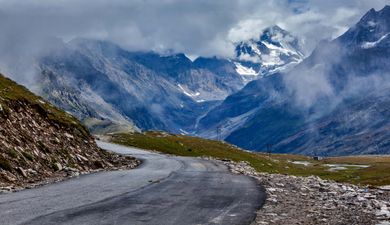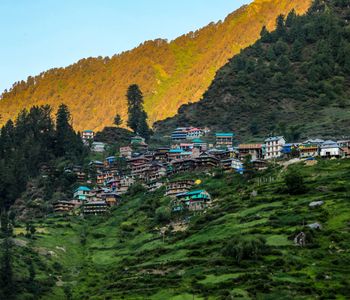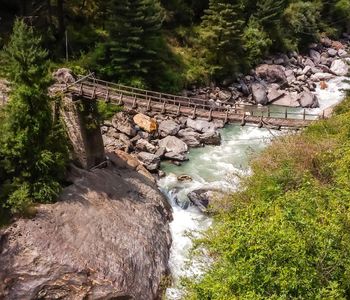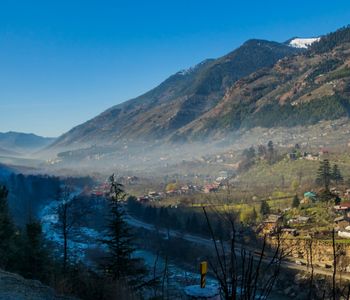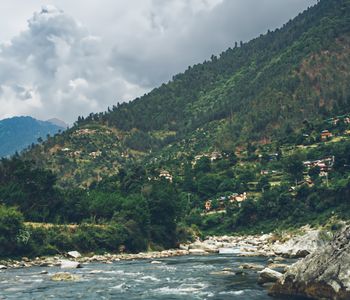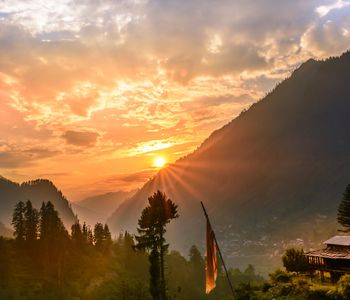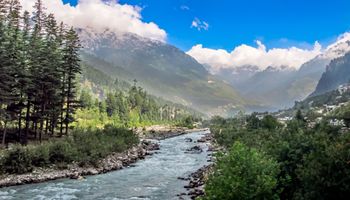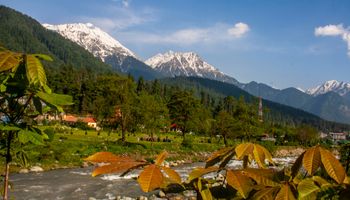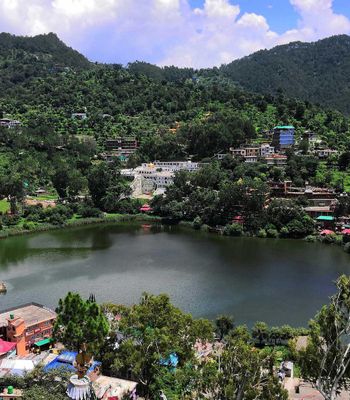
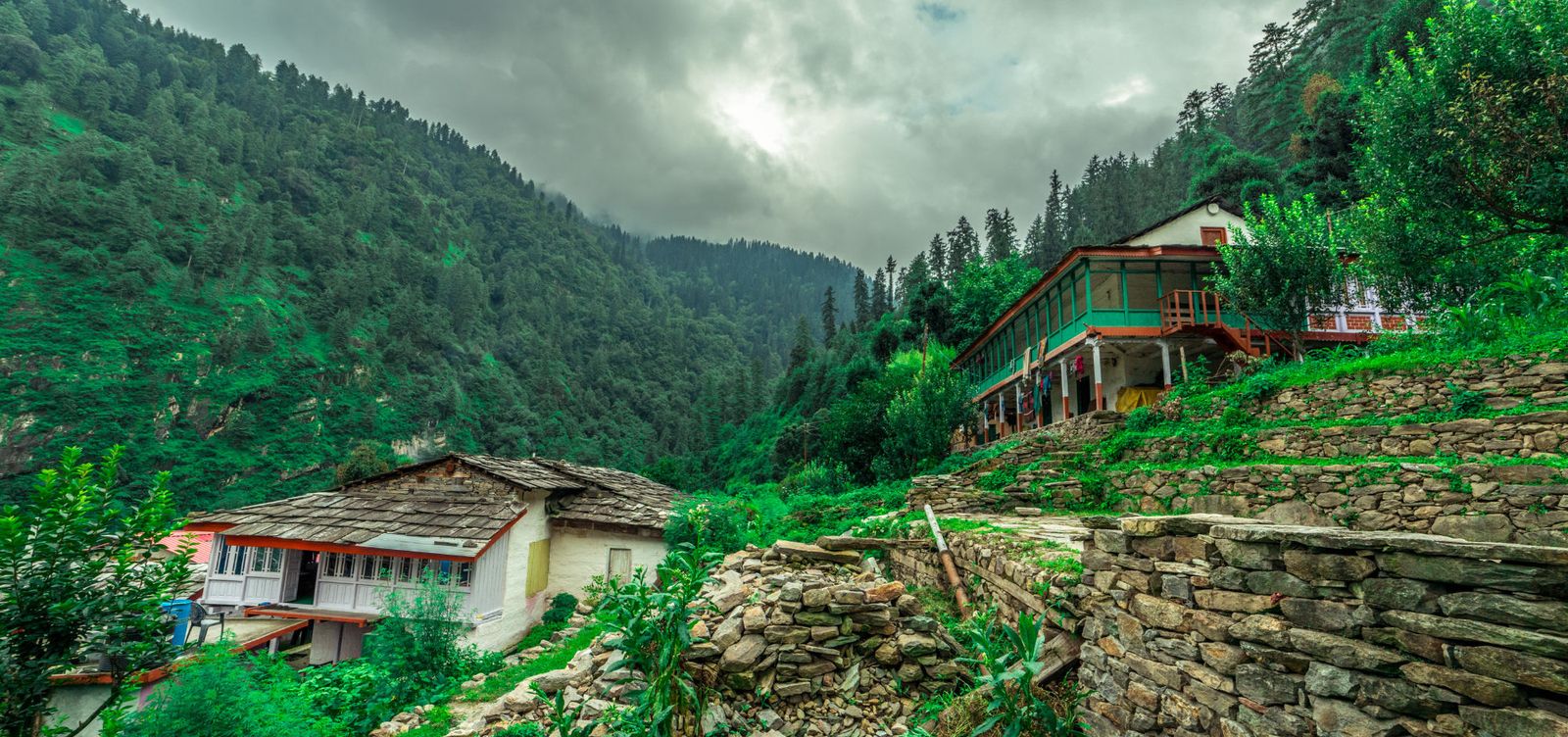
Jibhi doesn't announce itself. There's no grand gateway, no signboard hawking a tourism slogan, no cluster of souvenir shops marking your arrival. The road from Aut simply narrows, the deodar trees close in overhead, and at some point the air changes — cooler, sharper, faintly resinous. You've entered a hamlet that still runs on the rhythm of woodsmoke and river current, where the Tirthan tributary murmurs through a gorge so narrow you could toss a stone across it. In a country racing toward concrete and commerce, Jibhi feels like a place that misplaced the memo. That's precisely its value. At roughly 1,500 meters above sea level in the Banjar Valley of Kullu district, Himachal Pradesh, this settlement of a few hundred residents has become quietly magnetic for travelers sick of Manali's traffic jams and Shimla's weekend crush.
Where Wood Still Speaks
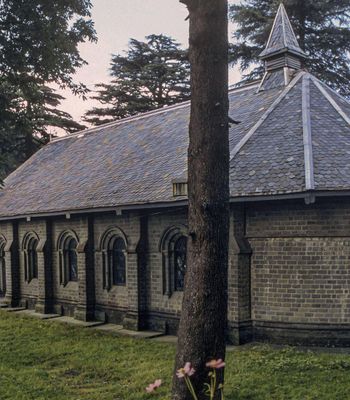
The first thing that strikes you about Jibhi isn't the mountains — those are everywhere in Himachal. It's the architecture. Traditional Himachali houses here use a construction technique called kath-kuni, alternating layers of dry stone and timber without mortar or nails. These structures have survived earthquakes that flattened concrete buildings nearby. Walk through the old quarter and you'll find homes with slate roofs gone silver with age, their wooden balconies carved in geometric patterns that no one alive remembers commissioning.
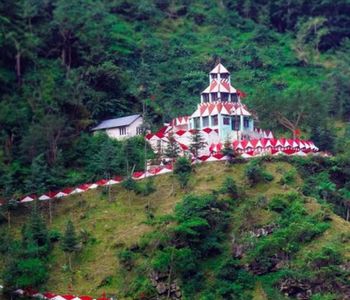
The Shringa Rishi Temple sits at the heart of this building tradition. Its pagoda-style wooden tower rises above the tree line, and the carvings along its entrance walls depict scenes from Hindu mythology with a roughness that feels more honest than polished. Locals still bring offerings of marigold and ghee. The temple doesn't charge admission because it isn't a tourist attraction to the people who pray there — it's simply where they go. That distinction matters more than any plaque could.
A Forest That Earns Its Silence
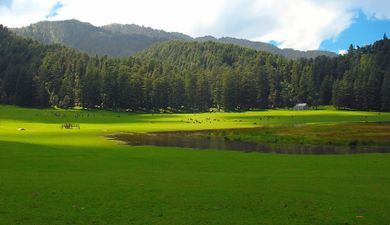
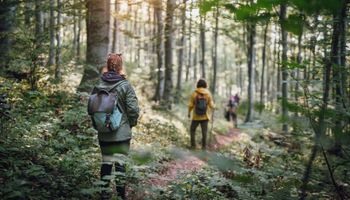
Step beyond the hamlet's handful of guesthouses and you're immediately in old-growth forest. Deodar, oak, and pine dominate the canopy. The undergrowth runs dense with fern and wild cannabis — the latter grows with the casual abundance of a weed, which technically it is here. Birds you won't encounter in the plains hold these branches: the Himalayan griffon riding high thermals, the white-throated laughingthrush whose call sounds like an argument between two strangers who can't quite remember what started it.
A forty-minute walk uphill from the hamlet leads to Jibhi Waterfall, a modest cascade that drops about fifteen meters into a rocky pool. It won't compete with Niagara for drama. But the water runs so cold that even in July your feet ache within seconds, and the surrounding moss-covered boulders lend the spot a primordial stillness that larger, more famous waterfalls lost decades ago to guardrails and selfie platforms. Nobody's built anything here. Not yet.
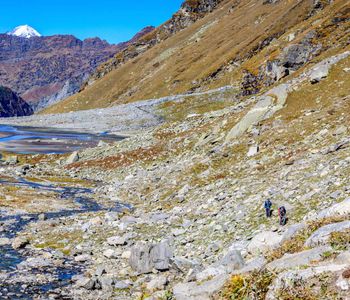
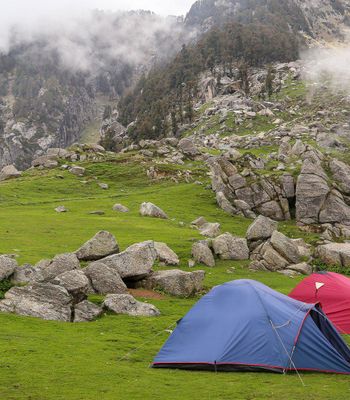
The trail to Serolsar Lake takes you deeper. About five kilometers of uphill hiking through increasingly thick forest delivers you to an alpine lake at roughly 3,100 meters. The lake is small — you could walk its perimeter in twenty minutes — and a wooden temple dedicated to the Goddess Budhi Nagin sits at one end. On a clear morning, the water holds the reflection of surrounding peaks so precisely it looks digitally composited. It isn't. The hike takes three to four hours round trip. Carry your own water. There's nothing resembling a shop along the way.
The Counterintuitive Appeal of Having Less
Here's what Jibhi doesn't have: a proper market, a cinema, reliable mobile coverage on all networks, or a single establishment that could reasonably be called a restaurant in the urban sense. Airtel and BSNL signals come and go. Wi-Fi at guesthouses works when the weather cooperates, which is less often than anyone admits.
Paradoxically, this scarcity is the draw. Most accommodations are wooden cottages or converted traditional homes. A few have attached kitchens where the owner's family cooks Himachali dishes — siddu, a steamed wheat bread stuffed with poppy seed paste, shows up on most tables alongside rajma cooked slowly over a wood fire. The dal here tastes different from what you'll get in Delhi: thicker, earthier, seasoned with local herbs that don't have standardized English names. You won't find a menu card. You eat what's made.
Evenings in Jibhi end early. By nine o'clock, most of the hamlet has gone dark except for the orange glow of kitchen windows. The silence isn't empty — it's layered with river sound, insect hum, and the occasional bark of a village dog reacting to something only it perceives. If you've spent weeks in Indian cities, this kind of quiet can feel almost confrontational. You notice your own breathing. That takes adjustment.
Getting There Without Losing Your Mind
Jibhi sits about 75 kilometers from Kullu and roughly 530 kilometers from Delhi. The nearest airport is Bhuntar, about an hour and a half away by road. From Bhuntar or Kullu, hire a taxi to Aut, then continue along the Banjar road until the forest swallows the highway. Himachal Road Transport Corporation buses run between Aut and Banjar, and you can ask to be dropped near Jibhi — though schedules are loose and the word "timetable" is used generously.
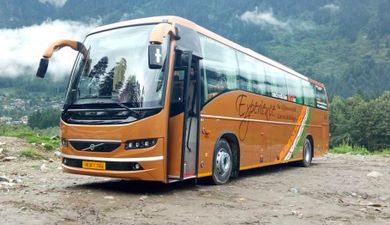
From Delhi, overnight Volvo buses to Aut are the most common route. The journey takes twelve to fourteen hours depending on road conditions and the driver's philosophy on mountain curves. If you're driving yourself, the stretch from Aut to Jibhi demands full attention — single-lane roads, blind turns, and the occasional goat standing in your path with absolute conviction that it has right of way. The goat will not yield. Plan accordingly.
When the Weather Decides to Behave
March through June offers the most accessible conditions. Trails are clear, the forest is green, and daytime temperatures hover between 15 and 25 degrees Celsius. Monsoon season from July through September turns the roads unpredictable and the leeches enthusiastic — bring salt if you're hiking during this window.
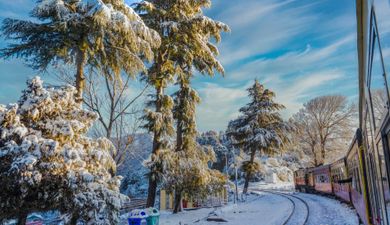
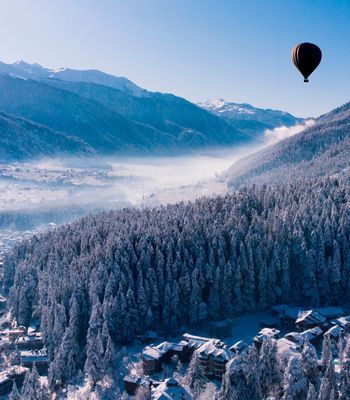
Winter transforms Jibhi entirely. December through February brings snowfall that blankets the hamlet in white, and temperatures drop below freezing at night. Fewer travelers make the journey, which means you might have entire trails to yourself. Pack serious layers. The wooden cottages retain warmth reasonably well, but the walk to an outdoor bathroom at two in the morning will test your commitment to the rustic experience. Consider it a character-building exercise.
A Place That Doesn't Perform
Jibhi's greatest quality is its indifference to your expectations. There are no light shows, no guided tours, no entrance tickets. The hamlet simply exists as it has for generations — a small human settlement in a large forest, getting on with the business of living. You come here not to see something extraordinary but to remember what ordinary felt like before everything became a destination.
Bring a book, a pair of sturdy shoes, and the willingness to let a place be exactly what it is. That's enough.