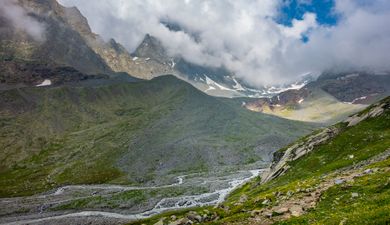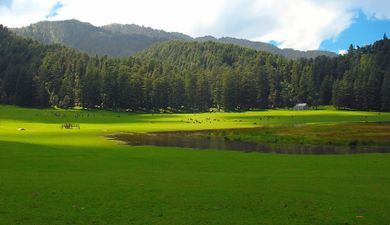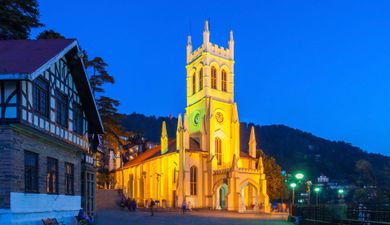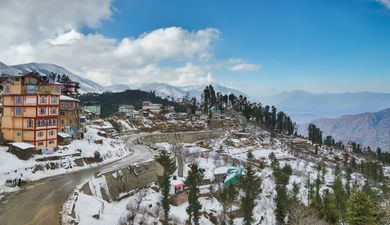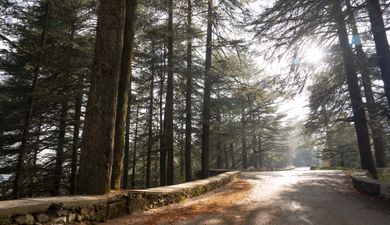
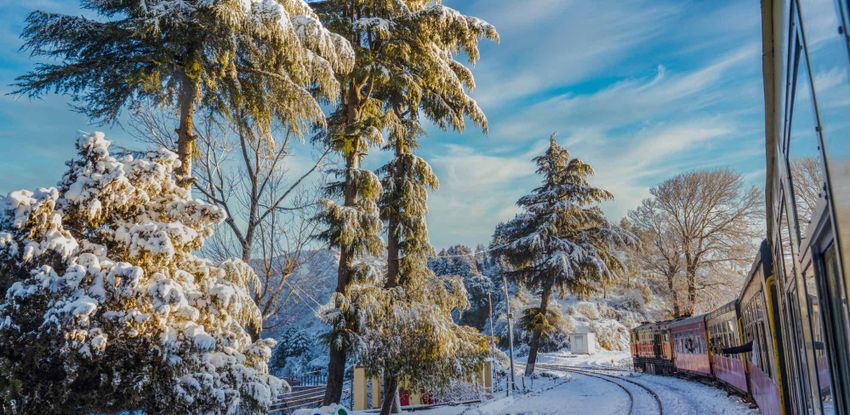
Shimla sits at roughly 7,000 feet on a long, crooked ridge in the Himalayan foothills, a town that the British built as a summer capital and then left behind like a half-read novel. The bones are still there — the Tudor facades, the cast-iron lampposts, the Mall Road that bans motor traffic and forces you to walk at a civilisation's pace. But the town has grown far past its colonial scaffolding. Below the ridge, concrete spills down the hillside in ungainly tiers, and the bazaars carry the noise and diesel-tang of any north Indian hill town. The contradiction is exactly the point. Shimla is neither museum nor metropolis. It is a place where you can hear both the call to prayer and a Bollywood ballad bouncing off tin roofs in the same five minutes, where the deodar forest begins precisely where the last shop ends, and where the sky, on a clear morning, offers a white wall of Himalayan snow peaks that makes you forget every building in the foreground.
Three days here is not about conquering a checklist. It is about adjusting your internal clock to the pitch of a hill station — slow mornings with fog drifting through pine branches, afternoons where the only agenda is the gradient of the next walk, evenings when the temperature drops fast enough that you reach for a shawl and a second cup of tea. You'll walk the Ridge at sunrise before the town wakes, lose yourself in the cramped lanes of the Lower Bazaar where metalworkers still hammer copper by hand, and stand inside a Gothic church that smells of old wood and cold stone. The final morning offers a choice that says everything about what kind of traveler you are: one last walk into the forest, or one last plate of Shimla's best breakfast. Either way, you leave lighter than you arrived.