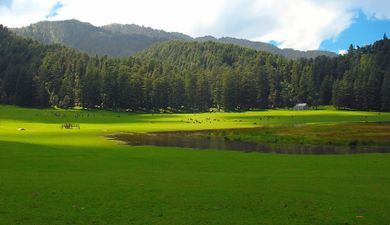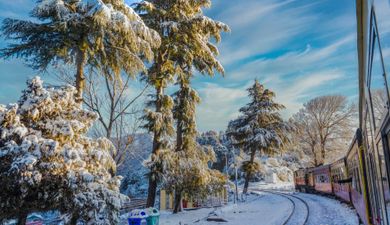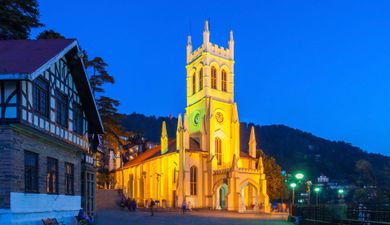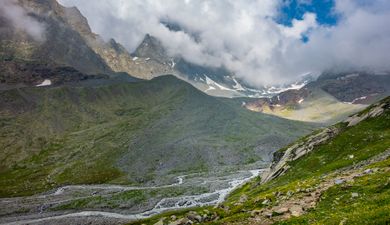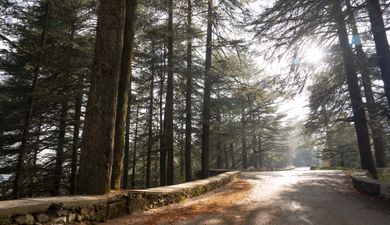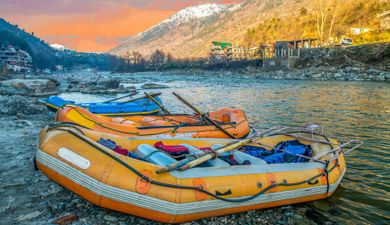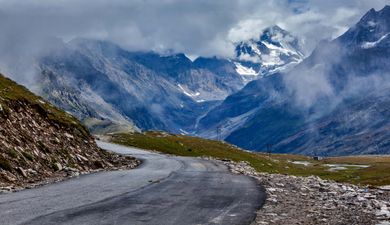
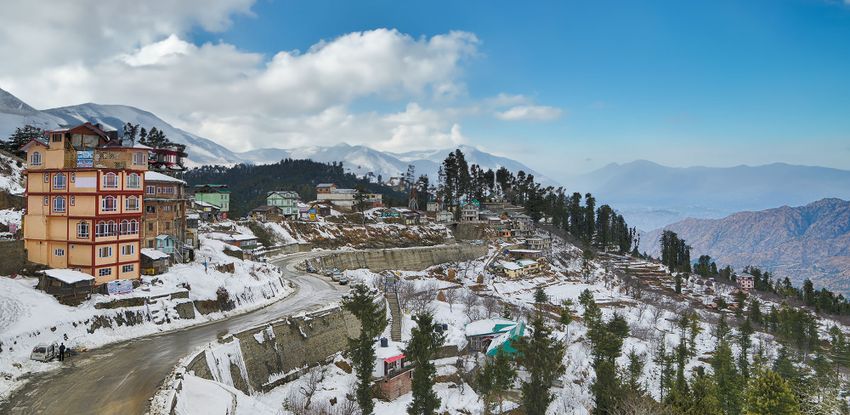
Shimla sits on a ridge like a sentence that refuses to end — one long, curved spine of colonial architecture, deodar forest, and cold air that smells of pine resin and roasted corn. Manali, four hours north through the Kullu Valley, is a different creature entirely: rawer, louder where the Beas River cuts through town, quieter where the apple orchards climb toward the snowline. Between these two hill stations lies a landscape that shifts from manicured British-era promenades to Himalayan passes where prayer flags snap in wind that has come a long way to reach you. This is not a tropical beach honeymoon. This is altitude, wool blankets, and the kind of cold that makes you reach for each other.
The first two days belong to Shimla's particular rhythm — morning walks along the Mall Road before the shops open, when the only sound is crows and your own footsteps on wet pavement, then the slow unraveling of the town's layers: the Viceregal Lodge with its Scottish baronial pretensions, the Jakhu Temple climb that leaves your calves burning and your lungs sharp. Then the road opens north, dropping into the Kullu Valley where the river appears and reappears between gorges, and Manali takes over — Hadimba Temple standing alone in its cedar grove, the sulfur springs at Vashisht where hot water meets mountain air, the Rohtang approach road where the world turns white and enormous. The pace shifts deliberately across six days: you begin in a town built for walking and end in a valley built for standing still and looking up. Evenings are for bonfires, for silence that isn't awkward, for the particular intimacy that cold weather and shared blankets provide.