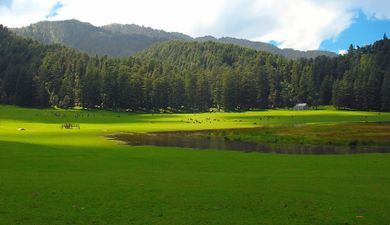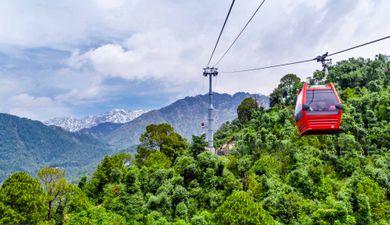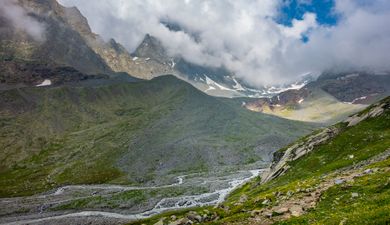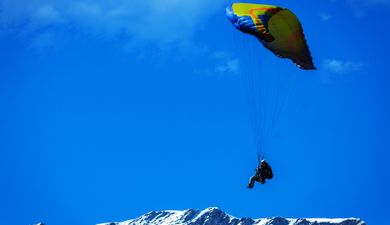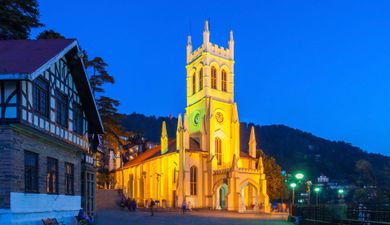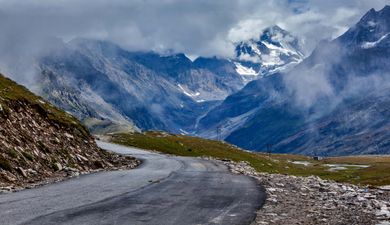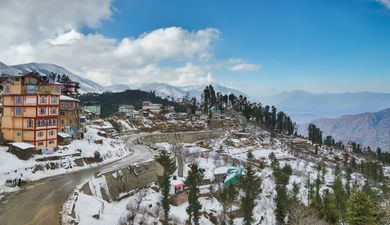
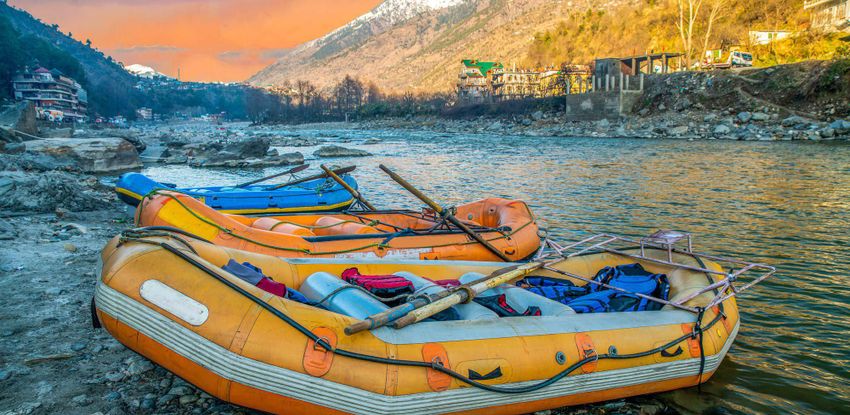
This trip begins in the flatlands of Punjab, where the air smells of ghee and woodsmoke, and the Golden Temple floats on its sacred pool like something conjured from another century. Amritsar is loud and unapologetic — autorickshaws jostling for space on narrow lanes, the rhythmic clang of karahi in roadside dhabas, the evening Wagah ceremony performed with the theatrical aggression of a Bollywood dance-off. From there, the landscape tilts upward. Dharamshala sits at the point where the Kangra Valley meets the Dhauladhar range — a place where Tibetan prayer flags snap in the wind above McLeod Ganj, and the air carries pine resin and momos in equal measure. By the time you reach Kullu, the Beas River is your constant companion, green and fast, carving through valleys that narrow as you climb. And then Manali — not the Manali of backpacker legend, but the old town where wooden temples creak in the cold and apple orchards line the roads to Solang and Naggar. The altitude rises, the temperature drops, and the trip acquires a different gravity.
The shape of this journey is deliberate: two days of cultural immersion in Amritsar's gurdwaras and bazaars, then a gradual ascent into Himachal Pradesh's mountain country, where the pace loosens and the landscape does most of the work. Dharamshala gives you monastery courtyards and cricket stadiums with Himalayan backdrops. Kullu is a single night — a pause beside the river, a chance to visit the Bijli Mahadev temple and the local shawl-weaving cooperatives. Manali gets three nights because it earns them: Hadimba Temple in the morning mist, the hot springs at Vashisht, the drive to Solang Valley where your children will remember the snow long after they've forgotten everything else. This is a family trip that moves from prayer halls to pine forests, with enough open road between stops to let everyone breathe.