Dharamshala & Dalhousie Couple Tour – Spiritual Honeymoon in Himachal

5 Nights / 6 Days
Dharamshala (2N)Dalhousie (2N)Palampur (1N)
Starting from ₹25,000
Compare quotes from top 3 travel agents

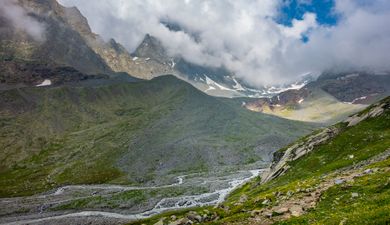
Dharamshala sits at the edge of the Dhauladhar range like a town still deciding whether it belongs to India or Tibet. The lower town is army cantonments and chai stalls and the sound of Hindi film songs drifting from auto-rickshaws. Walk twenty minutes uphill and you're in McLeod Ganj, where prayer flags snap in a cold wind that smells of juniper incense and momos frying in mustard oil. Dalhousie, by contrast, is a town the British built to escape the plains and then largely forgot — its colonial churches half-empty, its pine-shaded walks almost silent on weekday mornings. Between them lies Palampur, a tea-growing town where the Kangra Valley opens up wide and green, and the mountains, when they appear through the clouds, are so close and so vertical they look painted on. These are not the Himalayas of postcards. They are lived-in, layered, and full of small, stubborn particularities that reward anyone willing to slow down.

This six-day route traces a descending arc — from the spiritual intensity of Dharamshala's Tibetan exile community, through Palampur's terraced tea gardens where the light turns gold around four in the afternoon, and finally into Dalhousie's old-world quiet, where the only urgency is making it to Dainkund Peak before the afternoon mist rolls in. The pace is deliberately unhurried. Mornings belong to temples, monasteries, and mountain trails. Afternoons are for lingering — over Kangra tea, over a slow lunch, over a conversation that drifts because there's nowhere else to be. Evenings bring the particular pleasure of Himalayan dusk: the temperature dropping, the sky turning colors you forgot existed, and someone nearby cooking something with ginger and garlic. For two people beginning a life together, this is the right way to start — not with spectacle, but with presence.
Itinerary

Day 1Arrival in Dharamshala and the First Climb to McLeod Ganj

Morning

The drive from Gaggal Airport — or the longer haul from Pathankot railway station — takes you through the Kangra Valley floor, past rice paddies and small towns where traffic stops for nothing except a wandering cow. Dharamshala reveals itself gradually: first the army area, then the bazaar, then the road begins to switchback and the air changes. Check into your hotel in upper Dharamshala or McLeod Ganj. Drop your bags. Open a window. The Dhauladhar range is right there, filling the entire frame like a wall of white and grey stone.

Afternoon

Walk the main road of McLeod Ganj. Don't plan too much — the town is small enough to absorb on foot. The Tsuglagkhang Complex, the Dalai Lama's temple, sits at the center of everything. Step inside and you'll find monks debating in the courtyard, their maroon robes bright against the concrete. The Tibet Museum downstairs is small and unflinching; give it thirty minutes. Afterward, find a café with a balcony — there are several along Jogiwara Road — and order a pot of Kangra green tea. You've earned the sitting still.

Evening

Dinner in McLeod Ganj means Tibetan food, and you should lean into it. Thukpa — a brothy noodle soup heavy with vegetables and chili — is the right call on a cold evening. The restaurants along Temple Road fill up early, so don't wait past seven. Afterward, walk back slowly. The prayer wheels at the temple complex are lit at night, and the sound of them spinning — a low, rhythmic clicking — follows you uphill.

Day 2Dharamshala — Bhagsu Waterfall, Dal Lake, and the Quiet Side of the Ridge

Morning

Start early and walk to Bhagsu Waterfall before the day-trippers arrive from the plains. The trail from Bhagsunag Temple takes about twenty minutes — stone steps, a narrow path through deodar trees, and then the falls themselves, modest but forceful, the water ice-cold from snowmelt. The Shiva temple at the base is ancient and small, its stone darkened by centuries of oil lamps. Touch the water. It's colder than you expect.

Afternoon

Dal Lake in Dharamshala is not the Dal Lake of Srinagar — set your expectations accordingly. It's a small, still pond surrounded by deodar forest, and that's precisely its appeal. The walk around it takes fifteen minutes, and the silence is so complete you can hear pine needles falling. From here, follow the path toward Naddi viewpoint, where the entire Kangra Valley spreads below you and the Dhauladhar peaks are at eye level. Bring a flask of tea. Sit on the stone wall. This is the kind of afternoon that justifies the whole trip.

Evening

Tonight, explore the Tibetan market in McLeod Ganj for singing bowls, turquoise jewelry, and hand-knotted prayer beads. The shopkeepers here don't hustle — they pour you butter tea and let you browse. Dinner at a rooftop restaurant on Bhagsu Road, where the valley drops away below your table and the lights of lower Dharamshala flicker like a separate, distant city.

Day 3Dharamshala to Palampur — Tea Gardens and the Kangra Valley Floor

Morning

Check out after breakfast and drive south toward Palampur. The road drops from the mountain shelf of McLeod Ganj into the wide Kangra Valley, and the change is immediate — warmer air, flatter terrain, fields of mustard and wheat. Stop at the Kangra Fort en route. It's one of the oldest forts in India and almost never crowded. The walls are massive and crumbling, the views from the ramparts stretch for miles, and the silence inside the ruined temples has a weight to it. Give it an hour.

Afternoon

Arrive in Palampur by early afternoon. This is tea country — the Kangra tea estates here have been producing since the 1850s, and the terraced rows of tea bushes climbing the hillsides are as orderly and beautiful as anything in Assam or Darjeeling. Visit the Palampur Cooperative Tea Factory if it's a weekday; they'll walk you through the withering, rolling, and drying process. The smell inside the factory — warm, vegetal, slightly smoky — stays with you. Buy a packet of first-flush Kangra green directly from the source. It tastes nothing like what you'd find in Delhi.

Evening

Check into your hotel and walk to the Neugal Khad, a deep gorge where the Neugal stream has cut through the rock over millennia. The bridge across it gives you a vertigo-inducing view straight down. In the evening light, the pine forests on either side of the gorge turn almost black, and the sound of the water below rises up like static. Dinner tonight should be Himachali — ask for siddu, a steamed wheat bread stuffed with poppy seeds and served with ghee. It's plain food, and it's perfect.

Day 4Palampur to Dalhousie — Through the Chamba Valley

Morning

Before leaving Palampur, visit the Baijnath Temple, a thousand-year-old Shiva shrine on the bank of the Binwa River. The Nagara-style architecture is exquisite — intricately carved stone panels depicting scenes from the epics, the whole structure compact and proportionate in a way that feels almost modern. The temple sits in the center of a small town that pays it no particular reverence; schoolchildren walk past it on their way to class. That ordinariness is part of its power.

Afternoon

The drive from Palampur to Dalhousie takes roughly four hours and covers some of the most varied terrain in Himachal. You'll descend into the Chamba Valley, cross the Ravi River — wide and grey-green, its banks lined with smooth stones — and then begin the long climb up to Dalhousie. The road narrows. Pine gives way to deodar. The temperature drops noticeably. By the time you reach Dalhousie's Gandhi Chowk, you'll feel like you've entered a different century entirely. Check in, unpack slowly, and let the altitude settle into your lungs.

Evening

Walk the Mall Road. Dalhousie's version is not Shimla's — it's quieter, shorter, and edged with colonial-era buildings that look slightly startled to still be standing. The St. John's Church, built in 1863, is worth a glance inside; the stained glass is modest but the woodwork is exceptional. Dinner at a local dhaba near Subhash Chowk — rajma-chawal is the regional staple, and nobody does it better than the women running the small kitchens in this part of Himachal. The beans are slow-cooked, the rice is Himalayan, and you'll order seconds.

Day 5Dalhousie — Khajjiar, Dainkund Peak, and the Chamba Road

Morning

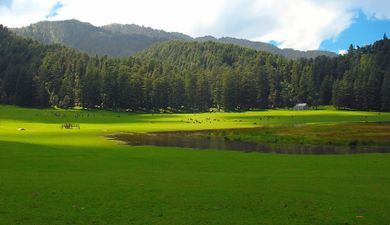
Drive to Khajjiar, twenty-two kilometers from Dalhousie. The road winds through dense deodar forest, and the meadow, when it appears, is genuinely startling — a flat, green clearing surrounded by tall trees with a small lake at its center. It's been called India's mini-Switzerland, which is the kind of comparison that helps no one, but the place has its own particular beauty: the grass is impossibly green, the air smells of resin, and the silence is punctuated only by the bells of grazing horses. Walk the perimeter trail. Skip the zorbing.

Afternoon

Return partway toward Dalhousie and take the turnoff for Dainkund Peak, the highest point in the area at just over 2,700 meters. The drive takes you to Pholani Devi temple, and from there it's a forty-minute trek to the summit. The path is well-marked and not steep, but the altitude will slow you. At the top, the view opens in every direction — the Pir Panjal range to the north, the Chamba Valley below, and on a clear day, the distant white line of the Great Himalayan Range. You'll stand there longer than you intended.

Evening

Back in Dalhousie, take the Garam Sadak — the warm road, so named because it catches the afternoon sun. It's a gentle, level walk along the southern face of the hill, and in the golden hour the light filters through the pines at a low angle that makes everything look like a painting you'd never trust if you hadn't seen the original. This is your last full evening in the mountains. Find a restaurant with a view, order something warm, and watch the valley below disappear into blue shadow as the sun drops behind the ridgeline.

Day 6Departure from Dalhousie — The Long Way Home

Morning

Wake early and walk to Panchpula, a set of small waterfalls about three kilometers from the town center. The path follows a stream through the forest, and at this hour — before eight — you'll have it to yourself. The memorial to Ajit Singh, a freedom fighter who died here in 1947, stands near the falls. The water pools in shallow rock basins that catch the morning light. Dip your hands in. Remember the cold. Come back and have a slow breakfast at the hotel. There's no reason to rush today.

Afternoon

Check out and begin the drive to Pathankot, about three hours downhill. The descent through the Chamba Valley unwinds everything the ascent wound up — the air warms, the trees thin, the road straightens. Stop at the Ravi River bridge for one last look back at the mountains. They'll be smaller now, blue-grey and distant, but you'll know exactly what they look like up close. Arrive at Pathankot railway station or continue to Amritsar or Chandigarh for your onward connection.

Evening

If you're catching a late train or flight, use the wait to sit somewhere ordinary — a station chai stall, an airport café — and let the trip settle. The mountains are already behind you, but the altitude is still in your blood, the taste of Kangra tea still on your tongue, the particular blue of Himalayan dusk still somewhere behind your eyes. You'll carry these things longer than you think. That's how the good trips work — they don't end when you leave. They end weeks later, in the middle of something unrelated, when you suddenly remember the sound of prayer wheels clicking in the dark.

  • 5 nights' accommodation in carefully selected boutique or heritage-category hotels: 2 nights in Dharamshala/McLeod Ganj, 1 night in Palampur, 2 nights in Dalhousie
  • Daily breakfast at each hotel for both guests, from Day 1 evening check-in through Day 6 morning
  • Welcome dinner on Day 1 at your Dharamshala hotel, including a traditional Tibetan set meal
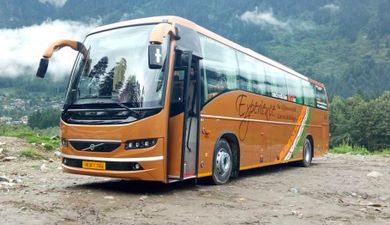
  • All intercity transfers by private air-conditioned vehicle: Dharamshala to Palampur, Palampur to Dalhousie, and Dalhousie to Pathankot on departure day
  • Airport or railway station pickup on arrival at Gaggal Airport or Pathankot station
  • Guided walking tour of McLeod Ganj including the Tsuglagkhang Complex, Tibet Museum, and Bhagsunag Temple trail
  • Kangra Fort entry tickets and guided tour en route to Palampur
  • Visit to Palampur Cooperative Tea Factory with tasting session and a packet of Kangra green tea per couple
  • Baijnath Temple visit with local guide
  • Day excursion to Khajjiar meadow and Dainkund Peak trek, including vehicle and driver for the full day
  • All applicable hotel taxes and service charges

Related Packages