Luxury Himachal Escape – Premium Shimla, Dalhousie & Manali Tour

8 Nights / 9 Days
Shimla (2N)Dalhousie (2N)Dharamshala (2N)Manali (2N)
Starting from ₹1,20,000
Compare quotes from top 3 travel agents

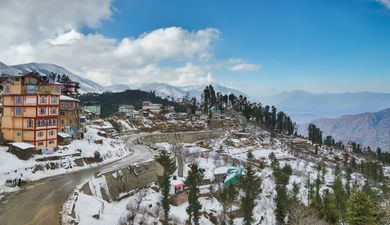
Himachal Pradesh is not one place. It is several arguments about what mountains should be, conducted simultaneously across a few hundred kilometres of road that winds through pine forests, apple orchards, and the occasional landslide. Shimla still carries the posture of British colonial ambition — its Ridge promenade and Tudor-faced buildings feel like a hill station that never quite got the memo about independence. Dalhousie is quieter, more private, the kind of town where you hear your own footsteps on empty forest trails and the deodar cedars seem older than any human concern. Dharamshala splits itself in two: the lower town is an Indian market bazaar with all its diesel-fumed urgency, while McLeod Ganj above it hums with Tibetan prayer wheels, momos steaming on roadside griddles, and monks in maroon robes checking their phones. Manali, at the northern end, sits where the Beas River runs cold and fast, the Rohtang snowfields loom close enough to taste, and the old village of Vashisht still smells of sulphur springs and wet stone.

This itinerary moves you through all four across nine days, and the rhythm is deliberate. You begin with Shimla's colonial architecture and mountain light, slow down into Dalhousie's pine-scented solitude, then shift gears entirely in Dharamshala — where Tibetan exile culture sits alongside Kangra Valley tea gardens and the Dhauladhar range cuts the sky like a serrated knife. The final stretch into Manali brings altitude, adventure, and the particular pleasure of a hot spring after a long mountain drive. The roads between these towns are half the experience: hairpin turns above river gorges, chai stalls at unlikely altitudes, and valleys that open without warning into something vast. You'll sleep well. You'll eat well. And you'll arrive home with a very specific understanding of why the Himalayas are not one thing but many — and why each version demands its own pace.
Itinerary

Day 1Arrival in Shimla and the First Mountain Evening

Morning

Your drive up from Chandigarh — or the flight into Jubbarhatti — delivers you through terraced farmland and thickening forest before Shimla reveals itself in layers along its ridge. Check in to your hotel and let the altitude settle into your legs. The air is thinner here than you expect, cooler too, even in the lobby.

Afternoon

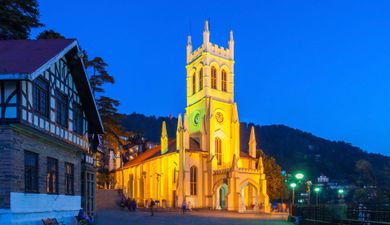
Walk the Mall Road at a pace that doesn't try to accomplish anything. The bookshop at Maria Brothers has been selling the same slightly foxed editions since 1956; the coffee at Wake & Bake is better than it has any right to be at 7,000 feet. Let the town introduce itself on foot — the Christ Church spire above you, the Gaiety Theatre's faded Victorian elegance below.

Evening

Dinner tonight should be unhurried. The Ridge clears out after dark, and the view north toward snow-dusted peaks is sharper without daylight's haze. The temperature drops fast once the sun goes — carry a layer you think you won't need. You will.

Day 2Shimla's Colonial Spine and the Kufri Ridgeline

Morning

Start early at the Viceregal Lodge, now the Indian Institute of Advanced Study. The building is absurd and magnificent — a Jacobethan pile on a Himalayan hilltop where Wavell and Mountbatten once carved up a subcontinent over scotch. The gardens behind it are worth the walk alone, the view south dissolving into haze and forest. Take the guided tour; the library inside smells like decisions that changed the world.

Afternoon

Drive the 16 kilometres out to Kufri, where the ridge opens up and, on a clear day, the greater Himalayan range stacks itself along the northern horizon like a geological dare. Skip the pony rides — they're touristy and the animals look bored. Instead, walk the nature trail through the cedar forest, where the light filters green and the silence is thick enough to feel physical. The Himalayan Nature Park here keeps a small but honest collection of Himalayan wildlife; the snow leopard enclosure, if you're lucky, rewards patience.

Evening

Back in Shimla, eat at Café Simla Times on the Mall — the mutton rogan josh is dependable, the view of the valley below better than any restaurant at this altitude deserves. Your last night in Shimla should feel earned, not rushed. Pack for Dalhousie. Tomorrow the road gets interesting.

Day 3Shimla to Dalhousie — Through the Kangra Foothills

Morning

Leave Shimla after an early breakfast. The drive to Dalhousie takes roughly eight hours, and the road doesn't forgive late starts. The first stretch descends through Solan district — apple orchards in neat rows, Kasauli's cantonment briefly visible on a parallel ridge. Your driver will stop for chai at one of the dhabas near Bilaspur, where the tea comes sweet and the parathas come stuffed with enough potato to fuel the next hundred hairpins.

Afternoon

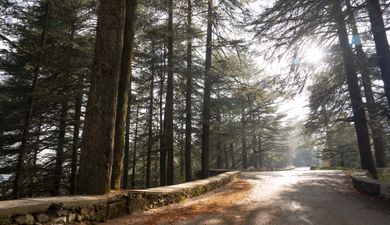
The landscape shifts as you cross into Chamba district. The valleys deepen, the rivers widen, and the deodar forests close in with a gravity Shimla's pine woods don't possess. You'll pass through small towns where the primary commerce seems to be timber and conversation. Arrive in Dalhousie by late afternoon — the town is spread across five hills, and the air here is cooler, damper, and scented with cedar resin in a way that announces itself the moment you step from the car.

Evening

Check in and do nothing ambitious. Walk Gandhi Chowk if the light holds — the promenade loops gently around the hilltop, the Pir Panjal range visible in pink silhouette against the fading sky. Dinner at your hotel tonight. The quiet here is the point. Let it work.

Day 4Dalhousie's Forest Trails and Khajjiar's Unlikely Meadow

Morning

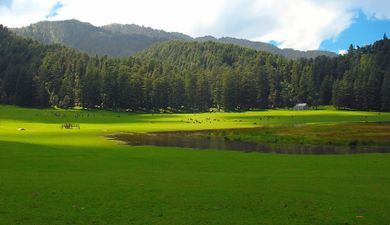
Drive to Khajjiar, twenty-two kilometres away and roughly a thousand feet lower. The meadow itself is startlingly flat — a small green lake at its centre, deodar cedars ringing it like spectators — and the comparison to Switzerland that every signboard insists upon is generous, but the place has its own unforced beauty. Arrive before the day-trippers from Dalhousie fill the benches. Walk the perimeter trail, where the grass is wet with dew and the Dhauladhar peaks frame the far edge.

Afternoon

Return to Dalhousie and take the Bakrota Hills walk — a five-kilometre loop that climbs gently through forest and opens up to panoramic views of the Chamba Valley. The path is unpaved, shaded, and empty most weekdays. This is the kind of walking that clears the head rather than tests the legs. If you're inclined, detour to Subhash Baoli, a spring and small park named for Netaji, who convalesced in Dalhousie and clearly had good taste in rest cures.

Evening

Eat at Mongas, a local institution on Gandhi Chowk — the rajma chawal is honest and warming, the kind of meal that belongs at altitude. Dalhousie turns quiet early. The stars here, away from any real light pollution, are uncomfortably numerous. Stand outside for five minutes and count satellites. You'll lose count.

Day 5Dalhousie to Dharamshala — Into the Kangra Valley

Morning

The drive to Dharamshala is approximately five hours, and the route drops you from Dalhousie's cedar-wrapped heights down through the Kangra Valley, where the light changes from mountain-filtered grey to a warmer, broader gold. The road follows the Ravi River briefly before cutting south. Stop at Chamba town if time allows — the Lakshmi Narayan temple complex, a cluster of sixth-century shikhara temples beside the river, is worth thirty minutes of anyone's morning.

Afternoon

Arrive in Dharamshala and drive up to McLeod Ganj, the upper town, where the Dalai Lama's residence and the Tibetan Government-in-Exile have turned a former British hill station into something entirely its own. Check into your hotel and walk to the Tsuglagkhang Complex — the main temple, museum, and the Dalai Lama's audience hall. The museum's photographs of the 1959 flight from Tibet are gut-level powerful, stripped of sentimentality.

Evening

Eat at Lung Ta, a Japanese-run restaurant on Jogibara Road where the tempura is unexpectedly precise and the proceeds fund Tibetan political prisoner support. The walk back to your hotel after dinner passes prayer wheels turning in the dark, the smell of juniper incense catching you at corners. Dharamshala at night has a frequency that Dalhousie doesn't — lower, more urgent, humming with exile and devotion.

Day 6Dharamshala — Kangra Art, Tibetan Exile, and the Dhauladhar Wall

Morning

Hire a local guide and hike to Bhagsu Nag waterfall — go before nine, when the trail is still cool and the only sound is water hitting rock. The temple at the base is small, wet, and very old, dedicated to a Naga deity by a king who lost a battle to a serpent and decided worship was wiser than revenge. The falls themselves are most impressive after recent rain, but the walk alone justifies the early alarm.

Afternoon

Drive down to Kangra town — about twenty kilometres south — and visit the Kangra Fort, one of the oldest in India and comprehensively ignored by most Himachal itineraries. The Mughal, Sikh, and British all wanted it, and the earthquake of 1905 finished what centuries of siege couldn't. The ruins are atmospheric in the truest sense: lizards on warm stone, wild grass in the courtyards, the Banganga and Manjhi rivers converging below. Nearby, the Kangra Art Museum holds a small but focused collection of miniature paintings — the Kangra school's depiction of Radha-Krishna is delicate enough to make you hold your breath.

Evening

Back in McLeod Ganj, eat momos at Tibet Kitchen — the steamed beef momos are the benchmark against which all others in this town are measured. Afterward, walk the kora path around the Dalai Lama's temple compound. Locals do this circuit at dusk, spinning prayer wheels with the kind of muscle memory that comes from doing something every single day. Join them or watch. Either feels appropriate.

Day 7Dharamshala to Manali — Over the Passes and Along the Beas

Morning

Leave after breakfast for the drive to Manali — roughly seven to eight hours depending on road conditions, and the road conditions in Himachal are always depending. The route drops through Palampur, where Kangra tea gardens stripe the hillsides in neat green rows, and the scent through the open window is vegetal and sharp. Stop briefly in Baijnath, where the thirteenth-century Shiva temple sits beside a small river and the carved stonework repays close looking.

Afternoon

The road follows the Beas River north through Mandi and into the Kullu Valley, and the landscape changes dramatically — the gentle Kangra slopes give way to steep gorges, whitewater sections, and the particular shade of grey-green that Himalayan rivers carry from glacial sources. Lunch at a roadside dhaba near Kullu — the dal and rice here are functional, honest, and better than anything trying harder. You'll smell Manali before you see it: pine resin, river mist, and a sharpness in the air that tells you the snowline is close.

Evening

Check into your hotel in Manali and resist the temptation to explore immediately. The town rewards you more tomorrow. Tonight, order room service or eat at the hotel restaurant, watch the Beas from whatever vantage your room offers, and let the altitude settle. You've earned a quiet arrival.

Day 8Manali — Old Village, Solang, and the Rohtang Approach

Morning

Walk to Old Manali across the bridge — the village sits above the river on the opposite bank and feels like a different decade. The Manu Temple here is dedicated to the sage who supposedly founded the town, and the wooden pagoda structure is genuinely beautiful in its simplicity. The lanes beyond it smell of hash, apple cider, and fresh bread from the cafes that cater to long-stay travellers. Breakfast at Drifters' Inn — the pancakes are thick, the coffee is strong, and the view of the valley through their window is worth the slightly steep walk up.

Afternoon

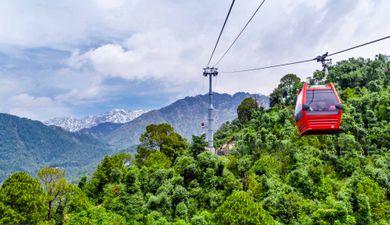
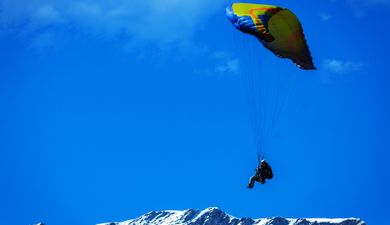
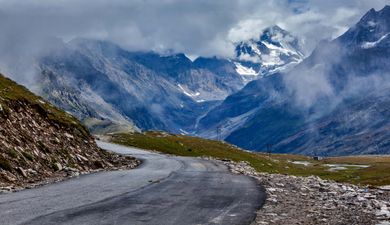
Drive to Solang Valley, fourteen kilometres north. In winter it's a ski slope; in summer and autumn, it's a wide glacial valley that funnels wind down from the Rohtang Pass. If the pass is open and permits are secured, continue up — the road climbs through switchbacks above the treeline into a landscape of scree, meltwater, and air so thin it makes your lungs work for each breath. The snow at the top, even in late spring, is dirty and real, not postcard-clean, and the view south back down the valley is the kind that makes you understand why people build temples in high places. If Rohtang is closed, Solang itself offers paragliding and the gondola to the upper ridge, where the Himalayan panorama is uninterrupted and slightly overwhelming.

Evening

Return to Manali and head to Vashisht village, a kilometre north of town. The hot sulphur springs here have been running since before anyone thought to charge admission, and the public baths — segregated by gender, tiled simply, steam curling off water that smells faintly of rotten eggs — are the best thing you can do for legs that have spent eight days in a car and on mountain trails. Dinner afterward at Johnson's Café, a colonial-era estate turned restaurant, where the trout is pulled from local streams and the fireplace is lit on cold evenings. This is your last full night. Spend it well.

Day 9Manali — Morning on the River and Departure

Morning

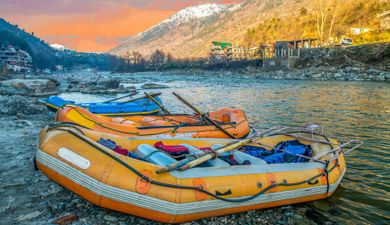
Wake early and walk along the Beas River path behind the town. The water is glacier-fed and runs fast, the colour of pale jade, and at this hour the only company is the occasional fisherman and a silence so complete you can hear individual stones shifting in the current. The Hadimba Temple, a four-tiered wooden pagoda set in a cedar grove, is five minutes further. The carvings on the doorframe are fifteenth-century and graphic — hunting scenes, animal sacrifices, figures locked in combat — and the darkness inside smells of old wood and devotion. Say goodbye to the mountains here. It's the right place for it.

Afternoon

Check out and begin the drive to Chandigarh or Kullu-Manali Airport for your onward journey. The descent from Manali retraces the Beas Valley in reverse — the gorges open up, the orchards thicken, the temperature rises noticeably with each thousand feet lost. If you're driving to Chandigarh, the trip takes nine to ten hours; if flying from Bhuntar, it's ninety minutes by road. Either way, the landscape gives you a slow, deliberate farewell — ridgeline after ridgeline falling behind you until the plains reassert themselves.

Evening

Depending on your departure route, you'll either be boarding a flight from Bhuntar or arriving in Chandigarh for an evening connection. The transition from mountain air to lowland heat is abrupt and slightly disorienting — your body will remember the altitude for days, the way your lungs worked harder, the way sleep came faster and deeper. Carry that. The plains will feel flat in more ways than one.

  • 8 nights' accommodation in premium heritage or luxury hotels: 2 nights in Shimla, 2 nights in Dalhousie, 2 nights in Dharamshala (McLeod Ganj), 2 nights in Manali
  • Daily breakfast at each hotel, plus dinner on Days 1, 3, 5, and 7 (arrival evenings at each new destination)
  • Private air-conditioned vehicle with experienced hill-road driver for the entire duration, including all intercity transfers: Chandigarh to Shimla, Shimla to Dalhousie, Dalhousie to Dharamshala, Dharamshala to Manali, and Manali to Chandigarh or Bhuntar Airport
  • Airport or railway station pickup at Chandigarh on Day 1 and drop-off on Day 9
  • Guided heritage walk in Shimla covering the Viceregal Lodge, Christ Church, and the Ridge
  • Excursion to Kufri including Himalayan Nature Park entry
  • Full-day Khajjiar excursion from Dalhousie with transport
  • Guided visit to the Tsuglagkhang Complex, Tibet Museum, and Kangra Fort with entry tickets
  • Rohtang Pass permit and vehicle access (subject to seasonal availability and government clearance)
  • Solang Valley gondola tickets
  • Entry to Vashisht hot sulphur springs
  • All road tolls, fuel charges, parking fees, and driver accommodation throughout the trip

Related Packages