Shimla Manali Honeymoon Tour – Classic Himachal Couple Getaway

6 Nights / 7 Days
Shimla (2N)Kullu (1N)Manali (3N)
Starting from ₹22,999
Compare quotes from top 3 travel agents

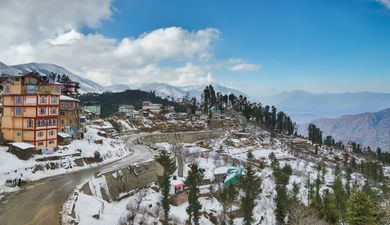
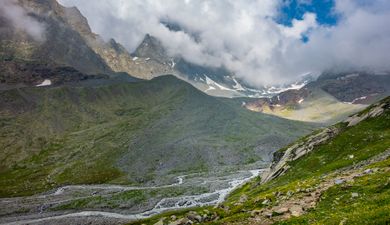
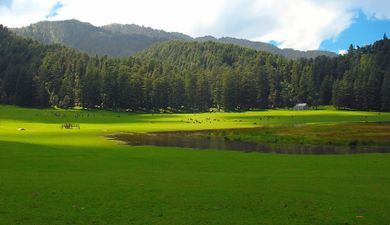
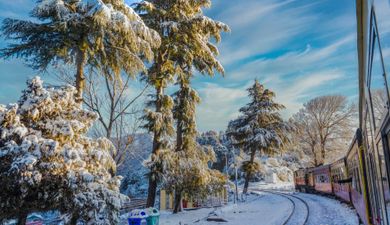
Shimla sits on a ridge like a sentence half-finished — colonial bones wrapped in pine and cloud, the Mall Road still carrying the echo of a different century's footsteps. Below and beyond, the Beas Valley opens into something rawer: Kullu's orchards and temple towns give way to the granite-and-cedar drama of Manali, where the air thins and the Himalayas stop being a backdrop and become the only thing in the room. This is not one landscape. It's three temperaments connected by mountain roads that climb, descend, and climb again, each switchback recalibrating what you thought you came here for.

Your journey starts with Shimla's measured civility — long walks under deodars, the creak of old wood in heritage corridors, mornings that taste like pine resin and black tea. Then the road drops into the Kullu Valley, where the river gets louder and the temples get older, and you spend a night in the kind of quiet that only exists between two larger destinations. Manali is the anchor: three nights to find your rhythm among snow-fed streams, cedar forests, and the particular silence of high-altitude mornings. You'll move from the curated to the wild, from pressed linen to woodsmoke, from town to valley to mountainside. The pacing is deliberate — slow enough to linger, brisk enough that each day delivers something the last one didn't. By the final morning, you'll have covered less distance than you think, but more ground than you expected.
Itinerary

Day 1Arrival in Shimla — Pine Air and the Ridge at Dusk

Morning

The drive up from Chandigarh takes roughly seven hours, and it earns every minute. You leave the plains behind at Kalka, where the road starts its long argument with gravity, switchbacking through Solan and Kandaghat as the temperature drops in increments you can feel on the back of your hand. Stay awake for the approach. The first sighting of Shimla's tin rooftops scattered across the ridge — glinting, improbable, clinging to the hillside like they got there by accident — is better than any photograph of it.

Afternoon

Check in and do very little. Your hotel will likely sit somewhere along or above the Mall Road, and you'll want to bolt out the door immediately. Don't. Order room service tea — the Himachali kahwa if it's on offer, or a simple Darjeeling — and let the altitude settle into your lungs. The strange thing about Shimla is that doing nothing here feels productive, as if the thin pine-scented air is quietly recalibrating something in your chest. If you must move, walk only as far as the nearest balcony. The valley below will still be there tomorrow.

Evening

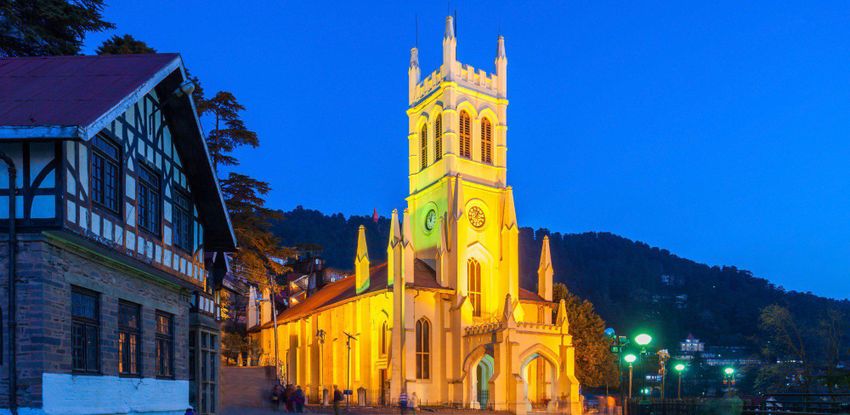
Now you walk. The Ridge opens up at sunset like a stage — the neo-Gothic spire of Christ Church catches the last amber light, and the sky behind the Shivalik range turns the colour of bruised plums. Here's what surprises first-timers: the Mall Road at dusk isn't quiet or contemplative. It's a shoulder-to-shoulder promenade, half the town out walking with purpose and the other half walking with none, everyone moving at a pace that suggests nowhere else to be. Peer into old bookshops and bakeries that have been selling plum cakes since your grandparents were young. The smell of warm butter and wood polish drifts from doorways that haven't changed their signage in decades.

Dinner at one of the heritage restaurants along the Mall. The trout, if it's fresh, is the right call. If it isn't, you'll know.

Day 2Shimla — Kufri's Cold Saddle and the Old Town's Steep Lanes

Morning

Get to Kufri early. Before the pony-wallahs stake their claims and the day-trippers spill out of hired Innovas, you want to be up there alone. At 2,600 metres, the air doesn't just feel different — it has a different weight. Thin, sharp, carrying the clean bite of frozen grass. On a clear day the views stretch to the snow line itself, and in winter the meadows wear a crust of frost that crunches underfoot like spun sugar.

Skip the so-called adventure park. It's exactly what you'd expect. Walk instead toward the Himalayan Nature Park, where the deodar forest closes in around you and the only sounds are wind through the canopy and the occasional indignant screech of a monal pheasant — that electric-blue bird that always seems offended by your presence.

Afternoon

Back in Shimla, go downhill. Not to the Ridge — that's the tourist promenade — but into the lower bazaar, where the lanes drop steeply and the town remembers what it was before the heritage hotels arrived. Tailors work behind ancient sewing machines. Spice merchants sit among burlap sacks. Shops sell hand-knitted shawls in colours that haven't changed since the 1970s, and nobody seems bothered about updating them.

Find your way to Lakkar Bazaar, the woodworkers' quarter. The smell hits you first — fresh-turned walnut and deodar, hanging in the air like temple incense. Here's the thing worth buying: something small and handmade. A carved walking stick. A wooden box with brass hinges. Something that still smells like the tree it came from. You won't find that in a duty-free.

Evening

Shimla's evenings have a natural center of gravity: Scandal Point, the wide intersection at the western end of the Ridge. Locals drift here as the light drains out of the sky and the mountains shift to indigo. Nobody's in a hurry. The gossip is unhurried too — this is, after all, the spot that earned its name from an actual nineteenth-century scandal, and the tradition of loitering with intent has stuck.

Find dinner somewhere with a window seat and a view that earns it. Watch the town's lights come on in stages — house by house, lane by lane — until the entire ridge glitters like an ocean liner at sea, all that vertical habitation suddenly made luminous. This is your last night here. Let it unspool slowly.

Day 3Shimla to Kullu — Through the Beas Valley to the Temple Town

Morning

Check out after breakfast and point the car north. The drive from Shimla to Kullu covers roughly 230 kilometres and takes between six and seven hours depending on the road's mood — and Himachali roads have moods. The route drops through Bilaspur and Sundernagar before climbing again along the Beas River, which appears suddenly below the road like a silver argument cutting through dark rock. Pull over at Pandoh Dam where the river widens and flattens into something almost calm. The chai stall on the eastern bank makes ginger tea strong enough to straighten your spine. Drink it standing, watching the water decide which way to go.

Afternoon

You'll reach Kullu by mid-afternoon, the valley opening around you like a long exhalation — apple orchards on every slope, the Beas running flat and broad below town. Check into your hotel, wash the road dust off your face, and drive the short distance to the Raghunath Temple in the centre of town.

It's not grand. That's the point. The stone is warm from the afternoon sun, the brass bells green with age, and the courtyard carries the thick, sweet weight of marigold and sandalwood. Lord Raghunath presides here, and has for over 350 years — the spiritual axis around which the entire valley quietly turns. What strikes you isn't the architecture but the ordinariness of devotion: a woman adjusting flowers on a shrine, a priest refilling an oil lamp without looking up. The sacred made routine is, in its own way, more moving than spectacle.

Evening

Walk down to the Beas riverbank before dinner. The water runs wide and shallow here, slipping over smooth stones with a sound like continuous, low applause. At this hour the light turns the valley gold and copper, and the pine-covered slopes on either side go dark from the bottom up — shadow climbing the hills like a tide.

Dinner should be local. Himachali siddu: steamed wheat bread stuffed with poppy seed paste, served with ghee and dal. It arrives dense and plain-looking, the kind of food you'd walk past on a menu. Don't. The first bite is earthy and faintly sweet, the poppy filling almost nutty against the tang of hot dal. Simple, filling, and impossible to replicate anywhere below 1,200 metres.

Day 4Kullu to Manali — Rafting the Beas and the First Night in the Cedars

Morning

Forty kilometres separate Kullu from Manali. That's nothing in distance — and everything in what you can do with the time. Before heading north, take the detour to Bijli Mahadev Temple, sitting at 2,460 metres above the town. The climb is honest work — about three kilometres on foot from the road, steep the whole way — but at the top, the Parvati and Kullu valleys spread beneath you, converging like two open palms. The temple itself is small, almost bare, overshadowed by its 20-metre staff, which functions as a lightning rod in the most literal and strange sense: bolts strike and shatter the Shiva lingam inside, and the priests piece it back together with butter and grain. Every time. It's the kind of detail that makes you stop trusting brochures entirely.

Afternoon

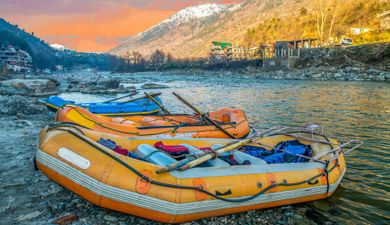
Head north toward Manali. If the season and river conditions cooperate, pull over at one of the rafting stretches between Pirdi and Jhiri. The rapids run Grade II and III — enough to make your chest tighten on the drops, not enough to flip you. The Beas here is glacier-fed, absurdly clear, cold enough to make your hands ache if you drag them through the current. Canyon walls rise on both sides, thick with pine and wild fern that seem to lean in overhead.

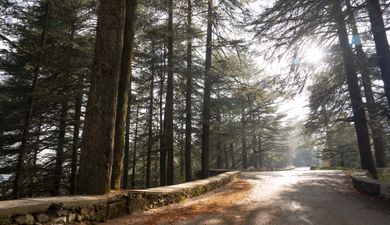
Even without the raft, the drive earns your attention. The valley tightens. The air sharpens. By the time Manali's first deodar groves appear along the road, the temperature has dropped a good five degrees from where you started, and the light filtering through those ancient cedars has a weight to it — green and quiet and entirely different from the open valley you just left behind.

Evening

You're in Manali for three nights. Unpack properly for once — let your bag exhale. Then walk across the bridge over the Manalsu stream to Old Manali, where cafes spill out onto rough stone terraces and woodsmoke tangles with the smell of fresh bread. Here's the counterintuitive thing about Old Manali: it looks like it was designed for backpackers seeking solitude, yet it's the most social corner of town. Everyone ends up on the same terraces, talking to strangers.

Find a riverside spot for dinner. Prop your feet up. The sound of the water does something useful — it drowns out everything that isn't directly in front of you. This is the rhythm for the next three days. Don't fight it.

Day 5Manali — Solang Valley and the Hadimba Temple's Forest

Morning

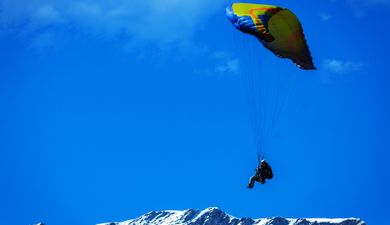
Get to Solang Valley by eight. Earlier if you can. At that hour the meadow belongs to you alone — the grass still heavy with dew, the snow peaks at the valley's head burning white in first light while everything below remains cool, blue, and shadowbound. In winter, this is ski country. Come summer, paragliding operators stake out the upper slopes, and the feeling of lifting off a Himalayan meadow while the Beas Valley unravels beneath your feet is exactly as absurd and wonderful as it sounds. But here's the thing about Solang that no one tells you: you don't need to leave the ground. Just standing in that meadow, dwarfed by the sheer vertical indifference of the mountains, recalibrates something. You feel correctly small.

Afternoon

Head back to Manali town and walk into the deodar forest that folds around the Hadimba Devi Temple. Built in 1553, the temple looks like nothing else in these mountains — a four-tiered wooden pagoda roof rising above walls of rough, uncut stone, its door frames carved with figures so ancient they've softened into abstraction, their features half-surrendered to weather and time. The forest floor is thick with pine needles that silence your footsteps. Light falls in slanted shafts through the canopy. The air carries a resinous sweetness — deep, woody, alive — that no shop-bought scent has ever come close to reproducing. Don't rush this. Sit on the rocks below the temple and let the light move across the stone. The forest does its work slowly, and you should let it.

Evening

Walk through the old market near the bus stand — not to buy anything, but to be inside the noise and theatre of it. Wool shops display hand-woven Kullu shawls in geometric patterns that have looked essentially the same for centuries, their colours bold and deliberate. Dry fruit vendors stack walnuts and apricots into copper-coloured pyramids with a greengrocer's pride. For dinner, order tandoori trout from the Beas. The flesh flakes pink and clean, the edges properly charred, and it arrives alongside naan still blistered and puffed from the clay oven. Eat slowly. The mountains aren't going anywhere tonight, and neither should you.

Day 6Manali — Rohtang or Atal Tunnel and Sissu's Frozen Silence

Morning

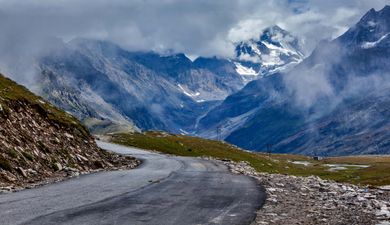
You leave before the town wakes up. There's no easing into this one — the road climbs fast through Kothi and Marhi, the deodar and pine thinning with every hundred metres of elevation, until the treeline simply gives up and you're staring at a landscape of raw rock, ice, and enormous sky. At Rohtang Pass — 3,978 metres, permits required, and only if the pass is open — the wind cuts sideways hard enough to make your eyes stream. Snow lies in thick, grimy drifts along the road, even in June. Stand at the top. Breathe slowly. The air holds half the oxygen you're accustomed to, and your body knows it before your mind does.

Afternoon

The Atal Tunnel offers a different kind of arrival. You plunge into the mountain in Manali's green world and emerge, nine kilometres later, into Lahaul — where everything is quieter than you expected quiet could be. Sissu sits there like a place that forgot to modernize. A waterfall drops in a single white column from the cliff above the village, clean and vertical, while the river below runs milky with glacial silt, the color of diluted cement.

The landscape is stark, nearly lunar — brown slopes, grey rock, and the occasional green rectangle of a barley field, improbably bright against all that mineral severity. What surprises you is how the emptiness doesn't feel desolate. It feels deliberate. Eat at one of the small dhabas in Sissu. The thukpa — thick Tibetan noodle soup, searingly hot — is exactly the thing altitude demands. Your hands wrap around the bowl and don't want to let go.

Evening

The drive back takes about two hours, and you feel the warmth re-enter the world as you descend through the cedar belt, the air thickening gratefully around you. This is your last proper evening in the mountains, and Manali knows how to hold you for it.

Walk to Van Vihar along the Beas. The footpath runs beneath old deodar trees, the river fast and shallow over grey stones, its sound constant enough to become a kind of silence itself. Here's the counterintuitive thing about Manali: the town can feel overrun, loud, a little chaotic — but step fifty metres toward the water and you're somewhere else entirely.

Dinner should be slow. A good bottle of Himachali apple wine, windows open to the river's noise, no agenda. Tomorrow you leave. Tonight, don't think about it.

Day 7Departure from Manali — Morning on the River and the Long Road South

Morning

Don't set an alarm. Just let the cold find you. Step outside before anything else and stand there — at this altitude, the hour after sunrise does something no lens can hold. The peaks look stamped from metal, so hard-edged against that impossible blue they don't seem real. They are.

Take breakfast slowly, by a window. The parathas come thick and golden, stuffed tight with potato and green chilli, set down alongside fresh yogurt and a pickle that carries just enough bite to keep you honest. There's no rush now. Pack with the deliberateness of someone who doesn't want to leave. Check out by 10am.

The Beas Valley in Reverse

You've driven this road before — the same Beas Valley corridor that brought you in — but southbound, everything shifts. The river swaps sides. Light catches the slopes at unfamiliar angles. Orchards you blew past on the way up suddenly announce themselves: pear and plum below Kullu, apple above it, branches sagging with fruit if your timing is right.

Between Kullu and Mandi, pull over at a highway dhaba. Don't overthink which one. The rajma chawal along this stretch is consistently, almost irrationally good — the beans slow-cooked with Himachali spices until they've given up all resistance, served in steel bowls alongside a minor mountain of rice. It's the kind of meal that costs almost nothing and stays with you for years.

What the Plains Tell You

By late afternoon, Chandigarh or the Bhuntar airport materializes depending on your route, and the transition is blunt. The air thickens. Sound crowds in. Heat presses against your skin like a hand. You feel the difference in your first breath, and that's the proof — the mountains did what they do.

You carry them out in your lungs. In the particular silence you'd grown accustomed to without realizing. In the memory of cold water and cedar smoke and the way afternoon light fell through the deodars near Hadimba. The trip ends here. What it left inside you doesn't.

  • Accommodation for 6 nights: 2 nights in a heritage or premium hotel in Shimla, 1 night in a riverside hotel in Kullu, 3 nights in a cedar-view hotel in Manali
  • Daily breakfast at each hotel for all 7 days, plus dinner on Day 1 (Shimla arrival) and Day 6 (Manali farewell dinner)
  • Private air-conditioned vehicle for airport or railway station pickup from Chandigarh and drop-off on Day 7
  • All intercity transfers: Shimla to Kullu, Kullu to Manali, including en-route stops
  • Local sightseeing transport in Shimla (Kufri excursion), Kullu (Bijli Mahadev), and Manali (Solang Valley, Hadimba Temple, Rohtang Pass or Atal Tunnel excursion)
  • Rohtang Pass permit fees or Atal Tunnel excursion coordination, subject to availability and seasonal road conditions
  • Entry tickets to Himalayan Nature Park (Kufri), Hadimba Devi Temple complex, and Raghunath Temple
  • Experienced local driver for the full duration, familiar with Himachal mountain roads and seasonal route changes
  • One river rafting session on the Beas between Kullu and Manali (Grade II-III, seasonal availability), including safety equipment and guide
  • Honeymoon room decoration on arrival at the Shimla hotel — flowers, candles, and a fruit basket

Related Packages