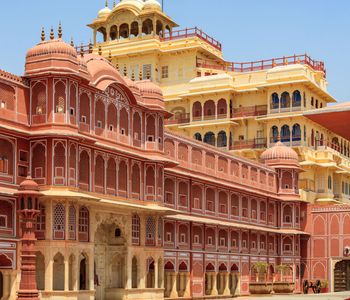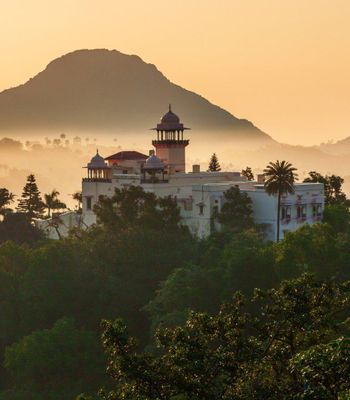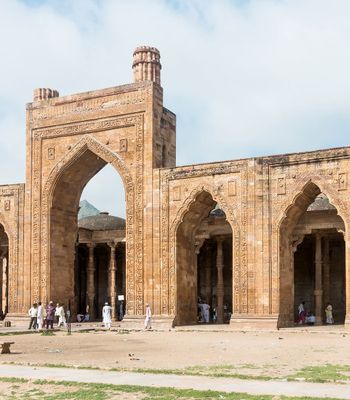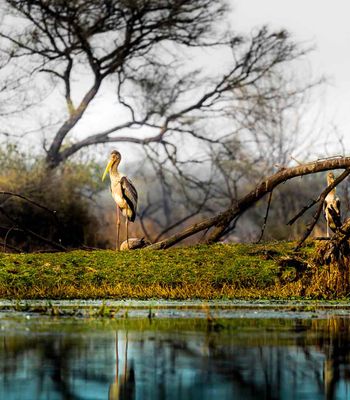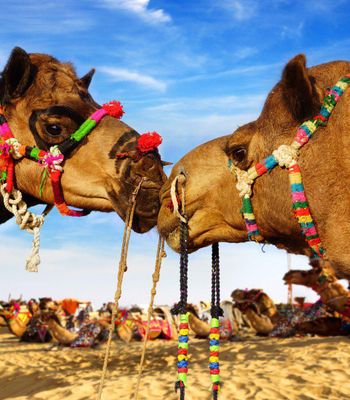
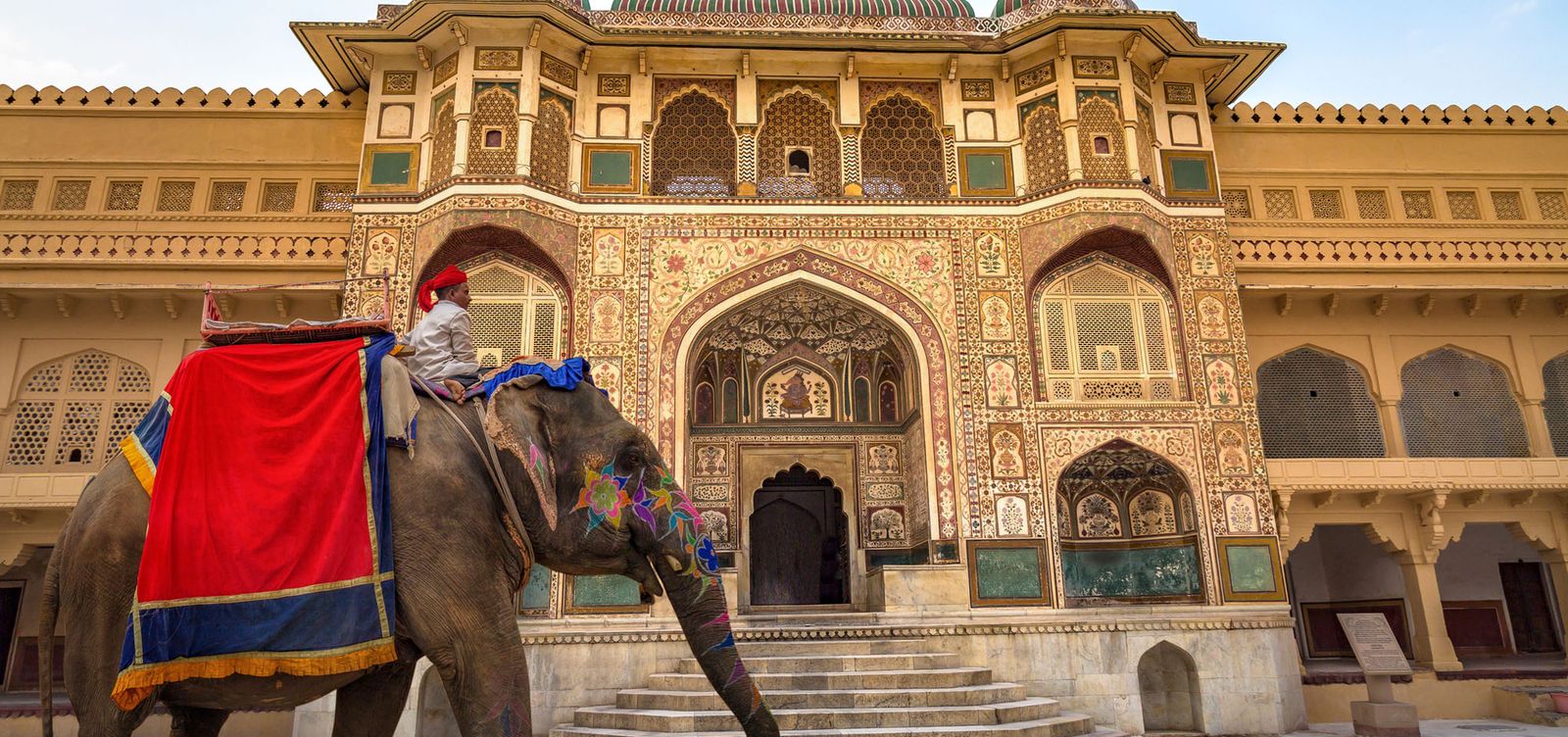
The first thing Jaipur teaches you is that pink isn't quite the word. The old city, painted for the visit of the Prince of Wales in 1876, sits somewhere between salmon and clay, and it shifts through the day — pale and washed-out at noon, then deepening to something warmer as the sun drops behind the Aravalli hills. Locals still call it the Pink City. It's more honest to call it the colour of a place that decided, long ago, exactly what it wanted to look like and never changed its mind.
Jaipur was planned. That sets it apart from most Indian cities, which grew like riverbeds, following the path of least resistance. This one was laid out in 1727 by Maharaja Sawai Jai Singh II on a strict grid, with wide avenues and rectangular blocks, according to ancient principles of design. He was an astronomer as much as a ruler, and it shows. There is logic under the chaos here, even when the chaos wins.
A Palace Built to Read the Sky
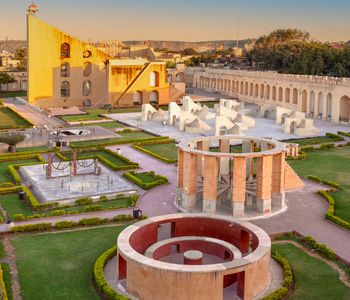
Nothing in Jaipur reveals its founder's mind like the Jantar Mantar. It looks, at first, like a sculpture park designed by someone with no interest in art — huge abstract forms in stone and marble, ramps and bowls and curved walls leaning toward the sun. Then you understand what you're looking at. These are instruments.
Jai Singh built them to measure the heavens. The largest is a sundial some twenty-seven metres tall, and you can stand and watch its shadow crawl across the marked stone. Long enough, and the whole place stops feeling like a curiosity and starts feeling like a machine that still runs. Nobody wound it. It simply keeps working.
The Wall of a Thousand Windows
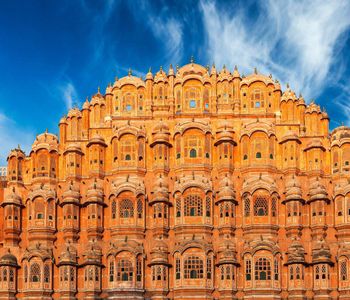
Everyone comes to photograph the Hawa Mahal, and for once the crowds are right. This five-storey façade of pink sandstone, honeycombed with nearly a thousand small latticed windows, was built so the women of the royal household could watch street processions without being seen. It's less a building than an elaborate screen — barely one room deep in places.
The trick most visitors miss is going inside. From the narrow passages behind those windows, you look down on the bazaar below through the same carved stone the queens once used, the breeze funnelling through the lattice exactly as intended. That's where the name comes from — the Palace of the Winds. It was engineered to stay cool in a city that hits punishing heat by April.
The Fort That Amber Never Surrendered
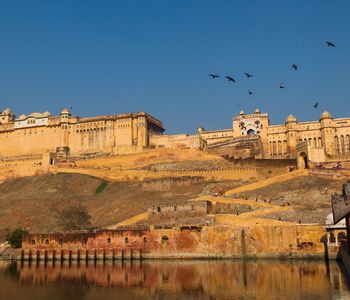
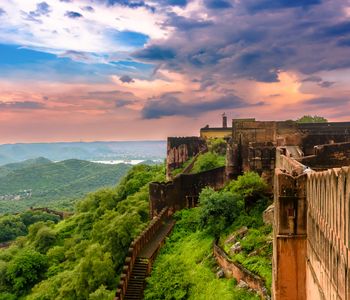
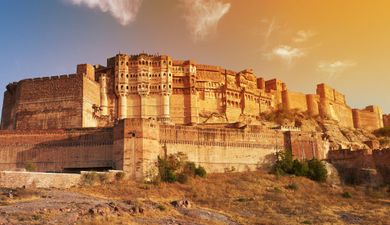
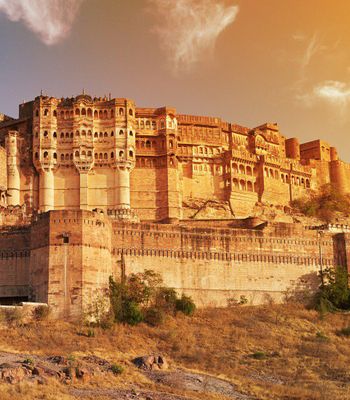
Up on a ridge above the old city, Amber Fort commands the approach the way it was meant to. You can walk up, ride a jeep, or take an elephant — though the elephants haul tourists up a steep stone ramp all day in the heat, and you shouldn't add to their load. However you arrive, the scale is the point — sandstone and marble ramparts stacked against the brown hills, with a walled lake spread below.
Inside, the Sheesh Mahal stops people cold. It's a hall of mirror-work so fine that, by legend, a single candle flame reflected across the tiny mirrored fragments could light the entire room. True or not, standing in it feels like being inside a broken constellation. The craftsmanship is centuries old and still catches every scrap of light that finds its way in.
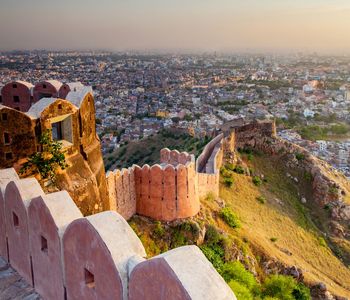
Follow the fortifications along The Ridge and you reach Nahargarh, higher still, where the whole city unfolds below in a grid of rose and grey. Come at sunset. The light does the work.
Where the Makers Keep Working
Step off the tourist circuit and into the bazaars, and the trade that built this city announces itself in the shopfronts. Johari Bazaar deals in gemstones and gold, its windows glinting with uncut stones weighed out on tiny brass scales. Over in Bapu Bazaar, the racks sag with block-printed cotton and flat leather jutti slippers stitched in bright thread. The air carries diesel, marigold, and frying jalebi in roughly equal parts.
Jaipur is a city of makers. Behind the shops, in cramped workshops, artisans still block-print cotton by hand, hammering carved wooden stamps onto fabric one press at a time, and cut precious stones the way their families have for generations. The blue-glazed pottery, the enamelled meenakari jewellery, the miniature paintings on old paper — these aren't souvenirs invented for tourists. They're what the city has always done. You're just late to the market.
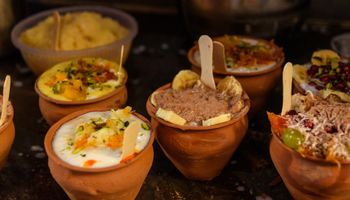
Sit down for lunch and Rajasthan arrives on a steel plate. Dal baati churma is the dish to find — hard wheat balls baked till golden, cracked open and drowned in ghee, served beside a lentil dal and a crumbly sweet of wheat and jaggery. It's food built for a desert, heavy and unapologetic. Wash it down with a lassi thick enough to stand a spoon in.
A City Learning to Be Two Things at Once
Modern Jaipur sprawls well beyond Jai Singh's neat grid, and the contrast is stark. Glass office blocks and shopping malls ring the old walled city, motorbikes swarm the roundabouts, and the traffic clots into knots that take twenty minutes to inch through. This is a working state capital of several million people, not a preserved museum. Don't expect it to behave like one.
What surprises you is how little friction there is between the two versions. The old city didn't get frozen for visitors — it just kept going, absorbing the malls and the motorbikes the way it once absorbed the demands of maharajas. Temples older than most nations still open at dawn onto lanes where couriers weave past cows. Nothing here waits for the rest to catch up.
Why the Rose City Holds You
Jaipur is often done in a rush, folded into a three-city dash across northern India with Delhi and Agra. That's a mistake. The famous sights reward a quick visit, but the city underneath rewards a slower one. It takes a day or two before the grid starts making sense, before you stop fighting the noise and start moving with it.
Come between October and March, when the desert cold makes the days bearable and the light stays golden. Skip the shopping list and let a bazaar pull you sideways into a workshop. End a day on the ramparts at Nahargarh, watching the rose city go grey as the sun drops behind the hills.
What stays with you isn't the palace or the fort. It's the strange coherence of the place — a whole city drawn to a plan by an astronomer, still standing inside the walls he ruled, still trading and printing and catching the wind three hundred years on. Give it time. Jaipur was built by a man who measured the sky, and it keeps its own careful order beneath all the noise.