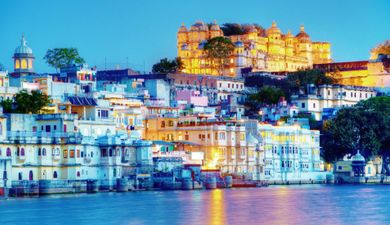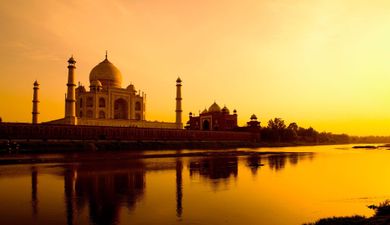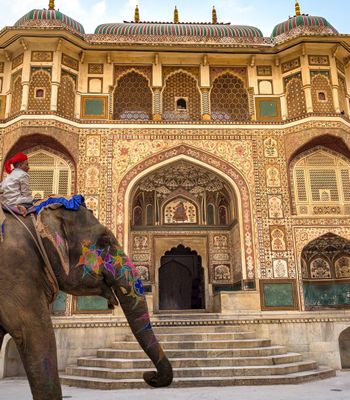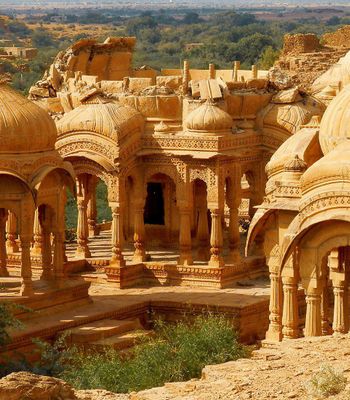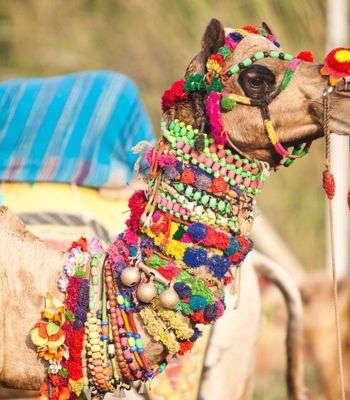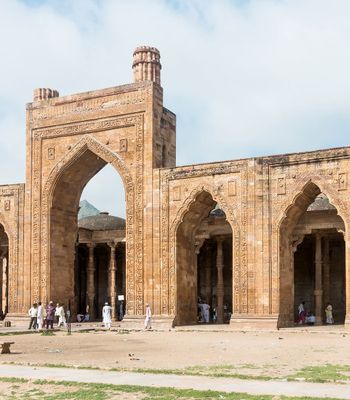
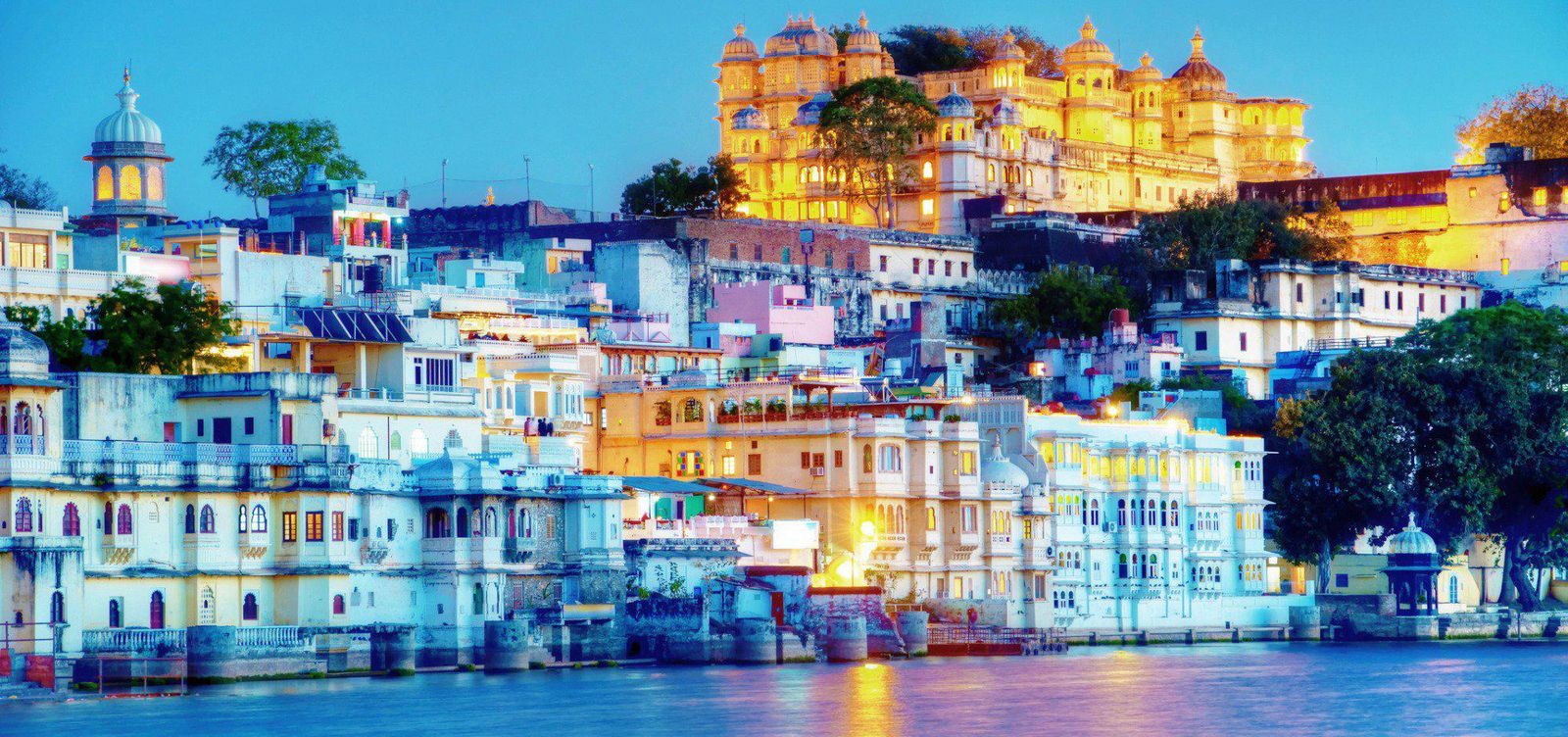
The first time you see Lake Pichola at dusk, you understand why the Mewar kings refused to leave. The water turns the color of hammered brass. White palaces seem to float on its surface like paper lanterns. Somewhere across the lake, a boatman cuts his engine and drifts, because even the people who live here stop to watch this happen. Udaipur doesn't announce itself the way other Rajasthani cities do. Jaipur shouts in pink. Jodhpur sprawls in blue. Jaisalmer rises from the desert like a mirage you half-expect to disappear. Udaipur is quieter, cooler, a city built around water in a state that mostly doesn't have any. That single fact shapes everything you'll experience here.
A City That Floats on Its Own Reflection
The old city wraps around Lake Pichola in a jumble of haveli rooftops, narrow lanes, and temple spires that seem to have been dropped into place rather than planned. Walk from Jagdish Temple down toward the ghats and you'll pass silversmiths hammering in doorways, women beating laundry on stone steps, cows that know exactly which lane belongs to them. Cars can't reach most of these streets. Rickshaws squeeze through, horns bleating, and you learn quickly to flatten yourself against ochre walls.
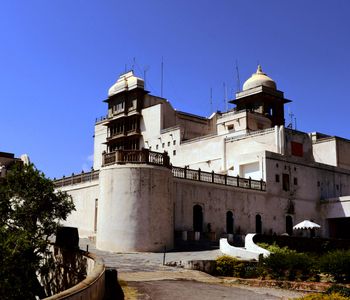
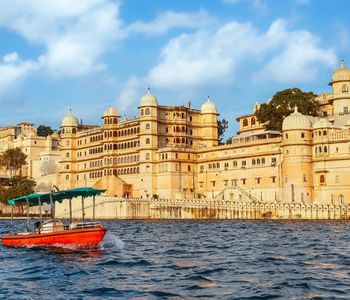
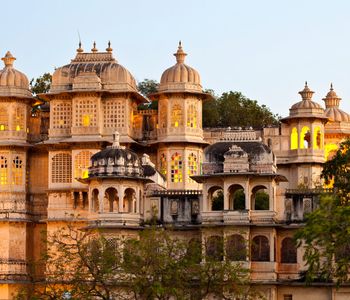
The City Palace dominates the eastern shore, and it's genuinely enormous, a stitched-together complex built over four centuries by successive Mewar rulers who kept adding wings, courtyards, and mirror-worked chambers as if no one ever thought to stop. You could spend a full morning inside and still miss rooms. The Peacock Courtyard, with its mosaic birds set into the walls, is the detail people remember.
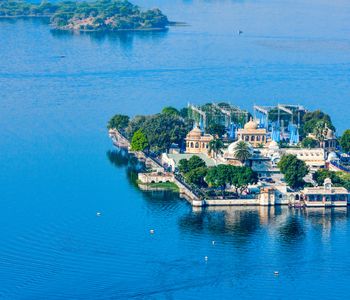
Out on the lake itself, the Lake Palace and Jag Mandir sit in a kind of theatrical suspension. The Lake Palace is now a hotel you probably can't afford, and that's fine. You see it better from a distance anyway, from a rooftop cafe with a cold Kingfisher and the call to prayer drifting from somewhere across the water.
The Hills Beyond the Water
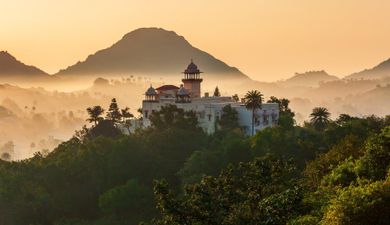
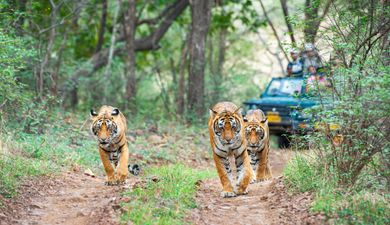
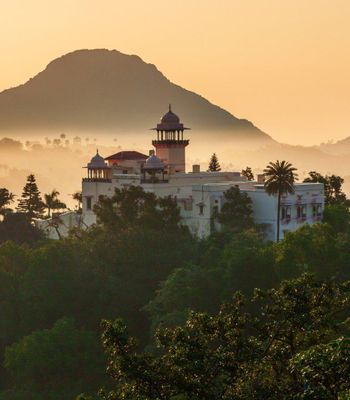
Most visitors forget Udaipur sits in a ring of the Aravalli Hills, among the oldest mountain ranges on earth, weathered down now to soft green humps that surround the city on every side. Drive twenty minutes in any direction and you're among them. Head southwest to the Monsoon Palace, perched on the highest ridge above the city, built as a place for the maharana to watch the rains come in. Come at sunset. The light over the lakes below goes through every shade of copper before flattening to violet. Leopards occasionally wander the slopes below, though you're unlikely to see one.
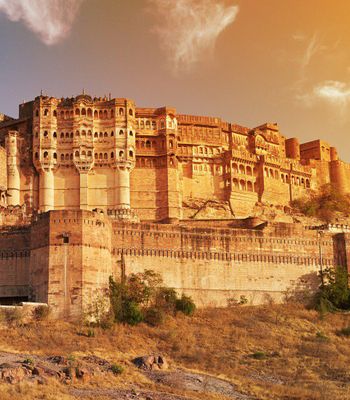
To the north, the marble Jain temples at Ranakpur sit about two hours away, and the drive takes you through villages where the rhythm of life has almost nothing to do with the tourists in town. Women in vermilion and saffron ghagras walk the shoulders of the road carrying water pots. Men in white turbans the size of small weather systems sit outside tea stalls and stare at your car without particular interest. Kumbhalgarh Fort, further along that same route, has the second-longest continuous wall in the world after the Great Wall of China. You can walk along sections of it. The views stretch into what feels like the entire subcontinent.
What the Streets Actually Smell Like
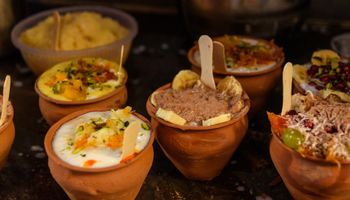
Rajasthani food in Udaipur leans heavier and spicier than you might expect, built for a climate where vegetables used to be scarce and dairy, ghee, and lentils did the work. Dal baati churma is the regional dish everyone mentions, and you should order it at least once. Hard wheat balls broken into ghee, dal poured over them, a crumbly sweet made from the same dough served alongside. It's peasant food elevated by centuries of repetition.
Gatte ki sabzi, chickpea flour dumplings in yogurt gravy, is the dish you'll actually crave a second time. Look for it at smaller family-run places in the Lal Ghat area. The touristy rooftop restaurants overlooking the lake do competent versions of everything, but the food improves significantly when you walk three streets inland.
On the streets, kachoris come stuffed with spiced lentils and fried in oil that clearly isn't changed as often as health inspectors in other countries might prefer. They're wonderful anyway. Pyaaz kachori, the onion version, is the one locals line up for at breakfast.
Where Time Slows on Purpose
Udaipur rewards people who don't try to see everything. The city works best when you surrender to its pace, which is noticeably slower than most of India. Boat rides on Pichola in the late afternoon, when the light starts to go. Long coffees at rooftop cafes where the wifi works and nobody rushes you.
An evening at Bagore ki Haveli, where traditional Rajasthani folk dancers perform in a lamplit courtyard, including women who balance eleven brass pots on their heads while dancing on broken glass. It sounds touristy. It is touristy. It's also remarkable.
The miniature painting schools in the old city still produce work in the Mewar style that developed here four hundred years ago. Watch an artist work on camel bone or silk with a brush made from three squirrel hairs, and you understand why a small painting takes weeks. Buy one. The good ones are cheaper than you'd guess.
When to Come and What to Expect
October through March is the season, which means every other foreign traveler has figured this out too. December mornings are genuinely cold. Pack a jacket. April and May turn brutal, with temperatures pushing 40 degrees Celsius and the lakes sometimes dropping to alarming levels if the previous monsoon was weak.
The monsoon itself, roughly July through September, brings the city back to life, refills the lakes, and transforms the Aravallis into something close to tropical green. Fewer crowds, more mosquitoes, occasionally cancelled boat rides. Worth it.
Udaipur gets called romantic so often the word has lost meaning. What it actually is, is specific. A lake city in a desert state. Palaces that reflect in water that shouldn't exist. A slower, softer Rajasthan that doesn't feel the need to prove anything to you. Go for three days. You'll want four.