There's a moment, usually just after sunrise, when you're standing at the edge of Pushkar Lake and the temple bells begin. The sound travels across the still water in every direction, and the Aravalli hills catch the light behind you. In that breath — somewhere between sleep and waking — you understand why people have been making the journey here for centuries.
Pushkar is small — almost deceptively so. Yet this desert town at the edge of Rajasthan's Thar carries a spiritual gravity that's hard to put into words until you're actually standing in it, feeling the warm sand-scented air settle against your skin.
A Crescent of Stone, Water, and Devotion
The town wraps around its crescent-shaped lake like cupped hands holding something sacred. More than fifty stone ghats descend to the water's edge, their steps worn smooth by centuries of bare feet. Throughout the day, you'll find locals performing prayers, floating flower offerings onto the glassy surface, and conducting rituals that have barely changed in a thousand years.
Stay until sunset. The lake turns copper and gold, mirroring the warm desert sky — the kind of scene that stops you mid-step and makes you forget the camera in your hand.
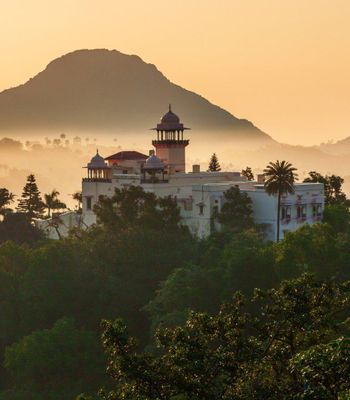
Pushkar is also home to one of the only temples in the world dedicated to Lord Brahma, the Hindu creator god. Its red spire punctuates the skyline from nearly every vantage point. But don't stop there — duck into the narrow lanes and you'll stumble upon hundreds of smaller shrines, each one thick with incense smoke and the sweet perfume of fresh marigolds piled high at doorsteps.
Where Every Alley Smells Like Spice and Cardamom
Step into the main bazaar and Rajasthani tradition collides with a distinctly free-spirited energy. Hand-embroidered fabrics ripple in the breeze from open storefronts. Silver jewelry catches the afternoon sun. Heaping mounds of turmeric, cumin, and dried chili sit in open sacks, their scent mingling with the leather of freshly tooled sandals.
Shopkeepers here are genuinely warm — not just selling, but storytelling, often happy to walk you through the generations of craftsmanship behind what they're offering.
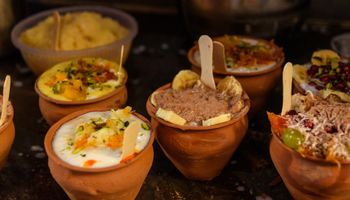
One thing worth knowing: Pushkar is entirely vegetarian. Every café and street stall honors the town's sacred status. That means you're in for proper dal baati churma — the crumbly, ghee-soaked Rajasthani classic — creamy lassis so thick you need a spoon, and chai served in clay cups on rooftop terraces where the lake shimmers below your feet.
The Camel Fair: Glorious, Beautiful Chaos
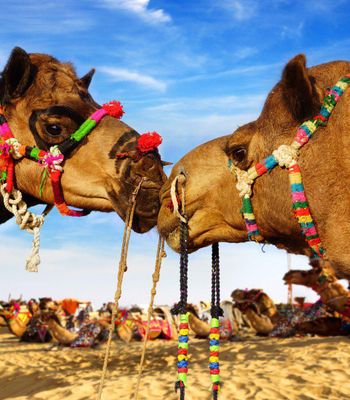
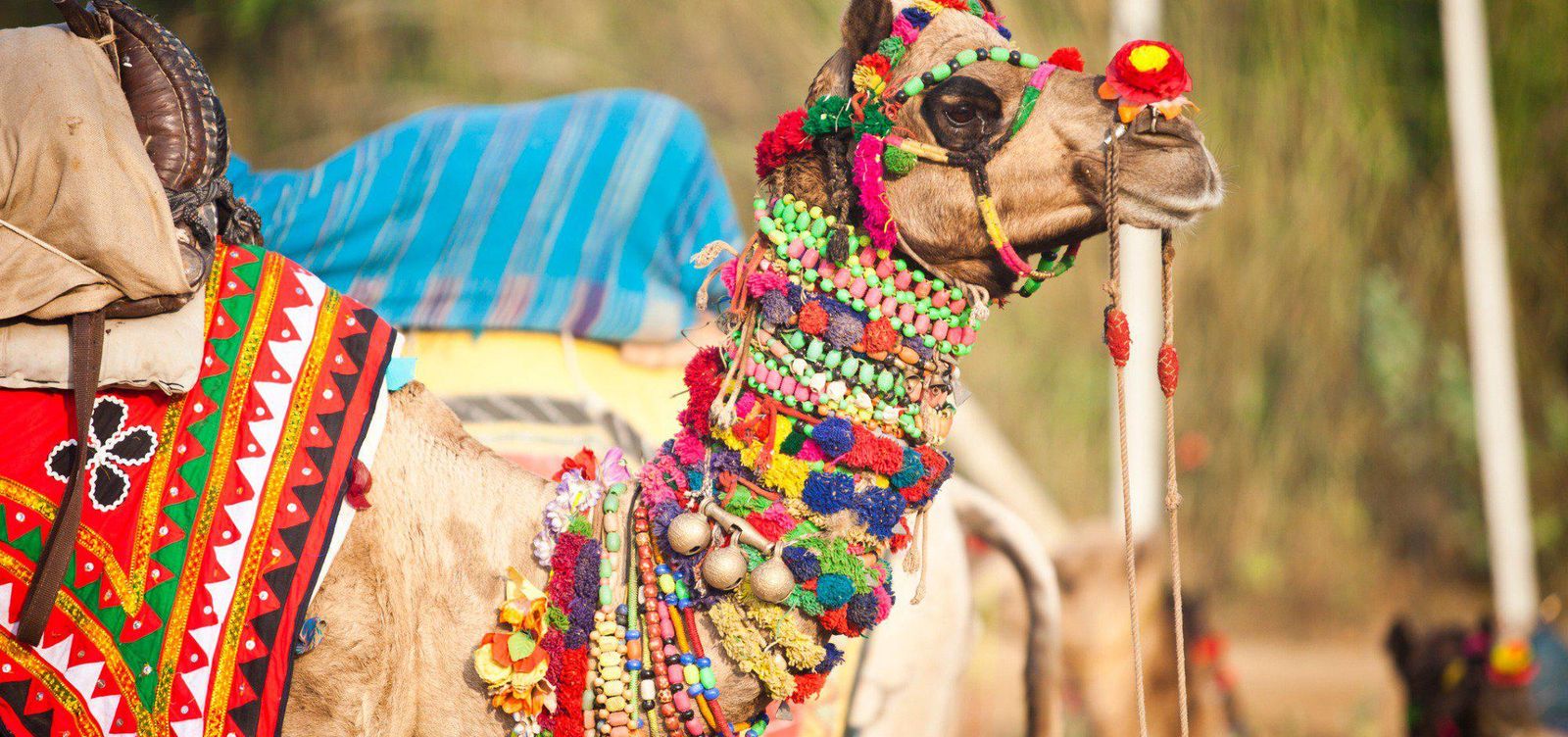
Thousands of camels adorned in embroidered blankets. Folk musicians competing with the clang of cattle bells. Hot air balloons drifting over dunes at first light. If you can time your visit for November, do it — the annual Pushkar Camel Fair transforms the desert on the town's edge into one of the most extraordinary spectacles in all of India.
Horses and cattle trade hands alongside camel races, traditional craft exhibitions, and performances that pull crowds from every corner of the country. The energy is electric and utterly unlike anything else on the subcontinent.
Fair warning: it fills up fast. Book accommodation months in advance if this is on your radar. Should crowds not be your thing, Pushkar's quieter months are genuinely lovely — and often even more rewarding, when the town exhales and returns to its contemplative rhythm.
Chase the Sunrise to Savitri Temple
Set your alarm. Drag yourself out of bed while the sky is still bruised purple. The pre-dawn trek up to Savitri Temple, perched on a hilltop above town, rewards every steep step with one of the most breathtaking panoramas in Rajasthan — Pushkar Lake glinting below like a dropped coin, the desert stretching endlessly beyond, and barely another soul around to break the silence.
A ropeway runs for those who'd rather ride up. Either way, get there before the heat does.
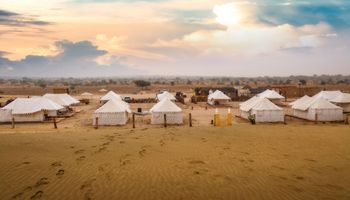
For something more immersive, camel and jeep safaris push further into the surrounding desert, where rural Rajasthani life unfolds at its own unhurried pace. Camping under open skies here — no city glow, no sound but the wind — is the kind of night that rewrites your sense of quiet.
When to Go & How to Get Here
October through March is the sweet spot — pleasant days, cool evenings, and the best conditions for exploring on foot. Summer temperatures regularly crack 40°C, which makes even a short walk to the nearest chai stall feel like an expedition.
Getting here is straightforward. Ajmer, just 15 kilometers away, is the nearest railway hub with connections across India. From there, a short bus or taxi ride winds through a scenic hill pass and drops you right into the Pushkar valley. Jaipur's airport sits about three hours away by road if you're flying in.
Give This Town Your Time
Pushkar rewards slowness. The best experiences here — a spontaneous conversation with a sadhu by the lake, watching a morning ritual unfold from a ghat step, catching the light just right as it gilds the temple spires — happen when you stop trying to tick things off a list.
Come with a loose plan. Let your feet wander. Leave the rest to the town.