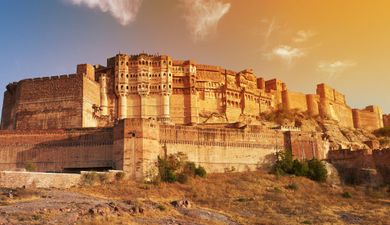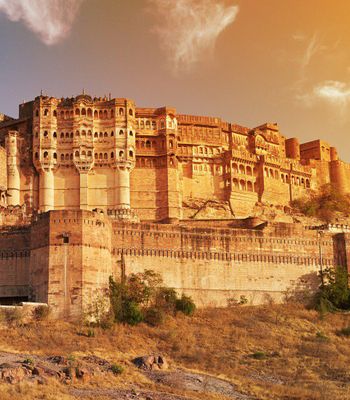
The desert sun hits Junagarh Fort's sandstone walls, and for a moment, the entire city turns to molten gold. Welcome to Bikaner — Rajasthan's best-kept secret, a fortified city where camel caravans still kick up dust along ancient trails and centuries-old havelis lean into each other like old friends swapping stories across narrow, chaotic lanes.
Founded in 1488 by Rao Bika, a Rathore prince hungry to build his own kingdom from the unforgiving Thar Desert, Bikaner doesn't try to compete with Jaipur's pink grandeur or Udaipur's lakeside romance. It doesn't need to. What it offers instead is something rarer: Rajasthan without the filter — raw, proud, and utterly alive.
A Desert That Glows
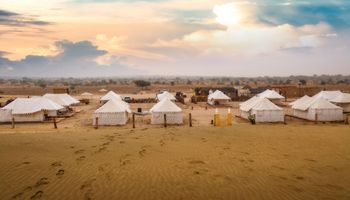
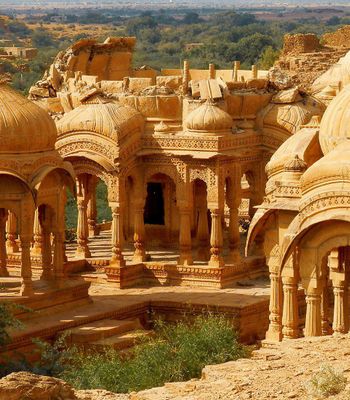
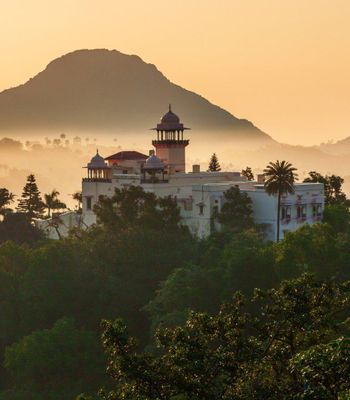
Golden-brown sand rolls out to the horizon in every direction, broken only by scrubby thorn bushes and the occasional emerald rectangle of irrigated farmland. Against this austere canvas, Bikaner's sandstone skyline practically hums with color and warmth.
Arrive early, when the first light spills across rooftops and turns every surface amber-pink. Or linger until dusk, when long shadows carve new shapes into ancient walls. Either way, your camera won't stop clicking. This is one of Rajasthan's most photogenic cities — and almost nobody knows it yet.
Junagarh Fort: The Unconquered Marvel
Most Rajasthani forts cling to hilltops. Junagarh defies the formula entirely — it rises from flat desert ground, ringed by a deep moat, a fortress so formidable that no invader ever breached its walls. Step through the Suraj Pol gate and centuries of history unfold around you.
Wander through a labyrinth of palaces, courtyards, and temples where every room reveals a different obsession — intricate Mughal-inspired jali screens that filter sunlight into lace-like patterns, mirrors arranged to multiply a single candle flame into a galaxy, painted ceilings so detailed you'll crane your neck until it aches. This isn't a museum. It's a masterclass in Rajput ambition, carved in stone and glass.
Give yourself at least two or three hours here. There's always one more hidden courtyard, one more jaw-dropping ceiling waiting around the next corner.
Lost in the Lanes of the Old City
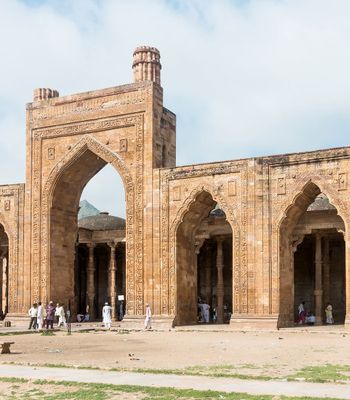
Outside the fort, Bikaner's old city practically begs you to get lost. Rampuria Haveli Street is the crown jewel — a procession of merchant mansions draped in impossibly detailed facades carved from red and gold sandstone. These havelis date to Bikaner's golden age, when the city thrived as a crucial stop on trade routes stretching from Central Asia to the Gujarati coast.
Today, the street pulses with a different kind of commerce. Shopkeepers stack pyramids of bangles and fabric bolts in doorways. Children on too-big bicycles weave between parked scooters. And from somewhere behind a carved archway, the warm, earthy scent of cumin and red chili drifts out of a kitchen that's probably been cooking the same recipes for a hundred years.
A City That Eats Like It Means It
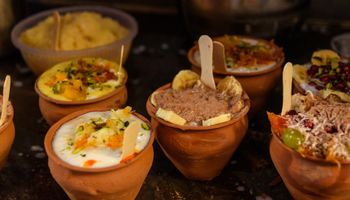
Bikaner's culinary reputation punches far above its weight. Across India, the city's name is practically synonymous with bhujia — those irresistibly crispy, spiced noodle-like snacks that crunch between your teeth and leave a slow chili burn on your lips.
But don't stop there. Sink your teeth into flaky, deep-fried kachori stuffed with lentils, or tear into dal baati churma — hard wheat rolls dipped in ghee-soaked lentil curry, finished with a crumble of sweet churma that somehow makes the whole dish sing. Hole-in-the-wall eateries here serve recipes guarded across generations, and every meal feels like being let in on a family secret. For food lovers, Bikaner isn't a side trip — it's a pilgrimage.
Where Camels Are Royalty
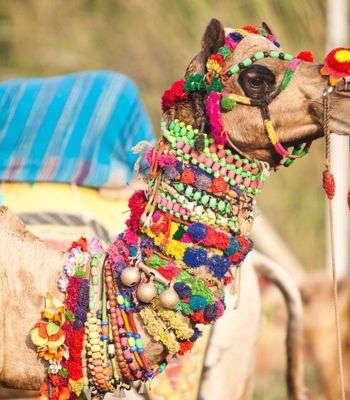
No animal is more woven into this city's soul than the camel. At the National Research Centre on Camel, just outside town, you'll find one of India's most wonderfully quirky attractions. Stroll among the herds, learn about breeding programs that have shaped desert life for centuries, and then — yes, really — sip a glass of frothy camel milk or cool down with a scoop of camel milk ice cream. It's surprisingly creamy, slightly salty, and absolutely worth the curiosity.
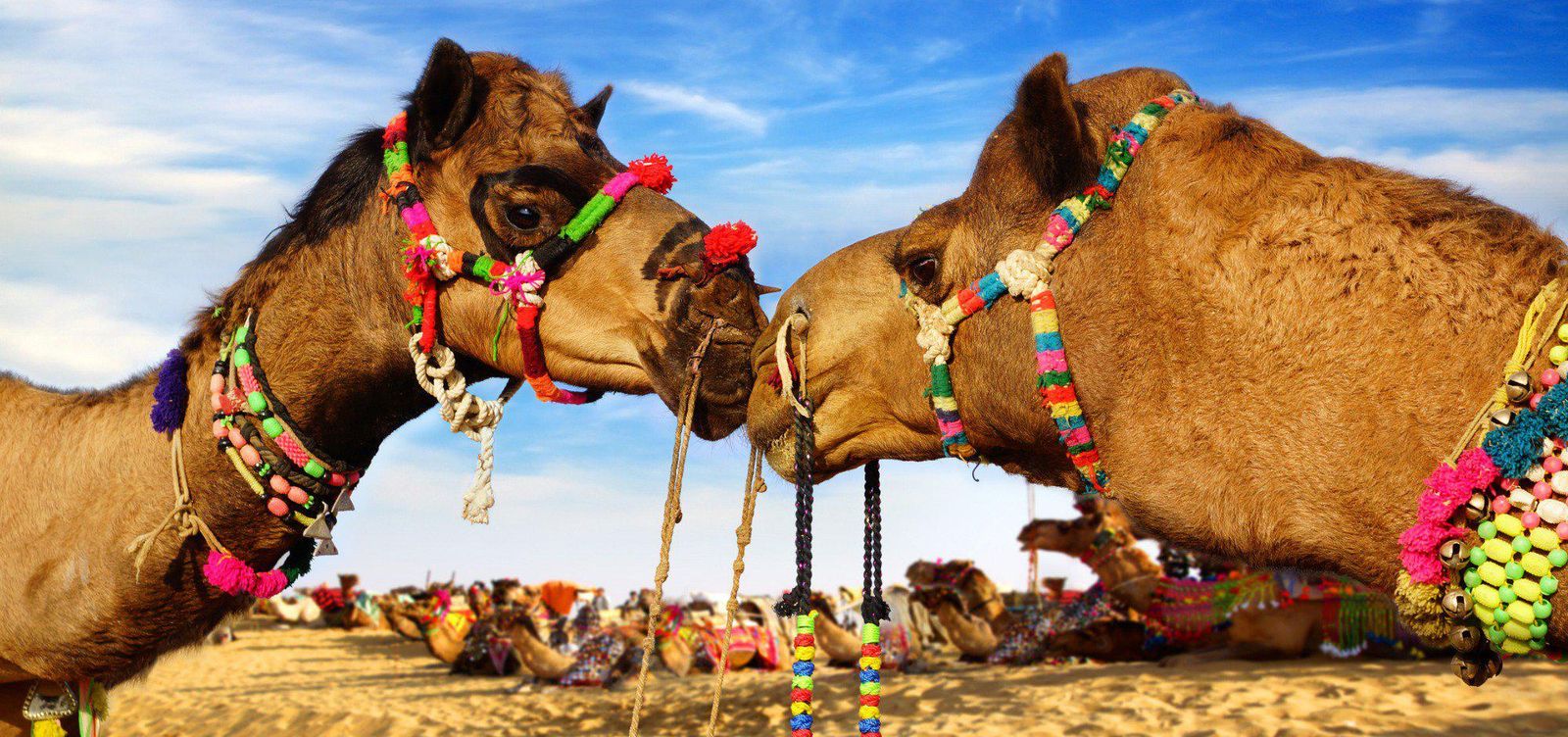
Time your visit for January and you'll land right in the middle of the Bikaner Camel Festival, a riotous celebration where camels race across the sand, folk musicians fill the air with haunting melodies, and vibrant processions wind through the streets in a kaleidoscope of turbans, embroidery, and desert pride.
The Temple Where Rats Are Sacred
Roughly 30 kilometers south of Bikaner, the Karni Mata Temple at Deshnoke offers an experience that defies every expectation you've ever had about a house of worship. Thousands of rats — considered holy reincarnations by devotees — scurry across marble floors, drink from silver bowls, and occasionally dart over your bare feet (shoes come off at the door).
It's startling, fascinating, and not for the squeamish. But love it or not, you won't forget it — and you'll have a story that stops dinner parties cold. Few cultural sites anywhere in Rajasthan spark as much debate, wonder, and sheer incredulity as this one.
When to Go (and When to Stay Away)
Between October and March, Bikaner hits its sweet spot — clear skies, comfortable temperatures, and evenings cool enough for long, aimless walks through the old quarters. This is also prime season for camel safaris into the surrounding desert and jeep excursions across the dunes.
Summer? Avoid it unless you enjoy 45°C heat that shimmers off the pavement and makes the air feel like an open oven. Seriously, even the camels look annoyed.
The Rajasthan You've Been Missing
Bikaner doesn't shout for attention. It doesn't need to. Travelers who make the journey here discover a city that moves at its own unhurried pace, fiercely proud of its desert roots and genuinely happy to share them with anyone curious enough to show up.
Striking sandstone architecture that glows like embers at sunset. A food scene that could rival cities ten times its size. Locals whose warmth makes you feel less like a tourist and more like a guest. This is Rajasthan at its most refreshingly, unapologetically real — and once you've tasted it, the more famous stops on the tourist trail may never feel quite the same.