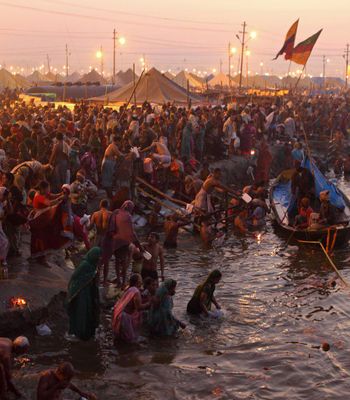
The dead arrive by bamboo stretcher, shoulder-borne through lanes barely wider than a water buffalo. They pass chai stalls and cricket games, stray dogs and selling women, until they reach the burning ghats where the fires have been going for what Hindus will tell you is three thousand years without interruption. This is the one detail that makes Varanasi irreducible, the thing no other city on earth can claim. Cremation as continuous public ceremony. Death not hidden but processed out in the open, on stone steps, beside a river where pilgrims are simultaneously bathing, laughing, washing laundry, and praying their way toward salvation.
You don't ease into Varanasi. The city hits you like a dropped pan. The lanes of the old town, the gallis, coil into each other without logic, and within ten minutes of arrival you will be lost, accosted by a sadhu requesting donations, nearly flattened by a motorbike, and offered silk, bhang lassi, a boat ride at sunrise, and a tour of a temple you can't enter anyway because you're not Hindu. Everything happens at once. The sensory overload is the point.
A River That Runs the Wrong Way
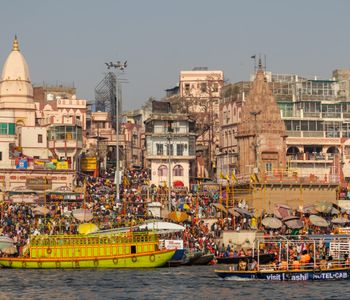
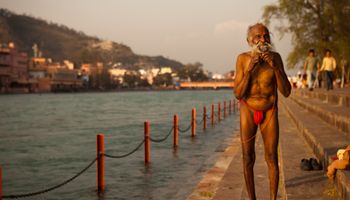
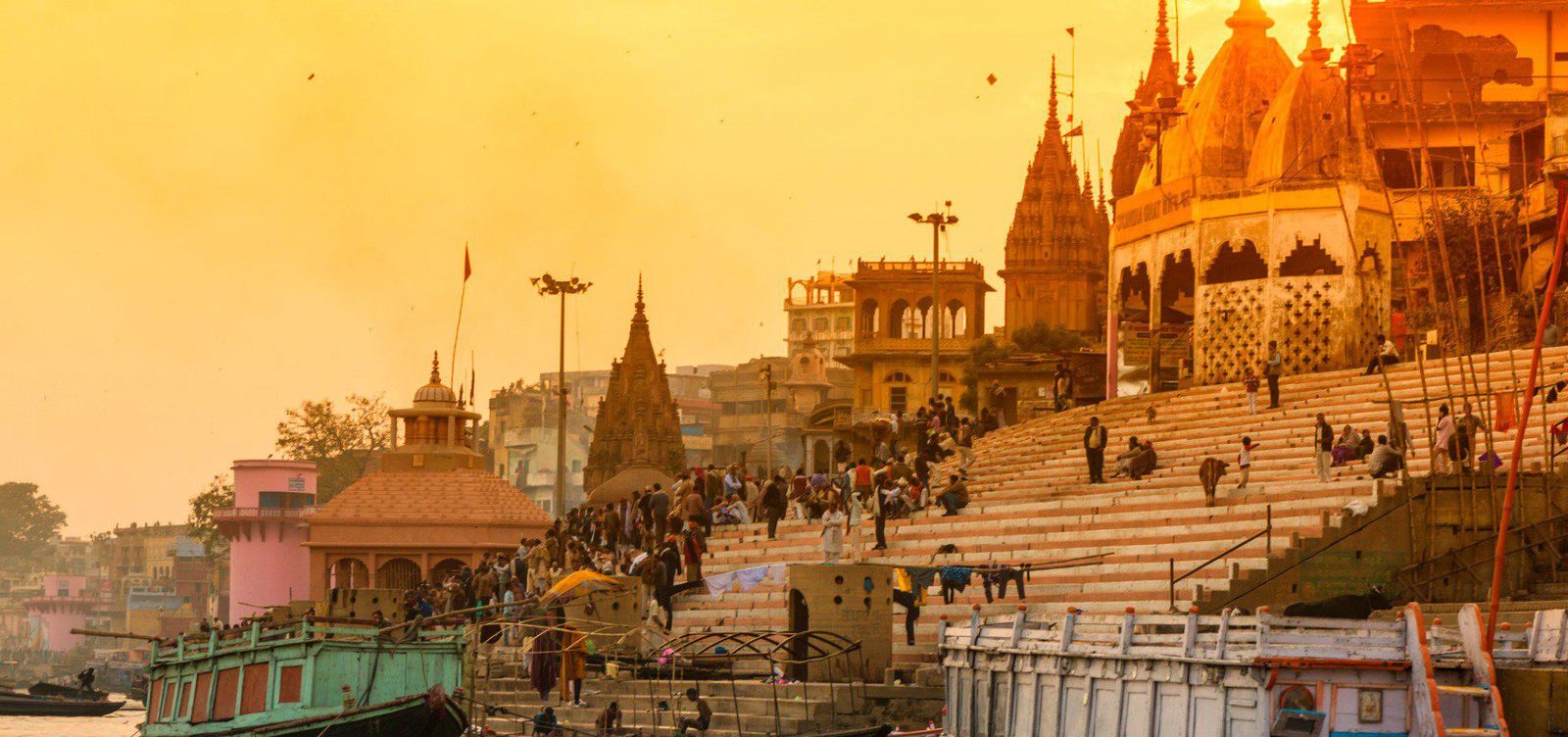
The Ganges here makes a strange gesture. It bends northward, briefly, reversing its usual southeast flow, and Hindus consider this geographic quirk sacred. The ghats, roughly eighty-eight stone stairways, stretch for several kilometers along this curve, and walking their length from Assi in the south to Raj Ghat in the north takes the better part of a morning if you stop to watch, which you will.
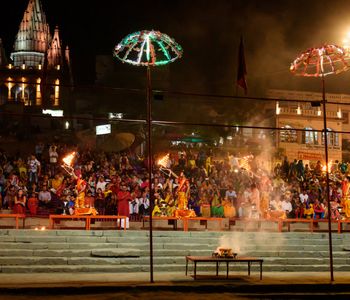
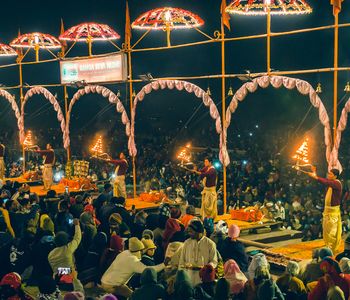
At Dashashwamedh Ghat each evening, priests in saffron robes perform the Ganga Aarti, a choreographed ritual of fire, conch shells, and bells. Hundreds gather on the steps and in boats drifting just offshore. It's theatrical in the truest sense, unapologetically so, and whether you find it stirring or overcooked depends on your temperament. I found it both, at different moments, sometimes in the same hour.
Then there is Manikarnika. The main cremation ghat. You should see it, but you should see it with appropriate restraint. Photography is forbidden, guides who insist otherwise are running scams, and the "donation for the wood" pitch from men claiming to be from the hospice is a known hustle. Stand at a distance. Watch. Think about what you're watching. Leave when you've seen enough.
Behind the River, the Labyrinth
Back from the water, Varanasi folds in on itself. The gallis are medieval in scale and logic, stone-paved, shadowed, scented with cow dung and incense and frying samosas and, occasionally, with something less pleasant that you learn to walk past quickly. Navigation requires surrender. Google Maps will fail you. Ask, and someone will point, and you will still be wrong, and eventually you will find the place you weren't looking for, which is often better than the place you were.
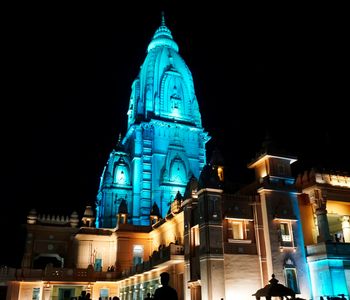
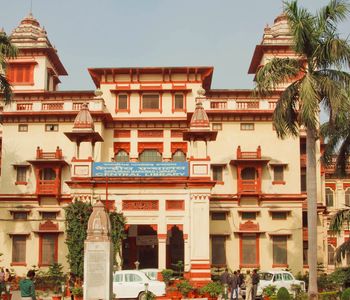
The Vishwanath Temple sits at the heart of this labyrinth, one of the holiest sites in Hinduism, rebuilt several times after various demolitions, most recently expanded into a corridor that connects it directly to the river. Non-Hindus cannot enter the main sanctum. You can, however, stand in the approach and feel the density of belief around you, which is its own kind of experience.
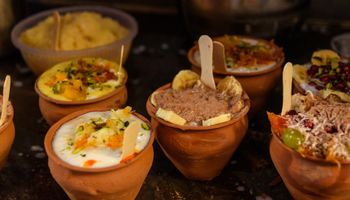
Around the temple, the Vishwanath Gali is a tunnel of shops selling rudraksha beads, brass lamps, Banarasi silk, and sweets stacked in glass cases. Try the malaiyo in winter, a frothy saffron-tinged milk foam that exists only in the cold months and dissolves on the tongue like a cloud someone forgot. Try the kachori-sabzi for breakfast at any stall that has a queue. Queues don't lie.
Silk, Sitars, and Fingers That Remember
Varanasi has been weaving Banarasi silk saris for centuries, and the craft persists in the Muslim quarters north of the old town, where families still work pit looms by hand. A proper sari can take weeks or months. The zari threadwork, gold or silver, is done by men whose fingers move with the unthinking speed of long practice. You can visit a working loom if you ask around and ignore the touts who will attach themselves to you within minutes of expressing interest. Go with a recommendation. Pay honestly. Don't bargain as if the person in front of you has nothing to lose.
The city is also a seat of classical Indian music. Ravi Shankar came from here. So did Bismillah Khan, the shehnai maestro, whose music still plays from speakers near Dashashwamedh on certain evenings. If you can find a concert at one of the small music schools in the lanes, go. If you can't, buy a recording and listen to it in the morning on a rooftop overlooking the river. This is not a bad substitute.
The One Boat Ride Worth the Cliché
Every guidebook tells you to take a boat at sunrise. Every guidebook is right. Hire a rowboat, not a motorized one, and push off from Assi Ghat around five-thirty. The river is still. The light comes up slowly, pink then gold, and the city wakes in stages along the bank. Bathers descend the steps. Priests begin their rituals. The smoke from Manikarnika rises thin against the brightening sky. You drift. You say nothing for an hour. This is the closest Varanasi comes to quiet, and it lasts about as long as the sunrise itself.
Sarnath, Because You'll Need the Pause
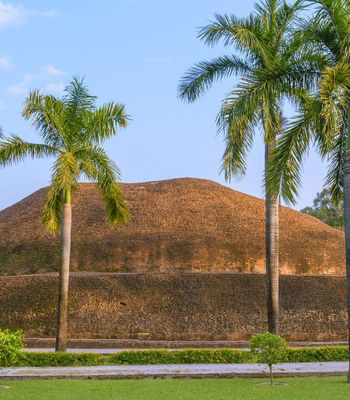
Ten kilometers outside the city, Sarnath is where the Buddha gave his first sermon after attaining enlightenment. The ruins of the old monastery, the Dhamek Stupa rising in solid brick, the deer park, the small museum with the Ashoka lion capital that became India's national emblem, all of it feels like a deliberate counterweight to Varanasi itself. Calm where the city is chaos. Empty where the city is crammed. Spend a half-day there. You'll return to the gallis better prepared to take them on again.
Who Should Come, and When
Varanasi is not a relaxing holiday. It's a place to think, to be rattled, to confront things most travel itineraries are designed to avoid. Some visitors leave elated. Others leave shaken. Almost no one leaves unchanged.
Come between October and March when the heat is tolerable and the light is clear. Avoid the summer, when the temperature climbs past forty-five degrees and the stones of the ghats burn through sandals. During Dev Deepawali in November, the ghats are lit with a million earthen lamps, and the river turns into something out of a myth, though the crowds are punishing.
Stay in the old city if you want to be inside it, near Assi Ghat if you want a slightly gentler entry. Either way, walk early, rest in the afternoons, and return to the river at dusk. That's the rhythm. That's how Varanasi gives itself up, slowly, and only to those willing to stop trying to understand it and just watch.