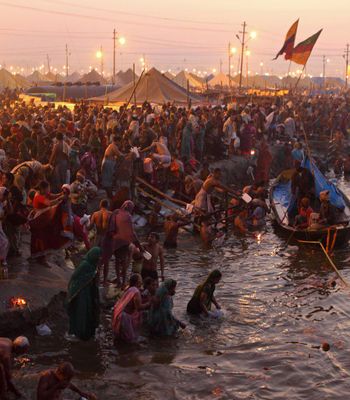
There's a moment, just before sunrise on the banks of the Sarayu River, when the entire city of Ayodhya seems to hold its breath. The water catches the first pale light. A temple bell rings somewhere in the haze. Then — all at once — the ghats come alive with chanting, the splash of ritual offerings, and the glow of oil lamps flickering against the dawn. This isn't a performance for tourists. This is how Ayodhya has woken up for thousands of years.
Perched on the Sarayu's southern bank in Uttar Pradesh, Ayodhya is believed to be the birthplace of Lord Ram — and that single, extraordinary claim shapes everything about this city. Millions of pilgrims arrive each year. But you don't have to be devout to feel the pull. You just have to be willing to listen.
A River That Sets the Rhythm
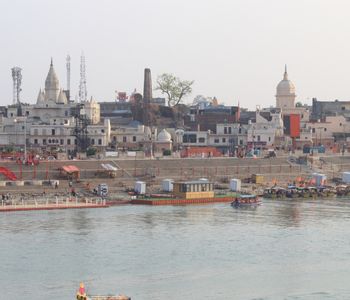
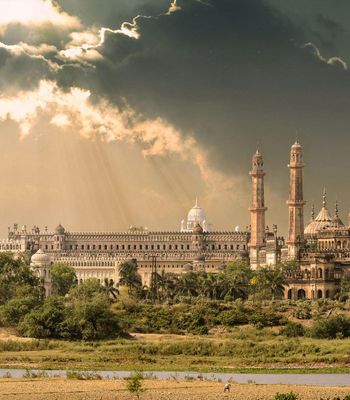
The Sarayu doesn't just flow through Ayodhya — it defines it. The flat expanse of the Gangetic plain stretches wide in every direction, leaving nothing between you and a sky so open it feels theatrical. Temple spires punctuate the horizon like exclamation marks against all that blue.
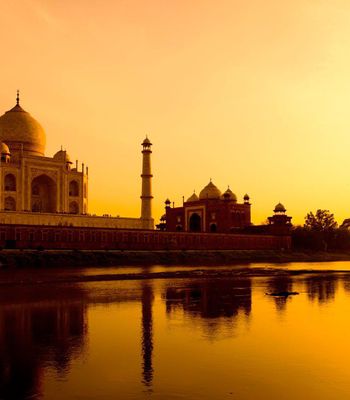
Come at dusk. Stand on one of the stone ghats as the sun drops low, flooding the river with amber, rose, and liquid gold. Watch as rows of tiny earthen lamps are set adrift on the current. It's the kind of scene that makes you forget your phone exists — at least for a few perfect minutes.
Streets That Feel Like Living Scripture
Step off the riverfront and into Ayodhya's narrow lanes, and the city wraps itself around you. The air is thick with the honeyed scent of marigold garlands and curling incense smoke. Flower vendors squat beside towering baskets of orange and yellow blooms. A chai wallah clanks metal cups at a stall no wider than a doorway, and somehow, the tea he hands you is the best you've had in weeks.
What strikes you most is how effortlessly the sacred folds into the ordinary. A shopkeeper arranging devotional trinkets shares a wall with a shrine that's stood for centuries. Temple bells ring so constantly they become a kind of background music — Ayodhya's own soundtrack, playing on an endless loop.
The Temples That Draw the World
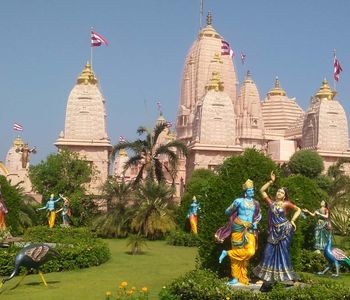
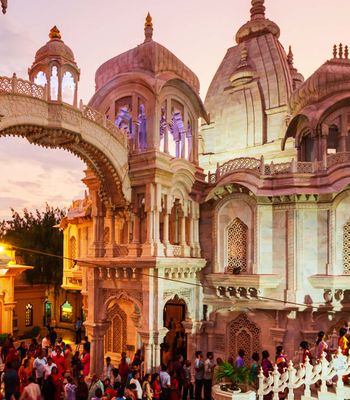
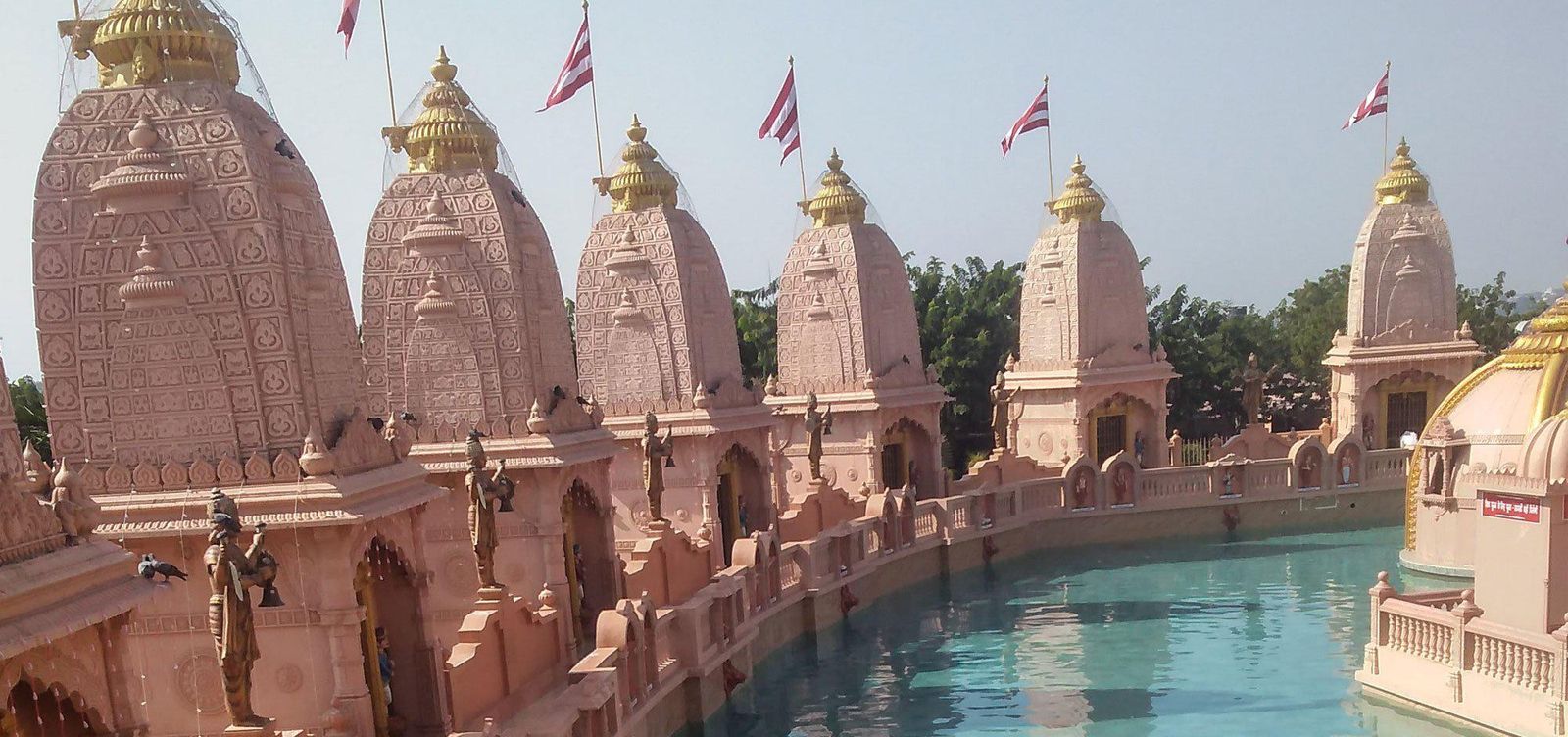
The Ram Janmabhoomi complex and its newly constructed Ram Mandir are, without question, the heart of any visit. Built on the site traditionally believed to be Lord Ram's birthplace, this grand temple has become one of the most significant religious monuments in modern India. The scale of it, the devotion etched into every carved detail — it demands a pause, whether you're a believer or simply an admirer of human ambition.
But Ayodhya's spiritual landscape stretches far beyond a single landmark. Don't miss these:
- Hanuman Garhi — Climb the hilltop steps to this fortress-like temple dedicated to Lord Hanuman, then catch your breath as a panoramic view of the entire city unfolds before you.
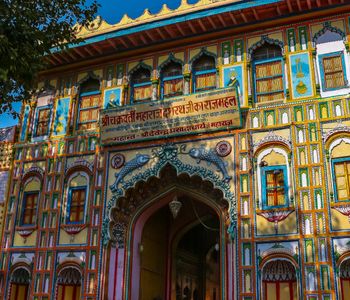
- Kanak Bhawan — Step inside and let the ornate interiors dazzle you; every surface seems to shimmer with devotion and craftsmanship.
- Nageshwarnath Temple — One of Ayodhya's oldest places of worship, carrying a quiet gravity that newer temples can't replicate.
- Guptar Ghat — A serene riverside spot where the crowds thin out and the only sound is the soft lap of water against ancient stone. Perfect for a moment of stillness.
On the Water, a Whole New City Appears
Here's a tip many visitors miss: rent a boat. Glide along the Sarayu at dawn or dusk, and Ayodhya reveals a face you simply cannot see on foot. From the water, the ghats unroll in a long, luminous ribbon — temples stacked behind temples, oil lamps trembling in the breeze, silhouettes of devotees bending toward the river in prayer.
Time your visit during Diwali or Ram Navami, and this already mesmerizing scene explodes into something unforgettable. Thousands upon thousands of lights blaze along the riverfront. The air hums with devotional songs and the crackle of celebration. The whole city feels like it's glowing from the inside out.
Flavors Worth Lingering For
Don't rush through Ayodhya on an empty stomach — you'd be doing yourself a disservice. Street food stalls dish out pillowy puri sabzi with generous splashes of spiced curry, syrup-soaked jalebi still hot and crackling from the kadhai, and creamy kheer that tastes like someone's grandmother made it just for you. The food here isn't fancy. It's honest, warm, and deeply satisfying — much like the city itself.
Ayodhya is also undergoing a remarkable transformation, with improved roads, enhanced visitor infrastructure, and new cultural spaces making the city more accessible and welcoming than ever before.
When to Go (and Why It Matters)
Visit between October and March. The Gangetic plain is unforgiving in summer — think searing heat that pins you to the shade by noon. But in the cooler months, the weather softens, the light turns golden, and the festival calendar brings Ayodhya to its most magnificent, electric life.
A City That Asks You to Slow Down
Whether you arrive as a pilgrim tracing the footsteps of Lord Ram, a history enthusiast hungry for layers of civilizational memory, or simply a wanderer drawn to places that hum with something ancient and unnameable — Ayodhya meets you where you are.
It doesn't shout. It doesn't rush. It simply asks you to slow your pace, open your senses, and connect with something far older, and far larger, than yourself. And somewhere between the temple bells and the river's quiet insistence, you will.