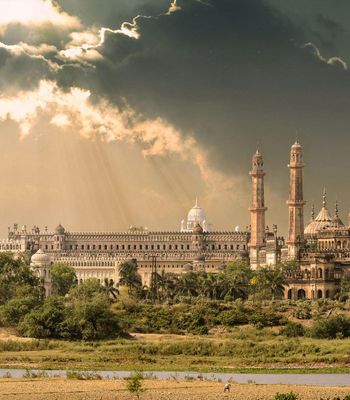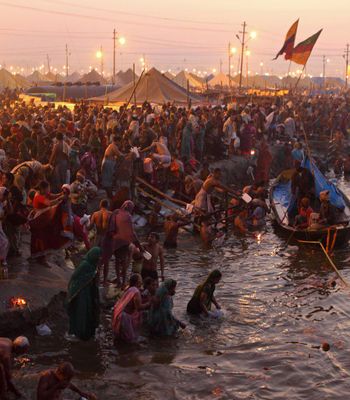
The world changed under a tree — and then it changed again right here. Sarnath, a quiet pocket of green just 10 kilometers northeast of Varanasi in Uttar Pradesh, is where Lord Buddha chose to share what he'd discovered. After attaining enlightenment, he walked to this very ground and delivered his first sermon, setting in motion a philosophy that would ripple across continents for over two thousand years. Today, while Varanasi roars with temple bells and motorbike horns, Sarnath hums at a different frequency — one of stillness, reflection, and deep, unhurried time.
A Landscape That Lets You Breathe
Leave behind the labyrinthine alleys and press of bodies that define Varanasi, and within minutes, the world opens up. Sarnath greets you with wide, manicured lawns and the soft rustle of flowering trees lining stone walkways between ancient ruins.
The Gangetic plains stretch flat and unassuming in every direction, but there's something about the light here — especially from October through March, when the air turns crisp and cool — that makes you want to slow your pace to a wander. Summer is a different story: temperatures claw past 40°C, and the smart money is on arriving at dawn, when the dew still clings to the grass and the stones hold the night's coolness.
The Stupa That Marks Where Everything Began
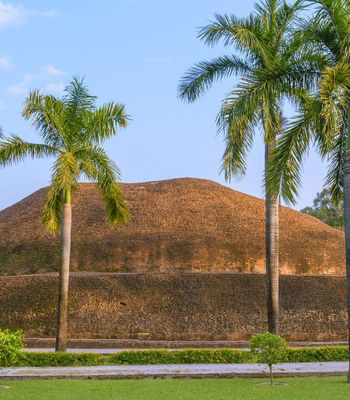
You'll feel it before you fully see it — the Dhamek Stupa rising over 40 meters into the pale sky, a massive cylinder of brick and stone that seems to anchor the entire landscape around it. Originally built during the Mauryan period and expanded over centuries, this is the spot. Right here, Buddha delivered the Dhammacakkappavattana Sutta, his first discourse, to five ascetics who became his earliest followers.
Press your hand against the lower stonework and trace the intricate geometric and floral carvings that have somehow survived centuries of monsoons, invasions, and neglect. Each groove feels like a whispered conversation with artisans who worked these surfaces long before most modern nations existed. Nearby, the broken foundations of the Dharmarajika Stupa and scattered monastery ruins sketch the outline of a vast Buddhist complex that once pulsed with monastic life.
A Museum That Holds a Nation's Symbol
Behind the unassuming facade of the Sarnath Archaeological Museum — established in 1910 and one of India's oldest — sits an artifact so significant it became the emblem of an entire country. The Lion Capital of Ashoka, four roaring lions mounted back-to-back atop a polished sandstone column, commands the central hall with an authority that photographs simply can't convey.
Wander deeper into the galleries and you'll encounter exquisite Buddhist sculptures, weathered inscriptions, and sacred relics spanning from the 3rd century BCE to the 12th century CE. Each room layers artistic evolution upon spiritual devotion, charting how faith and craftsmanship intertwined across nearly fifteen hundred years in this single corner of northern India.
A World Tour in One Square Mile
Here's what catches most first-time visitors off guard: Sarnath doesn't just belong to India. It belongs to the world. The Mulagandhakuti Vihara, a modern temple raised by the Mahabodhi Society in the early 20th century, glows inside with luminous frescoes painted by Japanese artist Kosetsu Nosu — scenes from Buddha's life rendered in colors so vivid they seem lit from within.
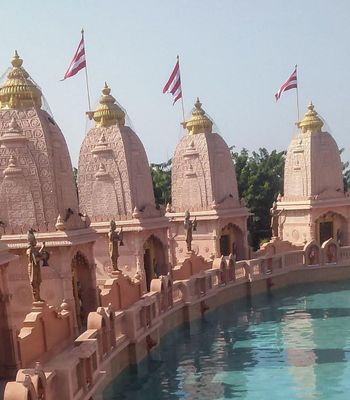
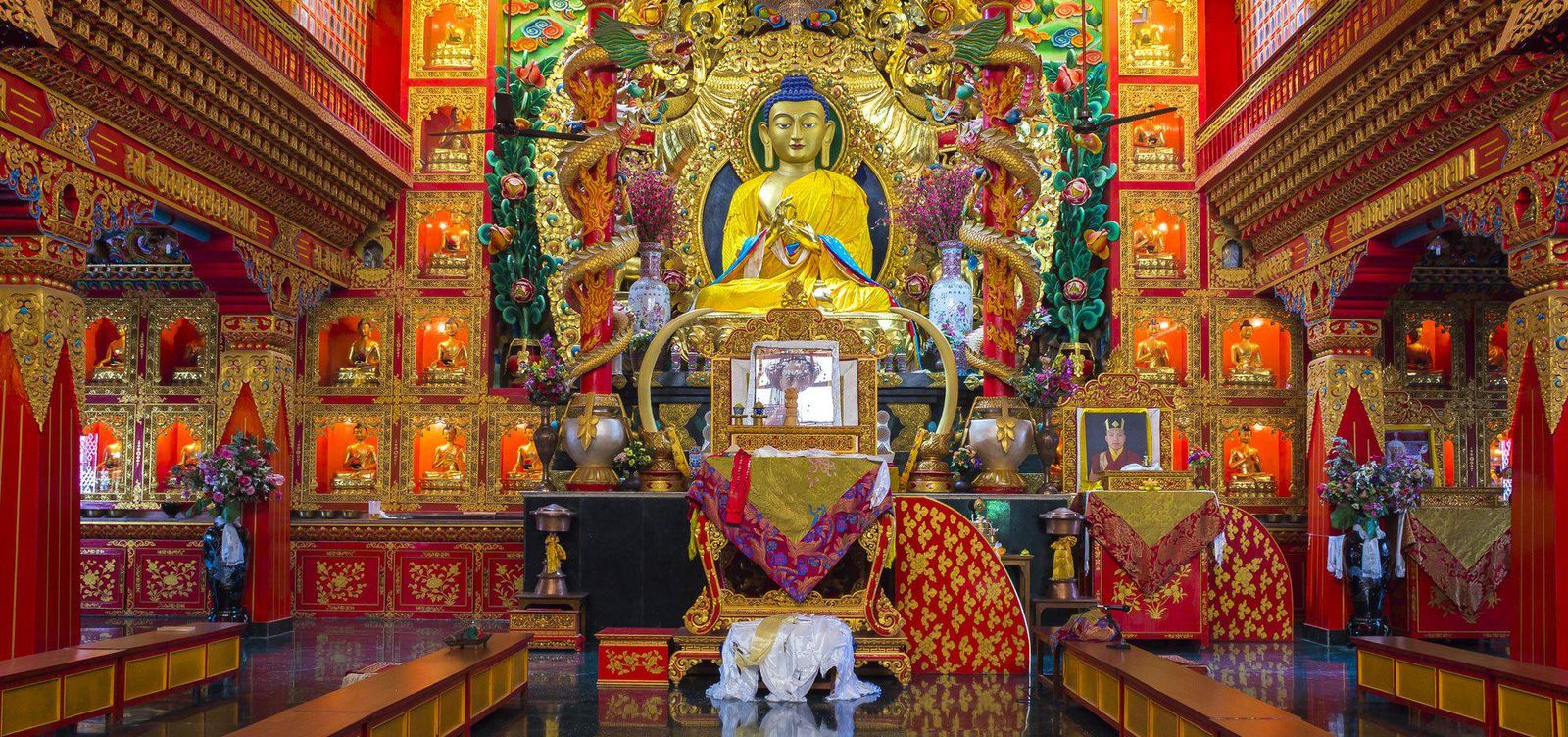
Step outside, and within minutes you can move between monasteries and temples representing Buddhist traditions from Thailand, Japan, China, Tibet, and Myanmar. Gilded Thai spires give way to Tibetan prayer wheels spinning in the breeze, then to the clean geometric lines of a Japanese meditation hall. Few places in India compress this much architectural and spiritual diversity into such a walkable space.
Getting There and Making the Most of Your Visit
Most travelers base themselves in Varanasi and hop an auto-rickshaw, taxi, or local bus for the short ride northeast — connections run frequently throughout the day. Sarnath's main sites cluster in a compact area, so half a day covers the essentials comfortably.
But here's the insider move: stay past the tour-bus rush. Late afternoon is when Sarnath truly reveals itself. Golden light spills across the ancient brickwork, shadows lengthen over the lawns, and the crowds melt away until it's just you and the sound of birds settling into the trees. That's when the weight of this place really lands.
Small Pleasures at the Gate
Near the entrance, a row of vendors spreads out Buddhist literature, sandalwood prayer beads, and small brass souvenirs on cloth-covered tables. Their approach is refreshingly gentle — a nod, a smile, no pressure. Nearby, a handful of modest eateries serve simple vegetarian meals: steaming dal, fresh roti, and milky chai served in clay cups that leave an earthy taste on your lips.
Why Sarnath Stays With You
Something shifts when you spend time on ground this old, this significant. It doesn't demand that you be Buddhist, or religious at all. The ancient ruins, the peaceful gardens, the knowledge that words spoken on this soil reshaped the spiritual landscape of half the world — all of it conspires to quiet the noise inside your head.
Whether you've come as a devoted pilgrim, a student of Indian history, or a curious traveler seeking a meaningful detour from the sensory overload of Varanasi, Sarnath gives back more than you expect. You arrive to see ruins. You leave carrying something harder to name — a stillness, a sense of purpose, a feeling that some places hold their meaning not in spite of time, but because of it.