The water changes color right before your eyes. One current runs muddy and pale, the other a deep greenish hue, and they swirl together in a slow, ancient embrace that has drawn pilgrims to this spot for millennia. This is Prayagraj — formerly Allahabad — where the Ganges and Yamuna rivers merge and a third, the mythical Saraswati, is believed to flow unseen beneath the surface. Few cities in India carry this kind of spiritual gravity, this sense that you're standing at a place where the earth itself holds its breath.
Where Sacred Rivers Collide
The Triveni Sangam isn't just a geographical landmark — it's the beating heart of Prayagraj. Hire a wooden boat at dawn, when mist still clings to the water, and let your boatman row you out to where the two visible rivers meet. The contrast is startling, almost painterly — twin currents braiding together as temple bells echo faintly from the ghats behind you.
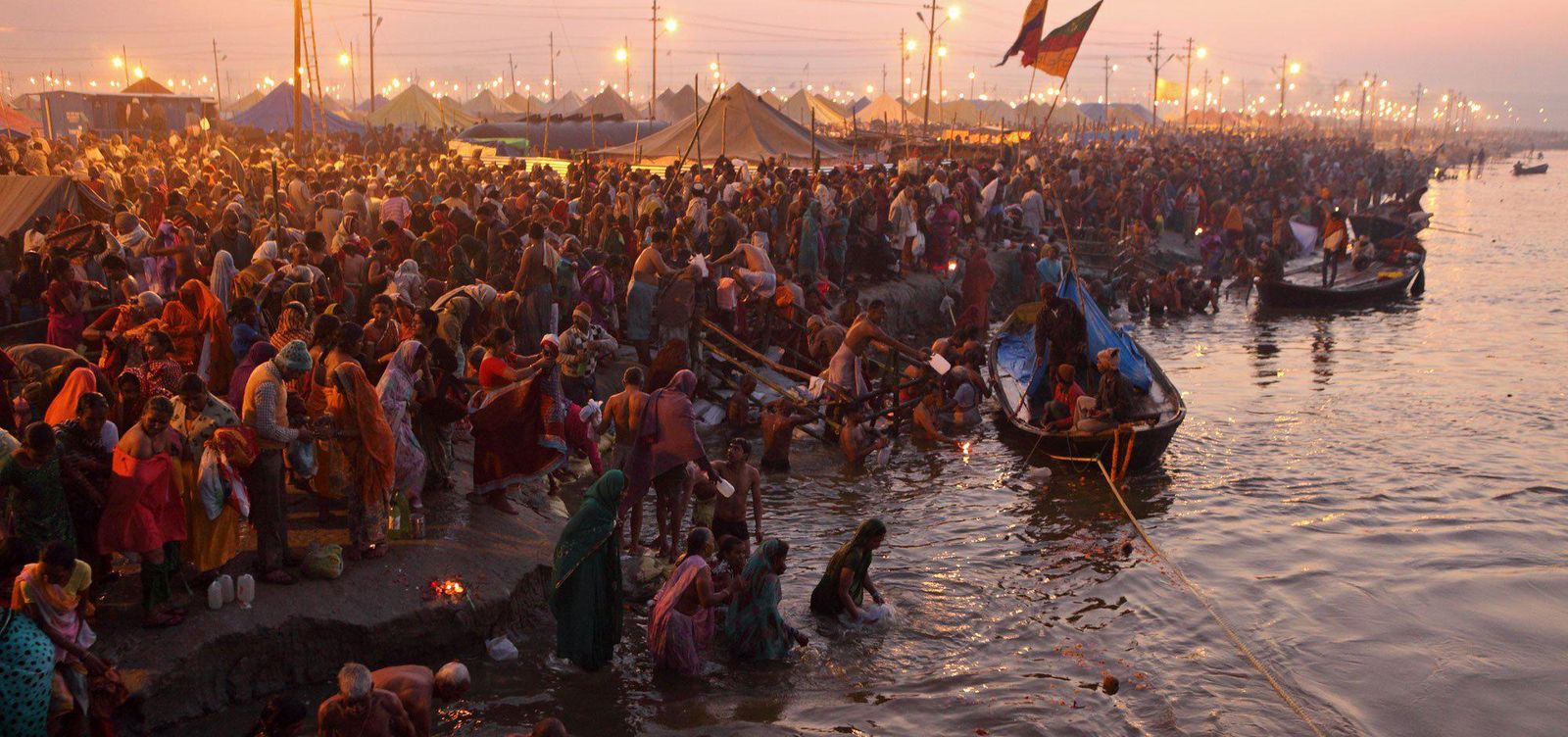
Along the riverbanks, the mood shifts with the seasons. Some mornings are hushed and deeply meditative, with solitary pilgrims waist-deep in prayer. Other days erupt in joyful chaos — chanting crowds, marigold garlands floating downstream, the air electric with collective devotion. Whenever you arrive, the Sangam has a way of stopping you mid-step and making you simply watch.
The Greatest Gathering on Earth
Every twelve years, something almost incomprehensible happens here. Tens of millions of people — yes, millions — pour into Prayagraj for the Kumbh Mela, the largest peaceful gathering the world has ever seen. Ash-smeared sadhus, families carrying offerings, and travelers from every corner of the globe wade into the sacred waters together in a spectacle of faith that defies easy description.
Can't time your trip to a Kumbh year? The annual Magh Mela, held during January and February, offers a smaller but no less mesmerizing taste of the same devotion. Saffron-robed monks, billowing tent cities, and the low hum of thousands of voices rising over the river — it's the kind of experience that rewires your understanding of what human gathering can look like.
Mughal Walls and Mughal Secrets
Step away from the water and Prayagraj reveals an entirely different personality. The massive Allahabad Fort, commissioned by Emperor Akbar in the 16th century, looms over the Yamuna's banks — its sandstone walls thick with the authority of an empire that once controlled half a continent. Much of the fort remains under Indian Army jurisdiction, but the accessible portions are worth every minute.
Inside, seek out the ancient Akshayavat — a sacred fig tree mentioned in Hindu scriptures — and the subterranean Patalpuri Temple, where cool stone corridors and flickering oil lamps pull you centuries backward. Even walking the fort's formidable exterior, tracing your hand along weathered sandstone, you can feel the strategic weight this citadel once commanded over river and land alike.
A Mansion That Changed a Nation
Anand Bhawan sits quietly on a tree-lined street, but the stories inside are anything but quiet. This graceful mansion was the ancestral home of the Nehru family — the household that produced prime ministers and shaped modern India's identity. Today it operates as a museum, and wandering through its rooms feels startlingly intimate.
Handwritten letters, faded photographs, personal belongings — each exhibit traces the arc from colonial resistance to independence with an emotional specificity that textbooks rarely capture. Afterward, linger in the manicured gardens outside. Sunlight filtering through old trees, birdsong overhead — it's a meditative pause you'll be grateful for.
Street-Level Flavors and Everyday Magic
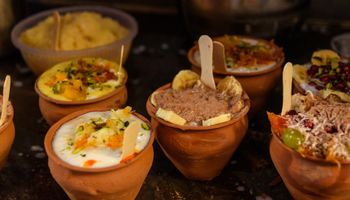
Prayagraj doesn't save its best moments for monuments alone. Near Chowk, the old bazaars hum with a kinetic energy that hits all your senses at once — sizzling pans of aloo tikki, the tangy punch of tamarind chutney dolloped over crispy chaat, sugar syrup dripping from freshly pressed sweets that have been made the same way for generations.
Over in Civil Lines, wide colonial-era boulevards offer a more relaxed pace. Duck into a local restaurant for rich North Indian dal and buttery naan, then stroll past faded British-period architecture that whispers of a very different chapter in the city's layered history. Hindi and Urdu weave together in the conversations around you, and locals tend to meet curious outsiders with genuine warmth.
An Intellectual Tradition Runs Deep
Long before it was a pilgrimage destination on anyone's itinerary, Prayagraj was producing some of India's sharpest minds. The University of Allahabad, established in 1887, has shaped generations of scholars, politicians, and writers. A walk through its leafy campus — past old lecture halls and sun-dappled courtyards — connects you to that scholarly pulse.
Hindi literature owes a particular debt to this city. Several of the language's most celebrated poets and authors lived and worked here, and that literary spirit still lingers in Prayagraj's bookshops, chai stalls, and animated intellectual debates.
When to Go and How to Get There
Timing matters. October through March delivers the most comfortable weather — cool enough for long, unhurried walks along the ghats and leisurely boat rides at the Sangam. Summer pushes temperatures past 40°C with a ferocity that makes outdoor exploration punishing. The monsoon months of July through September bring drenching rains and thick humidity, though watching the rivers swell into roaring, muscular forces of nature has its own dramatic appeal.
Getting here is straightforward. Prayagraj's railway station ranks among Northern India's busiest junctions, with connections to virtually everywhere. Bamrauli Airport handles flights to major Indian cities. Once on the ground, auto-rickshaws, cycle-rickshaws, and taxis are plentiful — just settle on a fare before climbing in, and enjoy the ride.
A City That Stays With You
Prayagraj doesn't compete for your attention with flashy skylines or Instagram-ready modernity. It earns something deeper. The pull is slow and cumulative — morning light hitting the river as a priest chants, the creak of an old museum door swinging open, the taste of chaat that a vendor's family has perfected over decades. You leave carrying the quiet weight of a city that has witnessed thousands of years of devotion, and somehow, it doesn't feel heavy at all. It feels like a gift.