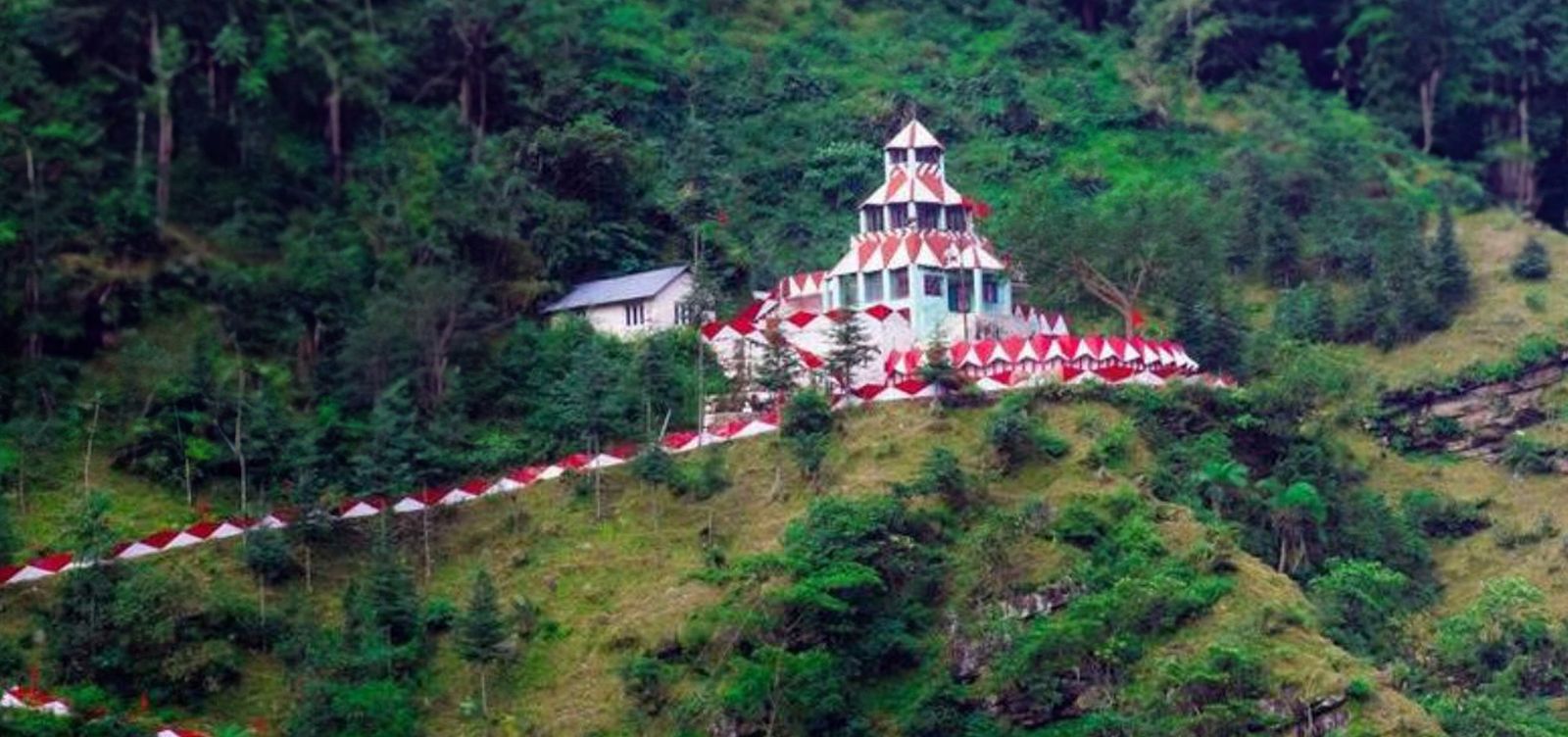
The first thing that hits you is the sound — a deep, thundering rush of the Beas River echoing off the gorge walls far below your feet. Then you look up, and there it is: the Hanogi Mata Temple, clinging to a sheer cliff face like it was carved from the mountain itself. Perched along the Mandi-Kullu highway, this ancient shrine dedicated to Goddess Hanogi Mata — a fierce manifestation of Goddess Durga — has been stopping travelers in their tracks for centuries. Not just devotees, but truckers, backpackers, families on road trips — everyone feels the pull. The views alone would be reason enough to pause: the river valley sprawling beneath you, forested ridgelines fading into haze. But there's something else here, something quieter, that makes people linger longer than they planned.
A Legend Written in Stone and Starlight
Long before this temple's wooden beams were carved, the cliff was already sacred. Hindu mythology names this site as one of the Shakti Pithas — those rare, electrifying locations where fragments of Goddess Sati's body fell to earth after Lord Vishnu's Sudarshan Chakra scattered her mortal form across the subcontinent. Each fragment sanctified the ground it touched, and devotees believe that one such piece landed right here, on this rocky ledge above the roaring Beas.
Generations of Kullu Valley families have woven this temple into the fabric of their daily faith. Local rulers and chieftains poured resources into its upkeep over the centuries, recognizing its gravity in the spiritual life of the Mandi and Kullu districts. What's remarkable is how the temple's remote hillside perch has shielded it from the homogenizing forces of urbanization — its rituals, its quiet intensity, feel untouched by time.
Wood, Stone, and the Scent of Burning Incense
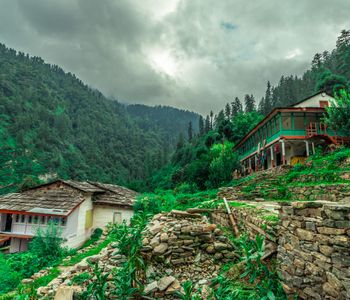
Forget the towering granite gopurams of South India. Here, architecture speaks a mountain dialect. The Hanogi Mata Temple is built from local stone and timber, its pagoda-like roof rising in tiers that mirror the layered peaks behind it. Run your fingers along the doorframes and you'll feel the grooves of intricate woodwork — patterns that Himachali artisans have been perfecting for generations, each cut deliberate, each flourish earned.
Step inside the main sanctum and the world shrinks to something intimate. A small idol of Goddess Hanogi Mata sits draped in red cloth, framed by fresh flowers and the warm glow of brass bells overhead. Thick coils of incense smoke hang in the still air, sweet and resinous, settling into your clothes and your memory. Outside, a modest courtyard invites you to sit on cool stone, let your breathing slow, and simply absorb the silence between temple bells.
Smaller shrines to other deities dot the complex, giving the whole site the feeling of a living spiritual neighborhood rather than a single frozen monument. If traditional architecture fascinates you, the interplay of rough-hewn stone masonry with delicate wooden joinery offers an unfiltered window into Himachali temple craft — no museum ropes, no glass cases, just the real thing under open sky.
Where Faith and Everyday Life Share the Same Road
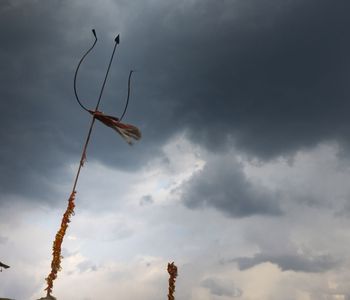
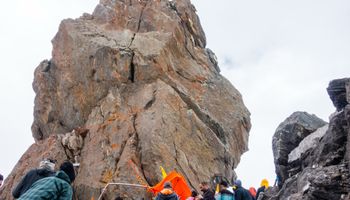
Twice a year, during the spring and autumn Navratri festivals, this mountainside transforms. Thousands of devotees make the steep climb over nine days, their chanting rising and falling like the river below. Marigold garlands — impossibly orange against the green hillside — drape every railing and doorway. Devotional songs echo off the cliff walls, and the air grows heavy with camphor and crushed flower petals.
But what makes this temple extraordinary isn't just the festivals — it's the in-between days. Truckers hauling goods along the Mandi-Kullu highway pull over, climb the stone steps, and press their palms together for thirty seconds of prayer before tackling the next switchback. Families stop mid-road trip, children still clutching bags of chips. Offering a quick prayer here before continuing your journey is considered deeply auspicious — a tradition so ingrained that the temple hums with spiritual traffic even on the quietest Tuesday afternoon. Few major pilgrimage sites can claim that kind of everyday relevance.
A Deity That Travels: The Kullu Dussehra Connection
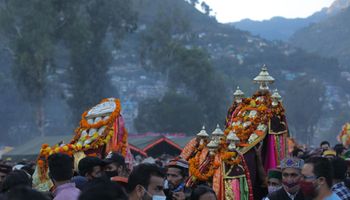
During Kullu's legendary seven-day Dussehra celebration each October, the Hanogi Mata deity doesn't stay home. She joins the grand procession of local gods and goddesses carried through Kullu town — a rolling, jubilant parade of faith, music, and color. Her inclusion speaks volumes about the temple's standing in the valley's spiritual hierarchy: this isn't a minor roadside shrine, but a cornerstone of the region's religious identity.
A Gorge That Demands Your Attention
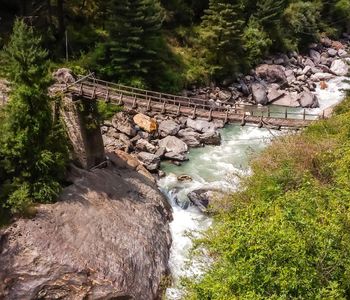
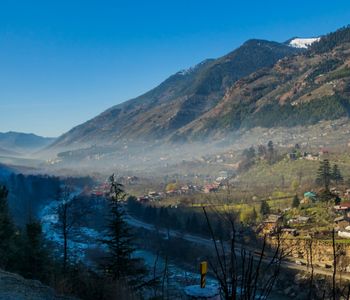
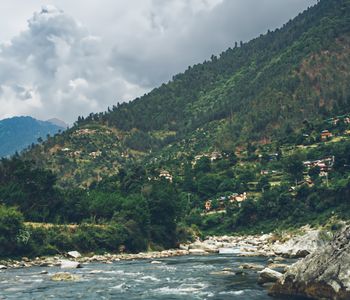
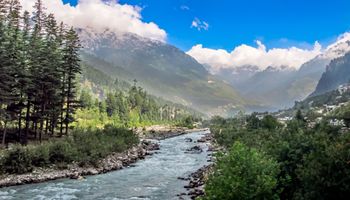
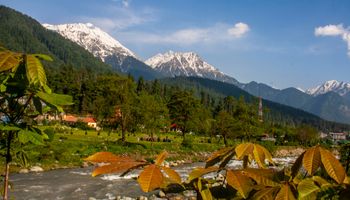
Even the most temple-weary traveler will feel their jaw drop at the setting. Below your feet, the Beas River punches through a narrow gorge with startling force, its blue-green water churning white against dark boulders. Dense forests of pine and deodar climb the surrounding hillsides, their deep green canopy broken only by slashes of exposed gray rock. The scale of it — the sheer vertical drama — makes you feel wonderfully small.
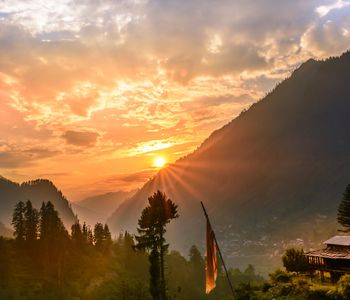
Visit during monsoon season and the river becomes a furious, swollen beast, its roar audible long before you see it. Come in winter, and fresh snow dusts the higher peaks like powdered sugar, adding another dimension to an already staggering panorama. Early risers get the best reward: mist lifting off the water in pale ribbons while golden morning light creeps down the mountainsides. Bring a good camera — and patience — because this is one of those places where every hour paints a different scene.
Everything You Need to Know Before You Go
The temple opens its doors from early morning until evening, every day of the year. No entrance fee stands between you and the experience, though donations are welcomed and go directly toward maintaining the grounds. Its location right along National Highway 21 makes access refreshingly simple — no bone-rattling detours required.
Finding Your Way There
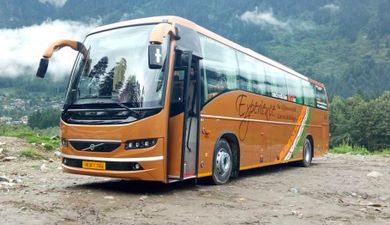
Driving from Kullu town, you'll reach the temple in about 30 kilometers heading toward Mandi. Himachal Road Transport Corporation buses rumble past throughout the day, so public transport is entirely doable. Hiring a private taxi or taking your own vehicle gives you the freedom to stop at every jaw-dropping viewpoint along the way — and there are many. The highway is well-maintained, though those sharp mountain curves demand your full attention. A small parking area near the temple fits cars and two-wheelers comfortably.
Coming from the Mandi side? Expect roughly 35 kilometers of equally stunning highway with the Beas River as your constant, glittering companion.
When to Time Your Visit
March through June and September through November offer the sweetest weather — mild temperatures, vivid landscapes, and comfortable climbing conditions. Monsoon months (July and August) dump serious rainfall, turning the stone steps slippery and the surrounding jungle almost impossibly green. If you don't mind getting wet, the drama of a rain-lashed gorge is unforgettable.
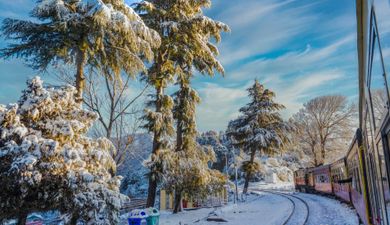
December through February brings biting cold and blissfully thin crowds. Bundle up in proper layers — temperatures plummet once the sun dips behind the ridgeline — and you'll have the temple nearly to yourself, with nothing but crisp mountain air and silence for company.
A Few Things Worth Knowing
Pull on sturdy shoes before you start — the path from the road climbs steeply via stone steps that can be uneven and, after rain, slick. Dress modestly as a gesture of respect for the worshippers around you. Tuck a water bottle into your bag, too; refreshment options near the temple are scarce, though a handful of tea stalls along the highway below serve chai hot enough to warm your bones.
Adding the Hanogi Mata Temple to your Kullu Valley route gives you far more than a scenic highway break. Spiritual weight, handcrafted beauty, and a natural setting that borders on the cinematic converge at this single cliff-edge shrine — a place that distills everything extraordinary about Himachal Pradesh into one unforgettable stop. Linger for ten minutes or an hour; either way, the memory follows you home.