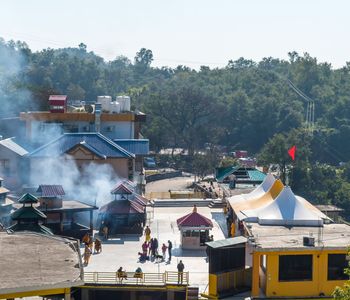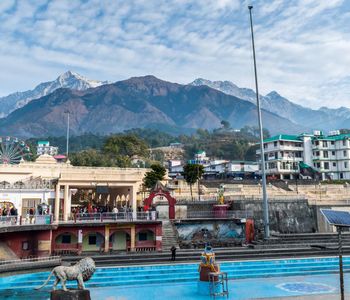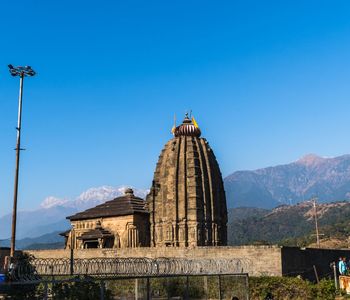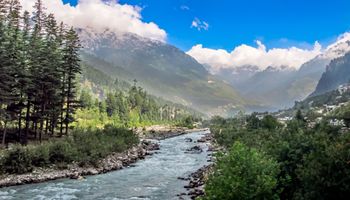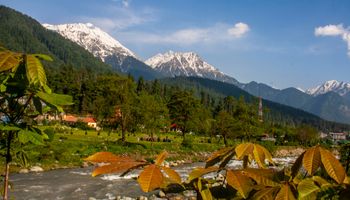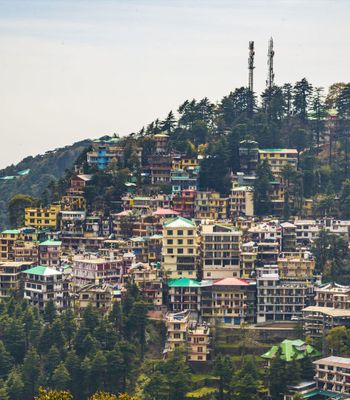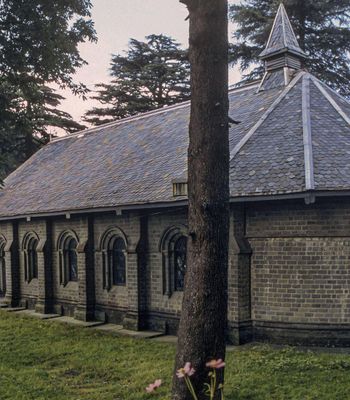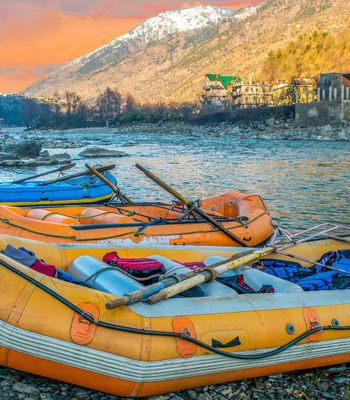
The sound of temple bells drifts across the valley before you even reach the town. Kangra greets you like that — not with fanfare, but with a quiet insistence that you slow down and pay attention. Spread beneath the jagged, snow-streaked wall of the Dhauladhar range, this ancient settlement holds one of the oldest recorded histories in the entire Himalayas, yet it remains blissfully untouched by the tourist crush that defines Shimla or Manali. Here, centuries-old temples share the valley with emerald tea gardens, rivers murmur through stone gorges, and every winding path seems to whisper a different story.
A Valley Painted in Contrasts
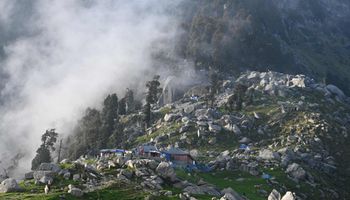
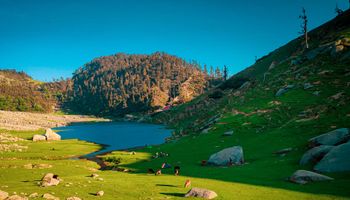
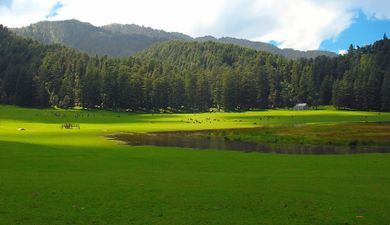
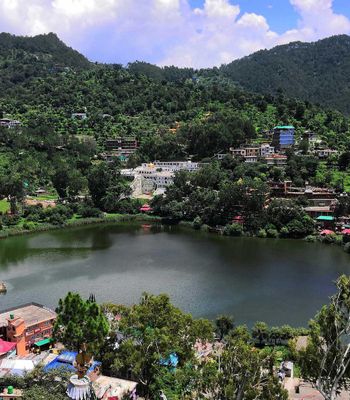
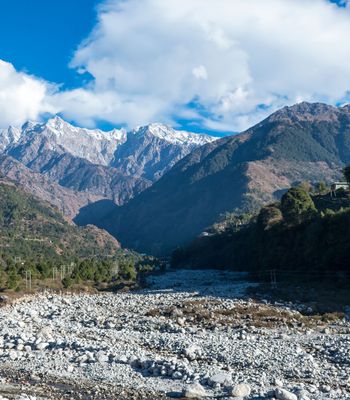
Lush, impossibly green fields roll out across the valley floor, nourished by the Banganga and Manjhi rivers, while the Dhauladhar peaks loom overhead like a fortress of ice and granite. During monsoon season, the entire landscape pulses with an almost electric vibrancy — every hillside dripping, every river swollen and thundering with fresh snowmelt.
Come spring, and the mood shifts entirely. Wildflowers freckle the slopes in bursts of purple and gold, and the breeze carries something unmistakable — a faint, earthy sweetness rising from the nearby Kangra tea plantations. This isn't your average hill-country chai. Kangra tea is prized globally for its delicate, almost floral flavor. Walk through one of the working estates, watch weathered hands pluck and roll the tender leaves, and sip a cup still warm from the processing shed. You'll never think about tea the same way again.
Forts That Have Outlasted Empires
Perched at the dramatic confluence of two rivers, Kangra Fort is staggering in both scale and age — one of the largest and oldest fortifications anywhere in the Indian Himalayas. Mughal emperors coveted it. Sikh rulers seized it. British forces eventually claimed it. Every scarred stone corridor and crumbling rampart holds the residue of those collisions.
Run your hand along the weathered walls and feel the grit of centuries beneath your fingertips. From the upper battlements, the view plunges down to the river junction far below, and on a clear day, the white teeth of the Dhauladhar bite into a sky so blue it almost hurts to look at. Few places in Himachal Pradesh make history feel this physical, this immediate.
Where Bells and Chanting Fill the Morning Air
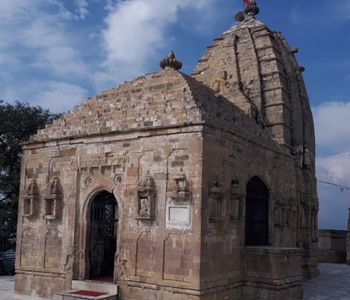
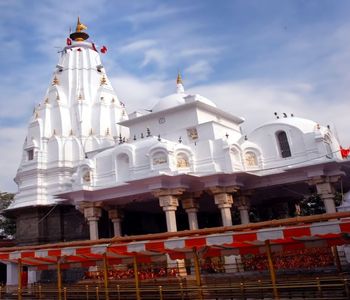
Arrive at the Brajeshwari Devi Temple just after dawn, when incense smoke curls through the courtyard and the rhythmic clang of brass bells mingles with low, resonant chanting. One of India's most revered Hindu pilgrimage sites, this temple draws devotees from across the country — yet the atmosphere never feels chaotic. There's a focused, almost electric stillness here, a spiritual gravity that settles over you whether you're a believer or simply a curious traveler standing respectfully at the threshold.
Brushstrokes That Captured a Civilization
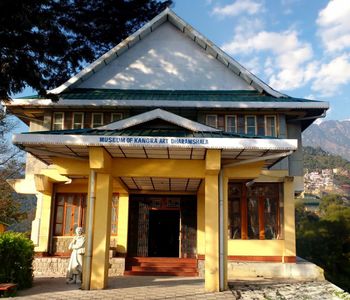
Long before cameras existed, Kangra's artists were preserving the world in breathtaking detail. The Kangra school of miniature painting, which flourished through the 18th and 19th centuries, produced some of India's most exquisite artistic works — graceful scenes of nature, love, and devotion rendered in pigments so vivid they still glow after two hundred years.
At the Maharaja Sansar Chand Museum, stand close to the originals and study the brushwork. Each strand of hair on a lover's head, each petal on a lotus, each ripple in a moonlit river was painted with a brush that might have held just a few hairs. The patience and precision are almost unbelievable. These aren't just paintings — they're acts of devotion in their own right.
Where Every Trail Leads Somewhere Extraordinary
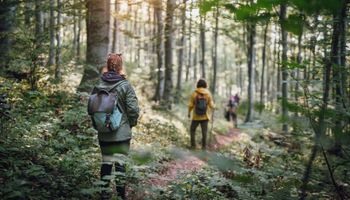
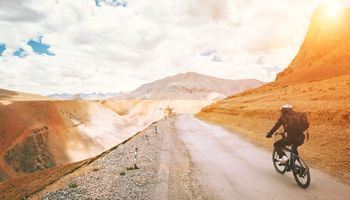
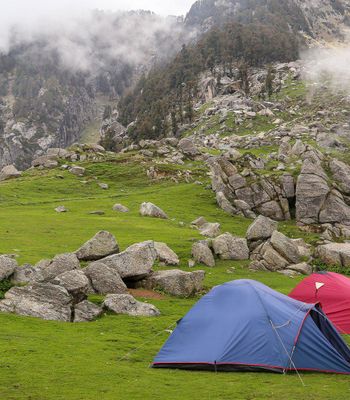
Beyond the temples and museum halls, the valley opens up into an outdoor playground that rewards every kind of adventurer. Leisurely treks wind through fragrant pine forests and terraced farmland, climbing to viewpoints where the entire Kangra Valley sprawls beneath you like a living map. Cycling the quiet roads between small villages is just as rewarding — the pavement narrows, children wave from doorsteps, and every bend reveals another postcard-worthy panorama.
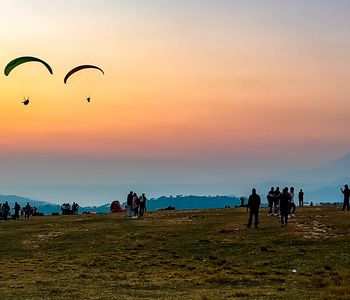
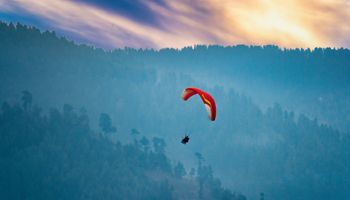
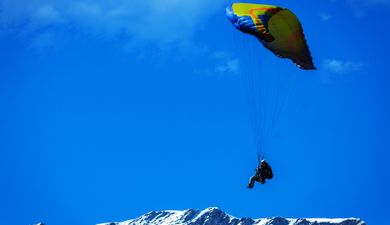
Craving something with more adrenaline? Bir Billing sits just a short drive away, widely regarded as one of the best paragliding sites on the planet. Launch from a grassy hillside, catch a thermal, and suddenly you're soaring above the valley with the Dhauladhar range filling your entire field of vision. It's the kind of moment that rearranges your priorities.
The Unhurried Rhythm of Kangra Life
Wander through the local markets and let yourself get happily lost. Stalls overflow with handwoven shawls in deep jewel tones, baskets of fresh produce still flecked with mountain soil, and traditional Himachali sweets — dense, fragrant, impossibly rich. Strike up a conversation with a tea vendor and don't be surprised when a simple purchase turns into a twenty-minute lesson on regional history or the secret to perfect rajma chawal.
Hindi and Kangri fill the air around you, punctuated by laughter and the occasional bleating of a goat navigating the crowd. English is understood in hotels and tourist areas, but even a few words of Hindi will earn you a wide smile and, quite likely, an invitation to sit and share a cup of chai. That warmth — generous, unforced, utterly genuine — is something larger destinations struggle to replicate.
When to Go (and Why Each Season Has Its Magic)
Spring and early autumn are the sweet spots — mild temperatures, crystalline skies, and the valley at its most photogenic. Summer months bring warmth to the valley floor, though it's still noticeably cooler than the scorching plains below. Winter wraps Kangra in crisp, biting mornings and occasional frost, but if solitude is what you're after, there's nothing quite like having those ancient fort corridors and misty trails entirely to yourself.
A Place That Stays With You
Kangra doesn't shout for attention. It doesn't need to. Ancient forts scarred by centuries of conquest, sacred temples humming with morning prayer, world-class paragliding just over The Ridge, and a painting tradition so refined it still stops art historians in their tracks — this valley town offers something rare in modern travel: genuine depth. Come for a weekend, and you'll find yourself rearranging your itinerary to stay longer. Leave, and some part of you will keep drifting back to that valley beneath the mountains, where the temple bells never quite stop ringing.