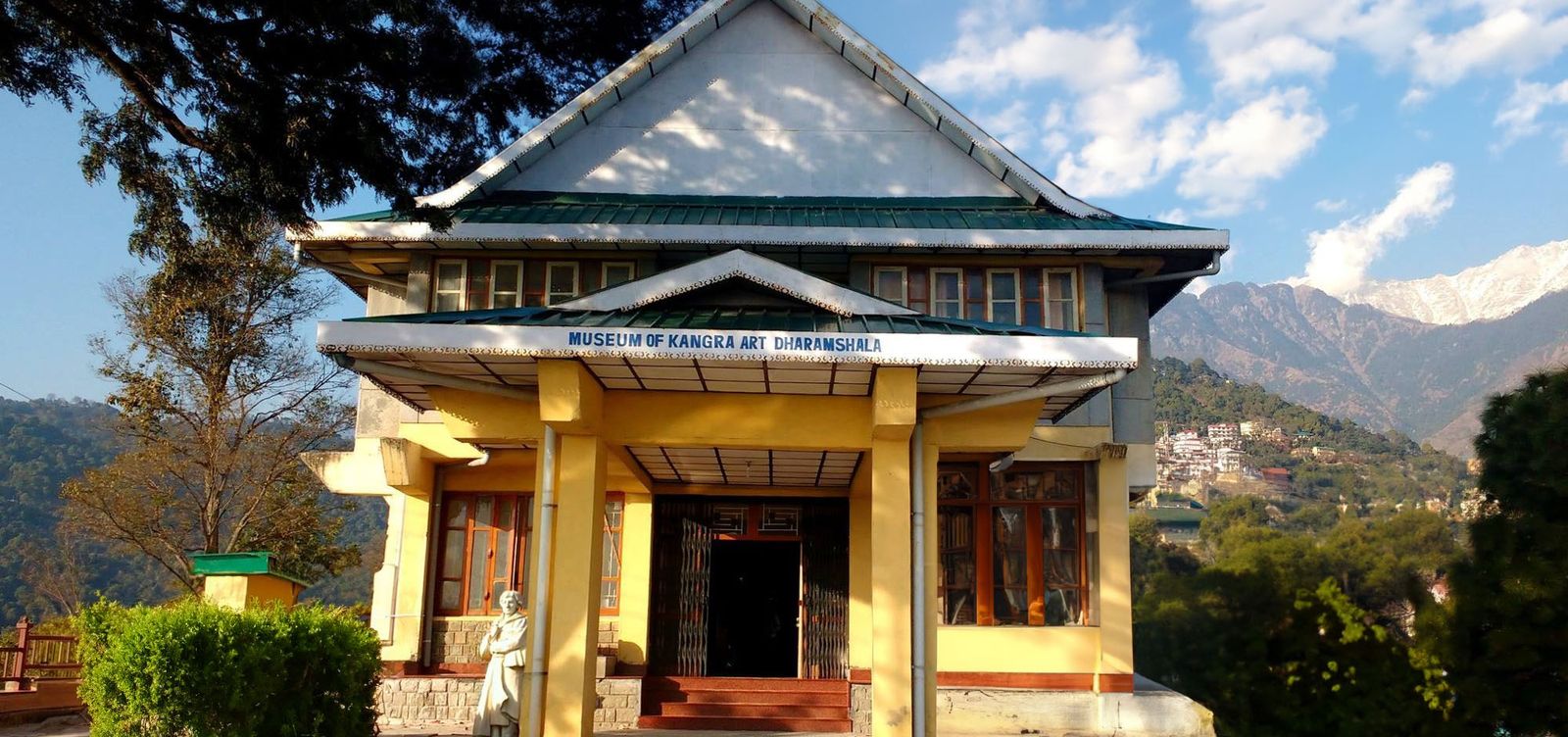
A hush falls over the room as you lean closer to a painting no larger than a hardcover book — and suddenly, an entire world unfolds. Lovers meet beneath canopies of blossoming trees. Krishna's flute seems to hum from the pigment itself. The brushstrokes are so impossibly fine they might have been laid down by a single eyelash. This is the Kangra Art Museum, tucked into the foothills of the Dhauladhar range, where centuries of devotion, artistry, and Himalayan life are gathered under one quiet roof.
One of Himachal Pradesh's oldest museums, this unassuming gem in the historic town of Kangra holds over 1,500 objects — from delicate miniature paintings to ancient sculptures and royal-era jewelry. It may not have the grand halls of Delhi's National Museum, but what it lacks in scale, it makes up for in soul. Every artifact here feels personal, like a handwritten letter from the valley's past.
From Earthquake Ruins to Cultural Refuge
When the devastating earthquake of 1905 flattened much of Kangra's architectural heritage, countless artistic treasures were scattered — hidden away in private homes, buried in temple rubble, forgotten in dusty storerooms across the valley. Decades later, in 1961, the Himachal Pradesh state government established this museum to gather what survived and give it a permanent home.
Since then, the collection has steadily grown through acquisitions, generous donations, and archaeological finds. Each new addition stitches another fragment into the valley's long, layered narrative. Walking through these galleries, you're not just looking at objects — you're witnessing a community's determination to remember.
Brushstrokes That Breathe: The Kangra Miniatures
The miniature paintings will stop you in your tracks. Flourishing during the 18th and 19th centuries under the patronage of Rajput rulers — most notably Maharaja Sansar Chand — the Kangra school of painting is one of India's most refined artistic traditions, and seeing it up close feels almost sacred.
Step up to any frame and the details pull you in like gravity. Faces are rendered with soft, luminous expressions. Backgrounds bloom with flowering trees, rolling emerald hills, and skies washed in dawn-pink and monsoon grey — landscapes that mirror the very valley visible through the museum's windows. Many scenes illustrate the love stories of Radha and Krishna, drawn from sacred texts like the Bhagavata Purana and the Gita Govinda. Others capture courtly ceremonies, seasonal festivals, and moments of quiet devotion.
Art lovers will notice something fascinating: the collection traces the entire evolution of the Kangra school. Earlier works carry the unmistakable influence of Mughal painting techniques — precise, formal, richly detailed. Later pieces shift into something more distinctly Pahari, a hill-country sensibility that feels warmer, more lyrical, more rooted in the natural world. These aren't merely decorative objects. They're visual poetry — windows into the spiritual and emotional lives of their creators.
Stone Gods, Ancient Coins, and Everyday Treasures
Sculptures That Survived Centuries
Beyond the paintings, an impressive collection of stone and metal sculptures commands attention. Dating from the 5th century onward, many of these pieces were recovered from temples and archaeological sites scattered throughout the Kangra region. Figures of Vishnu, Shiva, Parvati, and various Bodhisattvas emerge from the stone with remarkable expressiveness — serene faces, flowing garments, hands frozen in sacred gestures. Some of these carvings survived the 1905 earthquake, making them rare physical links to the valley's ancient religious life. Run your eyes along the chisel marks and you're tracing the hands of artisans who worked over a thousand years ago.
A Timeline in Metal and Silver
Numismatics enthusiasts, this one's for you. The museum's coin collection spans several centuries and dynasties — Mughal, Rajput, colonial-era — each piece a small, tangible chapter in the region's political story. Hold your gaze on a worn Mughal coin, then shift to a British-era piece sitting right beside it, and you can almost feel the tectonic shifts of power and commerce that shaped this valley.
Nearby, traditional Kangra jewelry gleams under soft light. Ornate silver necklaces, earrings, and bangles showcase the extraordinary craftsmanship of local artisans and offer a glimpse into how people adorned themselves across different social strata and eras.
Clay, Thread, and Daily Life
A smaller but equally compelling section features pottery, terracotta objects, and regional textiles — some centuries old, others representing more recent folk traditions. Where the miniature paintings reveal the world of royalty and devotion, these humble objects fill in the rest of the picture: how ordinary people in the Kangra Valley cooked, dressed, celebrated, and lived. It's the kind of section that rewards lingering.
A Setting That Mirrors the Art
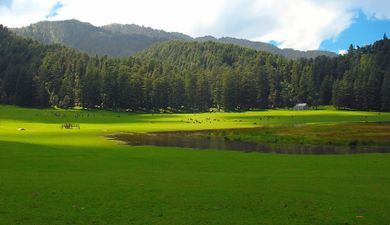
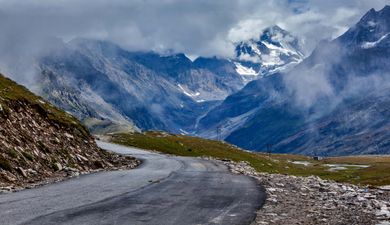
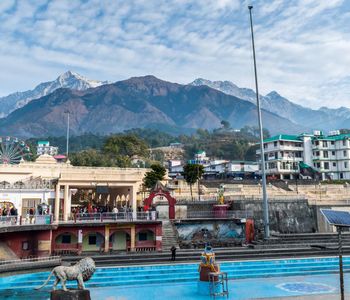
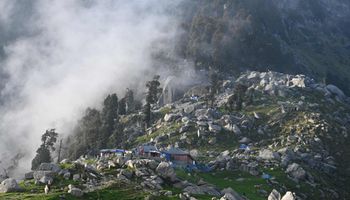
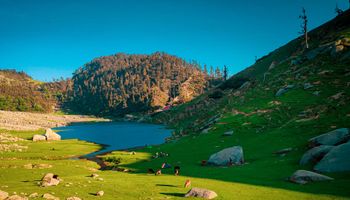
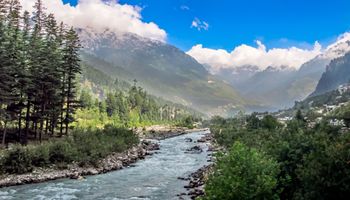
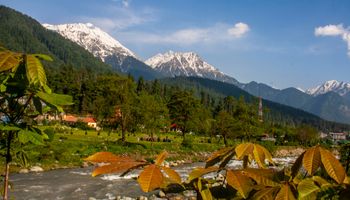
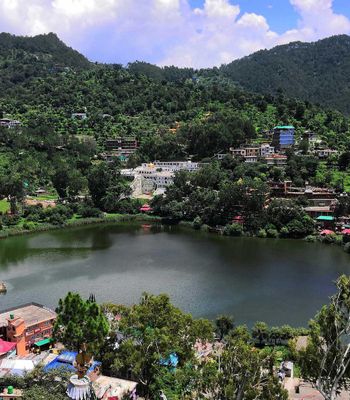
Here's what makes this museum truly special: step outside, and you're standing in the very landscape the miniature painters immortalized. The Kangra Art Museum sits near the town center, roughly 18 kilometers from the popular hub of Dharamshala. The Dhauladhar mountain range rises dramatically in the distance, its snow-dusted peaks catching the light. The gentle, green terrain of the valley spreads out in every direction, creating a stillness that seeps into your bones.
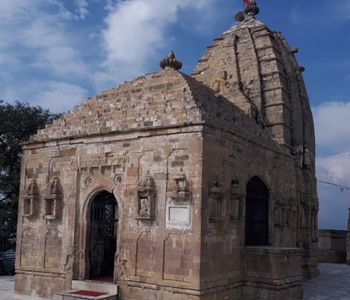
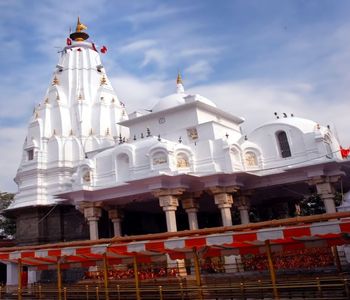
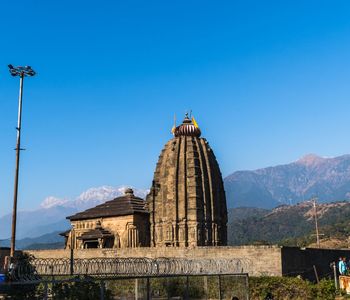
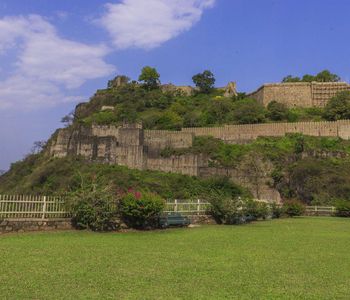
Because so many landmarks cluster nearby, you can easily weave the museum into a full day of exploration. Combine it with a visit to the imposing Kangra Fort, the ancient Bajreshwari Devi Temple, or the Maharaja Sansar Chand Museum. Together, they tell interconnected chapters of the same extraordinary story.
Everything You Need Before You Go
The museum opens Tuesday through Sunday, 10 a.m. to 5 p.m., and stays closed on Mondays and public holidays. Entry fees are refreshingly modest — typically around ₹10–20 for Indian nationals and ₹50 for international visitors, though it's wise to verify the latest pricing before your trip.
Arrive in the morning if you can. The galleries are quieter, the light is softer, and you'll have space to linger over the miniatures without feeling rushed. A thorough tour takes one to two hours — longer if the paintings hook you the way they hooked me. Photography policies vary by section, so check with staff at the entrance. The museum's compact layout is easy to navigate, though extensive wheelchair facilities are limited.
Getting There Is Half the Adventure
From Dharamshala, the journey takes just 30 to 40 minutes by taxi or local bus along a well-maintained road that winds through some of the valley's prettiest scenery. Flying in? Gaggal Airport, near Kangra, handles domestic flights from Delhi and Chandigarh. Travelers arriving by rail can connect through Pathankot railway station, about 90 kilometers away, which links to India's broader network.
Budget travelers will appreciate the convenience of the Kangra Bus Stand, just a short walk from the museum. Himachal Road Transport Corporation buses run regular services from Dharamshala, Manali, and even Delhi.
Slow Down — This Place Rewards It
One piece of advice: before you step through the doors, spend ten minutes reading about Kangra miniature art and the basics of Hindu mythology. Even a surface-level understanding transforms the experience — suddenly, every figure, every gesture, every blossoming tree in those tiny paintings pulses with meaning.
Inside, resist the urge to breeze through. The details in these works reveal themselves only to patient eyes — a half-smile on Radha's face, a distant temple nestled in painted hills, the precise curl of a peacock feather. Smaller museums like this one reward slowness in a way that blockbuster institutions rarely can.
Afterward, wander the surrounding streets where small shops sell locally made crafts, steaming cups of chai, and crispy snacks. Kangra town moves at an unhurried pace that feels like a natural extension of the museum's reflective mood. Pair the visit with the nearby fort or temple, and you'll leave with something more than photographs — you'll carry a deep, textured understanding of a Himalayan valley whose artistic contributions have quietly shaped Indian culture for centuries.