

The nine-kilometer road from Dharamshala to Mcleod Ganj is one of those stretches that tests your patience before it rewards your eyes. Hairpin bends stacked on top of each other, shared jeeps honking through fog, and a journey that can balloon from twenty minutes to well over an hour during peak tourist season or monsoon landslides. For decades, that serpentine climb has been the only way up — or down.
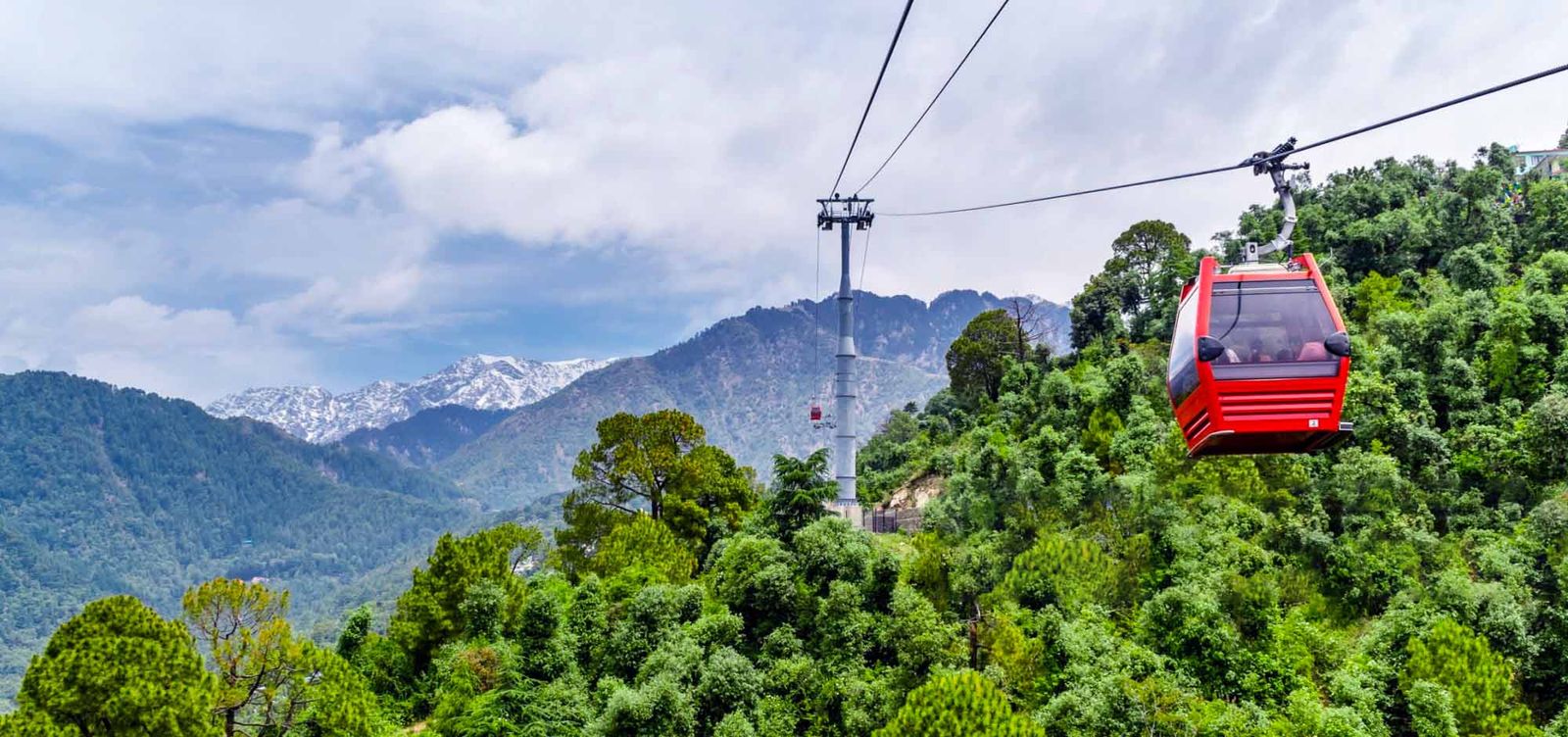
Now, a ropeway is set to change the equation entirely. Not just a tourist novelty or a scenic gimmick, this project addresses a genuine infrastructure headache in one of Himachal Pradesh's most visited corridors. The cable car promises to collapse that grueling ascent into a matter of minutes, suspended above the deodar canopy with the Dhauladhar range filling the windshield of your gondola.
What makes this particular ropeway worth paying attention to isn't the engineering alone — it's the context. McLeod Ganj sits at roughly 1,770 meters, and the town's narrow roads were never designed for the volume of traffic they now absorb. The ropeway doesn't just offer a ride. It offers relief. Here's everything you should know about the project, from its route to what the experience will actually feel like once those cables start humming.
Steel, Ambition, and a Very Steep Gradient
The Dharamshala to McLeod Ganj ropeway project has been developed under the Himachal Pradesh government's push to modernize hill-station connectivity. It's not a small undertaking. The terrain between the two towns rises sharply — roughly 500 meters of elevation gain compressed into a short horizontal distance — and building a cable car system through this landscape means anchoring towers into steep, forested slopes that shift with every monsoon cycle.
The project has been designed to handle a significant passenger load, aiming to ease the chronic congestion on the road that links Dharamshala's lower town with its more famous neighbor above. Construction has involved coordination between state authorities and ropeway engineering specialists, with environmental considerations factored in given the area's ecological sensitivity. The Dhauladhar Wildlife Sanctuary sits nearby, and the deodar forests along the route aren't just scenery — they're a functioning ecosystem.
What's quietly remarkable is the decision itself. Most Indian hill stations simply widen roads or add parking lots. Dharamshala chose vertical transit instead. That's a bet on a different kind of future — one where you don't need to sit behind a diesel-belching bus to reach the Dalai Lama's hometown. Whether the execution fully delivers on that ambition remains to be seen as the project reaches completion, but the intent is clear and, frankly, overdue.
From Lower Town to the Roof in a Straight Line
The ropeway connects Dharamshala's lower town area to McLeod Ganj, covering a distance of approximately 1.8 kilometers as the crow flies — or, more accurately, as the gondola glides. That's worth sitting with for a moment. The road route between these two points stretches to nearly nine kilometers and requires navigating dozens of switchbacks. The cable car simply ignores all of that topography, drawing a near-straight diagonal line through the air.
The lower terminal sits in the Dharamshala side, while the upper station lands you in McLeod Ganj, cutting through a vertical rise that would otherwise take your taxi driver twenty-odd gear changes to manage. The ride duration is expected to clock in at around five minutes. Five minutes against what can be an hour-long slog during summer weekends, when the road to McLeod Ganj becomes a single-lane parking lot of honking Innovas and overladen tempos.
The route passes directly over dense forest cover, which means mid-ride you'll find yourself suspended above a green canopy with nothing but treetops below and snow-streaked peaks ahead. It's not a long ride. But the compression of that distance — all that elevation swallowed in one smooth ascent — makes the brevity part of the thrill. You step into a gondola in a bustling government town and step out in a Tibetan hill colony. The geography changes that fast.
Five Minutes Between Two Different Worlds
Expect the unexpected sensation of silence. After the road noise of Dharamshala — auto-rickshaws, construction crews, temple loudspeakers — the gondola lifts you into a pocket of quiet that arrives almost immediately. The cabin rises above the treeline, and suddenly the only sound is the low mechanical hum of the cable and, if your window is cracked, wind moving through deodar branches far below.
The views build progressively. Early in the ascent, you're looking down at corrugated rooftops and terraced hillsides. Then the forest takes over, dense and unbroken, and the Kangra Valley starts to unfurl behind you toward the south — a patchwork of fields and small towns flattening toward the Punjab plains. Ahead, the Dhauladhar range dominates. On a clear morning, those peaks look close enough to scratch.
The gondolas are enclosed cabins designed for all-weather operation, which matters here. Dharamshala receives some of the highest rainfall in northern India, and the monsoon months turn that road into a slick, landslide-prone gauntlet. The ropeway is engineered to operate through conditions that would otherwise strand you in traffic — or worse, behind a road blockage with no ETA for clearance. Don't expect a luxury lounge on cables; do expect a functional, efficient ride that delivers you to McLeod Ganj with your nerves intact and your shoes dry.
Why the Smart Money Rides the Cable
The most obvious benefit is time. Shaving a potential sixty-minute road journey down to five minutes isn't an incremental improvement — it's a category shift. But the advantages run deeper than the clock.
Traffic congestion on the Dharamshala-McLeod Ganj road has become genuinely dangerous during peak seasons. The road is narrow, guardrails are inconsistent, and the mix of tourist vehicles, local buses, and two-wheelers on blind curves creates daily near-misses. The ropeway removes passengers from that equation entirely. Fewer vehicles on the road means less wear on an already fragile mountain highway, reduced emissions in an ecologically sensitive zone, and fewer traffic jams clogging Dharamshala's lower bazaar.
For travelers with mobility limitations, elderly visitors, or families with small children, the ropeway eliminates the motion sickness and physical discomfort of that winding climb. The ride is smooth, linear, and level in a way mountain roads can never be. There's also an economic argument: the ropeway creates a reliable transit link that doesn't shut down every time a hillside slumps across the tarmac. McLeod Ganj's economy — its cafes, guesthouses, monasteries, and meditation centers — depends on a steady flow of arrivals. A cable car doesn't care about landslides blocking the road below.
Practical Details for Planning Your Ride
Specific timings and ticket prices for the Dharamshala to McLeod Ganj ropeway are subject to official announcements as the project moves toward its operational launch. What's known is that the system is being designed for high-frequency departures, meaning you won't be waiting long between gondolas — the goal is to keep intervals short enough that queues don't build into the kind of ordeal that defeats the purpose of skipping the road.
Operating hours are expected to span most of the day, from morning through evening, with potential seasonal adjustments. Hill stations in Himachal Pradesh tend to see their heaviest footfall between April and June, and again in October, so anticipate peak-season crowds at the terminals during those windows. Early morning rides will likely offer the clearest views and the thinnest lines — a pattern that holds true at virtually every ropeway in India, from Gulmarg to Auli.
Ticketing details — whether there will be separate rates for residents and tourists, round-trip discounts, or digital booking options — haven't been finalized publicly at this stage. Keep an eye on the Himachal Pradesh Tourism Development Corporation's official channels for confirmed pricing as the launch date approaches. One thing is nearly certain: whatever the fare, it'll cost you less in time, stress, and vehicle rental charges than the alternative road trip during high season.
The Shortest Distance Between Two Elevations
Dharamshala and McLeod Ganj have always been two halves of a single story — the administrative town below, the spiritual and backpacker colony above — connected by a road that never quite felt equal to the relationship. The ropeway changes that dynamic in a way that goes beyond convenience. It makes the two towns feel, for the first time, like neighbors rather than distant relatives linked by a grudging mountain path.
If you're planning a trip to this part of Himachal Pradesh, factor the ropeway into your itinerary once it's operational. Ride it at least once for the view, and then ride it again simply because it beats the alternative. Some infrastructure projects are about spectacle. This one is about solving a real problem — and the fact that it happens to fly you over one of the most beautiful forest corridors in the Indian Himalayas is just the bonus you didn't know you were owed.