


The first time I flew to Bangkok, I packed three pairs of jeans. Three. For a place where the humidity settles on your skin like warm soup and denim becomes a form of slow torture. I also brought a hair dryer that promptly exploded in a Khao San Road guesthouse, tripping the power for the entire floor and earning me a look from the owner that I still think about two decades later.
Every traveller has a story like this. The mistake that became the lesson. The blunder that became, eventually, the anecdote. But here's the thing: most rookie mistakes aren't charming. They're expensive, exhausting, and entirely avoidable — if someone tells you in advance.
So consider this that warning. Ten of the most common missteps I've watched travellers make, from the backpacker crying over a lost passport in Delhi to the honeymooners discovering their Bali villa was booked for the wrong month. None of this is theoretical. All of it is fixable. And you don't have to learn any of it the hard way.
Every Traveller Was a Rookie Once — But Not Every Rookie Has to Learn the Hard Way
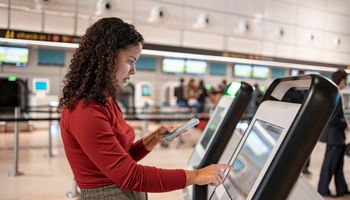
There's a particular look you see at airport check-in counters around the world. Wide eyes. An overstuffed bag being weighed for the second time. A conversation with the agent that begins hopeful and ends with items being transferred frantically into carry-ons while the queue behind grows impatient. I know it well. I've been that person.
Experienced travellers aren't smarter than rookies. They've just failed more times. They've missed trains in Italy because they didn't validate the ticket. They've been fined at Singapore customs for forgetting a stick of gum. They've arrived in Buenos Aires with only crisp US dollars and no plan, then discovered the blue-market rate is a whole ecosystem of its own.
What follows isn't a list of obvious warnings. You already know to keep your passport safe. You already know not to drink the tap water in certain countries. These are the mistakes that sit in the blind spot — the ones that cost you money, time, and sometimes the entire mood of a trip.
Read them carefully. Some will feel painfully familiar. Others might make you stop mid-packing and reconsider. That's the point. The best thing a seasoned traveller can give a new one isn't advice about where to go. It's a head start on what to skip.
Mistake 1: The Suitcase That Outweighs Your Ambition
Here's a rule that has served me well across five continents: lay out everything you plan to pack, then put half of it back. Then, if you're going somewhere warm, put another quarter back.
Overpacking is the rookie sin that punishes you repeatedly. It punishes you at the airport with excess baggage fees. It punishes you on cobblestone streets in Lisbon when the wheel of your suitcase snaps off. It punishes you in guesthouses with narrow staircases and no lifts. And it punishes you every single day of the trip, because a heavy bag slows every movement, every transfer, every spontaneous decision to hop on the next train.
The counterintuitive truth? Most places you're going have shops. If you forget something critical, you can buy it. A toothbrush in Tokyo costs roughly the same as a toothbrush in Toronto. What you cannot buy back is the ease of travelling light.
Stick to a carry-on when you can. Pack neutral colours that mix. Three tops, two bottoms, one jacket, and a pair of shoes you can walk ten miles in. Roll, don't fold. Leave the "just in case" outfit at home — you won't wear it, and you'll resent its weight every time you lift the bag.
Seasoned travellers are easy to spot at baggage claim. They're the ones already walking out the door while everyone else waits.
Mistake 2: Showing Up Without Doing the Homework
There's a difference between spontaneity and ignorance. The first-time traveller often confuses the two.
Arriving in a place knowing nothing about it isn't romantic. It's expensive. It means you'll take the first taxi from the airport and pay four times the going rate. It means you'll eat at the restaurant with the English menu on the tourist strip and wonder why the food was mediocre. It means you'll miss the Tuesday market, the free museum evening, the neighbourhood that everyone who lives there would have told you to visit first.
Research doesn't mean planning every minute. It means knowing the shape of a place before you enter it. What's the currency situation? Is it a cash economy or card-friendly? What's the rough cost of a taxi, a meal, a metro ticket? Which neighbourhood should you stay in — and which one sounds central but is actually where nothing happens after 6pm?
Read one good long-form article about the place. Skim a guidebook chapter. Watch a twenty-minute documentary. Check a local news site to see what's happening right now — political tension, a festival, a transport strike. Ten focused hours of research before a trip will transform the experience more than any packing list ever will.
The goal isn't to eliminate surprise. It's to make sure the surprises are the good kind — a temple discovered on a side street, not a scam you walked into because you had no idea it existed.
Mistake 3: The Budget That Was Never Really a Budget
Most rookie budgets collapse in the first forty-eight hours. The airport transfer costs more than expected. The first dinner runs over because you were hungry and ordered wine. The SIM card, the bottled water, the unexpected tip, the museum that turned out to charge for the special exhibit. By day three, you've abandoned the spreadsheet entirely and you're operating on vibes.
The problem isn't that travellers spend too much. It's that they budget for the obvious things — flights, hotels, a few meals — and forget the slow leak of daily expenses. A coffee here, a bottle of water there, a souvenir, a rideshare because you're tired. By the end of a week, that leak has become a flood.
Build your budget in three layers. The fixed costs: flights, accommodation, major tours. The daily average: food, local transport, small admissions — and be honest with yourself, then add twenty percent. The emergency buffer: enough to cover a missed connection, a sudden change of plans, a medical walk-in.
Track spending daily for the first three days. It's tedious but it resets your calibration. Use a free app or just a note on your phone. After day three, you'll know whether you're on track or quietly hemorrhaging money on things you won't remember.
Running out of money abroad isn't an adventure. It's a logistical nightmare that ends with expensive bank fees and a shorter trip than you wanted.
Mistake 4: The Insurance You Swore You Didn't Need
I've met exactly one traveller who regretted buying travel insurance. I've met dozens who regretted not buying it.
The stories are always the same. A stomach bug in Hanoi that turned into a hospital visit. A stolen backpack in Barcelona containing a laptop and a camera. A volcanic eruption in Iceland that cancelled a flight and required four extra nights in a hotel. A knee injury on a hiking trail that needed an evacuation. In each case, the out-of-pocket cost ran into thousands — sometimes tens of thousands.
Travel insurance isn't glamorous. It doesn't feel like part of the adventure. And for most trips, you'll never use it, which is exactly why rookies convince themselves it's optional. But insurance isn't about the likely scenario. It's about the catastrophic one.
Read the policy. Actually read it. Understand what's covered — medical, evacuation, trip cancellation, lost luggage — and what isn't. Adventure sports often require separate coverage. Pre-existing conditions need to be declared. Electronics are often capped at a lower amount than you'd expect.
The right policy for a two-week trip costs less than a decent dinner. Buy it the same day you book the flight, not the week before you leave, because most policies only cover cancellations from the moment of purchase forward.
Think of it this way: if you can't afford the insurance, you probably can't afford the trip going wrong.
Mistake 5: The Itinerary That Strangled the Trip
The opposite of not planning is planning too much. And it's just as damaging.
I've watched travellers in Rome sprint from the Colosseum to the Vatican to Trevi Fountain to the Pantheon in a single afternoon, their faces grey with exhaustion, barely looking up from their phones long enough to register where they were. They had hit every highlight. They had experienced none of them.
Over-scheduling is a rookie response to anxiety. You've spent money to be here. You don't want to waste a minute. So you fill every hour with something — and in doing so, you eliminate the things that actually make travel memorable: the unplanned coffee that turns into a two-hour conversation, the wrong turn that leads to a market, the afternoon nap that lets you stay out until 2am with strangers who became friends.
Build an itinerary that's roughly two-thirds full. Pick one anchor activity per day — a museum, a tour, a major sight — and leave the rest open. Say yes to detours. Eat lunch slowly. Sit in squares and watch people.
The best moments on any trip are almost never the ones on the itinerary. They're the ones that found you while you weren't looking at your phone. Leave room for them. The Colosseum will still be there if you arrive an hour later than planned.
Mistake 6: The Last-Minute Gamble That Rarely Pays Off
There's a persistent myth among newer travellers that everything gets cheaper at the last minute. That hotels drop their prices to fill empty rooms. That flights go on sale the week before departure. That trains can be caught on a whim.
This is, in almost every case, wrong.
Flights tend to get more expensive as the date approaches, not less. Trains in Europe sell out their cheap advance tickets months ahead — show up the day of, and you'll pay three times the price for the same seat. Popular accommodation in peak season simply disappears. I've seen travellers in Kyoto during cherry blossom week wander from hotel to hotel at 9pm, eventually sleeping in a 24-hour manga café because every actual bed in the city was taken.
Last-minute booking is a gamble that occasionally pays off in the low season, in unfashionable destinations, or on routes with plenty of supply. Everywhere else, it's just a tax on your own disorganisation.
Book flights six to ten weeks out for international trips. Book trains and major transport as soon as dates are fixed. Book the first and last night's accommodation even if you want flexibility in the middle — arriving somewhere tired with nowhere to sleep is a misery you don't need to experience to understand.
Spontaneity is wonderful in how you spend your days. It's terrible as a booking strategy.
Mistake 7: The Visa You Didn't Know You Needed
The single most avoidable way to ruin a trip is to show up at an airport and be told you can't board the flight.
It happens constantly. A traveller assumes their passport works everywhere their friends' passports work. They don't realise their destination requires a visa in advance, or that their passport needs six months of remaining validity, or that they need proof of onward travel, or that a transit country has its own visa rules. The check-in agent shakes their head. The flight leaves without them. The trip is over before it began.
Entry requirements change. They changed dramatically during the pandemic and they continue to shift. A country that was visa-free last year may not be this year. An e-visa that used to take 72 hours might now take two weeks. Some countries require yellow fever certificates. Others require proof of accommodation or sufficient funds.
Check the official government website of your destination — not a travel blog, not a forum post, not the advice of a friend who went three years ago. Check it twice: once when you book, once two weeks before departure. Verify your passport's expiry date meets the destination's requirements. Print key documents; don't rely on having them only on your phone.
This is the most boring part of travel planning. It's also the part that, if you skip it, makes everything else irrelevant. Thirty minutes of research can save a ruined trip.
Mistake 8: The Cultural Blind Spot That Makes You the Ugly Tourist
Every country has a set of unwritten rules that locals take for granted and foreigners routinely violate. The rookie traveller doesn't realise this until they've already committed the offense.
In Thailand, you don't touch anyone's head, not even a child's. In Japan, tipping isn't just unnecessary — it can be mildly insulting. In much of the Middle East, the left hand is considered unclean and shouldn't be used for eating or handing someone a gift. In Italy, ordering a cappuccino after noon marks you as a tourist more clearly than a fanny pack. In Singapore, chewing gum on the subway can get you fined.
These aren't arbitrary rules. They're the texture of a place — centuries of custom compressed into small daily gestures. When you ignore them, you're not being adventurous or authentic. You're just being rude.
Learn a few words of the language before you arrive. Hello, thank you, please, excuse me. Nothing unlocks doors faster than a traveller who has made the smallest effort. Watch what locals do in the first day — how they greet each other, how they eat, how they dress in religious spaces — and follow suit. Cover your shoulders in temples. Take your shoes off when it's expected. Don't photograph people without asking.
The goal isn't to blend in perfectly. You won't. The goal is to show that you noticed. That alone will transform how locals treat you — from another tourist to be tolerated into someone worth talking to.
Mistake 9: The Phone That Became a Crutch
Your phone is a miracle of travel technology. It's also a spectacular liability when it fails.
I've watched travellers freeze in the middle of a Hanoi street because Google Maps stopped working. I've seen people unable to find their hotel because they never wrote down the address. I've met travellers who lost their phone on day two and essentially lost the entire trip with it — no translations, no navigation, no booking confirmations, no photos of passports, no way to contact anyone.
Technology is a tool. Treat it as one. Download offline maps before you go. Screenshot your hotel address in both English and the local script. Keep a paper copy of essential bookings, phone numbers, and your passport details in a separate bag from your phone. Memorise the name of your hotel and the nearest major landmark.
There's also a subtler cost. A phone held up between you and a place is a phone that filters the place. You can't be present at the Taj Mahal if you're watching it through a screen. You won't remember the street in Havana if you were composing a caption while walking down it. The photos will be there forever. The moment won't.
Put the phone away sometimes. Navigate by asking strangers. Get lost on purpose. The best stories from any trip are the ones that happened when the battery died.
Mistake 10: The Safety You Assumed Because Nothing Had Gone Wrong Yet
Most places are safer than the news would have you believe. But safe doesn't mean consequence-free, and rookies often confuse feeling comfortable with being careful.
The classic mistakes: leaving a bag on the back of a chair in Barcelona while you eat. Pulling out a fat wallet in a crowded market in Marrakech. Walking home alone at 3am through an unfamiliar neighbourhood because it worked fine in the daylight. Accepting a drink from a stranger in a Southeast Asian beach bar. Posting real-time social media updates that broadcast exactly where you are and where you aren't.
Situational awareness isn't paranoia. It's the habit of noticing who's around you, what's happening, and what the normal pattern of a place looks like. When something breaks that pattern — someone following too closely, a "helpful" stranger who's a little too helpful, a taxi driver taking an unexpected turn — you want to notice it in the first second, not the fifth.
Keep valuables distributed. A little cash and one card on you, the rest locked in the accommodation. Photograph your passport and email it to yourself. Share your rough itinerary with someone back home. Trust your gut — if a situation feels wrong, it probably is, and leaving is always free.
The travellers who get into trouble are almost never the ones who were unlucky. They're the ones who stopped paying attention because the trip had been fine up to that point.
You Will Still Make Mistakes — But Now You Will Make Better Ones
Here's the secret no guidebook will tell you: mistakes are part of the deal. You will miss a train. You will overpay for something. You will offend someone without meaning to. You will eat something that disagrees with you violently. You will, at some point, sit on a curb in an unfamiliar city and wonder what you've done with your life.
This is travel. It's not supposed to be frictionless. The goal isn't perfection — it's to fail in smaller, smarter ways, so that the bigger disasters don't eat your trip whole.
Start your next journey a little better prepared than the last one. Pack lighter. Research more. Plan less. Pay attention. And when something goes wrong — because it will — remember that the best travellers aren't the ones who never mess up. They're the ones who recover faster, laugh sooner, and come home with better stories. Go make yours.