

The chai costs seven rupees. That's less than a dime. You're sitting on a plastic stool at a railway platform somewhere in Rajasthan, watching the sun turn the dust gold, and a man with a steel kettle is pouring you something so aggressively sweet and cardamom-laced that it rewires your morning. This is India at its most essential — not the palace hotels or the guided tours, but the unscripted moments that cost almost nothing and stay with you for decades.
India remains one of the last places on earth where a solo traveler can live well on $20 a day. Not just survive — actually live. Eat extraordinary food, sleep in clean rooms, cross entire states by train for the price of a sandwich back home. But it demands something in return: patience, adaptability, and a willingness to be uncomfortable before you're comfortable.
This guide covers the practical architecture of a solo India trip — timing, transport, money, safety, destinations, and the free experiences that no budget can improve upon. No romanticizing. Just what works.
The Country That Rewards a Thin Wallet
A plate of chole bhature — two puffed breads the size of your face, a bowl of spiced chickpeas, a sliced onion, and a wedge of lime — costs forty rupees at a dhaba outside Old Delhi Railway Station. That's less than fifty cents. In India, being broke isn't an obstacle. It's practically the entry requirement.
Solo travel here works because the country runs on a parallel economy built for people who count every rupee. Sleeper-class train berths cross entire states for a few dollars. Chai wallahs hand you a clay cup of milky tea for ten rupees, and you crack the cup on the ground when you're done. Guesthouses in Varanasi or Pushkar charge three hundred rupees a night for a clean room with a ceiling fan that sounds like it has opinions. The infrastructure of cheapness isn't a compromise — it's how most of India actually lives.
What makes it work for solo travelers specifically is stranger still: India won't leave you alone. You'll share train compartments with families who insist you eat their home-packed parathas. Rickshaw drivers will offer unsolicited life advice. Hostel common rooms in Jaipur or Hampi fill up with other budget travelers doing exactly what you're doing, and friendships form with the urgency that only a shared twelve-hour bus ride through Rajasthan can produce.
The country is loud, confusing, occasionally maddening, and structurally designed to keep you fed, moving, and spending almost nothing. It demands patience more than money. Your biggest expense won't be accommodation or transport — it'll be the inevitable stomach medicine from the pharmacy, which will also cost roughly nothing. India doesn't ask you to be wealthy. It asks you to be willing.
When the Calendar Works in Your Favor
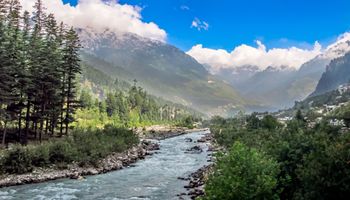
India's shoulder seasons — April through June and September through November — are when your rupees stretch furthest. Hotels that charge 3,000 rupees a night in January will quietly drop to 800 during a slow May afternoon. The trade-off is real: April in Rajasthan means 45°C heat that turns every afternoon into an exercise in survival. But if you're headed to the hill stations of Himachal Pradesh or the Western Ghats, that same month delivers mild days and empty trails.
The monsoon, roughly July through September, scares off most foreign travelers. This is exactly why it deserves your attention. Goa's beachside guesthouses practically beg for occupancy, dropping rates to a third of their peak-season prices. Kerala turns impossibly green. Yes, you'll get drenched — sometimes sideways — but the rain comes in dramatic bursts, not all-day curtains. An hour later, the sun's back and the air smells like wet earth and frangipani.
December through February is peak season, and everything reflects it. Flights into Jaipur or Goa spike. Popular hostels fill weeks ahead. The weather across most of the country is genuinely pleasant, which is precisely why half of Europe seems to show up at once. If you must travel during these months, push north into the less-touristed parts of Madhya Pradesh or east into Odisha, where the crowds thin and prices stay honest.
One counterintuitive move: festivals like Diwali (October–November) can actually lower accommodation costs in tourist towns because domestic travelers head home to their families. The popular spots empty while the residential cities fill. Read the calendar against the grain, and India rewards you for it.
The Art of Not Trying to See Everything
India will punish you for overplanning. I've watched solo travelers burn out by Day 5 because they crammed Delhi, Agra, Jaipur, Varanasi, Goa, and Kerala into two weeks — spending more time on trains than in any actual place. The smartest thing you can do with your itinerary is cut it in half. Then cut it again.
Pick a region, not a country. Northern India alone — Rajasthan, Varanasi, the Himalayan foothills — could swallow a month without repetition. Southern India is practically a different nation: slower, greener, with temple towns like Hampi where you'll lose three days without noticing. Trying to do both in under three weeks means you'll experience neither properly.
Build your route around train connections, not wishful thinking. India's rail network is vast but not instant — an overnight sleeper from Delhi to Jaipur is easy; Delhi to Kochi is a 40-hour commitment. Check routes on the IRCTC website before you lock anything down. Structure your days loosely: one major city, one smaller town, then breathing room. That breathing room matters more than any monument.
Leave at least two unplanned days per week. You'll meet other travelers in Pushkar who swear by a village you've never heard of. A chai-stall conversation in Rishikesh will redirect your entire trip. India rewards flexibility the way it punishes rigidity — completely and without apology.
Start in a city you can handle. Delhi's chaos is legendary for a reason; Jaipur or Udaipur offer a gentler entry point. Give yourself 48 hours to adjust before making any decisions about pace. Your body needs to recalibrate — to the heat, the noise, the food, the sheer density of everything happening at once. Plan for that recalibration. It isn't wasted time. It's the trip beginning.
The Beautiful Chaos of Indian Transport (And How to Ride It for Almost Nothing)
Indian Railways isn't just a transit system — it's a 68,000-kilometer social experiment. A sleeper class ticket from Delhi to Varanasi costs around 450 rupees (roughly $5.40), and for that price you get a bunk, endless chai deliveries from vendors working the aisles, and conversations with strangers who'll insist you try their home-packed parathas before you've even crossed state lines. Book through the IRCTC app or website, ideally two to three weeks ahead. General class is cheaper still, but unless you genuinely enjoy being compressed into a space that defies physics, sleeper is the sweet spot.
State-run buses fill the gaps where rail lines don't reach. They're absurdly cheap — a six-hour ride through Rajasthan might run you 200 rupees — and they stop everywhere, which is either a feature or a flaw depending on your patience. For overnight routes, private Volvo sleeper buses offer air conditioning and a flat bed for 800 to 1,200 rupees. RedBus and AbhiBus let you compare and book these online.
Then there's the auto-rickshaw, India's great equalizer. In most cities, a five-kilometer ride should cost 50 to 80 rupees. The trick: use the Ola or Uber app to check the fare first, then negotiate with the driver using that number as your anchor. Most will agree. Some will laugh. A few will counter with a price that suggests you're chartering a helicopter.
Shared jeeps and tempos dominate hill stations and rural stretches where buses thin out. They leave when full — not before — so build slack into mountain days. The counterintuitive truth about Indian transport: the cheapest options often deliver the richest experiences. Nobody ever wrote home about an Uber ride.
A Bed for the Price of a Coffee Back Home
India will recalibrate your sense of what accommodation should cost. A private room with clean sheets, a ceiling fan that actually works, and a hot-water bucket bath can run you 400–600 rupees a night — roughly five to seven dollars. That's not a hypothetical. That's a Tuesday in Varanasi or Pushkar or Hampi.
Hostels have exploded across India in the last decade, and the best ones aren't just cheap — they're genuinely good. Chains like Zostel and goSTOPS operate in dozens of cities, with dorm beds typically between 300 and 500 rupees. The communal kitchens save you money, but the real value is the other solo travelers congregating in the common areas, swapping route advice and splitting rickshaw fares. You'll rarely eat dinner alone unless you want to.
Guesthouses remain the backbone of budget travel here, especially in smaller towns where hostels haven't arrived yet. Look for family-run places — the rooms tend to be spartan but the chai is usually free and the local knowledge is better than any guidebook. Negotiate if you're staying more than two nights. Most owners expect it, and a polite ask often knocks 20 percent off.
One counterintuitive move: skip the booking apps in places like Jaisalmer or Mcleod Ganj and just show up. Walk-in rates are frequently lower than what's listed online, because guesthouse owners don't want to pay platform commissions. This works less well in Mumbai or Delhi, where demand is higher and options more scattered.
Ashrams and dharamshalas offer another tier entirely — sometimes free, sometimes donation-based. The trade-off is early wake-up calls and communal living with rules attached. But if you're open to it, sleeping in a Sikh gurdwara's guest quarters and waking to kirtan hymns at dawn is an experience no hotel star-rating can replicate.
The Art of Spending Almost Nothing
India will recalibrate your sense of what money is worth. A plate of chole bhature that leaves you groaning with satisfaction costs forty rupees — roughly fifty cents. A chai from a roadside stall runs you ten. The danger isn't overspending; it's losing track of how little you're spending and getting sloppy with it.
Cash still rules here. UPI payments through apps like Google Pay and PhonePe have transformed how Indians transact, and many vendors — even some chai wallahs — accept them. But as a foreign traveler, setting up UPI can be hit-or-miss depending on your SIM card and bank. Carry cash. ATMs are everywhere in cities, less reliable in smaller towns. SBI and HDFC machines tend to be the most dependable, and most charge a modest fee for international cards. Withdraw larger amounts less frequently to minimize those fees.
Here's what catches people off guard: India has a denomination problem. Breaking a 500-rupee note at a small shop or auto stand invites a theatrical sigh and a claim of having no change. Keep a stash of 10s, 20s, and 50s on you at all times. Guard them like they're gold, because functionally, they are.
Budget between 1,500 and 2,500 rupees a day — that's roughly eighteen to thirty dollars — and you'll eat well, sleep in decent guesthouses, and move between cities without anxiety. Splurges happen naturally: a rooftop dinner overlooking a lake in Udaipur, a cooking class in Jaipur, an overnight sleeper to Varanasi. Let them.
One practical note: notify your bank before departure. Indian ATMs trigger fraud alerts with impressive speed, and being locked out of your account in Rishikesh at nine in the evening is a specific kind of loneliness nobody needs.
Keeping Your Wits (and Your Wallet) Close
India doesn't require bravery. It requires attention. The difference matters. Most solo travelers — men and women — move through the country without serious incident, but the ones who do it well share a common trait: they stay alert without staying anxious. That's the balance worth striking.
Trust your gut over your guidebook. If a rickshaw driver insists your hotel is "closed" and offers to take you somewhere better, it isn't and he shouldn't. This is the oldest redirect scam in the subcontinent, and it works because tired travelers arriving at 2 a.m. don't want to argue. Have your accommodation's phone number saved. Call them. The hotel is open.
Solo women travelers will hear unsolicited warnings from well-meaning locals and panicked relatives back home in roughly equal measure. The practical reality: dress conservatively outside of Goa and tourist-heavy zones, avoid empty streets after dark in unfamiliar cities, and sit in the women's compartment on trains — it exists for a reason, and the camaraderie inside it is genuinely good. Carry a dupatta. It deflects attention and doubles as a sun shield.
Food safety trips up more travelers than crime does. Drink only sealed bottled water, skip raw salads outside high-end restaurants, and eat where the turnover is fast — a street stall frying fresh samosas every three minutes is safer than a half-empty restaurant reheating yesterday's paneer. Keep oral rehydration salts in your bag. You'll likely need them once.
Photocopy your passport, email yourself scans of every important document, and store emergency cash separately from your daily wallet. These aren't paranoid habits. They're the kind of boring preparation that lets you actually relax into the chaos — which is, after all, the entire point of being here.
Where Your Rupees Stretch the Furthest
Varanasi costs almost nothing and gives you almost everything. A plate of kachori sabzi on the ghats runs about 30 rupees. The evening Ganga Aarti — fire, chanting, thousands of flames reflected on black water — costs zero. Rooms in the old city start at 300 rupees a night, and they come with the kind of ambient chaos that makes sleeping feel like an act of faith. It's overwhelming, filthy, sacred, and completely itself. No other city in India hits this hard for this little.
Hampi is the opposite frequency. The ruins of the Vijayanagara Empire sprawl across a landscape of rust-colored boulders and banana plantations in Karnataka. Rent a bicycle for 150 rupees and spend the day weaving between 15th-century temples that most of the world has never heard of. Guesthouses across the river in Virupapur Gaddi charge 400–600 rupees, and the pace there is so slow it borders on geological.
Pushkar, in Rajasthan, runs on its own logic — a tiny town built around a holy lake where you'll find more backpackers per square meter than almost anywhere else in the country. Thalis for 80 rupees. Rooftop cafes where the sunset over the Aravalli hills is complimentary.
Pondicherry's French Quarter delivers colonial architecture, excellent South Indian coffee at 20 rupees a cup, and a seafront promenade that feels transplanted from another continent. Budget stays in the Tamil Quarter hover around 500 rupees, and the best meal in town — a banana-leaf lunch at a local mess — will cost you less than a dollar.
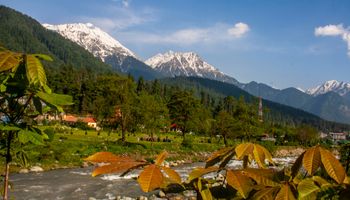
Then there's McLeod Ganj. The Tibetan exile capital in Himachal Pradesh is cool, compact, and cheap. Momos for 60 rupees. Meditation sessions by donation. The Dalai Lama's temple charges nothing to enter. You'll spend more on chai than on culture — and you'll drink a lot of chai.
A Country That Barely Charges Admission
India's greatest experiences don't cost a thing. Walk into almost any Hindu temple — Madurai's Meenakshi Amman, Varanasi's lanes of shrines, the ghats of Pushkar — and you'll pay nothing. Zero. These aren't museums behind velvet ropes; they're living, breathing places of worship where incense smoke drifts past thousand-year-old carvings and priests daub vermilion on your forehead without asking for your credit card.
The Ganges aarti in Varanasi at sunset is free. So is watching the flag-lowering ceremony at the Wagah Border near Amritsar, where Indian and Pakistani soldiers high-kick at each other like competing Rockettes in a geopolitical showdown. The spectacle is absurd, theatrical, and genuinely moving — all without spending a rupee.
Government museums rarely charge foreigners more than 20–50 rupees. National parks are pricier, but city parks and gardens — Lodi Gardens in Delhi, the Cubbon Park in Bengaluru — cost nothing and offer more honest encounters with local life than any guided tour. Sit on a bench in Lodi Gardens at 6 a.m. and you'll share the space with yoga practitioners, speed-walkers in saris, and couples pretending not to hold hands.
Sikh gurdwaras serve free meals to anyone who walks in. The langar at Amritsar's Golden Temple feeds roughly 100,000 people daily — you sit cross-legged on the floor, strangers hand you dal and roti, and nobody asks where you're from or what you believe. It's the most democratic dining experience on earth.
Street food stretches your budget further still. A plate of chole bhature in Old Delhi runs about 40 rupees. Chai from a roadside stall costs 10. India doesn't demand your money. It demands your attention.
India doesn't wait for you to be ready. It grabs you by the collar the moment you step off the plane — the heat, the noise, the impossible density of life pressing in from every direction. And somewhere in that chaos, between a thirty-rupee chai and a stranger's insistence that you sit down and share their meal, you'll realize you stopped being a tourist three days ago. You became a traveler. The budget part is almost laughably easy here; it's the rest that demands something of you. India asks you to be patient, to be uncomfortable, to let go of the schedule you thought you needed. Go alone. Go with less money than you think you need and more curiosity than you think you have. The country will handle the rest.