


The first time I saw a couple argue at the Taj Mahal, it struck me that choosing a honeymoon destination might be more fraught than choosing a spouse. India, with its absurd geographic range — from glacial passes at 18,000 feet to coral reefs barely skimming the Indian Ocean — makes the decision genuinely difficult. This isn't a country that narrows your options. It explodes them.
What I've learned from years of crisscrossing the subcontinent is that the best honeymoons aren't about luxury hotels or Instagram backdrops. They're about rhythm — finding a place whose pace matches yours as a couple. Some pairs need the silence of a Kashmiri lake at dawn. Others need a Goan beach bar at midnight, sand between their toes and cashew feni burning their throats. Neither is wrong.
What follows isn't a generic listicle. These ten destinations span deserts, backwaters, hill stations, and archipelagos, each with a distinct personality and a specific kind of romance. I've included places that work whether you're counting rupees carefully or spending freely. Because the truth about Indian honeymoons is this: the country doesn't charge admission for its best moments — a sunset over Pichola, mist rolling through a cardamom plantation, the impossible green of a Kerala paddy field reflected in still water. Those are free. You just have to show up.
Kashmir — Where the Light Does Things You Won't Believe
Dal Lake at six in the morning is so still that the shikaras seem to float on sky rather than water. The Zabarwan mountains hold the first light like a cup, pouring it gold across the surface. It's the kind of scene that feels digitally enhanced, except your phone camera will never quite capture what your eyes are actually seeing. That gap between reality and photograph — that's Kashmir's whole trick.
Stay on a houseboat in Srinagar and you'll understand a pace of life that most of modern India has abandoned. The boat barely moves. A vendor paddles up selling saffron and papier-mâché boxes. Lotus roots bob in the shallows. Your biggest decision is whether to take a shikara ride before or after the noon meal of rogan josh — lamb braised so slowly in Kashmiri chilies that the meat has essentially surrendered. Order it with steamed rice and a side of haak, the local collard greens cooked with just mustard oil and asafoetida. Simple. Perfect.
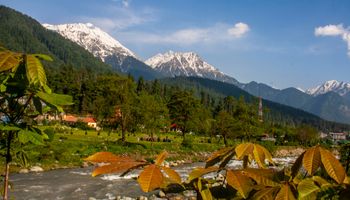
Beyond the lake, Gulmarg offers something different entirely: a gondola ride to nearly 14,000 feet where, in winter, the meadows vanish under deep snow and the silence is so total it has a physical weight. Pahalgam, about two hours southeast, trades altitude for river valleys — the Lidder River runs cold and fast through pine forests that smell like they've been freshly unwrapped. Take a pony ride to Betaab Valley if you want the full Bollywood-romantic experience without a shred of irony.
Here's what nobody tells you: Kashmir's beauty can be almost too intense for conversation. You'll find yourselves sitting together, saying nothing, watching light change on a mountainside for twenty minutes. For a new marriage, that comfortable silence is worth more than a hundred candlelit dinners.
Munnar — Where Kerala Climbs into the Clouds
The drive up to Munnar is the real honeymoon. The road winds through rubber plantations that give way, almost suddenly, to tea — endless, sculpted rows of it carpeting every slope in a green so saturated it looks artificial. Women in bright saris move through the bushes, plucking the top two leaves and a bud with a speed that borders on musical. Roll down the window. The air shifts from humid lowland warmth to something cooler, thinner, scented with eucalyptus.
Munnar itself is a small, slightly chaotic hill town that functions mostly as a base. The magic is all around it. Eravikulam National Park, about fifteen kilometers north, is home to the Nilgiri tahr — a stocky, endangered mountain goat that has precisely zero fear of tourists and will stare you down with the quiet confidence of something that was here first. During September and October, the park's slopes erupt in neelakurinji blooms, a purple flower that appears only once every twelve years. If your honeymoon aligns with this cycle, you've won a cosmic lottery.
The tea museum near town is modest — a few old rollers, some sepia photographs, a tasting room — but it grounds you in the history of these hills. British planters carved Munnar out of the Western Ghats in the 1870s, and their bungalows, many now converted to heritage stays, still carry that particular colonial melancholy of people trying to recreate England in the tropics and failing beautifully.
At night, the temperature drops enough to warrant a blanket, and the quiet is real — not the manufactured silence of a resort, but the actual absence of noise. A flask of fresh Munnar tea on the veranda, your partner beside you, clouds drifting through the valley below. That's it. That's the whole pitch.
Andaman and Nicobar — India's Secret Ocean
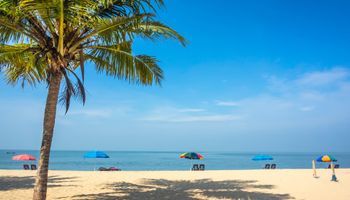
Most Indians don't think of their country as a beach destination on par with Thailand or the Maldives. They're wrong. Radhanagar Beach on Havelock Island — now officially renamed Swaraj Dweep, though nobody uses that — has sand so fine and white it squeaks underfoot, and water that transitions from pale jade to deep teal in a way that feels personally choreographed for whoever is watching.
But the Andamans aren't really about lying on sand. They're about what's underneath the water. Snorkel off Elephant Beach and you'll drift over coral gardens where parrotfish and clownfish go about their business with absolute indifference to your existence. For certified divers, the waters around Havelock and Neil Island (Shaheed Dweep) offer wall dives and reef systems that rival anything in Southeast Asia, at a fraction of the cost. The visibility, particularly between December and April, is startling — thirty meters on a good day.
Port Blair, where you'll likely land, deserves at least a half-day for the Cellular Jail. It's a sobering place — the British imprisoned Indian freedom fighters here in conditions designed to break them — and it may seem an odd recommendation for a honeymoon. But standing in those narrow cells, reading the names carved into walls, recalibrates something. You leave grateful for every freedom, including the freedom to be here together, choosing joy.
The counterintuitive thing about the Andamans is that the infrastructure is still deliberately limited — ferries run on their own schedule, Wi-Fi is unreliable, restaurants close early. For honeymooners, this isn't a bug. It's the feature. The islands force you into each other's company in the best possible way.
Udaipur — Romance Built in White Marble and Water
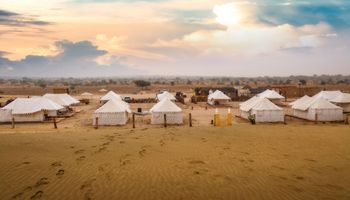
Udaipur earns its reputation not through grandeur alone but through composition. The city is essentially a painting that someone forgot to frame — white palaces rising from lake water, the Aravalli hills curving behind them in dusty ochre, pigeons wheeling above the ghats in the late afternoon. Sit on the rooftop of any Old City guesthouse at sunset and you'll watch Lake Pichola turn from blue to copper to ink in the space of thirty minutes.
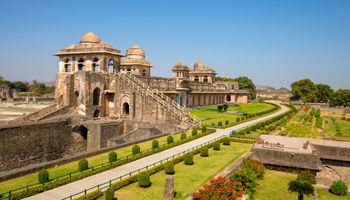
The City Palace is the obvious first stop, and for once, the obvious choice is the right one. It's enormous — a sprawling complex built over four centuries by successive maharanas, each adding rooms and courtyards like architectural one-upmanship. The peacock mosaics in the Mor Chowk courtyard are so precise they seem to flutter. More intimate is Jag Mandir, a palace on an island in Lake Pichola that you reach by boat — the same island where Shah Jahan once took refuge, reportedly finding inspiration for what would eventually become the Taj Mahal. Whether that's historically airtight doesn't matter. The setting makes it believable.
What elevates Udaipur beyond postcard beauty is its street life. The narrow lanes around Jagdish Temple smell of incense and fresh marigolds. Miniature painting studios line the alleys, and if you stop to watch an artist work — a single-hair brush tracing the outline of a Rajput king on handmade paper — you'll understand a patience that modern life has mostly extinguished.
Eat at Ambrai, where the tables face the lake and the lit-up palace across the water. The dal baati churma — baked wheat balls with lentils and a crumbled sweet — is Rajasthan on a plate: rough, hearty, unexpectedly tender. Like the city itself.
Goa — The Honeymoon That Doesn't Take Itself Too Seriously
Goa is two places pretending to be one. North Goa — Baga, Calangute, Anjuna — is loud, sandy, slightly sunburned, full of bass drops and cheap cocktails. South Goa — Palolem, Agonda, Cabo de Rama — is quieter, slower, and infinitely more suited to two people who want to actually hear each other speak. Choose wisely. This single decision will define your entire trip.
The Latin influence here isn't a footnote — it's baked into the architecture, the food, and the rhythm of daily life. Four and a half centuries of Portuguese rule left behind whitewashed churches with Baroque facades, vindaloo that bears almost no resemblance to its British-Indian namesake, and a relaxed attitude toward alcohol that the rest of India quietly envies. The Basilica of Bom Jesus in Old Goa, which holds the remains of St. Francis Xavier, is genuinely moving regardless of your faith — the interior dim, the stone cool, the silence real even when tour groups hover outside.
For food, skip the beachside shacks serving "Continental" pasta and find a place doing Goan prawn curry with rice — coconut milk, kokum for tartness, a controlled heat from local Kashmiri chilies. Pair it with a cold Kingfisher and the sound of waves. Ritz-level dining it isn't. But the ratio of pleasure to rupees spent is unbeatable.
Here's what makes Goa work for honeymooners who aren't the palace-and-spa type: it allows you to be unglamorous together. You can rent a scooter, get lost down laterite roads, stumble into a village bar, and discover that the best version of your relationship might be the one with helmet hair and red dust on your ankles.
Shimla and Manali — Cold Air, Warm Proximity
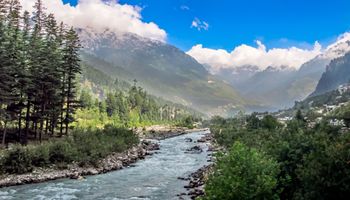
There's a reason Indian couples have been honeymooning in Himachal Pradesh since before the word "honeymoon" entered Hindi conversation. Cold weather forces closeness. When the temperature outside your hotel window sits around freezing and the deodar trees are heavy with snow, sharing a blanket isn't romantic — it's practical. That the practical and the romantic happen to overlap is Himachal's gift.
Shimla, the former British summer capital, still wears its colonial bones visibly — The Ridge, Christ Church with its stained-glass windows, the timber-framed buildings along Mall Road that could pass for a Surrey high street if you squinted hard enough. The Kalka-Shimla toy train, a narrow-gauge line that climbs through 102 tunnels and over 800 bridges, is worth the five-hour journey purely for the drama of the approach: each curve reveals another valley, another ridge, another reason the British chose this specific place to escape the plains.
Manali, about eight hours north by road, trades Shimla's Edwardian order for mountain-town chaos. The old village, across the Manalsu stream from the main town, still has traditional Himachali houses with wooden balconies and slate roofs. Hadimba Temple sits in a cedar forest, its four-tiered pagoda roof a startling contrast to the Hindu temples you'll see elsewhere. The road from Manali to Solang Valley — ropes courses, paragliding, snow activities depending on season — is where most couples spend their adventure quota.
The surprise of Himachal, though, isn't the scenery. It's the food. In Shimla's Lakkar Bazaar, try siddu — steamed wheat bread stuffed with poppy seed paste, served with ghee. In Manali, the trout from local streams, simply pan-fried, is the kind of meal you'll remember not for its complexity but for its honesty.
Coorg — Coffee, Mist, and Merciful Quiet
Coorg — Kodagu, if you're being proper — doesn't announce itself. You drive through increasingly dense forest, the road narrows, and then suddenly the air smells different: wet earth, coffee blossom, something faintly spiced that you can't identify until someone tells you it's wild cardamom. The entire district sits between 900 and 1,700 meters in the Western Ghats, and the mist doesn't roll in so much as it simply lives here, drifting between trees like a permanent resident.
The coffee plantations are the main draw, and staying on one — in a converted planter's bungalow with deep verandas and creaking floorboards — is the closest India gets to a rural European holiday. Morning walks through Robusta and Arabica rows, with pepper vines climbing the silver oaks used for shade, are meditative in a way that no yoga retreat can replicate. The estate manager, if you ask nicely, might walk you through the process from cherry to cup. You'll never look at your morning coffee the same way.
Abbey Falls, about ten kilometers from Madikeri, the district capital, is most impressive during and just after the monsoon, when the water drops about seventy feet in a curtain of white noise. Raja's Seat, a garden on the edge of Madikeri that the Kodagu kings used as a sunset viewpoint, is genuinely lovely at dusk — the valley below fills with golden light and the silhouettes of distant hills stack like theater flats.
Kodava cuisine, the food of Coorg's martial community, revolves around pork and rice. Pandi curry — pork slow-cooked with kachampuli, a dark vinegar made from a local fruit — is aggressively flavorful, tangy and rich in a way that defies its simple ingredient list. Share a plate. Argue over the last piece. That's romance in Coorg.
Pondicherry — Where India Learned to Linger Over Lunch
The French left Pondicherry in 1954, but they forgot to take the atmosphere. Walk through the White Town — the grid of streets between the canal and the sea — and the mustard-yellow colonial buildings with their louvered shutters and bougainvillea-draped courtyards feel more Provençal than subcontinental. Street signs still carry French names: Rue Suffren, Rue Dumas, Rue Romain Rolland. The gendarme-style képi caps disappeared decades ago, but the croissants at Baker Street remain impressively legitimate.
The Promenade along the Bay of Bengal is best before seven in the morning, when joggers and walkers share the road and the Gandhi statue faces the sea with its back firmly turned to France. The rocky beach isn't swimmable — the surf hits basalt blocks — but the light at sunrise, flat and pink across the water, has a quality that photographers spend careers chasing.
Auroville, about twelve kilometers north, is either a utopian experiment in human unity or the world's most elaborate commune, depending on your tolerance for idealism. The Matrimandir — a giant golden sphere surrounded by manicured gardens — is genuinely striking, whatever you think of the philosophy behind it. Book a meditation session inside if you can; the silence within that sphere, with light refracting through a crystal, is unlike anything you'll encounter elsewhere in India.
Pondicherry's real romance, though, happens at the table. The Tamil-French fusion here is unique: think bouillabaisse made with local catch and curry leaves, or crème brûlée flavored with filter coffee. Dine at a courtyard restaurant in White Town, where the ceiling fans turn slowly and nobody rushes you, and you'll understand what the French actually left behind. Not buildings. A philosophy of lunch.
Darjeeling and Sikkim — Altitude and Intimacy
The toy train to Darjeeling climbs in switchbacks through tea gardens so steep that the pickers work at angles that would make a mountain goat nervous. At Batasia Loop, the track curls around itself in a full spiral, and on a clear morning — emphasis on clear, because Darjeeling hoards its clouds jealously — Kanchenjunga fills the northern horizon like a wall of light. At 8,586 meters, it's the third-highest peak on earth, and seeing it from Tiger Hill at dawn, with the first rays turning the snow from grey to gold to blinding white, is one of those moments that justifies every alarm clock ever set for 4 AM.
The town itself is a vertical maze of narrow streets, prayer flags, and tea shops. Glenary's, a bakery and restaurant on Nehru Road since 1935, serves the kind of plum cake and hot chocolate that colonial hill stations perfected — not gourmet, but exactly right for the altitude and the cold. The Darjeeling Himalayan Railway's museum, small and slightly dusty, is worth an hour if you care about engineering as a form of stubbornness.
Sikkim, accessible from Darjeeling via a border crossing at Rangpo, is a different country in all but passport. Buddhist monasteries perch on impossible ridges — Rumtek, the seat of the Karmapa, has an interior so gold and elaborate it verges on hallucinatory. Tsomgo Lake, at 12,313 feet, sits frozen or half-frozen for much of the year, its surface reflecting clouds and yak herders in equal measure.
The unexpected truth about this region: the difficulty of getting around — winding roads, unpredictable weather, permits for certain areas — creates its own intimacy. When you're stuck together in a jeep waiting for a landslide to clear, watching clouds eat a valley below, the honeymoon becomes an adventure. And adventures bond people faster than sunsets ever could.
Alleppey — Floating Into Marriage
A Kerala houseboat — kettuvallam, properly — is a rice barge reinvented. The original vessels carried grain through the backwater canals of Kuttanad; now they carry honeymooners, and the conversion is surprisingly elegant. The hull is jackwood and anjili, held together with coir rope rather than nails, and the roof is woven palm thatch that keeps the interior remarkably cool. You board at Alleppey's finishing point jetty, and within thirty minutes, the noise of the town dissolves into the sound of water against wood and the occasional call of a kingfisher.
The backwaters are a network of canals, rivers, and lagoons threaded through a landscape of paddy fields and coconut groves so flat that the tallest thing for miles is a church steeple. The boat moves at walking pace. Your crew — a driver, a cook, typically a helper — keeps a respectful distance while producing meals that are quietly extraordinary: karimeen pollichathu, pearl spot fish marinated in a masala of shallots, ginger, and curry leaves, wrapped in banana leaf, and cooked over coals. The fish is so fresh it was likely swimming that morning.
At night, the boat anchors in a quiet stretch of canal. There are no streetlights, no headlamps, no glow from a nearby town. The darkness is total. Stars appear in numbers you forgot were possible. The water laps. Something splashes in the distance — an otter, maybe, or a snake. Your world has shrunk to the size of this boat, this person beside you, this night.
One honest note: the backwaters can get crowded during peak season, with houseboats queuing like floating traffic jams. Book a route through the narrower canals of Kuttanad rather than the main Vembanad Lake stretch, and ask specifically for the quieter waterways. The difference between a magical night and a mediocre one is often just which canal your driver chooses.
The Calculus of Togetherness
India doesn't do honeymoon romance the way the Maldives or Santorini does — there's no single formula of overwater villa, infinity pool, repeat. What India offers instead is variety so extreme that every couple can find their own version of intimacy. The couple who bonds over a challenging trek to a Himalayan pass has nothing in common with the pair sipping wine on a Goan beach, and that's precisely the point.
Privacy, which can be scarce in a country of 1.4 billion people, becomes something you actively create rather than passively consume. A houseboat on empty backwaters. A heritage haveli where you're the only guests. A mountain lodge where the nearest neighbor is a rhododendron forest. India makes you work for your seclusion, and that effort — the shared project of carving out your own space — is itself a kind of romantic practice.
Budget flexibility is the other advantage. A houseboat in Alleppey can cost as little as a few thousand rupees per night or as much as fifty thousand, depending on the vessel. Goa offers everything from beach huts to boutique villas. Udaipur ranges from rooftop guesthouses where you'll pay a thousand rupees for a lake view to the Taj Lake Palace, where you'll pay considerably more. The romance doesn't scale with the price tag. Some of the most memorable nights happen in the simplest rooms.
What makes India genuinely exceptional for honeymooners is that it resists monotony. No two days feel the same, no two meals taste alike, and no two views from your window repeat. For a relationship just beginning, that's not a bad metaphor to start with.
When the Calendar Favors Lovers
India's size means there's no single "best time" — only best times for specific places, and getting this wrong can turn a dream trip into a soggy, sweaty, or snowed-in ordeal. October through March is the broad sweet spot for most destinations, but the details matter more than the generalization.
Kashmir is two different honeymoons depending on when you go. September to November offers golden chinar trees and crisp air; December through February brings snow that transforms Gulmarg into a ski destination and Dal Lake into a scene from a Russian novel. Avoid July and August unless you enjoy rain as a personality trait. Rajasthan — Udaipur in particular — is best from October through February, when the daytime heat is manageable and the nights are cool enough for a shawl. By April, the marble of the City Palace starts radiating heat like an oven.
Kerala's backwaters and Munnar peak between September and March, though the monsoon months of June through August have their own fierce beauty — Alleppey in the rain is atmospheric rather than ruined, and hotel prices plummet. Goa's season runs from November to February; arrive in May and you'll find shuttered shacks and air thick enough to chew. The Andamans share this winter window, with the calmest seas and best diving visibility between December and April.
Darjeeling and Sikkim are clearest from October to December and again in March through May, though October's post-monsoon clarity offers the best mountain views of the year. Shimla and Manali split their appeal: snow lovers want December through February, while those preferring green valleys and open passes should target May through June. Pondicherry, sitting on the Coromandel Coast, catches the northeast monsoon in November and December — plan around it or plan for indoor meals and wet promenades.
Love in the Details
The grand gestures — a sunset boat ride on Lake Pichola, a gondola over Gulmarg's snow — are obvious. What makes an Indian honeymoon actually romantic, though, are the smaller, stranger, less Instagrammable moments. Learning to eat a full Kerala sadya on a banana leaf with your right hand while your partner laughs at your technique. Getting matching mehndi done by a roadside artist in Udaipur for a hundred rupees. Sharing a single umbrella during a sudden Coorg downpour and arriving at the coffee estate drenched and euphoric.
In Pondicherry, rent bicycles and ride through the Tamil quarter at dawn — the kolam rice-powder designs on doorsteps are different every morning, and the quiet ritual of their creation is more romantic than any candlelit dinner. In Alleppey, ask your houseboat cook to teach you both how to make a proper fish molee; the negotiation over who handles the coconut milk and who chops the green chilies is a miniature rehearsal for decades of shared kitchens.
Darjeeling's Chowrasta square, where locals gather to sit and watch the mountains, is perfect for an afternoon of doing absolutely nothing together — buy roasted peanuts from a vendor, find a bench, and let the cold air and the Kanchenjunga view render conversation optional. In Goa, the Saturday Night Market at Arpora is controlled chaos — live music, food stalls, craft vendors — and navigating it together, hand in hand, is its own small adventure.
The Andamans offer a genuinely unique romantic activity: bioluminescent plankton walks on certain beaches, where your footsteps trigger blue-green light in the wet sand. It's brief, seasonal, and not guaranteed — which makes it, when it happens, feel like the ocean is personally celebrating your arrival. Take off your shoes. Walk the shoreline. Watch the light follow you both.
India, as a honeymoon destination, doesn't offer perfection. It offers something better: texture. The trains will be late. The autorickshaw driver will overcharge you. The hotel room won't quite match the photographs. None of that matters. What matters is that you'll return home with stories — real ones, with edges and smells and sounds — rather than a curated highlight reel of someone else's idea of romance. India asks you to build your own love story from the materials at hand: spice, water, stone, light, chaos, and the quiet moments you steal between them. Start planning. But leave room for the plan to fall apart. That's where the best honeymoons live.