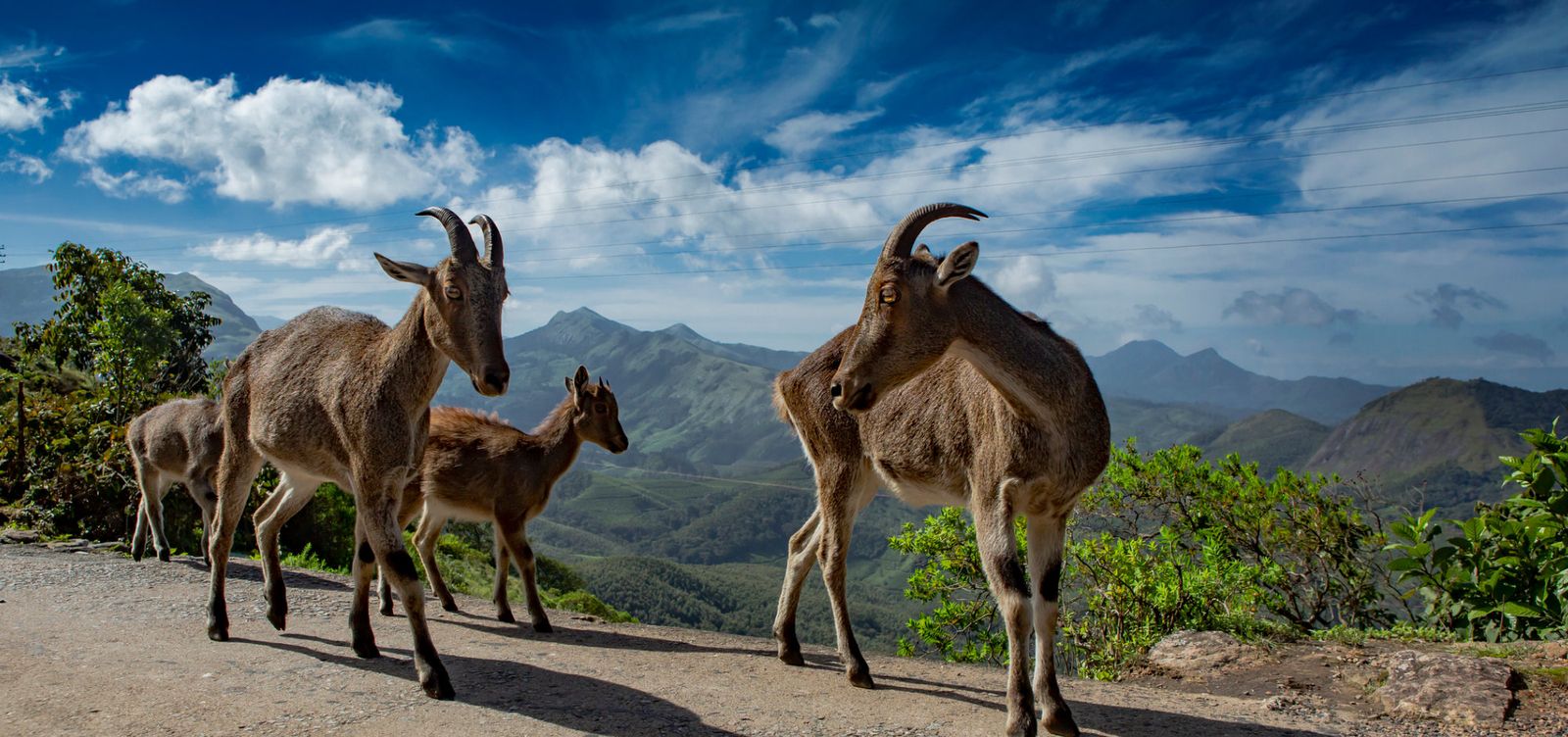
At 7,000 feet, the wind doesn't greet you at Eravikulam National Park — it ambushes you. Sharp, cool, carrying the faint sweetness of wild balsam, it sweeps across rolling grasslands that look nothing like the tropical Kerala you left behind a few hours ago. This is not jungle India. This is something far stranger — a high-altitude grassland ecosystem draped over the Western Ghats, where endangered mountain goats graze within arm's reach, entirely unbothered by your presence or your camera. Eravikulam covers roughly 97 square kilometers of shola grasslands and montane forest near Munnar, and its existence serves one primary purpose: keeping the Nilgiri tahr alive. A stocky wild goat found nowhere else on Earth. The park doesn't perform for you. It operates at a frequency most wildlife sanctuaries have long abandoned — quiet, unhurried, startlingly intimate.
The Goat That Rewrote the Map
By the 1970s, fewer than 100 Nilgiri tahr survived in these hills. Hunted nearly into oblivion, the species was circling the drain. Eravikulam's designation as a national park in 1978 wasn't conservation as strategy — it was conservation as emergency room surgery. Today, this single reserve shelters roughly 800 animals, approximately half the world's entire tahr population.
But here's the thing that catches you off guard: the encounter itself isn't defined by rarity. It's defined by closeness. The tahr here have grown so habituated to human footfall along the designated pathways that they graze mere feet from where you stand, their coarse brown coats rippling in the highland wind. Males, darker and stockier, carry curved horns that sweep backward like a sculptor's afterthought. You don't need binoculars. You barely need to look up.
This casual nearness feels counterintuitive for a critically endangered species, and it reveals something important about how carefully the park has managed the membrane between conservation and access. The tahr aren't tame — they simply don't register you as a threat. There's a crucial difference, and standing among them on a cold morning, you feel it in your chest.
A Landscape That Belongs Somewhere Else
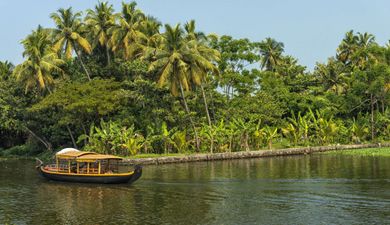
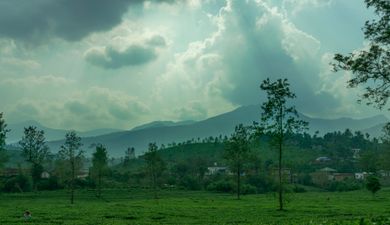
Most of Kerala lives at sea level, under coconut palms and monsoon skies. Eravikulam dismantles that expectation within minutes. The landscape here reads more like the Scottish Highlands than South India — vast undulating grasslands punctuated by stunted shola forests that cling to the valleys like dark green veins. The grass itself, primarily species of Chrysopogon, shifts between gold and green depending on the season, lending the hillsides a texture that's restless, alive.
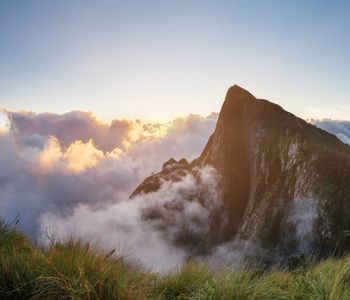
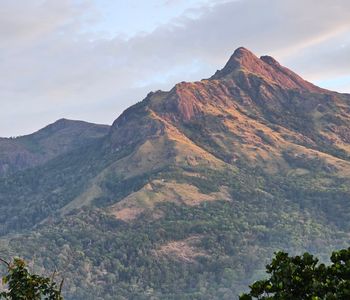
Anamudi, the highest peak in South India at 2,695 meters, anchors the park's southern boundary. You can see its broad summit from several points along the walking trail, though trekking to the top requires separate permission that's rarely granted. The peak is less dramatic than its reputation suggests — a wide grassy dome rather than a jagged pinnacle — but its sheer mass grounds everything around it, giving the whole landscape a gravitational center.
Between January and March, the park closes for the tahr calving season. This isn't bureaucratic inconvenience. It's the park choosing its animals over its visitors — a decision worth respecting rather than resenting.
The Twelve-Year Question
Every twelve years, Eravikulam turns violet. The Neelakurinji flower — Strobilanthes kunthiana — blooms in a mass synchronization event that covers entire mountainsides in a blue-purple haze so dense it looks photoshopped. The last major bloom was in 2018, which puts the next one around 2030. If your timing aligns, expect tens of thousands of visitors and the complete dissolution of Munnar's quiet hill-station composure.
Outside those bloom years, the flower is invisible — just another unremarkable shrub in the undergrowth, biding its time. This twelve-year cycle gives Eravikulam a temporal dimension that few parks anywhere possess. You're either witnessing something extraordinary, or walking through a landscape holding its breath for the next decade. Both carry weight.
One Trail, No Distractions
No jeep safaris. No boat rides. No elephant encounters. Eravikulam offers a single walking trail, roughly three kilometers, that climbs gradually from the entrance zone into the upper grasslands. The Kerala Forest Department runs shuttle buses from the ticket counter to the trailhead — a fifteen-minute ride through tea plantations and eucalyptus stands.
On foot, the path is paved and manageable for most fitness levels, though the altitude can leave lowland lungs mildly winded. The walk takes one to two hours depending on how often you stop. And you will stop — not because you're told to, but because cloud banks roll through without warning, swallowing entire hillsides, then releasing them seconds later in sharp golden light. The mountain edits itself in real time.
Entry runs from 7:30 a.m. to roughly 4 p.m., with the last shuttle typically departing by 3 p.m. Mornings deliver the clearest skies and the thinnest crowds. By midday, mist often settles over the upper reaches — atmospheric, yes, but it narrows visibility to a few dozen meters. Entry fees sit at around 125 rupees for Indian nationals and 420 rupees for foreign visitors, though these figures shift periodically. Children under five enter free.
The Road Up
Eravikulam's entrance lies about 15 kilometers northeast of Munnar town. Auto rickshaws and hired cars cover the distance in roughly 30 minutes, climbing steadily through tea estates that blanket every visible slope in geometric green rows. The road narrows as it approaches the park gate, and during peak season — October through February — traffic can choke the final stretch. Arriving before 8 a.m. solves this problem entirely.
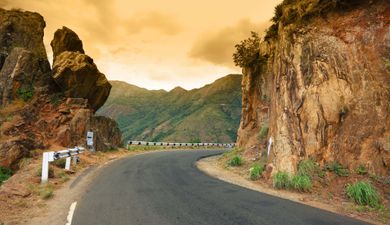
Munnar connects to Kochi by road, a four-to-five-hour journey through winding ghat roads that test both driver skill and passenger stomachs in equal measure. The nearest railway station is Aluva, roughly 110 kilometers away, with buses and taxis handling the mountain ascent from there. Flying into Cochin International Airport puts you closest — the full drive to Munnar takes a steady five hours, the scenery improving with every hairpin turn.
What Stays With You
Eravikulam won't overwhelm you. It doesn't try. The park lacks the megafauna drama of Ranthambore, the sheer species-count spectacle of the Western Ghats' lower forests. What it offers instead is rarer and harder to replicate — a landscape where altitude, light, wind, and a single endangered species combine into something that shifts your understanding of what a park can be. You walk a modest trail through high grasslands, watch wild goats graze against a backdrop of moving clouds, and leave with the strange conviction that less, done with honesty and restraint, is more than enough. Come early. Bring a windbreaker. Let the mountain do the talking.