God's Own Country Family Grand Tour – Complete Kerala Circuit

9 Nights / 10 Days
Kochi (1N)Munnar (2N)Thekkady (1N)Alleppey (2N)Kollam (1N)Kovalam (2N)
Starting from ₹68,000
Compare quotes from top 3 travel agents

Kerala is not one place. It's several, stacked against each other like geological strata — the port-stained trading floors of Kochi giving way to tea country so vertical you feel your ears pop, then the pepper forests of the Periyar basin, and finally the waterlogged lowlands where life moves at the speed of a rice barge. The coast, when you reach it, feels like an exhalation. Kovalam's laterite cliffs drop to a crescent of sand where fishing boats still outnumber loungers, and the lighthouse blinks at dusk as if keeping time for no one in particular. This is a state where the Arabian Sea and the Western Ghats are never more than a few hours apart, and the air shifts from salt to cardamom to coconut oil depending on which direction you're driving. It is lush, yes — almost aggressively so — but it is also layered, complicated, and full of small daily dramas played out in temple courtyards and tea stalls and on the backwater jetties where cormorants dry their wings.

This ten-day circuit traces the full arc of that landscape, moving from city to hill station to spice plantation to houseboat to coast, with each transfer deliberately paced so the family never spends more than half a day in a vehicle. You'll wake to mist in Munnar and to the sound of oars in Alleppey. You'll watch elephants drink at the edge of Periyar Lake and eat karimeen fried whole at a canalside kitchen in Kollam. The itinerary tilts between active mornings — guided walks, boat rides, market visits — and unhurried afternoons that leave room for a poolside nap or a second round of parottas. Children will find things to touch, climb, and taste at every stop. Adults will find, more quietly, that Kerala rewards slowness — that the best moments here tend to arrive unscheduled, in the gap between one plan and the next.
Itinerary

Day 1Kochi — Spice Dust and Stage Paint

Morning

Arrive at Cochin International and let the humidity introduce itself — it will not be subtle. Your driver meets you in the arrivals hall and delivers you to Fort Kochi, where the hotel sits on a lane narrow enough that autorickshaws think twice. Check in, shower off the flight, and walk to the Chinese fishing nets at the tip of the peninsula. They're best in the first half of the morning, when the fishermen still work them by hand and the catch goes straight to the stalls behind for cleaning and cooking to order.

Afternoon

Fort Kochi rewards aimlessness. Walk through the spice warehouses on Jew Town Road, where the turmeric-stained floors and sacks of raw cardamom smell the way they did three centuries ago when the Dutch ran the trade. The Paradesi Synagogue is worth the entry fee for its hand-painted Chinese floor tiles alone — each one slightly different, brought by ship in 1762. Stop at the Mattancherry Palace for its Kerala murals, which are explicit enough to make teenagers giggle and adults linger.

Evening

Tonight is Kathakali. The performance halls in Fort Kochi open their doors an hour before the show so you can watch the actors apply their own makeup — layers of rice paste and vegetable dye built up over forty minutes into masks that are somehow more expressive than bare faces. The drumming starts low and gets under your skin. Afterward, eat appam and stew at a local restaurant where the coconut milk is fresh and the fish was swimming that morning.

Day 2Kochi to Munnar — The Climb into Green

Morning

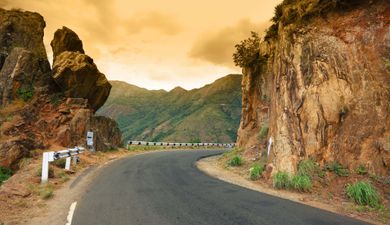
Leave Kochi by eight. The drive to Munnar is roughly four and a half hours, and the landscape will narrate its own transformation — flat paddy fields giving way to rubber plantations, then pineapple gardens, then the first switchbacks as the road corkscrews into the Ghats. Stop at Cheeyappara Falls, about two hours in, where the water drops in seven tiers across the rock face. The mist from the falls is cold, which will feel like a gift after the coastal heat.

Afternoon

You arrive in Munnar and the temperature has dropped ten degrees. The town itself is unremarkable — a congested market settlement on a ridge — but the country around it is extraordinary. Check into your resort, which sits among the tea estates rather than in town. Spend the afternoon doing very little. The altitude, the cool air, and the silence after the lowland noise conspire to make you drowsy. Let them.

Evening

Walk the estate paths near your property as the light softens. The tea bushes run in contour lines across the hills like an agricultural fingerprint, and the women who pick them will be heading home along the same paths, baskets on their backs. Dinner is Kerala fare at the resort — a thali with local vegetables, sambar, and possibly the best rasam you've had, peppery and sharp enough to clear the sinuses after the mountain air.

Day 3Munnar — Tea, Altitude, and the Mattupetty Plateau

Morning

Start early at the Kanan Devan Tea Museum, which is run by the workers' cooperative that now owns the plantations the British left behind. The factory tour shows the full process — withering, rolling, fermenting, drying — and the smell of oxidizing leaves is so dense it almost has texture. Buy tea here; it's fresher and cheaper than anything in the shops below. Then drive to Mattupetty Dam, where the reservoir sits in a bowl of hills and the water is absurdly still on a calm morning.

Afternoon

Head to Eravikulam National Park if it's open — the park closes annually during the Nilgiri tahr breeding season, so check ahead. If accessible, the bus ride up the slope takes you into shola grassland where the tahr, a wild mountain goat with a Roman nose and no fear of cameras, grazes within arm's reach. Children tend to be mesmerized. If the park is closed, divert to the Echo Point trail, where the valley acoustics bounce your voice back with an unsettling delay.

Evening

This is a good night for a bonfire if your resort offers one. The mountain darkness comes fast in Munnar — by six-thirty the hills are silhouettes — and the temperature drops enough to warrant a sweater. Eat early. The quiet here is the kind that makes you realise how much noise you've been living with, and sleep comes like a door closing gently.

Day 4Munnar to Thekkady — Descending into Spice Country

Morning

The drive from Munnar to Thekkady takes about four hours and descends from tea into spice. The gradient shift is visible — tea gives way to coffee, coffee to cardamom and pepper, and the air thickens as you lose altitude. Stop at a spice garden en route, where someone will walk you through vanilla vines, nutmeg trees, and pepper creepers, crushing leaves between their fingers and holding them up for you to smell. This is not a tourist show; this is how the economy works here.

Afternoon

Arrive in Thekkady and check in to your hotel, which sits on the perimeter of the Periyar Tiger Reserve. After lunch, book the guided nature walk — not the boat ride, which is crowded and noisy, but the two-hour walking trail along the lake's edge with a forest department naturalist. The chances of seeing a tiger are essentially zero, but you'll see sambar deer, Malabar giant squirrels, and possibly a herd of wild elephants coming down to the water to drink. The naturalist will point out things you'd never notice: a spider's web the size of a dinner plate, a tree bark that smells of cinnamon, animal tracks in the mud.

Evening

Thekkady's town centre has a nightly Kalaripayattu demonstration — Kerala's martial art, which predates most Asian fighting forms and looks like a cross between gymnastics and actual combat. The performers are young and terrifyingly fast. The oil lamps throw their shadows high against the walls. Eat dinner at a local restaurant where the fish curry uses kokum instead of tamarind, giving it a sourness that's darker and more interesting.

Day 5Thekkady to Alleppey — From Forest to Water

Morning

Leave Thekkady after breakfast. The drive to Alleppey is roughly four and a half hours, and it takes you from the Ghats down to sea level in a single, sweeping descent. The vegetation changes completely — the tight forests loosen into coconut groves, and the roadside shifts from spice shops to fish markets. You'll cross the first canals about an hour before Alleppey, and the landscape flattens into a patchwork of paddy fields and water.

Afternoon

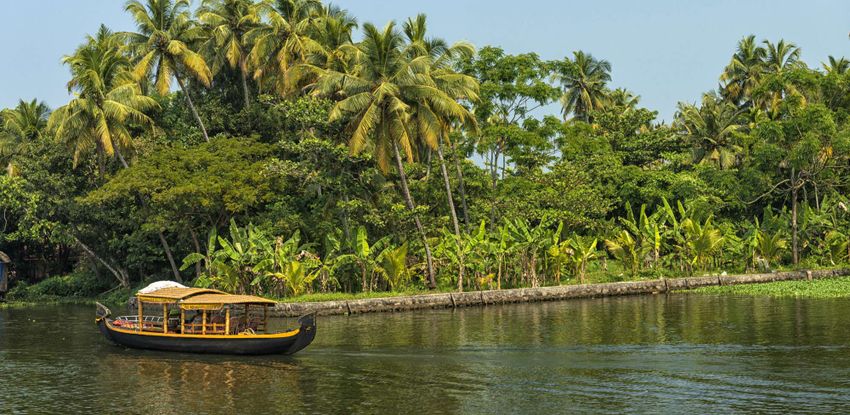
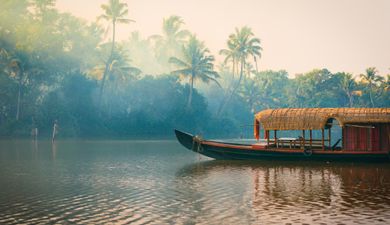
Board your houseboat — a converted rice barge, kettuvallam, with a thatched roof, a bedroom, and a cook who works from a kitchen the size of a cupboard and produces meals that would embarrass most restaurants. The boat pushes off from the Alleppey jetty and slides into the backwater network. The first hour is the widest — Vembanad Lake stretches to the horizon — and then the channels narrow, passing between paddy fields where egrets stand like white punctuation marks. The cook will serve lunch on deck: fish moilee, avial, rice, and a sambar that's been simmering since morning.

Evening

The houseboat moors for the night at a designated point along the canal. This is when the backwaters reveal their trick — the silence. No engines, no horns, just the occasional splash of a fish or the call of a kingfisher settling for the night. The sky turns copper, then violet. Your cook prepares dinner — likely prawns in coconut, a vegetable thoran, and appam — and you eat under a sky that's dense with stars because there's no competing light for miles.

Day 6Alleppey — A Second Day on the Water

Morning

The houseboat disembarks you at the jetty by mid-morning, but the water isn't done with you yet. Check into your Alleppey hotel, which should sit along the canal network or on the fringes of the lake. After settling in, take a canoe ride through the narrower village canals — the ones too tight for houseboats. A paddler steers you past toddy tappers climbing coconut palms with nothing but a rope and nerve, past women washing clothes on the stone steps, past a church with its feet in the water. This is the backwater life the houseboats can't access.

Afternoon

Alleppey Beach is worth an hour — not for swimming, as the undertow can be strong, but for the scene. Fishing boats painted in carnival colours line the sand, and the evening's catch is being sorted, sold, and argued over in Malayalam. Walk the pier if the sea is calm. Then head to a coir-making workshop in one of the canal villages, where coconut fibre is twisted into rope by hand, a process that hasn't changed in centuries and that children find unexpectedly absorbing.

Evening

Eat at one of the toddy shops near the canal — rough-hewn, low-ceilinged places where the karimeen fry is fried to a crackling crisp and the tapioca comes in chunks with a chilli-coconut chutney that burns clean. Toddy — fermented coconut sap — is an acquired taste, sour and slightly fizzy, but it's the local drink and this is its natural habitat. The family can order lime soda instead without shame.

Day 7Alleppey to Kollam — The Ashtamudi Crossing

Morning

The drive from Alleppey to Kollam is about two and a half hours by road, but if timing allows, take the state-run boat service across Ashtamudi Lake instead — it's slower, but the approach to Kollam by water gives you the town the way traders first saw it, rising from the lakeside with its warehouses and cashew factories intact. If the boat schedule doesn't align, the road route passes through Kayamkulam and Karunagappally, where the landscape is flat, green, and laced with canals.

Afternoon

Kollam is older than Kochi as a trading port — the Chinese, Arabs, and Portuguese all came here first — but it wears its history with less self-consciousness. Check into your hotel and visit Thangassery, the old lighthouse headland where crumbling Portuguese and Dutch fort walls jut from the undergrowth. The lighthouse itself is climbable, and from the top you see the Arabian Sea on one side and Ashtamudi Lake on the other, which makes the geography of this coastal strip suddenly, viscerally clear.

Evening

Walk the Kollam waterfront as the fishing boats come in. The cashew industry runs this town — you'll smell the roasting nuts from certain streets — and the local shops sell fresh cashew at prices that make airport duty-free look criminal. Dinner tonight should be simple: a plate of meen curry and red rice at a family restaurant where the cook's grandmother probably used the same recipe, and the ceiling fan does most of the work.

Day 8Kollam to Kovalam — The Southern Coast

Morning

Drive south to Kovalam — about two and a half hours through Thiruvananthapuram. Stop in the capital for an hour at the Napier Museum, a bizarre Indo-Saracenic building painted in stripes that houses a collection of bronze idols, ivory carvings, and a temple chariot. The Sri Padmanabhaswamy Temple across the road is one of the richest religious institutions on earth — non-Hindus can't enter, but the exterior gopuram and the tank are worth seeing for the scale alone.

Afternoon

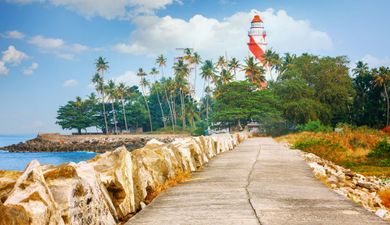
Arrive in Kovalam and check into your hotel on or near Lighthouse Beach. The beach itself is a crescent of sand bracketed by rocky headlands, and the lighthouse at the southern end gives it a focal point most Indian beaches lack. Swim if the sea allows — the lifeguards here are attentive and will wave you back if the current shifts. The water is warm enough that getting in takes no courage at all, just a willingness to taste salt.

Evening

The restaurants along the beach promenade lay their fish on ice at the front — you point, they weigh, they grill. Kingfish steaks rubbed with turmeric and chilli, grilled over coconut husk, are the thing to eat here. The sunset behind the lighthouse is good, but the afterglow — when the sky turns the colour of bruised fruit and the first lamps come on along the cliff — is better. Sit with it.

Day 9Kovalam — Cliffs, Temples, and the Southernmost Point

Morning

Drive forty-five minutes to Kanyakumari, where the Arabian Sea, the Indian Ocean, and the Bay of Bengal meet at India's southern tip. The Vivekananda Rock Memorial sits on an island just offshore — the ferry ride takes five minutes and the rock itself is worth the visit for the meditation hall and the view back at the mainland. The light here is different from anywhere else in Kerala: harder, more equatorial, bouncing off three bodies of water at once.

Afternoon

Return to Kovalam and spend the afternoon at the beach or the pool — the trip has covered serious ground over nine days, and the body deserves a few hours of nothing. If you need a purpose, walk to Vizhinjam, the fishing village just south of Kovalam, where the boats are hauled ashore by hand each afternoon and the catch is auctioned right on the sand. The harbour mosque and the rock-cut cave temple sit within two hundred metres of each other, which tells you everything about this coast's history of coexistence.

Evening

This is the last full evening. Eat well. The seafood restaurants along the cliff path in Kovalam serve lobster and tiger prawns that were in the ocean that morning. Order the Kerala parotta on the side — flaky, layered, slightly sweet — and a fresh lime soda with salt. The lighthouse beam sweeps across the water in slow arcs, and the sound of the surf is the sound of a trip winding down to its natural close.

Day 10Kovalam — Departure Morning

Morning

Wake early if you can manage it. The beach at six-thirty, before the sunbeds appear, belongs to the fishermen and the crows and possibly you. The sand holds the coolness of the night and the water is flat and grey-green. It's a good final image — the Arabian Sea doing nothing in particular, the coast stretching north toward every place you've been. Breakfast at the hotel, then check out and load the car for the drive to Trivandrum airport, about thirty minutes south.

Afternoon

Your flight departs from Trivandrum International. The airport is small and manageable — allow ninety minutes for check-in and security, no more. The drive from Kovalam passes through the city's southern suburbs, past banana vendors and tailoring shops and a temple elephant being walked along the road margin as if this were the most normal thing in the world. Which, here, it is.

Evening

By evening you'll be wherever you're going next, carrying the smell of coconut oil and the memory of water — on lakes, in canals, falling from cliffs, lapping at sand. Kerala doesn't follow you home so much as it stays where it is, exactly as it was, waiting with the patience of a place that knows you'll probably come back.

  • 9 nights' accommodation in handpicked hotels and resorts: 1 night in Fort Kochi heritage property, 2 nights in Munnar hillside resort, 1 night in Thekkady near Periyar Reserve, 1 night on a private kettuvallam houseboat in Alleppey (with onboard cook), 1 night in Alleppey lakeside hotel, 1 night in Kollam waterfront hotel, 2 nights in Kovalam beachfront property
  • Daily breakfast at all hotels; full board (lunch and dinner) on the houseboat in Alleppey
  • Airport transfers at Cochin and Trivandrum in private air-conditioned vehicle
  • All intercity transfers by private air-conditioned car with experienced English-speaking driver for the full duration of the trip
  • Guided heritage walk through Fort Kochi including Mattancherry Palace, Paradesi Synagogue, and Chinese fishing nets
  • Entry tickets to Eravikulam National Park and Kanan Devan Tea Museum in Munnar
  • Guided nature walk in Periyar Tiger Reserve with forest department naturalist
  • One-night houseboat cruise on Alleppey backwaters with all meals onboard
  • Village canoe ride through narrow backwater canals in Alleppey
  • Return ferry to Vivekananda Rock Memorial at Kanyakumari
  • One Kathakali performance in Fort Kochi and one Kalaripayattu demonstration in Thekkady
  • Spice garden tour en route from Munnar to Thekkady with guided walkthrough

Related Packages