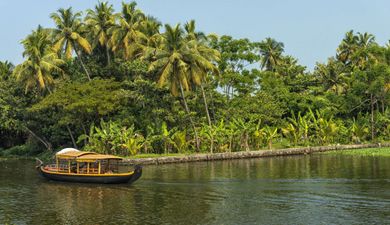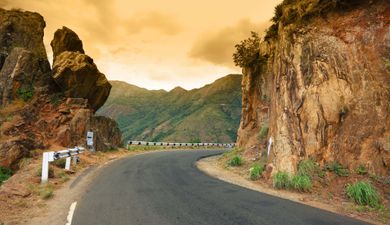
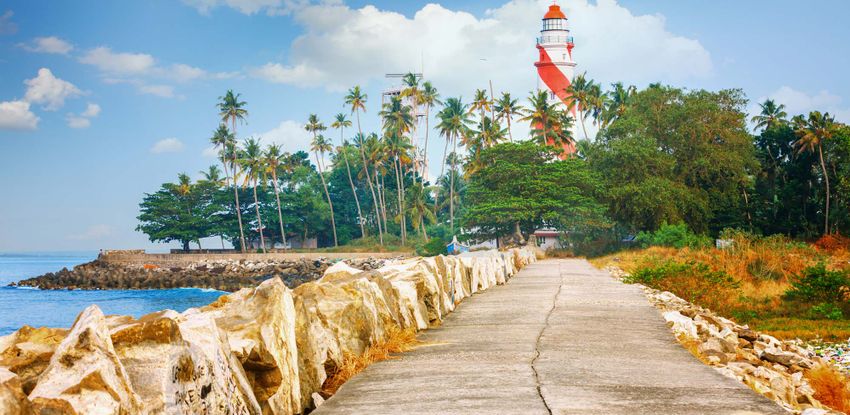
Kerala doesn't announce itself the way Rajasthan does, with forts on every ridgeline and camels blocking traffic. It works on you slowly — through the smell of cardamom drying on a tarpaulin beside the road, the slap of a coconut being split for you at a roadside stall, the particular silence of a tea plantation at six in the morning when the mist hasn't yet burned off and the pickers are already waist-deep in green. Munnar sits high in the Western Ghats, its hillsides carved into pale-green terraces that roll away from you in every direction, cool enough to need a light jacket at dawn. Thekkady, lower and wilder, is the domain of Periyar — a lake surrounded by deciduous forest where elephants come to drink and the air smells of wet earth and pepper vine. Kovalam is the full stop at the end: a pair of crescent beaches on the Arabian Sea, the lighthouse blinking at the southern tip, fishermen pulling in their catch before breakfast while the rest of the coast is still asleep.
This seven-day arc takes a family from mountain air to forest floor to salt water — each shift deliberate, each place tuned to a different frequency. In Munnar, you'll walk through tea estates and learn to tell a two-leaf pluck from a coarse one. In Thekkady, you'll move through spice gardens where the guide snaps a cinnamon twig and holds it under your nose, and you'll take a boat across Periyar Lake in the early morning when the water is still as glass. By the time you reach Kovalam, the trip has earned its slower final act: warm sand, fresh kingfish, the sound of waves replacing the sound of birds. The pace shifts every two days, which means children stay engaged and adults never feel rushed. It's a route that respects the distances between stops and leaves room for the unplanned — the tea shop with the best parotta, the elephant that appears on the far bank just as you've stopped looking.