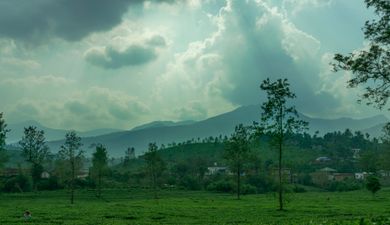
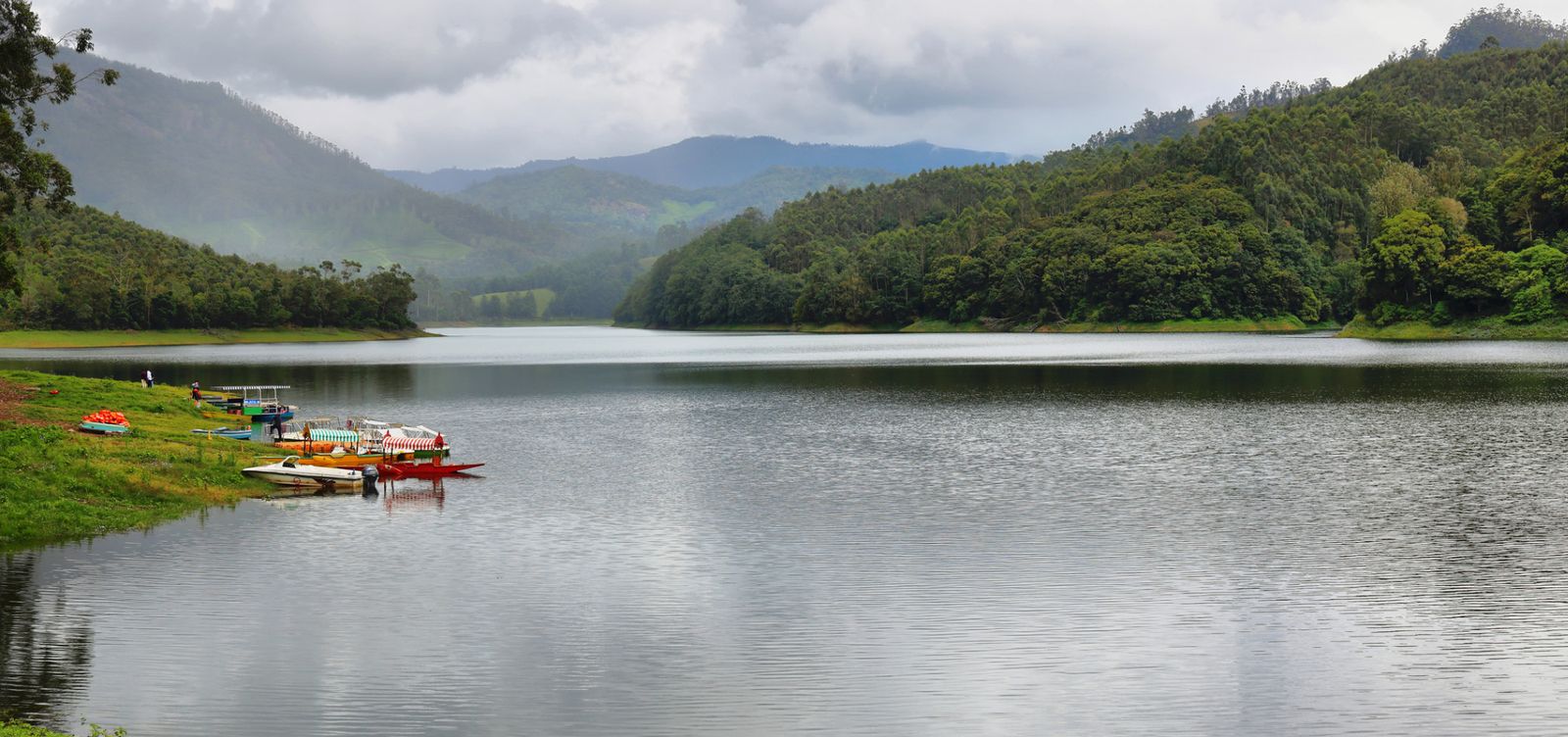
At roughly 1,700 metres above sea level, Kundala Lake occupies a shallow bowl of green hills about 20 kilometres from Munnar town. It's artificial — the product of a dam thrown across the Kundala River in the early twentieth century — and yet nothing about its appearance feels engineered. The water shifts between grey-green and slate blue depending on whether clouds have sunk into the valley or the sun has shouldered through. Most mornings, fog rolls across the surface so heavily that the pedal boats moored at the shore seem to float in mid-air. This is not a lake that overwhelms you with scale. It works on you slowly, the way a quiet room eventually makes you conscious of your own breathing.
A Dam Nobody Photographs — and a Lake Nobody Forgets
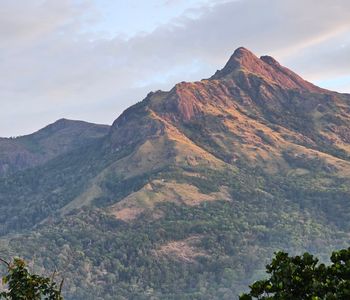
The Kundala Dam was built to support irrigation and power generation in the surrounding tea country. Concrete, modest in proportion, it won't stop anyone mid-stride. But the reservoir it created filled a natural depression between two ridges of the Western Ghats, and the resulting lake absorbed the landscape's personality entirely — tea plantations tilting to its edges, eucalyptus groves doubled on its surface, the occasional Neelakurinji shrub gripping a nearby slope.
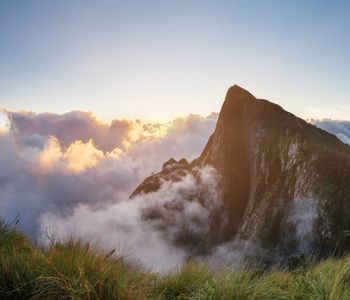
That last detail matters more than it seems. Neelakurinji blooms only once every twelve years, and when it does, the hills around Kundala Lake go violet. The last bloom came in 2018; the next arrives around 2030. If you happen to show up during that narrow window, the scene becomes genuinely surreal — purple hillsides meeting grey water under a white sky. Time your life accordingly, or don't. The lake doesn't need the flowers to justify itself.
Shikara Boats and the Art of Going Nowhere
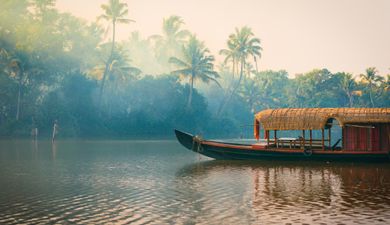
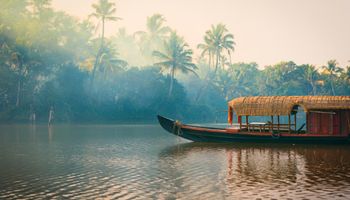
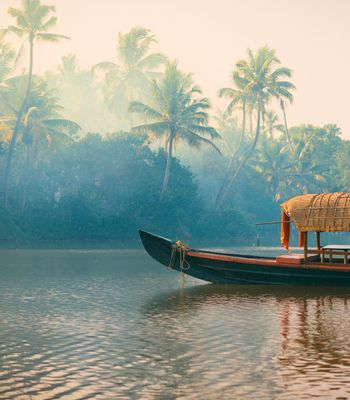
Boating is the main activity here, and the options are deliberately low-key. Pedal boats and rowing boats hire out from a small jetty near the dam. The more interesting choice is the shikara — the covered wooden boat you'd normally associate with Dal Lake in Srinagar. Seeing one this far south feels slightly incongruous, like finding a gondola on a Scottish loch.
The shikaras glide across Kundala's still water with a gentle, rocking rhythm. No motor. No urgency. Your boatman paddles toward the centre where the hills close in on all sides, and for a few minutes the only sounds are a wooden paddle breaking the surface and the odd birdcall from the tree line. It's the kind of experience that feels almost too simple to recommend — and yet it stays with you longer than most elaborate attractions.
Boating charges run between 100 and 400 rupees depending on the vessel and duration. Rates shift with the season, so confirm at the jetty before stepping aboard.
The Road That Earns the View
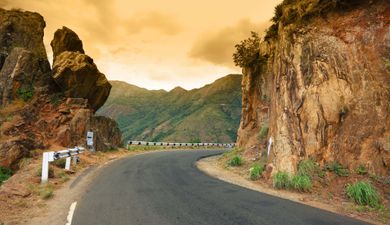
The drive from Munnar town takes about 40 minutes along a winding hill road, and it's half the experience. You pass through rolling tea estates where women in bright saris pick leaves with a speed that makes the work look effortless. It isn't. The road narrows as you climb, flanked by silver oak trees and the occasional spice garden. If your driver is local, he'll point out cardamom plants and pepper vines without being asked.
Auto rickshaws and taxis run from Munnar's town centre. Some travellers rent scooters or motorbikes, which gives you more freedom but demands genuine respect for the hairpin turns — especially during monsoon months when the road surface goes slick. No public bus reaches the lake directly, so private transport is your only realistic option.
When the Weather Writes the Script
Between September and March, conditions tend toward cool and clear — temperatures hover between 10 and 25 degrees Celsius, and the lake reflects the sky with photographic precision. This is peak season. The jetty area fills up by midday, particularly on weekends and holidays.
The monsoon months of June through August transform everything. Rainfall is heavy, the hills turn an almost radioactive green, and the lake swells visibly. Boating sometimes shuts down during intense rain. But catch a break in the weather — a sudden clearing after hours of downpour — and the mist lifts off the water in theatrical layers while you have the shore nearly to yourself. That emptiness is its own reward.
April and May bring warmer temperatures and thinner crowds than the winter peak, though "warm" here still means pleasant by lowland Indian standards. Early mornings remain the smartest strategy regardless of season. By 10 a.m., tour groups start rolling in by minibus, and the mood shifts from contemplative to crowded.
What the Hills Hold Close
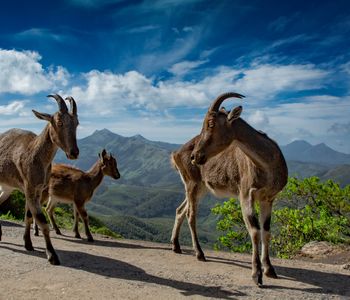
Kundala Lake sits within striking distance of several other Munnar landmarks, so it folds easily into a longer day. Mattupetty Dam, about seven kilometres away, offers a larger reservoir and a slightly more developed setup. Eravikulam National Park, home to the endangered Nilgiri tahr, lies further along the same road network — though park entry requires a separate ticket and advance booking during peak months.
Closer to the water, small tea stalls sell hot chai and maggi noodles from makeshift counters. The tea is strong and milky, brewed from leaves grown within eyeshot of where you're drinking it. That connection between cup and hillside isn't something you think about consciously, but it registers. A few vendors sell local spices — cardamom, cinnamon, cloves — at prices lower than Munnar's main market, though quality varies and a quick smell test before buying is wise.
There are no restaurants at the lake, so carrying food and water from Munnar is a practical move. The jetty area has basic seating but no formal picnic facilities. Pack light. Take your waste back with you — the lake's fragile ecosystem doesn't need the help of discarded plastic bottles.
Still Water, Clear Thinking
Kundala Lake won't compete with India's more dramatic natural landmarks for sheer spectacle. It doesn't try. What it offers instead is a rare commodity in a country that often overwhelms the senses — quiet. The water, the mist, the encircling green hills all conspire to slow your pulse and empty your head for an hour or two. Bring a book or bring nothing at all. Drift on a shikara and watch the shoreline dissolve into fog. In a region celebrated for its tea, Kundala Lake is the pause between sips — brief, unhurried, and more essential than you'd expect.