
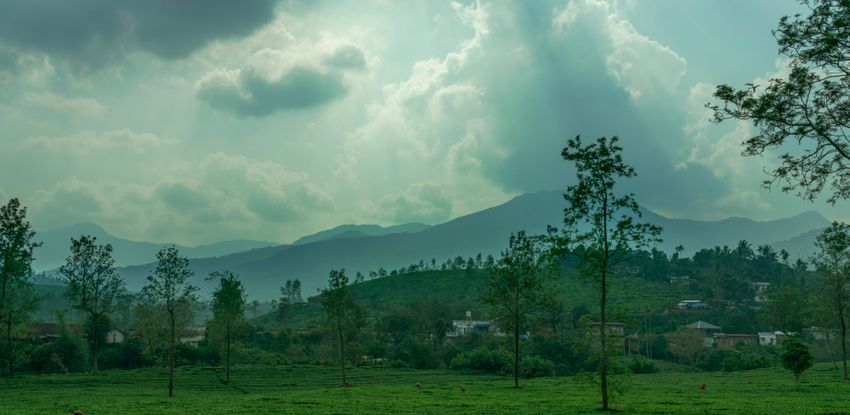
Wayanad sits at roughly 700 metres above sea level on the Western Ghats, a plateau where the air smells of wet earth and pepper vines even during dry months. Its forests are not decorative — they are functional, dense, full of sound, and not entirely safe, which is part of the appeal. Kannur, by contrast, is coastal Kerala at its most unvarnished: laterite cliffs dropping into the Arabian Sea, Theyyam performers who become gods in firelight, and fish curry that tastes different at every house. Coorg — Kodagu, if you prefer the name its people use — is a different country altogether. Coffee-growing hill country in southern Karnataka, it has more in common with a Scottish highland estate than with the Kerala lowlands two hours west. The people here are Kodava, with their own martial traditions, their own cuisine heavy on pork and wild game, and their own particular way of regarding outsiders: polite, proud, not especially interested in your opinion.
This six-day route traces a line from Kerala's interior hills to its northern coast and then climbs back into Karnataka's plantation country. The first two days belong to Wayanad's forests and tribal edges — Edakkal Caves, Banasura Sagar, the Kuruva Island driftwood trails. Then you descend to Kannur for a single concentrated night: enough time to see a Theyyam ritual if the season allows, or to walk St. Angelo Fort at sunset if it doesn't. The final push into Coorg rewards patience. Here the pace drops to nearly nothing — coffee estate walks at first light, the Abbey Falls trail in the afternoon, and evenings where the only sound is rain on a tin roof or, failing that, the industrious silence of a plantation at dusk. You'll cover roughly 350 kilometres over six days, which sounds modest until you account for the ghat roads. They are slow, scenic, and occasionally terrifying. That is also part of the appeal.