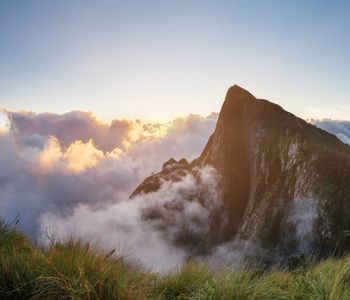
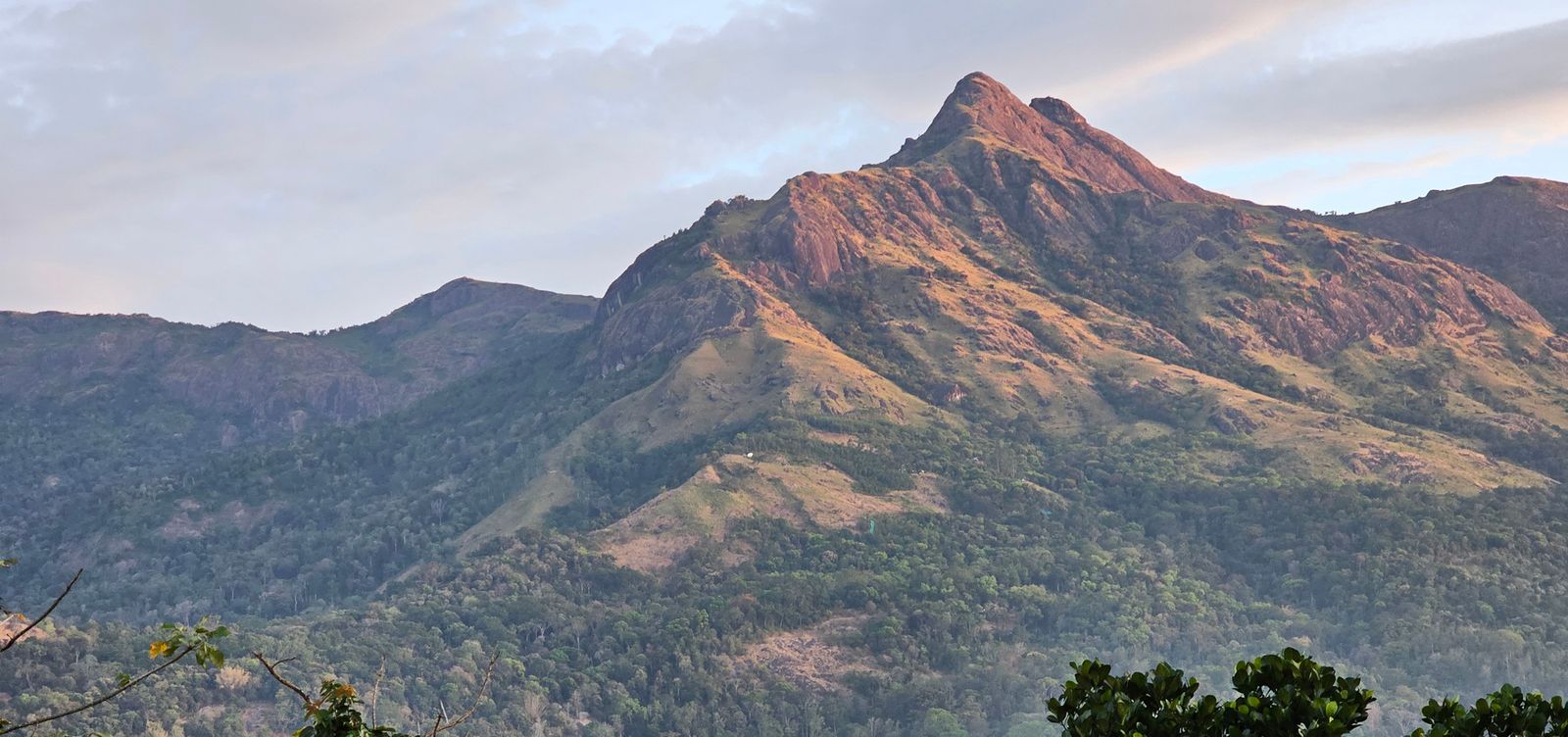
At 2,695 metres, Anamudi Peak doesn't just dominate the Western Ghats — it dominates the entire landmass south of the Himalayas. Let that register. Every ridge and summit across Kerala, Tamil Nadu, and Karnataka stands shorter than this single point in the Eravikulam National Park outside Munnar. And yet, unlike so many famous peaks, Anamudi doesn't announce itself with jagged drama or snow-dusted grandeur. It's a rounded, grassy dome — elephantine in shape, which is fitting, since its name translates roughly to "elephant's forehead" in Malayalam. The mountain's quiet authority is precisely what makes it compelling. You don't gasp at Anamudi. You study it.
A Mountain That Refuses to Show Off
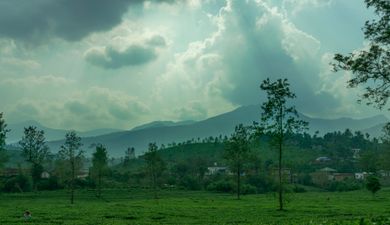
From a distance, Anamudi can fool you. Its broad, sloping summit blends into the surrounding shola grasslands so seamlessly that first-time arrivals sometimes can't tell where the peak actually begins. No knife-edge ridge. No rocky crown. The mountain rises instead in long, undulating folds of green, interrupted only by patches of stunted evergreen forest gripping the valleys between slopes.
Here's the strange thing: the landscape around Anamudi looks more like the Scottish Highlands than anything most people associate with tropical India. Mist rolls across the grasslands in thick curtains, and the temperature at higher elevations can dip below 10 degrees Celsius even in the warmer months. The air carries a damp, earthy quality — not the heavy wetness of the Kerala lowlands, but something thinner, sharper, threaded with the faint sweetness of wild balsam flowers.
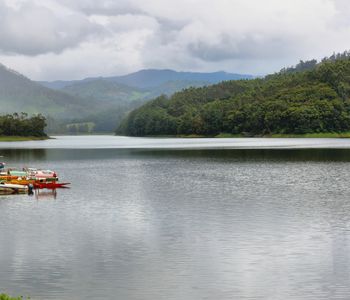
Find one of the approach viewpoints on a clear morning and the panorama unfolds into Tamil Nadu on one side and the tea estates of Munnar on the other. Three states visible from a single vantage point. The scale disorients you, and the silence up here is so total that the only sound competing with the wind is the occasional alarm call of a Nilgiri tahr.
The Tahr's Kingdom
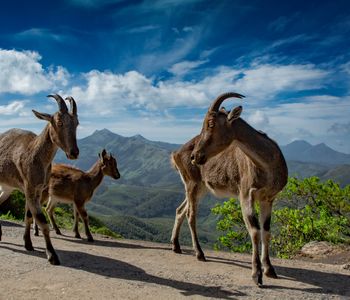
That alarm call belongs to the real reason Eravikulam National Park exists. The Nilgiri tahr — an endangered mountain goat with stocky legs, coarse fur, and a gift for navigating near-vertical terrain — claims Anamudi as the heart of its territory. Roughly half the world's remaining population of this species lives on and around these slopes. They move across gradients that leave you gasping on a moderate incline with an ease that borders on insulting.
Along the designated trekking paths, the tahrs have grown remarkably accustomed to human presence. Don't mistake this for tameness. They simply don't care about you. A large male might graze ten feet from the trail without lifting its head, and that indifference delivers a thrill no zoo encounter can match. The females and juveniles tend to cluster higher up in groups, silhouetted against the sky like figures in a landscape painting nobody would believe was real.
What the Trek Actually Demands
Here's the counterintuitive part: you cannot simply hike to Anamudi's summit whenever you want. The Kerala Forest Department controls access strictly, and for much of the year, the peak itself is off-limits to casual trekkers. Permits are required, group sizes are capped, and the department periodically closes routes to protect the fragile shola-grassland ecosystem. This isn't bureaucratic inconvenience. It's the reason the ecosystem still functions.
When the trek is open — typically during limited windows the forest department announces — the route covers roughly 10 kilometres round trip from the Eravikulam park entrance. The gradient is steady rather than punishing, but altitude and weather conspire to make it harder than the distance suggests. Cloud cover can descend within minutes, reducing visibility to a few metres. Carry a windproof layer regardless of the forecast in Munnar town, because conditions at 2,600 metres bear no resemblance to conditions at 1,500.
The designated paths through Eravikulam's lower reaches, however, remain open to regular park visitors. These trails take you through rolling grasslands past several viewpoints where Anamudi looms behind everything. Even without reaching the summit, the terrain itself rewards you — every turn in the path rearranges the composition of cloud, grass, rock, and sky into something new.
Getting There Without Losing Your Mind
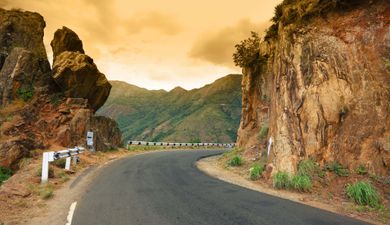
Eravikulam National Park's entrance sits about 15 kilometres north of Munnar town. The road climbs steadily through tea plantations, and on weekdays before 9 a.m., you'll share it mostly with estate workers rather than tourist vehicles. From the park gate, shuttle buses operated by the forest department carry you to the starting point of the main trail. Private vehicles aren't permitted beyond the gate.
Munnar connects to Kochi by road — roughly 130 kilometres that takes between four and five hours depending on traffic and your driver's appetite for mountain curves. The nearest airport is Cochin International, and from there, hiring a car remains the most practical option. Buses run regularly from Kochi's Ernakulam station to Munnar, though comfort levels vary wildly between operators.
Entry fees run around 125 rupees for Indian nationals and 420 rupees for foreign visitors, though these figures update periodically. Arrive early. The park admits a fixed number of visitors per day, and during peak season from September through February, that quota fills by mid-morning.
When the Mountain Gives Its Best
Timing matters enormously. The monsoon months from June through August drench the Western Ghats thoroughly, and the park closes during the heaviest rainfall. September and October, just after the rains pull back, transform the grasslands into an almost unnaturally vivid green. If you're very lucky with the calendar, the Neelakurinji flowers — which bloom once every twelve years — carpet certain slopes in pale blue when their cycle aligns. The last mass bloom was in 2018, so the next one falls around 2030.
Between November and February, skies clear more reliably, and morning visibility from the upper trails can extend for dozens of kilometres. The trade-off is colder temperatures and thicker crowds. March through May brings warmer weather but haze, and the grasslands shed their electric green for a tawny gold that carries its own austere beauty.
More Than a Summit
Anamudi doesn't offer the drama of a Himalayan ascent or the spiritual weight of a temple summit. What it offers is rarer — an intact high-altitude ecosystem in a part of the world where such things are vanishing fast. The shola forests here rank among the oldest tropical montane ecosystems on the planet, and the grasslands above them support species found nowhere else on Earth. You walk through a landscape that predates human civilization in the subcontinent, and if the forest department's careful stewardship holds, it will outlast most of what we build. That alone is worth the early morning, the permit paperwork, and the wind cutting through your jacket at the top of South India.