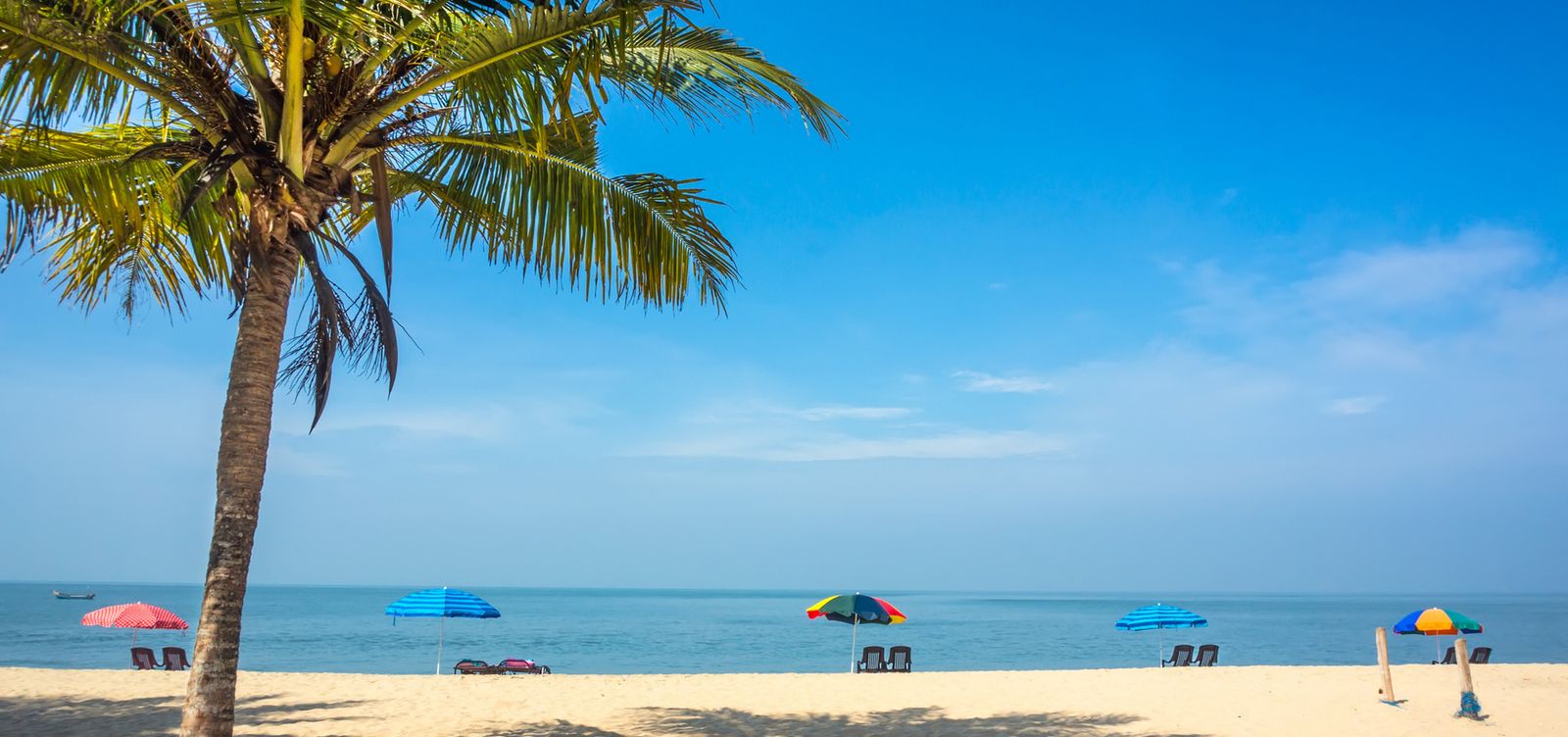


The sand at Radhanagar Beach isn't white. It's the color of uncooked rice, and it squeaks underfoot like fresh snow. I noticed this while walking barefoot at low tide, the Andaman Sea pulling back to reveal a shelf so flat and wide you could land a small aircraft on it. That sound — that unlikely squeak — is the kind of detail no brochure mentions, and it's exactly why India's coastline deserves more than a passing glance on the way to Thailand or Bali.
India holds over 7,500 kilometers of coast, stretching from the mangrove-choked edges of Gujarat down through the coconut-fringed sweep of Kerala and out to volcanic islands closer to Myanmar than Mumbai. The beaches here don't conform to a single aesthetic. Some are backed by crumbling Portuguese churches, others by dense tropical forest where monitor lizards patrol the tree line. A few sit at the foot of ancient forts. One glows blue with bioluminescence on moonless nights.
This is a guide to ten of the most remarkable, each chosen not because they photograph well for Instagram — though most do — but because they deliver something no other stretch of sand in the country quite replicates. From the party-adjacent shores of Goa to the profoundly remote crescents of the Andaman archipelago, here's where India meets the sea at its finest.
Where the Subcontinent Meets the Tide — And Why It Feels Different Here
India's beaches don't exist in isolation. They come entangled with everything else — religion, commerce, ecology, history, the daily lives of fishing communities who were here long before the first sunbed arrived. At Palolem in Goa, wooden fishing boats still outnumber tourist kayaks. At Mahabalipuram in Tamil Nadu, seventh-century rock-cut temples stand within earshot of breaking waves. This layering of human activity is what separates an Indian beach from, say, a Caribbean resort strip where the only story is the resort itself.
The geography helps. India's western coast, facing the Arabian Sea, tends toward dramatic: laterite cliffs, rocky headlands, and beaches that shift shape with each monsoon season. The eastern coast along the Bay of Bengal runs longer, flatter, wilder — less developed, often wind-battered, and for that reason deeply compelling. Then there are the islands. The Andamans sit nearly 1,200 kilometers from the mainland, their coral reefs largely intact, their forests older than most civilizations.
What catches you off guard is the variety compressed into relatively short distances. Drive three hours along the Konkan coast in Maharashtra and you'll pass black-sand beaches, red-cliff beaches, and sheltered coves where dolphins surface in the morning calm. The water temperature barely changes — warm year-round — but the character of each shoreline transforms entirely.
There's also this: Indian beaches don't try to be polished. The rough edges are part of the deal. A chai wallah sets up shop under a palm tree. Cows wander across the sand at Anjuna. It's messy, alive, and completely itself. That's not a flaw. That's the point.
Ten Shores Worth the Salt and the Sunburn
1. Radhanagar Beach, Havelock Island, Andaman and Nicobar Islands
The benchmark. A two-kilometer arc of pale sand backed by dense deciduous forest, with water that shifts from turquoise to deep emerald as the seabed drops off. Arrive before 8 a.m. and you'll share it with hermit crabs and not much else. The sunset here doesn't just color the sky; it turns the wet sand into a mirror. No hawkers, no shacks lining the shore — just forest, sand, and sea in proper proportion.
2. Palolem Beach, South Goa
A crescent so geometrically perfect it looks engineered. The water stays shallow for a long wade out, making it forgiving for swimmers. Colorful wooden huts line the back of the beach each season, dismantled before the monsoon arrives — the whole infrastructure is temporary, which gives Palolem a lightness that North Goa lost years ago. Silent noise headphone parties on the sand at night are surreal in the best way.
3. Agonda Beach, South Goa
Palolem's quieter, longer neighbor. The surf is rougher, the crowd thinner, and olive ridley turtles nest here between November and March. The beach shacks serve food that's genuinely good rather than merely convenient — the grilled kingfish with recheiado masala at several spots rivals proper Goan restaurants.
4. Varkala Beach, Kerala
The beach itself sits at the base of dramatic laterite cliffs, and the approach down a steep staircase framed by mineral springs gives it a theatrical entrance. Varkala is the rare Indian beach where you can swim, eat Keralan fish curry, visit a 2,000-year-old temple, and watch paragliders overhead — all without moving more than a kilometer.
5. Tarkarli Beach, Maharashtra
Where the Karli River meets the Arabian Sea, the water turns an improbable shade of blue-green. This is Maharashtra's closest thing to a tropical postcard, and the snorkeling around the nearby Sindhudurg Fort — a seventeenth-century island fortress built by Shivaji — offers surprisingly clear visibility. Most visitors arrive from Mumbai on a long but rewarding drive down the Konkan coast.
6. Marari Beach, Kerala
Fishing nets dry on poles stuck into the sand. Coconut palms lean at angles that suggest decades of Arabian Sea wind. Marari doesn't try to impress; it simply exists as a working beach where tourism has arrived gently, mostly in the form of small homestays and one or two understated resorts set well back from the shore. The swimming is calm, the light in the late afternoon almost amber.
7. Elephant Beach, Havelock Island, Andaman and Nicobar Islands
Reachable by a muddy forty-minute trek through the jungle or a short speedboat ride, Elephant Beach delivers the Andamans' best accessible snorkeling. The coral starts in waist-deep water — staghorn, brain coral, and schools of parrotfish dense enough to block the light. It's small, it gets crowded by midday, and it doesn't care. The reef speaks for itself.
8. Gokarna Beaches, Karnataka
Not one beach but a sequence of four — Kudle, Om, Half Moon, and Paradise — connected by cliff trails south of the temple town. OM Beach, shaped roughly like the sacred syllable, draws the most attention, but Half Moon rewards anyone willing to scramble over the rocks with genuine solitude. Gokarna is what parts of Goa felt like thirty years ago, or so people who were there keep saying.
9. Bangaram Island, Lakshadweep
Getting here requires a permit, a flight to Agatti, and a boat transfer — bureaucratic effort that serves as a natural filter. The payoff is an uninhabited island ringed by a lagoon so shallow and clear that fish shadows move across the sand beneath them like living calligraphy. There's one resort. No crowds. The silence at night is oceanic in every sense.
10. Chandipur Beach, Odisha
The odd one out, and deliberately so. During low tide, the sea retreats up to five kilometers from the shore, exposing a vast, surreal mudflat where you can literally walk toward the horizon. It looks like the ocean forgot to come back. Horseshoe crabs, red crabs, and shorebirds populate the exposed seabed. It's not a swimming beach. It's not even conventionally beautiful. But it's unlike anything else on this list, or any other list, and that alone earns its place.
When the Water's Right — A Season-by-Season Reckoning
India's beach season isn't a single window. It's a negotiation between monsoons, humidity, and the particular coastline you're targeting. Get it wrong, and you'll find yourself staring at a shuttered beach shack in sideways rain. Get it right, and the conditions border on unreasonable beauty.
October to February is the clearest stretch for Goa, Karnataka's coast, Kerala, and the Konkan. Post-monsoon, the sea calms, the air cools to something bearable, and the water visibility improves markedly. December and January bring peak crowds to Goa — prices rise accordingly, and Baga Beach becomes a place to endure rather than enjoy. South Goa and Karnataka remain more temperate in every sense.
November to April is the Andaman and Lakshadweep window. The sea between the islands flattens, diving visibility can reach thirty meters, and the humidity, while always present, stops being oppressive. February and March are ideal — fewer Indian holiday-makers than December, and the weather holds steady.
March to May works for Odisha and parts of Tamil Nadu's coast, though the heat is serious — expect midday temperatures above 35°C. Chandipur's tidal phenomenon operates year-round, but the pre-monsoon months offer the most dramatic retreats.
The monsoon itself — June through September — closes most western-coast beach operations entirely. Kerala's Varkala becomes a theatre of crashing surf against those red cliffs, spectacular to witness from the clifftop but genuinely dangerous for swimming. Here's the counterintuitive part: some locals consider the monsoon the most beautiful time on the coast. They're not wrong. They're just braver than most of us.
India's coastline doesn't package itself neatly. It won't hand you a single perfect week that works everywhere. The reward for doing your homework — matching the right beach to the right month — is a stretch of shore that feels as though it materialized just for you.
These ten beaches span four states, two union territories, two seas, and an ocean. They range from the easily accessible to the permit-required, from party-adjacent to profoundly silent. What connects them is specificity — each one does something no other Indian beach does quite as well. Pack reef-safe sunscreen. Bring a book you've been meaning to finish. And leave at least one afternoon completely unplanned, because the best moment at any beach is the one you didn't schedule.