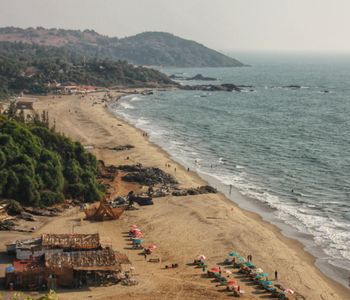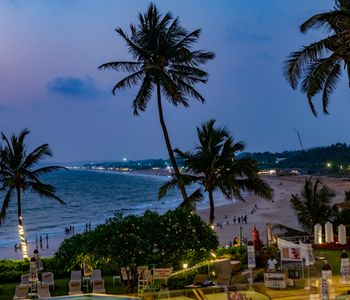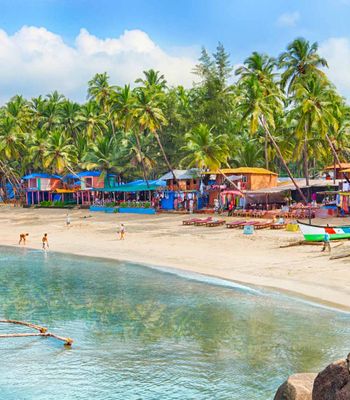
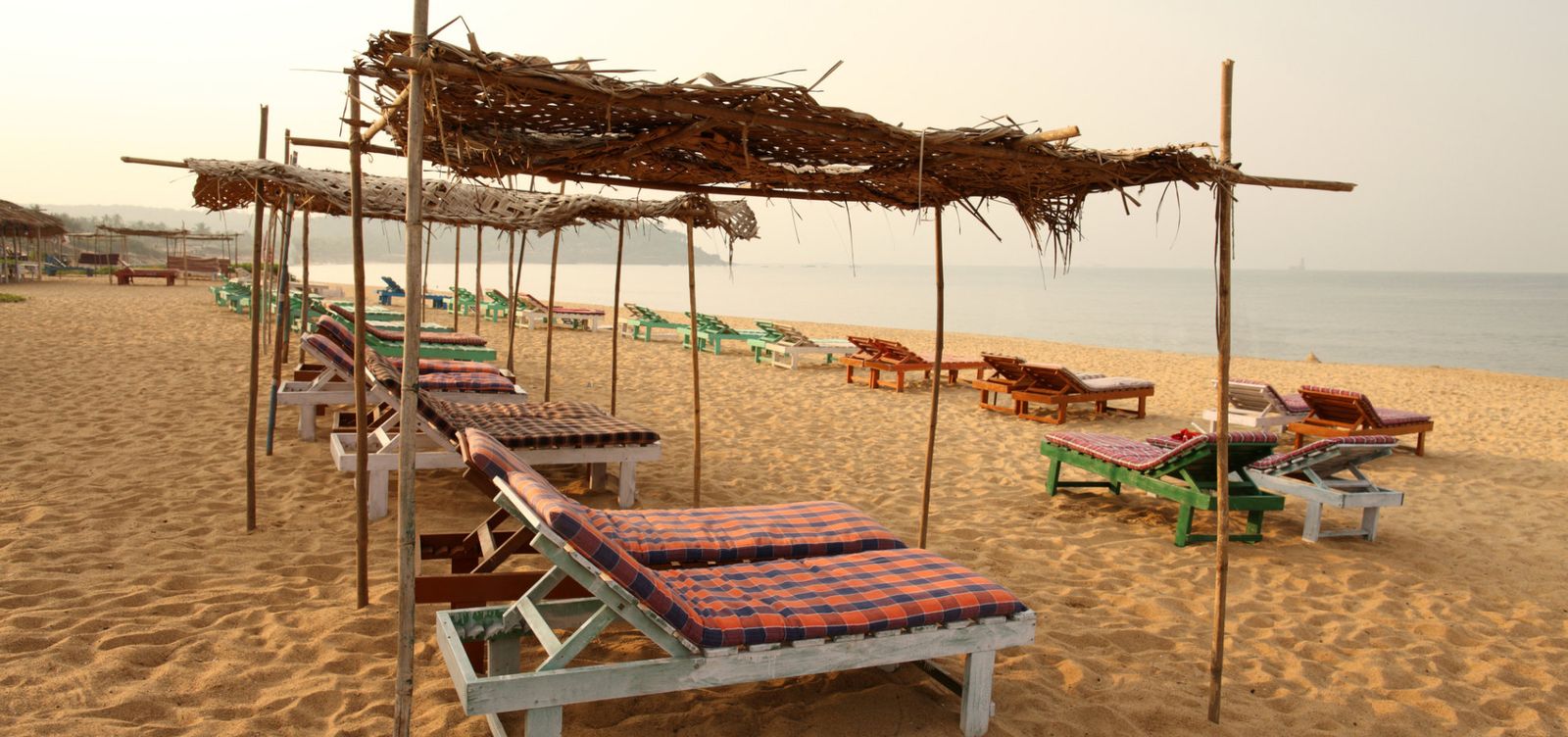
Baga Beach doesn't whisper. It announces itself — in the thump of bass from a shack speaker at two in the afternoon, in the sizzle of kingfish hitting a hot tawa, in the particular shade of amber that the Arabian Sea turns right before the sun drops behind it. Located at the northern end of Calangute in North Goa, Baga runs roughly 600 metres along a crescent of coarse, tawny sand that meets the mouth of Baga Creek. It is not the most beautiful beach in Goa. It isn't trying to be. What it offers instead is an honest, slightly chaotic energy that draws people back not for serenity but for the pleasure of being in the thick of things. If you want Goa distilled into a single stretch of coast, this is the place.
The Creek That Splits the Scene
Most people come to Baga for the shacks and the nightlife, but the creek at the beach's northern tip is what gives the place its geography and its name. Baga Creek is shallow enough to wade across at low tide, the water warm and brackish around your ankles. On one side, fishing boats painted in blues and reds line the sand. On the other, a quieter stretch of shore extends toward Anjuna.
This crossing point is where Goa's two worlds collide — local fishermen hauling in the morning catch alongside tourists nursing hangovers from the night before. The contrast is Baga's defining characteristic. It doesn't try to separate these realities. It lets them coexist, sometimes awkwardly, always honestly.
Shack Culture and the Art of Doing Very Little
Baga's beach shacks are its living rooms. Britto's, operating since the late 1960s, occupies a prime stretch near the centre of the beach and serves as the unofficial landmark. The menu runs long — Goan fish curry, prawn balchao, cold Kingfisher beers — and the plastic chairs face the water at an angle that makes every seat feel deliberate. You don't come to Britto's for culinary revelation. You come because it has earned its permanence in a landscape where shacks are rebuilt every season after the monsoon dismantles them.
Farther along the sand, smaller operations set up bamboo tables under palm-thatch roofs. The food is often better at the places without signboards. Look for wherever the staff is eating lunch — that's your cue. A plate of rava-fried mackerel with a squeeze of lime and a cold feni on ice costs next to nothing and tastes like the coastline itself: salty, sharp, uncomplicated.
After Dark, the Beach Changes Its Clothes
By nine o'clock, Baga's identity shifts. Tito's Lane, a narrow road running perpendicular to the beach, has been the spine of Goa's nightlife since Tito's nightclub opened in 1971. The lane now hosts a cluster of bars and clubs that pulse with electronic music and a crowd that skews young and international. Cape Town Cafe and Mambo's sit nearby, each with its own flavour of loud.
Here's the counterintuitive thing about Baga at night: it's actually more relaxed than it sounds. The party stays concentrated on Tito's Lane, which means if you walk fifty metres toward the water, you can sit on the sand with your feet in the surf and hear the music only as a muffled heartbeat behind you. That proximity — wild night on one side, dark sea on the other — is precisely why people choose Baga over Goa's quieter alternatives. You can toggle between the two in sixty seconds.
Water and the Ways to Get Wet
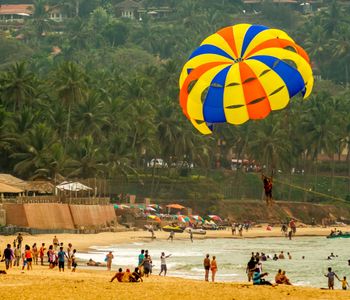
During the tourist season, from November through March, the northern stretch of Baga fills with jet ski operators, parasailing rigs, and banana-boat runners. The pricing isn't standardised. Jet ski rides start around 500 rupees for fifteen minutes, but treat that number as a negotiation opener, not a final price. Bargain firmly, settle at about 60 percent of the first quote, and you'll land close to what locals consider fair.
Parasailing lifts you roughly 80 metres above the water — high enough to see the entire Baga-Calangute-Candolim coastal stretch laid out beneath you like a sand-coloured ribbon fringed with palms. The ride lasts only a few minutes, but the aerial perspective reframes everything. Suddenly you can see how narrow the strip of development really is before the laterite hills of the Western Ghats take over.
Swimming is best in the morning, before the watercraft operators claim their territory. The waves at Baga are moderate by Goan standards, with a gentle shelf that drops off gradually. Pay attention to the lifeguard flags. Red means stay out. They mean it.
Getting There Without the Headache
Baga sits about 16 kilometres from Panaji, Goa's capital, and roughly 45 kilometres from Dabolim Airport. The easiest transit option is a prepaid taxi from the airport, which runs around 1,200 to 1,500 rupees depending on the time of day. Avoid the touts inside the terminal and head for the official counter just outside arrivals.
Once in North Goa, renting a scooter changes everything. A day's rental costs between 300 and 500 rupees, and it gives you the freedom to arrive at the beach at dawn — when the sand is still cool and the shack owners are just setting up their chairs — rather than fighting for a parking spot at noon. The road from Calangute to Baga narrows as you approach the beach, and traffic bottlenecks during peak season. Scooters slip through. Cars don't.
When to Show Up, When to Stay Away
The sweet spot is November through February, when the humidity drops, the rain disappears entirely, and the water temperature hovers around 28 degrees Celsius. December brings the largest crowds and the highest prices; if you can swing a mid-January visit, you'll get the same weather with considerably fewer elbows on the sand.
From June through September, the monsoon shuts Baga down almost completely. The shacks are disassembled, the sea turns rough and grey, and the beach belongs to the crabs and the rain. Some travellers find the off-season atmospheric. Most find it miserable. Plan accordingly.
The Truth About Baga
Baga Beach is not a place for solitude or for Instagram fantasies of untouched shoreline. It is, instead, a place that understands what most travellers actually want — good food within arm's reach, water warm enough to linger in, a drink when you want one, and the option to disappear into a crowd or away from it. The sand here carries footprints from five decades of Goa tourism, and that history gives the beach a lived-in quality that newer destinations can't replicate. Show up without expectations of paradise, and Baga will give you something more useful: a very good time.