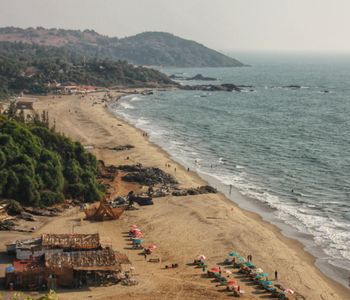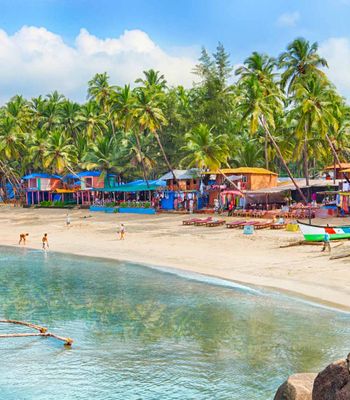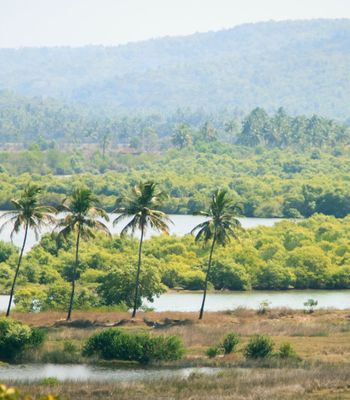
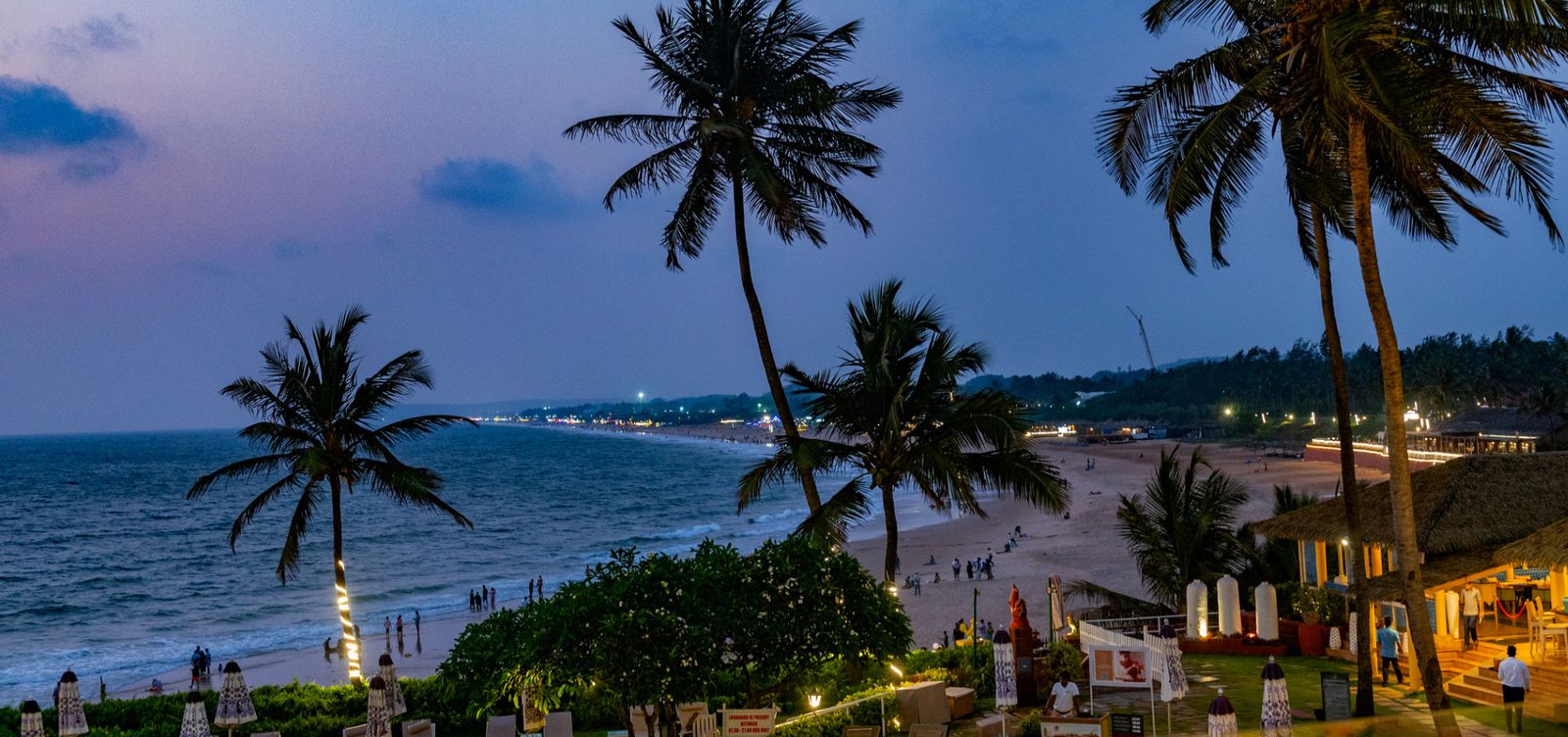
Walk north from Calangute, and you'll feel the crowd thin like a receding tide. The hawkers grow fewer, the sun loungers space themselves out, and the sand — coarse and golden, not the powdery white of travel brochures — stretches wider than seems fair for a beach this close to Goa's main tourist corridor. Candolim Beach runs roughly two and a half kilometers along North Goa's coast, and its chief virtue is restraint. It doesn't assault you with jet ski operators every thirty seconds. It doesn't smell of stale beer at noon. The water here carries a steady, clean break that makes wading in genuinely pleasant rather than an act of faith. For a stretch of Goan coastline that sits between the chaos of Calangute to the south and the fortress headland of Aguada to the north, Candolim has figured out something most beaches haven't: how to be popular without being ruined.
Where the Portuguese Left Their Fingerprints
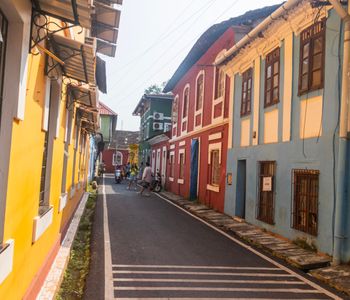
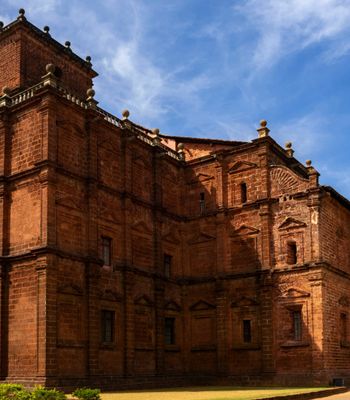
Candolim's personality isn't confined to sand and surf. Turn off the beach road, and the village behind it still carries the weight of four centuries under Portuguese rule. Laterite stone houses with tiled roofs and narrow balconies stand along the quieter lanes, their walls washed in faded yellows and terracotta. Some have been converted to guesthouses. Many remain private homes, their courtyards shaded by mango and cashew trees, doors half-open to the afternoon heat.
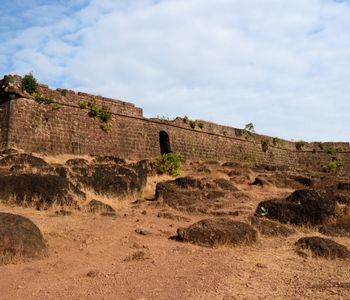
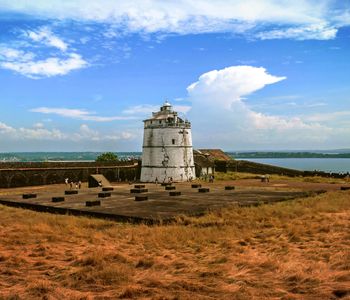
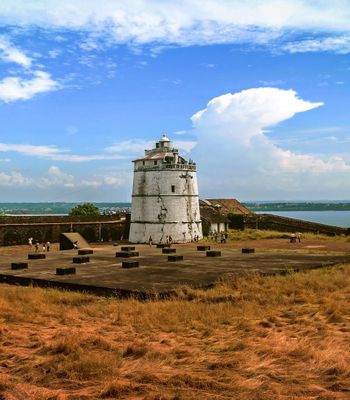
At the southern end of the beach, Fort Aguada's massive laterite walls loom on the headland — a seventeenth-century citadel built to guard the mouth of the Mandovi River. Its old lighthouse, constructed in 1864, still stands, though a newer one assumed duties in 1976. The walk up from Candolim takes about twenty minutes, and the climb pays off with a vantage point where the Arabian Sea opens in every direction — the water shifting from jade to deep cobalt at the line where the continental shelf drops away. You stand there and the fort feels less like a relic than like a hinge between two Goas: the holiday coast at your back, and something older and wilder ahead.
What the Sand Actually Feels Like
Candolim's beach is firm underfoot. The sand compacts well, which makes it better for long walks than for the barefoot-sinking-in sensation you get at finer-grained beaches further south. At low tide, the shore widens dramatically — you can walk nearly a kilometer toward the waterline across hard, wet sand that reflects the sky like a dull mirror. The effect at sunset is genuinely arresting. The entire flat expanse turns copper and rose, and for a few minutes the beach becomes the kind of place that makes you stop talking mid-sentence.
From November through February, the water stays relatively calm, the monsoon a distant memory, the sea settling into a lazy rhythm. Lifeguard flags mark safe swimming zones, and it's worth respecting them. Undertows appear without warning, particularly near the rocky northern stretch by Aguada. During the monsoon months, June through September, the beach transforms entirely — waves crash with genuine force, the sand darkens, and only the shack foundations remain, stripped bare and waiting like the ribs of something abandoned.
The Shack Economy
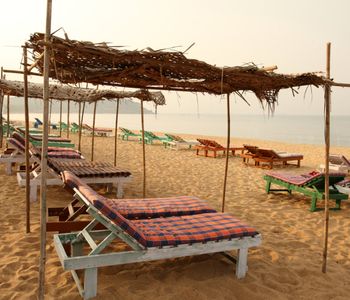
Goa's beach shacks are seasonal organisms, assembled each October from bamboo, thatch, and optimism, then dismantled before the monsoon. At Candolim, they line the upper beach at measured intervals, each with its own personality and menu. Some lean into seafood platters and sweating Kingfisher bottles. Others dabble in wood-fired pizza and cocktails with names nobody remembers the next morning.
The food, honestly, varies. Follow the prawn smell. Shacks that grill their catch fresh — the ones where you can see the fish laid out on ice at the front — tend to deliver better plates than those hiding behind laminated menus running thirty pages deep. A grilled kingfish recheado, slathered in that fierce red Goan masala paste, eaten with your feet in the sand and a Feni sour sweating in your hand — that's Candolim at its most persuasive. Nothing else needs to happen after that.
Here's what catches most people off guard: prices at beachfront shacks in Candolim run noticeably higher than at comparable setups in Arambol or Palolem. You're paying for the location and the relative calm, and whether that trade-off suits you depends entirely on how much you value elbow room.
After the Sun Drops
Candolim doesn't pretend to be a party beach. That's Baga's territory, a fifteen-minute ride south, where the bass thumps until the small hours. Evenings here are built around long dinners and the kind of conversation that loosens after a second carafe of port wine sangria. Several restaurants along Fort Aguada Road serve credible continental and Goan cuisine in garden settings lit by paper lanterns, the air thick with citronella and jasmine.
A handful of bars along the beach road host acoustic acts during peak season, if you want live music without the nightclub crush. The atmosphere tilts more toward middle-aged contentment than youthful abandon — and that's not a criticism. Sometimes a beach that quiets down after ten o'clock is exactly what a long day of doing nothing requires.
Getting There Without the Headache
From Dabolim Airport, Candolim sits roughly 45 kilometers north. Pre-booked taxis are the most reliable option, and the drive takes about an hour depending on traffic through Panjim. Auto rickshaws from Panjim cover the remaining thirteen kilometers for a negotiable fare — start lower than what they quote, because the first number is never the real one. It never is anywhere in India, but in Goa the markup carries a particular cheerfulness.
Renting a scooter remains the most practical way to explore once you've settled in. Most guesthouses arrange rentals for 300 to 500 rupees per day, and the coastal road connecting Candolim to Sinquerim and Calangute is flat and manageable even for inexperienced riders. Just watch for the stray dogs that sleep in the middle of the road at dusk, utterly indifferent to oncoming traffic. They've been there longer than you. They know it.
When to Show Up
The sweet window runs from mid-November through mid-February. Skies stay clear, humidity drops to tolerable levels, and the sea cooperates. December brings the densest crowds and the steepest hotel rates, particularly around Christmas and New Year's, when Goa becomes a pressure valve for domestic tourists escaping northern winters. If you can manage a visit in November or late January, you'll find the same weather with considerably fewer people competing for the same sun lounger.
Avoid the monsoon months entirely unless you enjoy watching rain hammer an empty beach through a window — which, admittedly, has its own melancholy appeal. There's a reason some writers come specifically for that.
A Beach That Earns Its Quiet
Candolim doesn't dazzle. It doesn't perform. What it does is offer a stretch of honest Goan coastline where the water is clean enough to swim, the food is fresh enough to trust, and the evenings are slow enough to remember. In a state where every beach markets itself as paradise, Candolim's refusal to oversell is, paradoxically, its strongest argument. Bring a book. Order the prawns. Let the afternoon unravel on its own terms.