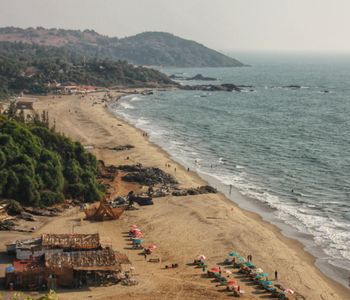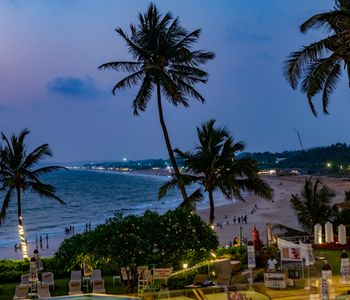
Every beach town has a founding myth, and Calangute's is simple: the hippies came in the 1960s, the package tourists followed in the 1990s, and nobody ever really left. Stretching roughly four kilometers along North Goa's coast, Calangute Beach carries the unofficial title of "Queen of Beaches" — a phrase you'll see plastered on everything from restaurant menus to rickshaw bumpers. The title has nothing to do with pristine solitude. It's about sheer gravitational pull. This is the beach that taught Goa how to monetize the Arabian Sea. On any given afternoon, Russian couples roast under rented umbrellas, Maharashtrian families wade fully clothed into the shallows, and Goan shack owners watch it all with the patience of people who've seen every kind of tourist the world can produce.
The Sand Tells the Story
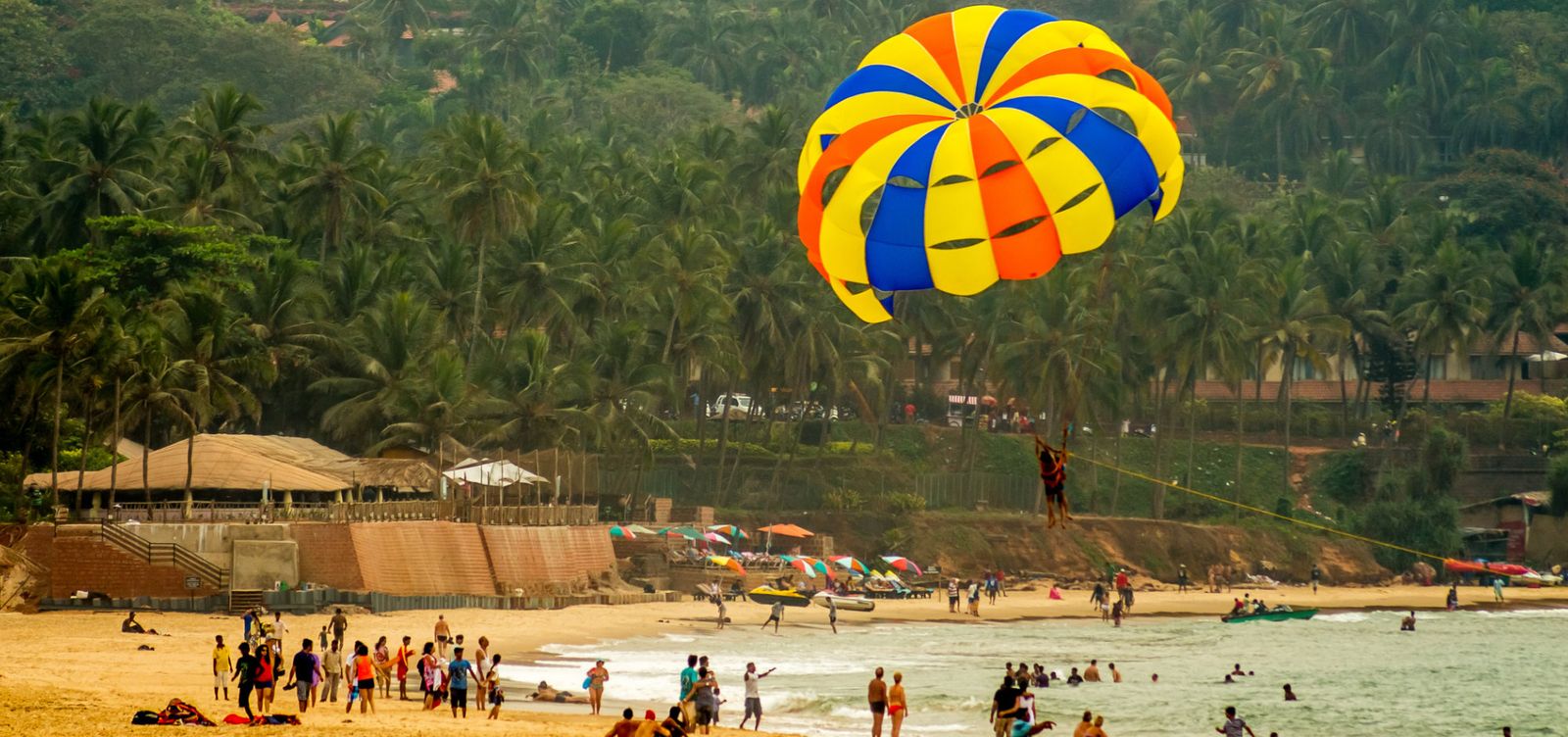
Calangute's sand is coarse and dark gold — not the powdered sugar of the Andamans, not the volcanic grey of Kovalam. It compacts under your feet with a satisfying firmness that makes long walks possible without sinking ankle-deep. At low tide, the beach widens dramatically, revealing a flat expanse stretching fifty meters or more toward the waterline. Wet sand mirrors the sky. For a few minutes, you almost forget the parasailing operators rigging their lines behind you.
The water stays warm year-round, hovering around 27 to 29 degrees Celsius. Waves arrive in modest, manageable sets — enough to bodysurf if you're committed, but nothing that'll humble you. Lifeguards in red shirts patrol the main swimming zones, and red flags mark the spots where currents run mean near the rocky northern end. Respect those flags. The sea here looks lazier than it is.
A Commerce Engine in Flip-Flops
What separates Calangute from neighboring Baga or distant Palolem is its complete lack of pretense about what it is. This beach doesn't play at being a retreat. It operates like an open-air bazaar that happens to have an ocean. Hawkers sell everything from counterfeit Ray-Bans to fresh pineapple slices dusted with chili powder and salt — a combination that sounds wrong until you taste it at midday with sand between your toes. Tattoo artists stake out temporary stations. Women weave through the crowd offering ten-minute head massages with coconut oil.
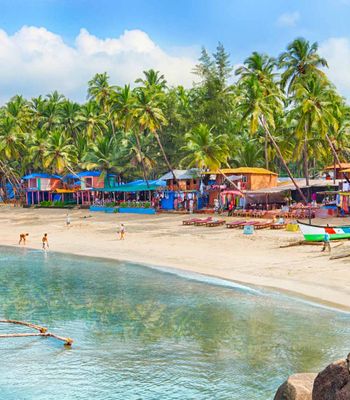
But the shack culture defines Calangute more than the sand ever could. From roughly October through May, dozens of bamboo-and-tarp restaurants materialize along the beachfront, serving kingfish recheado, prawn curry rice, and cold Kingfisher in sweating bottles. Some shacks have evolved into near-permanent establishments with tiled floors and proper cocktail menus. Others remain gloriously ramshackle — a few plastic chairs, a gas stove, and a cook who learned his craft from his grandmother. The ramshackle ones generally serve better food.
The Ghost Season Nobody Mentions
Most travel advice steers you toward Calangute between November and February, and that advice is sound. Skies stay clear, humidity drops to bearable levels, the shacks are fully operational. What nobody tells you is how the monsoon transforms this coast into a different place entirely.
From June through September, the Arabian Sea turns muscular and grey. Waves crash with genuine force, the shacks get dismantled board by board, and the beach empties to near-silence. Walk Calangute in July, with rain sheeting sideways and not another soul visible in either direction, and you'd never guess this is the same strip of coast that hosts a quarter-million visitors a year. It's the closest Calangute comes to solitude, and some long-term Goa residents consider it the beach's finest version. You can't swim — the currents are genuinely dangerous — but the raw theater of the sea is worth getting drenched for.
Beyond the Shoreline
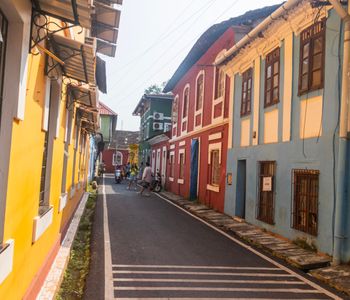
The town of Calangute extends inland along narrow roads lined with guesthouses, currency exchange counters, and shops selling identical "Goa Vibes" tank tops. A ten-minute walk from the beach brings you to St. Alex Church, a whitewashed Baroque structure originally built in 1597 and rebuilt in its current form in 1741. The interior is unexpectedly grand for a village church — gilded altarpieces, painted ceilings, wooden pews worn smooth by centuries of Sunday worship. Most beachgoers never bother walking this far. That alone is reason enough to go.
About a kilometer south along the main road, the Kerkar Art Complex houses rotating exhibitions of Goan contemporary art in a garden setting. It's small and occasionally uneven in quality, but it breaks the relentless sun-and-sand rhythm of the coastline in a way your brain will thank you for. Evening performances of traditional Indian music and dance take place here during peak season, typically on Tuesday and Saturday nights.
Getting There Without Losing Your Mind
Dabolim Airport in South Goa sits about 42 kilometers away, and the drive takes anywhere from 60 to 90 minutes depending on traffic and your taxi driver's personal interpretation of lane markings. Pre-paid taxis from the airport run at fixed government rates — confirm the price at the official counter before getting in. Ride-hailing apps work in Goa, though drivers sometimes cancel if they don't like where you're headed.
Within Calangute, renting a scooter remains the most practical way to move. Rental shops cluster near the main beach entrance and charge between 300 and 500 rupees per day for a standard Honda Activa. An international driving permit is technically required for foreign visitors, though enforcement is inconsistent. What is enforced — sporadically and with enthusiasm — are helmet laws. Wear one.
If you're arriving by train, Thivim station on the Konkan Railway is the nearest railhead, roughly 20 kilometers northeast. Auto rickshaws and taxis wait outside, and the ride through Goa's interior — past cashew plantations and laterite houses painted in faded pastels — is one of those drives that makes the journey feel like part of the destination rather than an obstacle to it.
When the Shack Bill Arrives
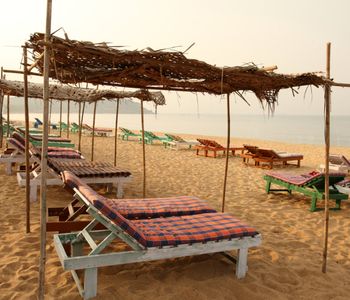
Calangute is not expensive by international standards, but it is Goa's most inflated beach when it comes to local pricing. A sunbed with an umbrella runs 200 to 400 rupees for the day, usually waived if you order food and drinks from the shack that owns it. A plate of fish curry rice at a beachfront shack costs between 250 and 450 rupees — roughly double what you'd pay at a local restaurant two streets inland. The markup is the price of the view. Honestly, the view earns it.
Calangute doesn't try to seduce you with tranquility or exclusivity. It won't appear in any minimalist travel fantasy. What it offers instead is the unfiltered energy of a place that has been the entry point to Goa for decades — loud, crowded, occasionally exasperating, and somehow impossible to dismiss. Stand at the waterline as the sun drops toward the Arabian Sea, the sky turning copper and violet, and even the most determined cynic has to concede: the queen earned her title.