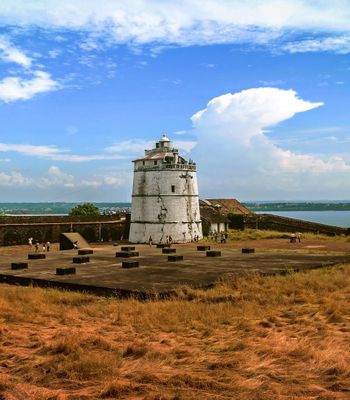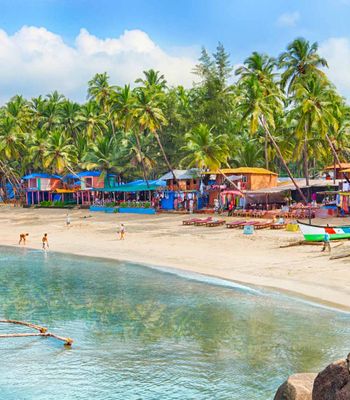
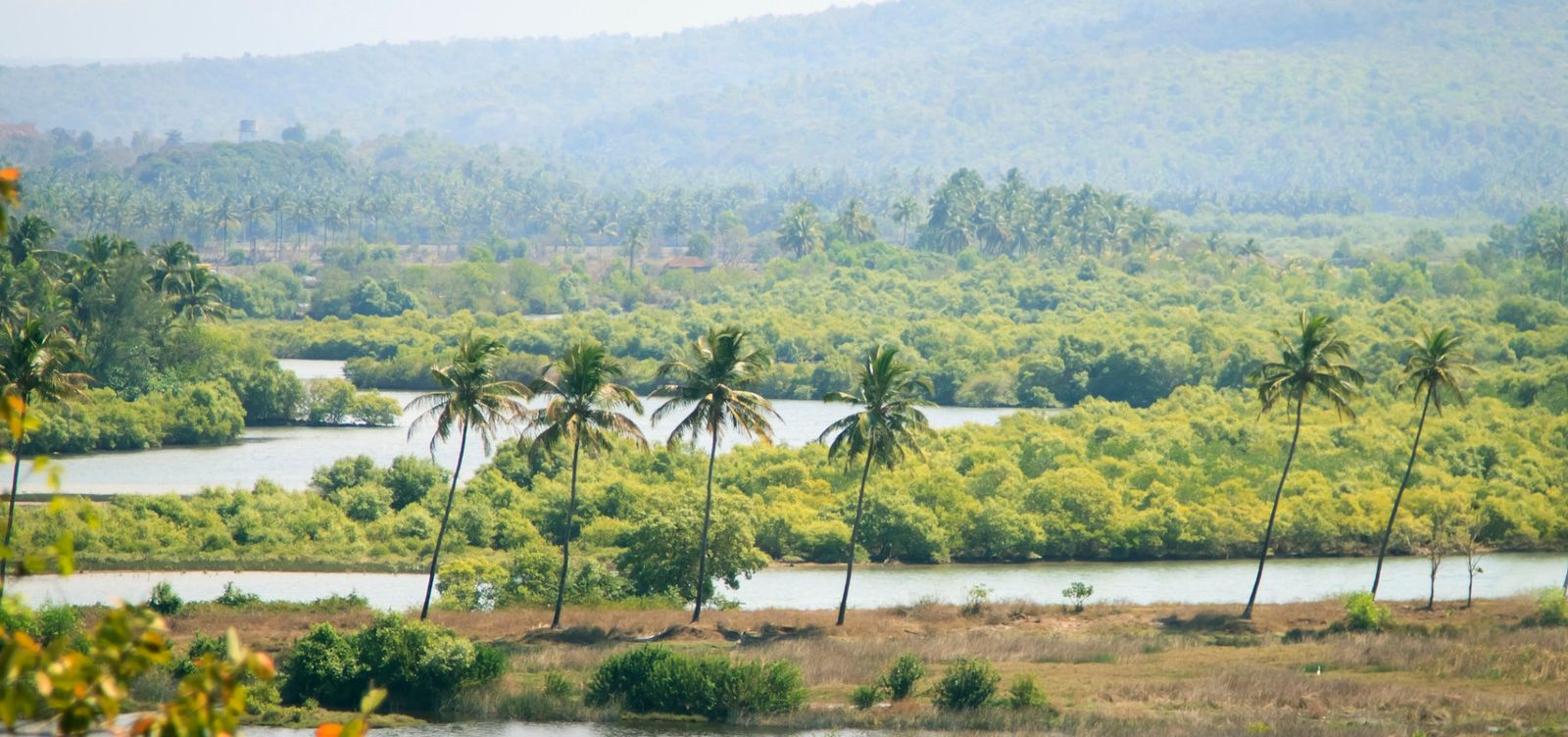
The Goa most people carry in their heads — beach shacks, trance music, sunburnt Europeans nursing Kingfishers — ends about three kilometers from the coast. Cross that invisible threshold and the land turns a green so saturated it looks like someone adjusted the contrast too far. Nobody did. This is Inland Goa, where laterite plateaus crack open into spice plantations, forested ghats, and villages where the afternoon quiet holds until a rooster or the distant clang of a temple bell breaks it apart.
Most travelers skip it entirely. That's their loss, and — if you're being honest — Inland Goa's gain.
Where the Soil Speaks Louder Than the Sea
The Western Ghats rise along Goa's eastern border like a green barricade between the narrow coastal strip and the Deccan Plateau. The terrain here folds into dense semi-evergreen forest around Bhagwan Mahavir Wildlife Sanctuary, where the creature you're likeliest to spot is a giant Malabar squirrel catapulting itself between canopy branches — not another tourist. Dudhsagar Falls, tumbling roughly 310 meters down a tiered rock face inside the sanctuary, delivers its full force during the monsoon months. The water runs milky white — the name translates to "sea of milk" — and it crashes with a bass-note vibration you register in your ribcage before your ears make sense of it.
Reaching the falls means either a jeep ride through muddy forest tracks from Collem or a trek that leaves your calves in open revolt. Neither option is comfortable. Both are worth it.
Further south, Cotigao Wildlife Sanctuary operates at a different frequency — quieter, less visited, its dry deciduous forest sheltering slender loris and Indian pangolin. You'll almost certainly never see them. But knowing they're somewhere in the undergrowth rewires the way you move through the place, slowing you down, sharpening your peripheral vision. A treetop watchtower gives you a dawn vantage over the canopy, when the forest exhales mist and the birdcall rises to a pitch that borders on reckless.
Spice, Stone, and the Portuguese Ghost
Inland Goa's spice plantations deliver a genuine sensory education, not a tourist performance. At farms around Ponda — the best known being Sahakari and Tropical — you walk through rows of cardamom, vanilla, black pepper, and nutmeg while a guide peels a strip of cinnamon bark and holds it under your nose. The scent is sharp and immediate, with nothing in common with the dusty powder that's been sitting in your kitchen cabinet for two years. Lunch arrives on banana leaves: Goan fish curry with kokum-sour gravy, rice, and a vegetable sabzi cooked with spices ground from the same soil you just walked on. The connection between earth and plate is so short it almost feels indecent.
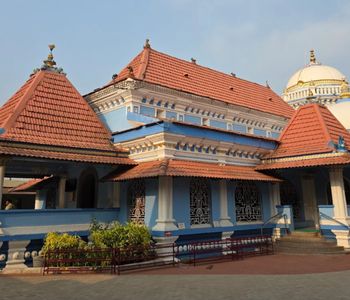
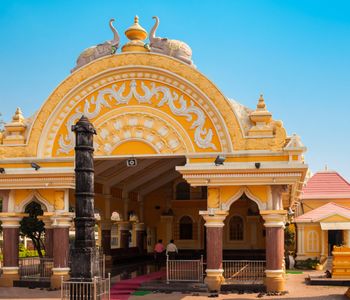
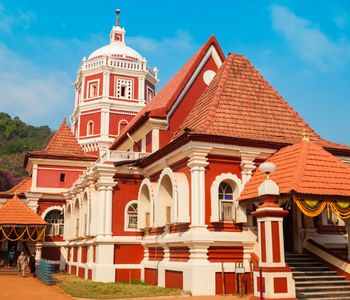
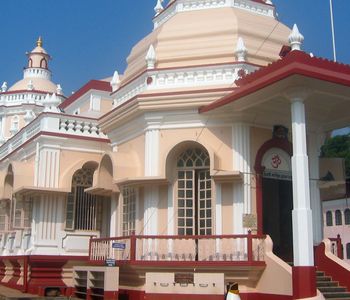
Ponda itself serves as Goa's temple heartland — a corrective to the lazy assumption that Portuguese influence erased everything else. The Shri Mangeshi Temple, dedicated to Lord Shiva, carries an unusual blend of Hindu and Baroque architecture: a deepstambha lamp tower that, if you squint, looks like it might belong on a church. The Shanta Durga and Mahalasa temples nearby share similar hybrid details, the work of communities that absorbed colonial aesthetics without surrendering anything essential about their own identity.
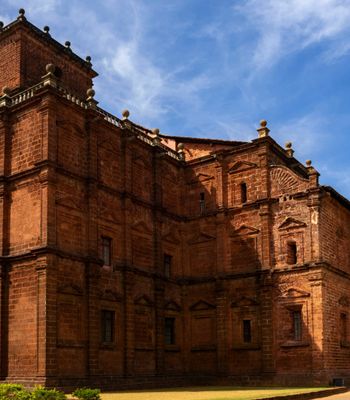
Then there's Old Goa, technically inland, though only eleven kilometers from Panaji. The Basilica of Bom Jesus holds the remains of St. Francis Xavier in a silver casket, and the Se Cathedral — one of the largest churches in Asia — commands a scale that impresses even if you've spent weeks inside European cathedrals. But what stays with you is the emptiness surrounding these structures. Old Goa once rivaled Lisbon in population. Plague hollowed it out centuries ago. The grand churches now stand amid lawns and silence — monuments to ambition and what ambition costs.
The Rhythm Nobody Packages
Village life inland runs on a clock the coast abandoned decades ago. In Chandor, the Braganza House — a 17th-century Indo-Portuguese mansion divided between two branches of the same family — opens its doors if you knock politely. One wing is immaculate: chandeliers, Chinese porcelain, the full catalog of colonial refinement. The other is fading, its furniture dusty, its grandeur slowly retreating. Walking between the two halves feels like watching a family's fortune measured out in real time. Which is exactly what it is.
The countryside around Quepem and Sanguem districts rewards anyone willing to ride a scooter on narrow roads flanked by paddy fields. You'll pass whitewashed chapels the size of garden sheds, cashew orchards where the fruit hangs fat and orange before the nut is harvested, and tiny tavernas pouring feni — the locally distilled cashew or coconut spirit that tastes like a dare the first time and a habit by the third.
Here's what no one tells you: monsoon is the best time. Counterintuitive, maybe, but between June and September the waterfalls run full, the spice farms turn electric, and the heat finally relents. Tourists vanish almost completely from these parts, leaving the red-earth roads and emerald hills to you and the rain.
Coastal Goa sells you a party. Inland Goa offers something harder to package and far more difficult to shake — a landscape where history, faith, and the physical earth are so tangled that pulling on one thread moves everything else. You don't need a week. Three or four days, a rented scooter, and a willingness to get rained on will do.