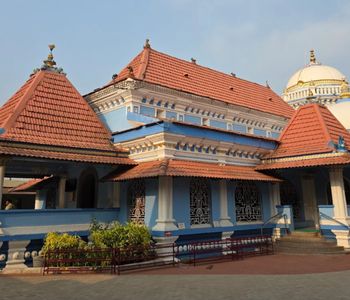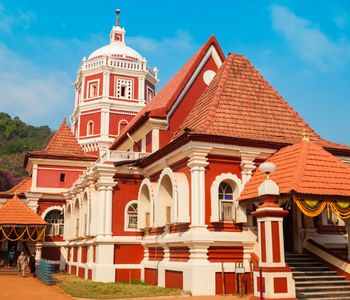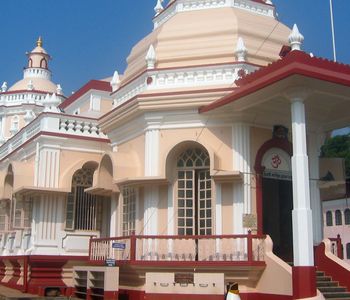
Most people arrive in Goa chasing surf and sundowners. They rarely venture inland, which is precisely why the Shree Mahalaxmi Temple deserves your attention. Situated in the village of Bandora, roughly four kilometers from Ponda, this temple belongs to a Goa that predates the Portuguese by centuries — a landscape of laterite hills, areca nut groves, and Hindu worship that survived colonial persecution through sheer stubbornness. The temple is dedicated to Goddess Mahalaxmi, the deity of wealth and prosperity, and her presence here tells a story of displacement, devotion, and quiet resilience. If you want to understand Goa beyond the shacks and techno, this is where you begin. The air smells different here — less salt, more sandalwood — and the silence carries weight.
A Deity in Exile
The temple's origin is inseparable from the Portuguese Inquisition. When colonial authorities began demolishing Hindu temples across the coastal talukas in the sixteenth century, devotees smuggled their sacred idols inland to the sheltered villages around Ponda. The Mahalaxmi idol was originally worshipped in Colva — yes, the same Colva now famous for its beach. Priests and followers carried her across rivers and through dense forest to Bandora, where she could be venerated without threat of destruction.
The inversion this creates is extraordinary. Colva today is all sunburn and fish curry restaurants. Bandora, meanwhile, holds the spiritual core that Colva lost. The deity didn't merely survive the journey — she anchored an entire community in a new place. The temple you see today was rebuilt and expanded over the centuries, but the act of rescue remains its founding story, carved into local memory if not into the stone walls themselves.
Stone, Wood, and an Eighteen-Armed Goddess
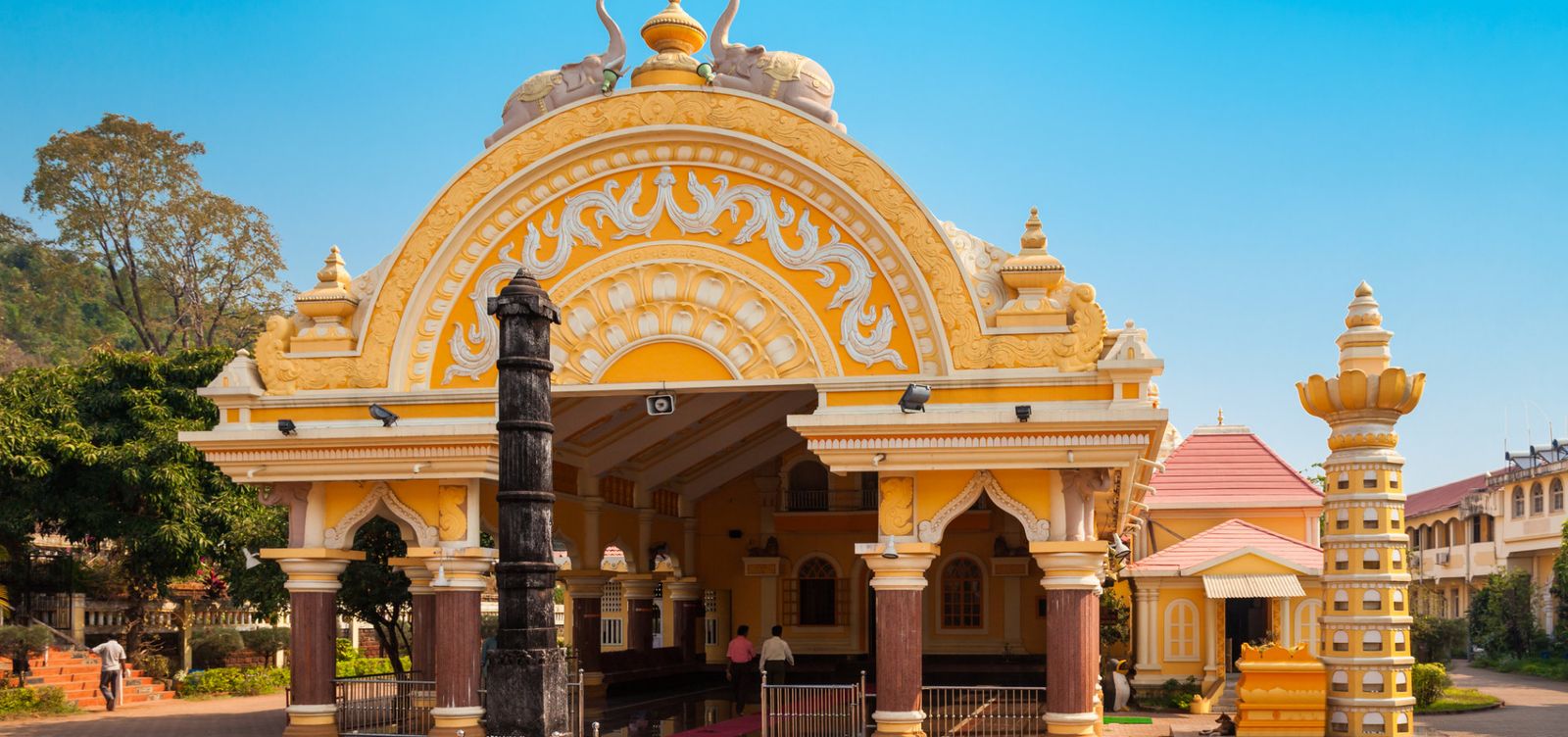
Shree Mahalaxmi Temple is a lesson in Goan Hindu design — a style most travelers never encounter because they assume Goa's architecture begins and ends with Baroque churches. The structure blends Islamic dome elements with distinctly Hindu features, a hybrid born from centuries of overlapping rule. A deepstambha, or lamp tower, rises near the entrance, its octagonal form engineered to hold oil lamps during festivals. At dusk, when each tier is lit, the tower becomes a column of flickering gold against a sky turning indigo. It's one of those moments where you stop composing photographs and simply stand still.
The interior is relatively modest in scale, which makes the sanctum's main idol all the more arresting. Goddess Mahalaxmi stands here with eighteen arms, each gripping a different weapon or symbolic object. This is unusual. Most Mahalaxmi representations across India depict her with four arms. The eighteen-armed form links her specifically to the destroyer of the demon Mahishasura, blurring the line between Mahalaxmi and Durga — a theological overlap Hindu scholars have debated for generations. But standing before the idol, scholarly distinctions dissolve. What remains is the sheer visual authority of that dark stone figure, filling a small chamber with something larger than itself.
Don't rush past the carved wooden panels that line sections of the interior. The nagar drum house near the entrance features panels depicting scenes from Hindu epics, each figure rendered with such attention to gesture and expression that they reward the kind of looking most travelers reserve for European galleries. Slow down. These panels earned it.
The Festival That Rewrites the Village
Visit during the Navratri festival, typically falling in October, and Bandora becomes unrecognizable. The temple hosts nine nights of elaborate celebration, and the energy shifts from contemplative to ecstatic. Devotees arrive in hundreds, oil lamps blanket the courtyard, and the deepstambha blazes fully lit from base to peak. Drumming echoes off the laterite walls well past midnight. The air thickens with camphor and incense until you taste it.
On regular days, the temple operates at a different pace entirely. Morning and evening arati ceremonies draw a handful of local families. The priests perform rituals with an unhurried precision that suggests centuries of repetition. You'll hear temple bells, the murmur of Sanskrit verses, and the occasional screech of a nearby parakeet. No loudspeakers. No crowds jostling for selfies. The contrast with Goa's coastal circus is so stark it almost feels like a different state — which, in some essential way, it is.
Getting There Without the Runaround
From Panjim, the drive to Bandora takes roughly forty minutes through winding roads that pass through Ponda town. A rented scooter or motorbike gives you flexibility, and the roads are manageable if you've navigated Indian traffic before — though "manageable" is a relative term that includes stray cattle and buses with an adversarial relationship to lane markings. Auto rickshaws from Ponda town will take you directly to the temple for a negotiated fare; expect to pay between fifty and a hundred rupees depending on your bargaining stamina.
If you're relying on buses, the Kadamba Transport Corporation runs regular services between Panjim and Ponda. From the Ponda bus stand, you'll need a short rickshaw ride to complete the trip. There's no dedicated parking lot, but the roadside near the entrance accommodates cars and two-wheelers comfortably on most days. During Navratri, arrive early or accept that parking becomes a competitive sport.
Before You Walk In
The temple charges no entry fee. Dress modestly — shoulders and knees covered — and remove your shoes before entering the main structure. Photography rules shift depending on the presiding priest's preference, so ask before pointing a lens at the sanctum. A few small shops near the entrance sell offerings like flowers and coconuts, and one or two tea stalls nearby let you sit afterward with a clay cup and let the visit settle in your bones.
Mornings between seven and nine offer the most atmospheric experience, when the arati coincides with soft light filtering through the temple's interior. Afternoons tend toward a stillness bordering on emptiness — which has its own appeal if you prefer solitude over ceremony. The temple remains open throughout the day, typically from six in the morning until nine at night.
Combine your visit with the nearby Shanta Durga and Mangeshi temples, both within a short drive, to grasp the full scope of Ponda's temple belt. Together, they form a corridor of Hindu worship that has persisted for nearly five hundred years against considerable odds.
The Goa Worth Remembering
Shree Mahalaxmi Temple won't compete with a beach sunset for your Instagram feed. It doesn't need to. What it offers instead is a confrontation with a Goa that most travelers ignore — one shaped by displacement, devotion, and an eighteen-armed goddess who refused to disappear. The temple stands in Bandora not because this was always her home, but because her people carried her here when home was taken away. That single fact gives this quiet laterite structure more gravity than a dozen beachfront landmarks. Come early, stay unhurried, and let the silence do what silence does best.