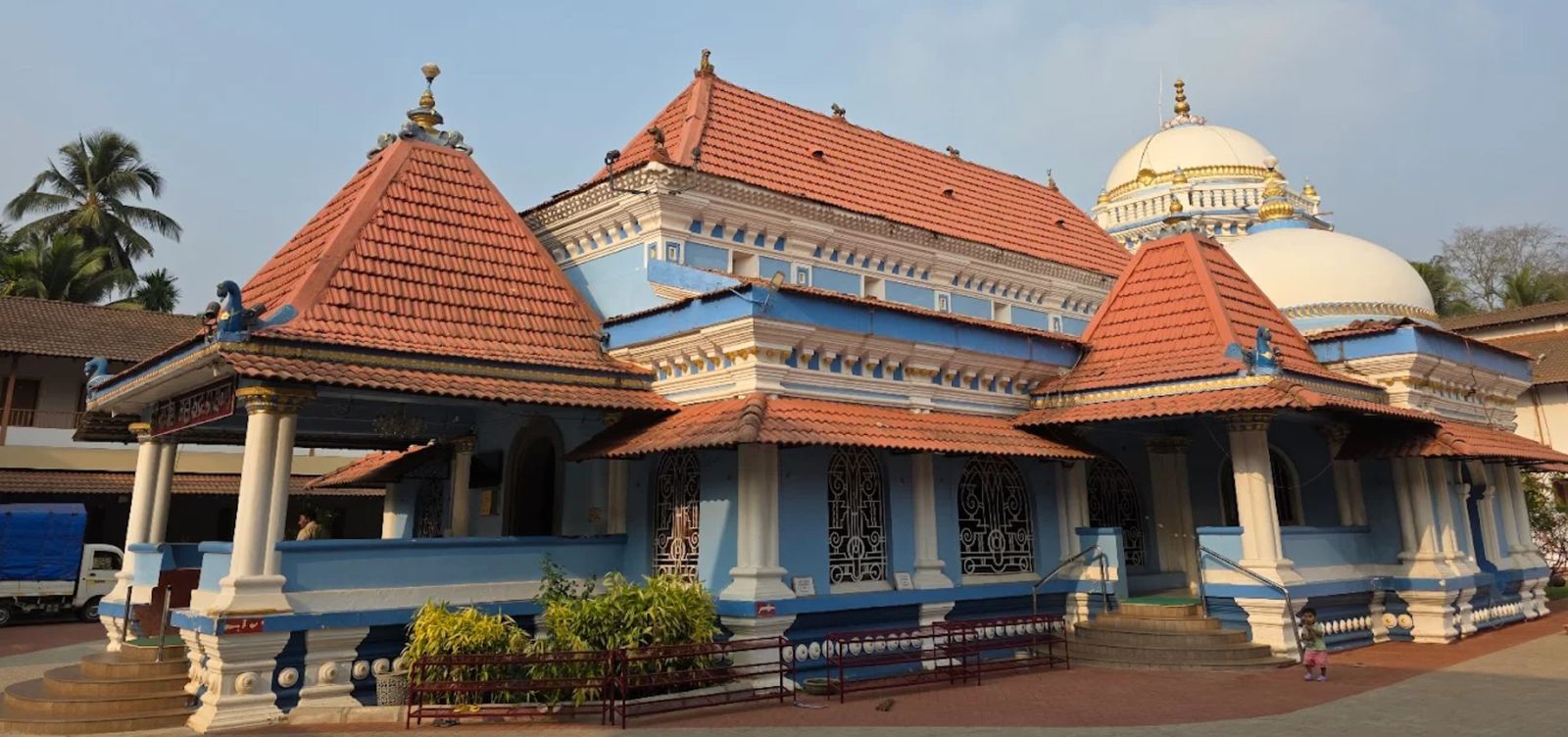
The story goes like this: a lingam of Lord Shiva appeared in the forest, and a cobra coiled around it in devotion, refusing to leave. That cobra — the naga — gave this temple its name. Shri Nageshi Temple sits in the village of Bandora, about 30 kilometers from Panaji, in a Goa that most visitors to the state never bother to see. There are no beach shacks here, no trance parties, no sunburned Europeans on scooters. Instead, you get laterite hills, areca nut groves, and the sound of temple bells drifting through humid afternoon air. Nageshi is one of the oldest temples in Goa, and its atmosphere carries a weight that the coastal strip simply cannot offer. If Goa's beaches represent the state's body, its inland temples are something closer to the spine.
A Temple That Outlasted Its Destroyers
Portuguese colonial rule was ruthless toward Hindu temples in Goa. During the Inquisition era, hundreds were demolished, their deities smuggled across rivers into safer territory. Nageshi's present structure dates to a reconstruction, but the site's sanctity predates European contact by centuries. The original temple was likely destroyed and rebuilt more than once, yet the lingam at its core endured — carried, hidden, and returned by devotees who refused to let their god vanish.
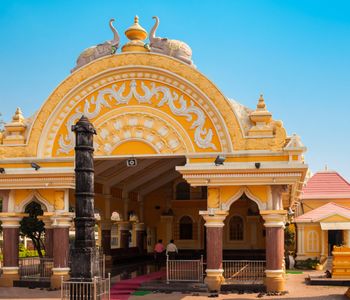
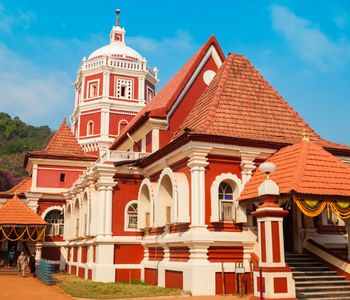
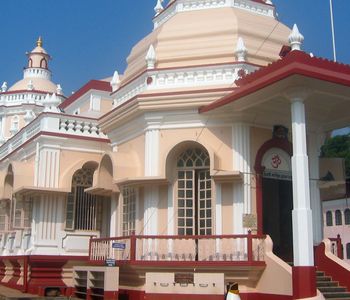
What stands today weaves Kadamba-era architectural memory with later Maratha-period renovation. The deepastambha — a tall stone lamp tower — rises near the entrance, its multiple tiers designed to hold oil lamps during evening ceremonies. This isn't ornamental flourish. On festival nights, every tier burns, and the tower becomes a vertical column of flame visible from across the valley.
Soot, Grain, and Silence Inside the Mandapa
Step through the entrance, and the temperature drops a few degrees. The sabha mandapa, or assembly hall, holds carved wooden pillars darkened by centuries of oil-lamp soot and incense residue. Run your fingers across one, and you'll feel the grain beneath layers of accumulated ritual. The ceiling panels carry painted scenes from the Ramayana, though age has softened many of them into suggestion rather than illustration.
The inner sanctum houses the Shiva lingam — modest in scale, immense in local devotion. A Nandi bull carved from black stone sits facing the sanctum, patient as stone should be. Around the main shrine, smaller shrines honor Ganesh and Lakshmi-Narayan, but these feel like supporting characters in a play that belongs entirely to Shiva and his serpent guardian.
Here's the counterintuitive thing about Nageshi: it's arguably more atmospheric because it lacks the grand scale of temples like Mahabaleshwar in Gokarna or the carved excess of Hoysala monuments. The intimacy of the space forces you closer. You don't admire this temple from a distance. You stand inside it and breathe.
The Tank That Holds More Than Water
Behind the temple sits an ancient water tank, its stone steps descending into green, still water. In temple architecture across India, these tanks — called pushkarnis — served both ritualistic and practical purposes. At Nageshi, the tank is surrounded by old-growth trees whose canopy blocks the midday sun entirely. Frogs call from the edges. The occasional splash of a fish breaks the surface.
Locals bathe here ceremonially before entering the temple, and the water carries that particular mineral-rich scent of tropical stone pools — damp, faintly metallic, older than anything you can name. Sit on the upper steps for a few minutes and you'll notice how the temple's rear facade reflects against the water when the surface goes calm. It's the kind of image that rewards patience rather than a camera's burst mode.
When Drums Echo Through Bandora
Nageshi comes alive during Mahashivratri, usually in February or March, when devotees gather through the night for continuous worship. The rhythms of traditional percussion — ghumot drums and cymbals — reverberate off the laterite walls until the stone itself seems to pulse. Processions move through the village carrying palanquins, and the temple's deepastambha blazes with every lamp lit simultaneously.
The annual Jatra, or temple fair, draws families from across Goa's Hindu community. Food stalls line the road into Bandora, and the smell of frying pakoras competes with incense drifting from the sanctum. During these festivals, the temple reveals what it is at its core — not a monument, but a living institution that binds a community across generations.
The Road Through a Different Goa
From Panaji, hire a taxi or ride a rented scooter south through Ponda taluka. The drive takes roughly 45 minutes and passes through countryside that feels like a different state entirely — cashew orchards, laterite escarpments, and villages where cows still have right of way. Bandora sits just off the main road connecting Ponda to Farmagudi, and small signs point toward the temple.
Public buses from Ponda town reach Bandora, though schedules grow unreliable outside morning hours. If you're visiting multiple temples in the area — and you should, given that Mahalasa Temple at Mardol and Mangeshi Temple both lie within a short drive — a hired car for the day makes the most practical sense. Drivers familiar with the Ponda temple circuit know the routes and the parking spots, which saves considerable time.
The temple opens early, around 5:30 a.m., and remains accessible until about 9 p.m. Morning visits, particularly before 8 a.m., offer near-solitude. There is no formal entry fee, though donation boxes at the entrance accept contributions for the temple's upkeep. Dress modestly — shoulders and knees covered — as this remains an active place of worship, not a heritage exhibit.
Why This Place Matters
Goa's coastal identity is so dominant that its interior life gets overlooked, sometimes even by its own tourism board. Shri Nageshi Temple is a corrective to that imbalance. It carries the memory of colonial destruction and devotional resilience in its very walls. The cobra that guarded the lingam may belong to myth, but the generations of worshippers who protected this site through centuries of upheaval are entirely real. Come early, come quietly, and let the temple do what it does best — remind you that Goa has depths the beach will never show you.