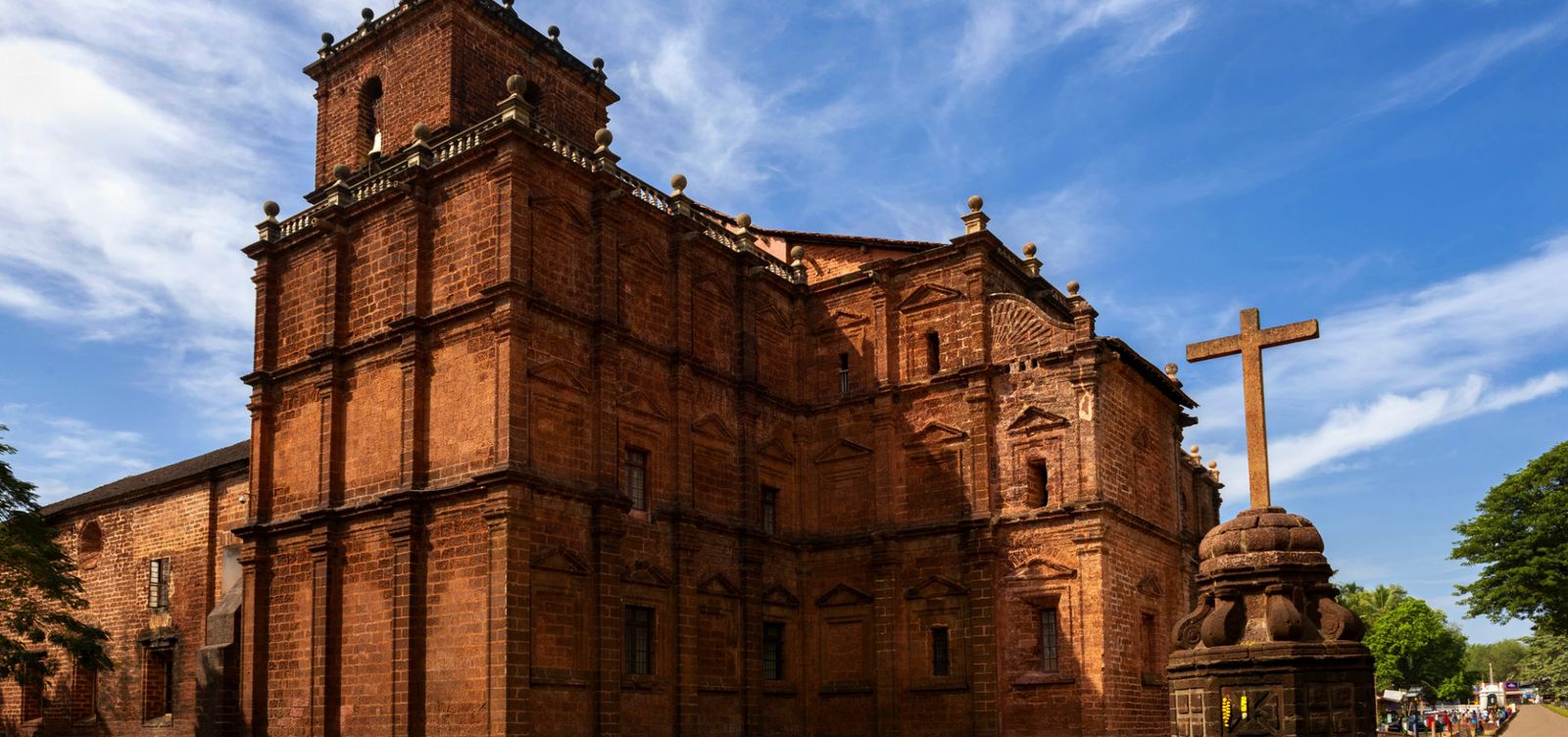
The first thing that hits you isn't the architecture. It's the silence. Old Goa sits along the Mandovi River barely ten kilometers from Panjim, yet it belongs to a different century entirely. Where the rest of Goa throbs with beach bars and scooter horns, this abandoned capital offers something the state otherwise doesn't — stillness, weighted with four hundred years of memory.
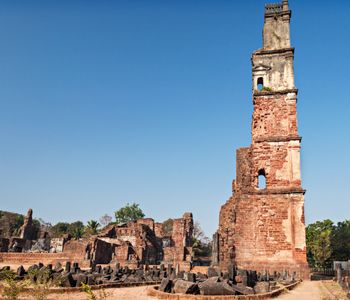
This was once a city that rivaled Lisbon. Portuguese sailors in the sixteenth century called it "Goa Dourada" — Golden Goa — and at its peak, the population here exceeded that of London. Walk the grounds today and you'll struggle to believe any of it. The grand metropolis has been reclaimed almost entirely by laterite dust and banyan roots. What remains are the churches — massive, pale, stubbornly intact — rising from green lawns like bones the jungle couldn't quite swallow.
Cathedrals That Outlived Their City
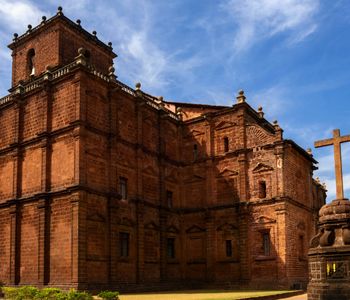
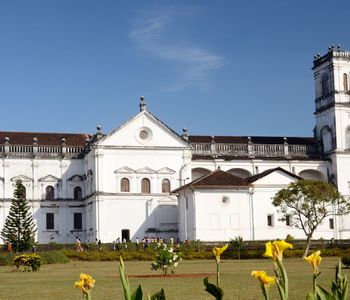
The Basilica of Bom Jesus is the anchor of any visit, and deservedly so. Built in the early 1600s, it holds the mortal remains of St. Francis Xavier in an ornate silver casket — the body, or what's left of it, on display for centuries, still drawing pilgrims from across the Catholic world. Every ten years, the Exposition of the relics transforms Old Goa into something closer to the Vatican than a sleepy Konkan town.
What stops you first, though, is the exterior. Dark basalt, unplastered — deliberate, not neglected — giving the building a kind of geological weight the whitewashed churches beside it can't match. You touch the wall and it's warm, almost alive, absorbing the coastal heat like a living thing.
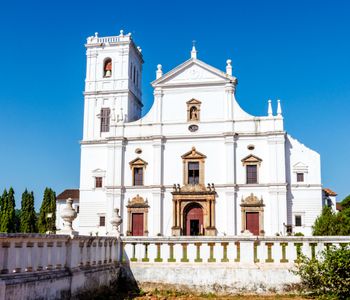
Across the road stands Sé Cathedral, the largest church in Asia when it was completed in 1619. Step inside and the scale is almost disorienting. The vaulted ceiling soars above a nave that could comfortably hold several hundred worshippers, though on most weekday afternoons you'll share it with perhaps a dozen. One of its original twin towers collapsed in 1776 and was never rebuilt, leaving the facade permanently lopsided. That asymmetry, oddly, is what makes it beautiful — a concession that even monuments built to project imperial permanence answer, eventually, to weather and time.
Farther along the road, the Church of St. Francis of Assisi houses a small but absorbing museum. Portuguese-era portraits stare down from the walls with the rigid formality of colonial officialdom. Wooden panels illustrate the life of St. Francis, darkened with age, the paint cracked but the emotion still legible. The Archaeological Museum within the same complex holds Hindu artifacts and hero stones that predate the Portuguese arrival — a quiet correction to the assumption that Goa's history began in 1510.
A City Emptied by Plague
The reason Old Goa exists in this skeletal state is grimly practical. Cholera and malaria epidemics ravaged the city through the seventeenth and eighteenth centuries. The Portuguese eventually abandoned it, shifting the capital to Panjim and leaving the churches behind like headstones for a civilization that moved on. By the nineteenth century, the population had dwindled to almost nothing.
What you're walking through today is essentially a ghost town with a UNESCO designation. And that's not hyperbole — it's the accurate emotional register of the place.
You don't visit Old Goa the way you visit a monument in a living city. There's no surrounding neighborhood to absorb you, no café culture, no market stalls clamoring for your rupees. There's the road, the lawns, the churches, and the river beyond. A few vendors sell trinkets and bottled water near the main entrance. That's it. The emptiness isn't a failing. It's the whole story.
How the Light Tells Time
Give yourself a full morning. The churches are clustered close enough that you can walk between them in minutes, but rushing defeats the purpose. Light behaves differently here than almost anywhere else in Goa — early morning throws long shadows across the Basilica's façade, while midday sun turns the white walls of Sé Cathedral almost blinding against a monsoon sky. Visit during the wet season, between June and September, and the surrounding greenery intensifies to an almost unreal degree, the laterite paths darkening to rust.
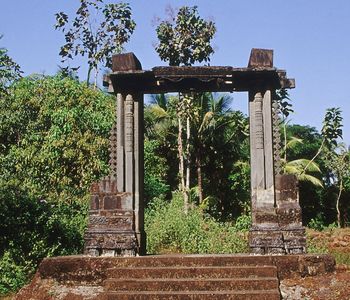
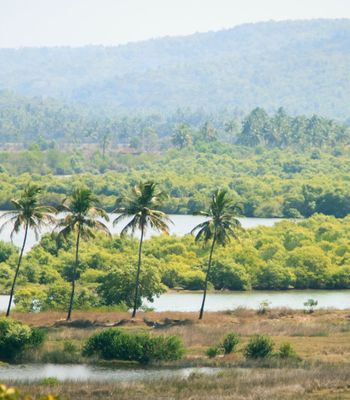
The Viceroy's Arch, closer to the river, marks what was once the ceremonial entrance to the city. It's modest compared to the churches, but standing beneath it you can almost reconstruct the arrival — ships on the Mandovi, officials in procession, the full theater of empire. Almost. The river today is quiet, bordered by mangroves, indifferent to everything that happened here.
Most travelers visit Old Goa as a day trip from Panjim or the beach towns. That's sensible — there's no real reason to stay overnight, and the area has limited dining options beyond a few simple eateries serving fish curry rice. But don't make the mistake of treating it as a quick photo stop between beach sessions. Here's the counterintuitive thing about Old Goa: the less you try to document it, the more it gives you. Put the phone away. Read the inscriptions. Sit with the strange, irreducible fact that one of the greatest cities in Asia simply ceased to exist — and left its churches standing as the only proof it was ever real at all.