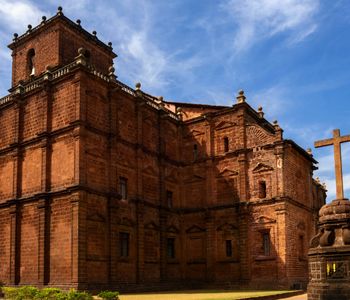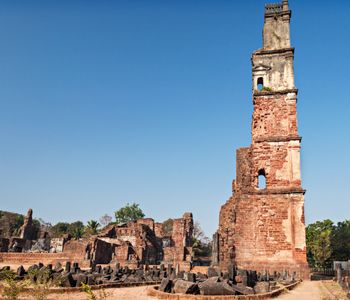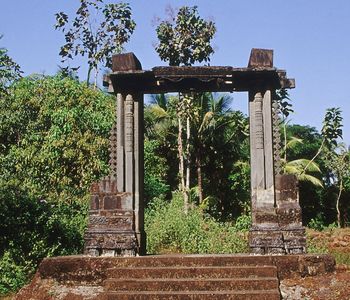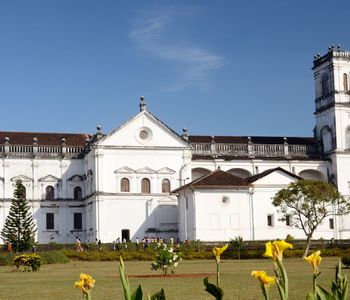
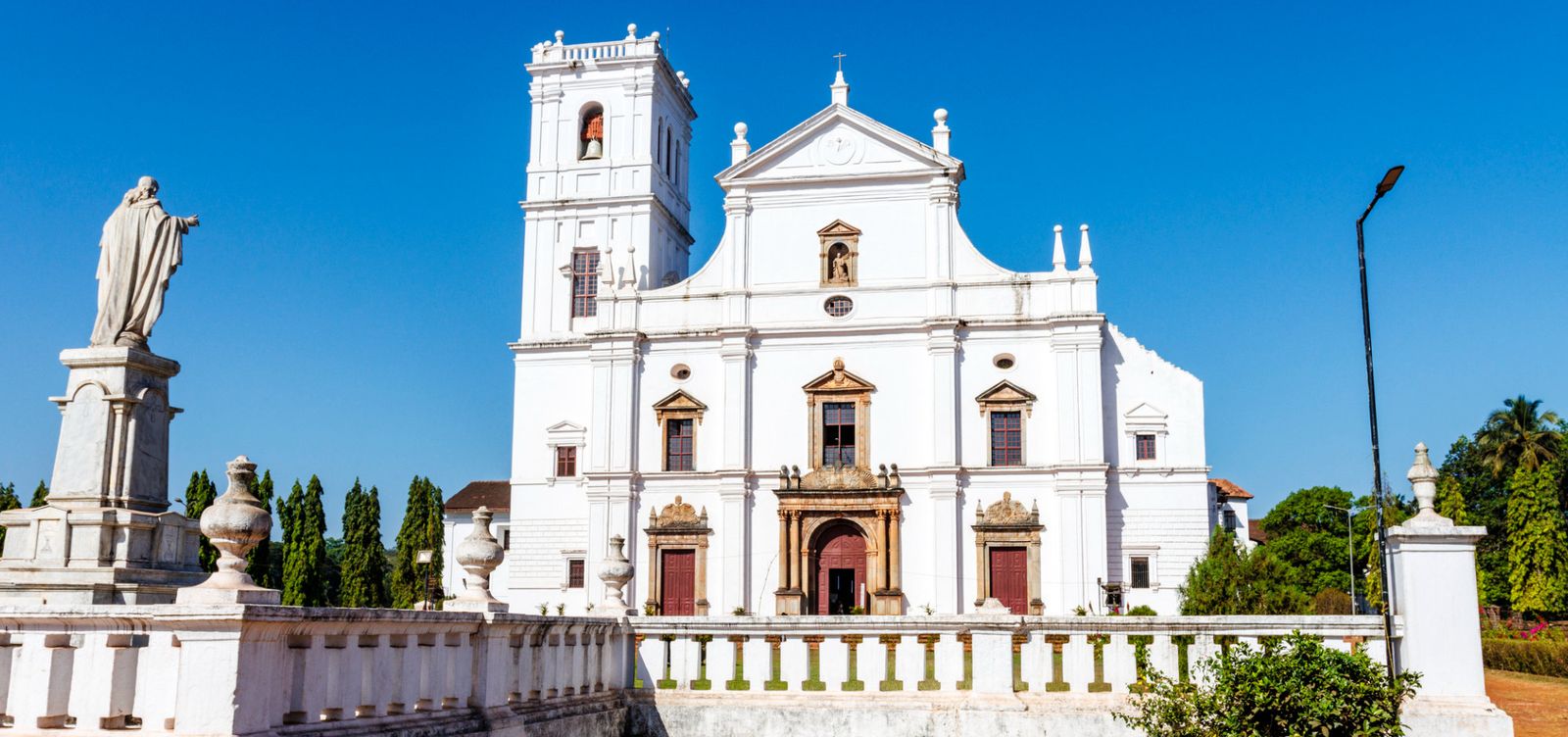
The largest church in Asia doesn't announce itself with fanfare. It sits in Old Goa under a white-hot sky, its laterite walls bleached by centuries of monsoon and sun, one bell tower conspicuously absent — lost to collapse in 1835 and never rebuilt. That asymmetry is the first thing you notice, and it tells you more about this cathedral's story than any plaque could. Se Cathedral is not a monument to perfection. It's a monument to endurance, to the strange persistence of Portuguese Catholicism on Indian soil, and to the Golden Bell — the largest in Goa — whose deep toll once reminded an entire colony who was in charge.
Standing at the heart of what was once the capital of Portuguese India, Se Cathedral rewards you for lingering. This isn't a place to photograph and leave. Sit in the nave, let your eyes adjust to the shadows, and slowly register the scale of what 80 years of construction produced.
A Cathedral Born from Conquest
Construction began in 1562 under orders from the Portuguese Viceroy, and the building wasn't consecrated until 1640. Nearly eight decades of labor — which partly explains the architectural identity crisis. The exterior follows a restrained Portuguese-Manueline style, but walk inside and the Tuscan columns and Corinthian detailing reveal an Italian Renaissance influence that crept in across those long construction decades. The result is a hybrid. Not confused, exactly, but layered in a way that pays off if you're paying attention.
The cathedral was dedicated to St. Catherine of Alexandria, commemorating the Portuguese capture of Goa on her feast day in 1510. Afonso de Albuquerque's military victory became, in stone and mortar, a religious statement. That tension between devotion and dominion runs through the entire building like a fault line. You feel it in the sheer dimensions — 250 feet long, 181 feet wide — designed not merely for worship but for spectacle, for making the conquered landscape feel permanently rearranged.
The Golden Bell and the Missing Tower
Every cathedral has bells. Few have a bell with a reputation. The Golden Bell of Se Cathedral hangs in the surviving tower on the south side, and its name comes not from its material — it's bronze — but from the richness of its tone. When struck, the sound carries across the Mandovi River basin with a resonance that feels almost physical, a low vibration you register in your chest before your ears fully process it. During the Inquisition, this same bell tolled to announce public sentences. Beautiful sound. Ugly history.
The northern tower collapsed nearly two centuries ago, and authorities never replaced it. Some find the absence regrettable. I find it honest. It gives the facade a lopsided dignity — a reminder that even the grandest imperial projects eventually lose pieces of themselves. The remaining tower, standing alone, looks less like a ruin and more like a survivor.
Where Light Does the Work
Step through the main entrance and the temperature drops several degrees. The nave stretches ahead in a long barrel vault, and the whitewashed walls create a luminous interior that feels counterintuitive for a building this massive. Light enters through high windows and lands on surfaces with a softness you wouldn't expect from laterite and lime plaster. Here's the thing most people miss about Se Cathedral: for all its imperial bluster on the outside, the interior is surprisingly gentle. The light has no agenda. It simply falls.
The main altar, gilded and dedicated to St. Catherine, rises behind an intricately carved reredos. Six panels depict scenes from her life and martyrdom, gold leaf still catching filtered light after centuries. To the right, the Chapel of the Blessed Sacrament holds its own ornate altarpiece. But the chapel that draws the most visitors sits on the southern side — the Chapel of the Cross of Miracles, which houses a plain wooden crucifix said to have once grown in size. Believe what you will. The faith invested in that cross is palpable in the worn floor tiles surrounding it.
Eight chapels line the aisles in total, each with its own altar and artistic personality. Some are lavish, others spare. Together, they create a rhythm as you walk the length of the cathedral — pause, absorb, move, pause again. The building teaches you its own pace.
What Four Centuries of Weather Leave Behind
The Archaeological Survey of India maintains Se Cathedral as a protected monument, and UNESCO designated all the Churches and Convents of Goa as a World Heritage Site in 1986. Conservation efforts are ongoing, which means you may encounter scaffolding or restricted areas during your visit. Don't let that put you off. The restoration work itself is worth watching — artisans repairing laterite blocks using traditional methods, their hands engaged in the same labor that raised these walls in the first place.
Monsoon humidity has taken its toll on interior paintings and woodwork over the years. Some gilt surfaces show their age openly. But the structural bones remain remarkably sound for a building that has weathered more than 380 rainy seasons on the Konkan coast. The walls are thick — built for a tropical climate the Portuguese architects were still learning to respect.
Getting There and Getting In
Old Goa sits about 10 kilometers east of Panaji, the current state capital. Auto rickshaws and taxis make the run frequently, and local buses operate from the Kadamba Bus Stand in Panaji with departures every few minutes during the day. The ride takes roughly 20 to 30 minutes depending on traffic. If you're coming from the beach towns of North or South Goa, budget 45 minutes to an hour.
Entry to Se Cathedral is free. The cathedral opens at 7:30 a.m. and closes by 6 p.m., though mass schedules can affect access to certain areas. Morning visits, particularly on weekdays, offer the quietest experience. By mid-afternoon, tour buses arrive in waves, and the nave fills with the particular hum of guided groups moving through on tight schedules. Come early, and you'll have the echoing space largely to yourself — which is how a building like this deserves to be met.
The Basilica of Bom Jesus stands just across the square, and several other historic churches and convents cluster within walking distance. Wear comfortable shoes and carry water. Old Goa's heat is insistent, and the complex sprawls more than you'd think.
A Place That Outlasted Its Empire
Se Cathedral exists because of colonial power, and it would be dishonest to separate the architecture from that context. But the building has outlived the empire that built it by more than half a century now. It belongs to Goa — to the parishioners who attend Sunday mass, to the local couples who marry beneath its vaulted ceiling, to the custodians who sweep the nave each morning before the first visitors arrive. Stand in the doorway as the Golden Bell sounds, and you'll understand why this cathedral endures. Not because of what it represents historically, but because of what it has quietly become: a living place, imperfect and irreplaceable, still resonating after all these years.