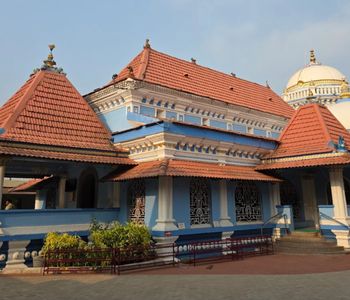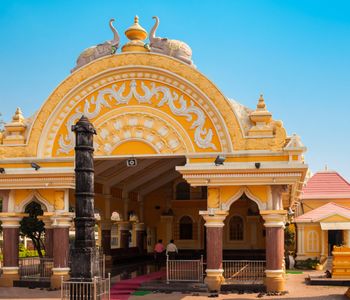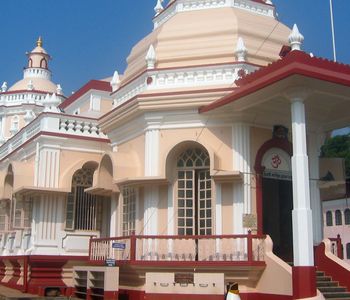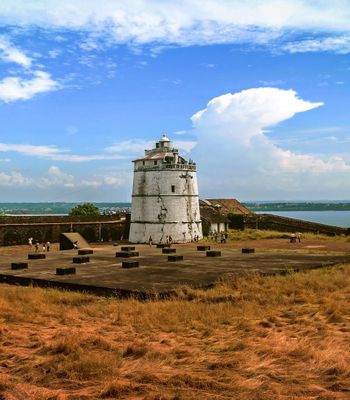
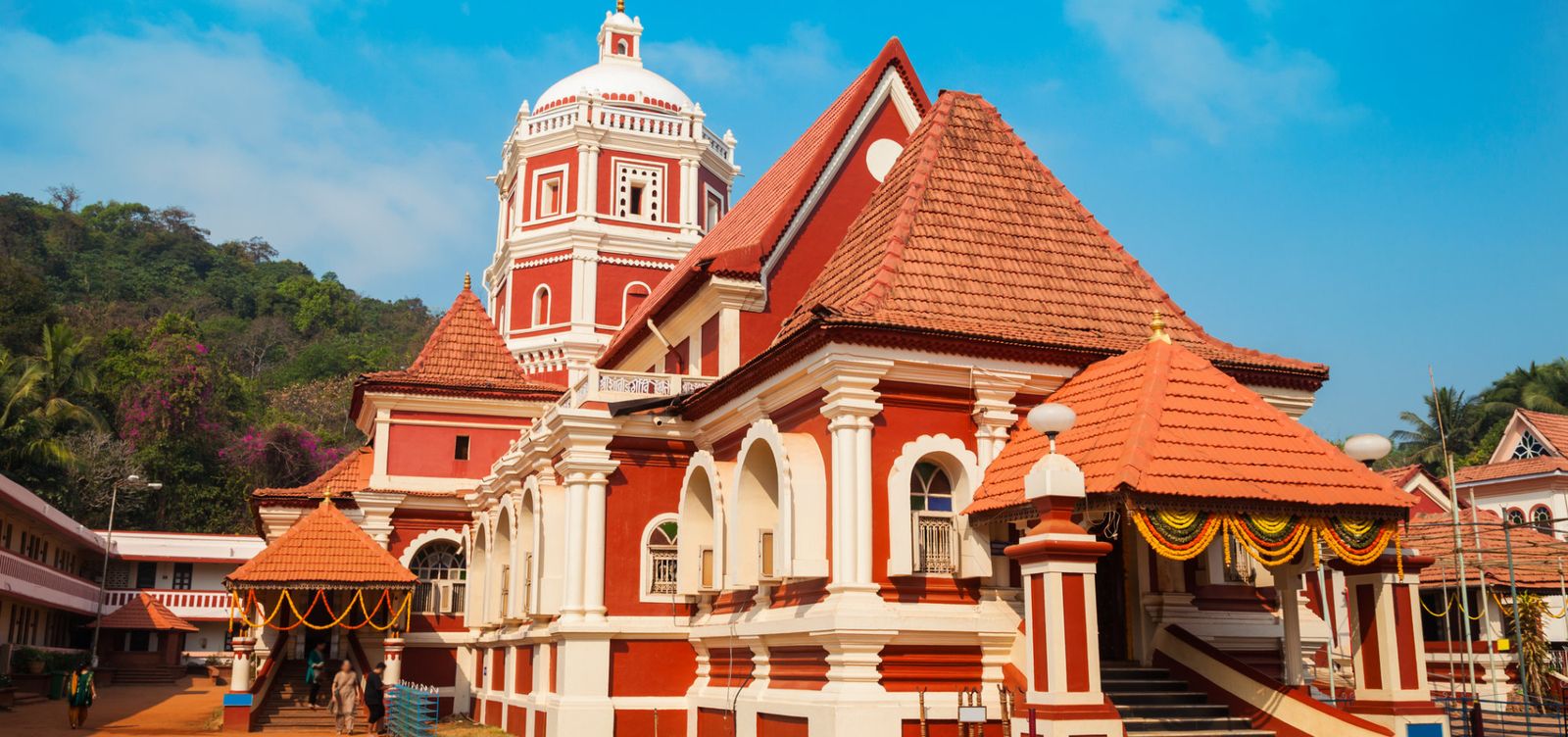
Drive thirty minutes inland from Panjim, past the cashew plantations and laterite hillsides, and the Goa you thought you knew dissolves entirely. At the foot of the Kavalem hills in Ponda taluka, Shri Shantadurga Temple rises in a wash of terracotta and white — a structure so composed, so symmetrically certain of itself, that it feels like a rebuke to the coastal chaos most travelers associate with this state. This is the other Goa, the one that existed long before charter flights and beach shacks. The temple, dedicated to the Goddess Shantadurga — a peaceful form of Parvati who mediated between Vishnu and Shiva — draws thousands of Hindu devotees daily. Yet it rarely appears on mainstream tourist itineraries. That gap between devotion and tourism is precisely what makes visiting here so rewarding.
A Goddess Who Chose Diplomacy Over War
Most Hindu deities carry weapons. Shantadurga carries none. According to legend, Vishnu and Shiva were locked in a battle so fierce that the universe itself trembled. Parvati intervened, holding each god by the hand and restoring peace between them. For this act, she earned the name Shantadurga — "shanti" meaning peace. The temple's central idol reflects this story: the goddess stands with Vishnu on her right and Shiva on her left, a mediator frozen in bronze.
It's a curious founding myth for a temple — not triumph, not destruction, but negotiation. In a country where temple iconography so often celebrates conquest, Shantadurga's defining act is restraint. That philosophical undercurrent lends the entire complex a different gravity than you might expect from one of Goa's most visited religious sites.
Built Twice, Remembered Forever
The temple's history carries scars. The original shrine at Quelossim was destroyed during Portuguese rule in the sixteenth century, part of a systematic campaign against Hindu worship across Goa. Devotees smuggled the idol inland to Kavalem, where thick forest and hilly terrain offered cover from colonial forces. For decades, the goddess lived in hiding.
The present structure dates to 1738, raised under the patronage of the Maratha ruler Shahu. By then, the Portuguese Inquisition had loosened its grip on the interior, and Hindus could rebuild — cautiously. What they built was deliberately grand. The six-storey deepastambha, or lamp tower, at the entrance stands as a quiet declaration: we are still here. Its octagonal base supports a column of oil lamps that, when lit during festivals, throws flickering light across the entire courtyard.
Architecturally, the temple is a hybrid that refuses to hide its contradictions. The main building follows Kadamba-era design principles with its sloped roof and carved wooden interiors, but the dome sitting atop the sanctum is unmistakably European — a Romanesque addition that reflects the cultural cross-pollination of eighteenth-century Goa. Here's the counterintuitive thing: a temple that survived Portuguese destruction ended up borrowing Portuguese aesthetics. Few temples in India wear their colonial context so visibly on their roofline.
Walking the Grounds at Ground Level
Enter through the main gateway, and you'll pass beneath a nagarkhana, or drum room, where musicians once announced the arrival of important visitors. The courtyard beyond opens wide, paved in smooth stone that stays surprisingly cool even in the late morning heat. To your left stands the agrashaala, a pilgrim's rest house with thick walls and deep verandas. Ahead, the main temple building commands the space with its white-plastered exterior and pyramidal shikhara.
Inside, the sanctum is smaller than the exterior suggests. Oil lamps — not electric substitutes — illuminate the goddess, and the air carries a dense layer of camphor and sandalwood. The palanquin kept near the inner sanctum is used during the annual Jatra festival, when the idol is carried in procession through the surrounding village. If you visit outside festival season, it sits in near darkness, draped in silk, waiting.
What catches you off guard is the tank. Behind the temple, a stepped water tank stretches out in clean geometric lines, its green water reflecting the surrounding palm canopy. Few people linger here, which is precisely why you should. The silence is absolute — broken only by the occasional crow and the distant murmur of prayers drifting from the sanctum.
The Festival That Transforms Everything
During the annual Shantadurga Jatra, typically held in late January or February, the temple compound swells beyond recognition. Devotees arrive from across Goa and Maharashtra, and the deepastambha is lit from base to summit — hundreds of oil lamps stacked in vertical rows, turning the tower into a column of fire against the night sky. Processions wind through the village with the palanquin, accompanied by traditional Goan percussion and chanting that echoes off the hillsides.
Outside festival periods, the temple keeps a quieter rhythm. Morning aarti begins at dawn, and the evening prayer session around 7 p.m. draws a devoted but manageable crowd. Weekday mornings between 8 and 10 a.m. offer the most contemplative experience — enough activity to feel the temple's living pulse, enough space to absorb its details without being jostled.
Getting There Without the Guesswork
Shri Shantadurga Temple sits roughly 33 kilometers from Panjim and about 26 kilometers from Margao. From either city, hire a taxi or drive — the roads are well-maintained, winding through Ponda's spice plantation belt. If you're coming by bus, Ponda's central bus stand connects to Kavalem by local service, though schedules grow unreliable after noon.
There's no entry fee. The temple is open from approximately 5:30 a.m. to 8:30 p.m., though the sanctum may close briefly during the afternoon. Dress modestly — shoulders and knees covered — and leave your shoes at the designated area near the entrance. Photography is permitted in the courtyard and around the tank but prohibited inside the sanctum itself.
Combine your visit with stops at the nearby Mangueshi Temple and Mahalasa Temple, both within a ten-minute drive. Together, these three shrines form the spiritual backbone of Inland Goa, and seeing all three in a single morning is entirely feasible.
The Goa Worth Driving Inland For
Shri Shantadurga Temple won't overwhelm you with scale or dazzle you with ornamentation. Its power is subtler than that. Here is a goddess defined by peace, worshipped in a structure that survived destruction and reinvented itself with a dome borrowed from its colonizers. Stand by the water tank in the early light, listen to the temple bells carry across the courtyard, and you'll understand something essential about Goa that no beach sunset can teach you. The coast gives you the postcard. The interior gives you the story.