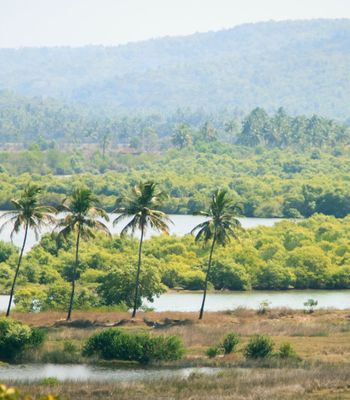
The first thing that strikes you about Fort Aguada isn't its walls or its lighthouse or even the Arabian Sea crashing against the laterite headland below. It's the cistern. Buried within the fort's ramparts sits a freshwater reservoir that once held nearly 2,376,000 gallons — enough to supply passing Portuguese ships for months at a stretch. In a region defined by monsoons and maritime ambition, Fort Aguada was never really about defense. It was about water. The name itself comes from the Portuguese word "agua," and that single detail tells you more about this fort's purpose than any history textbook. Built in 1612 on the southernmost tip of the Mandovi River estuary in Candolim, Goa, this laterite stronghold served as a lifeline for an empire running on wind and thirst.
A Fort Born from Paranoia, Not Ambition
The Portuguese didn't build Fort Aguada because they were expanding. They built it because they were losing sleep. By the early seventeenth century, the Dutch and the Marathas were circling Goa's coastline with sharpening intent, and the sense of encroachment had become impossible to ignore. The Portuguese Viceroy Ruy Tavara ordered construction of a fortress that could guard the Mandovi River's mouth while doubling as a watering station for ships arriving from Lisbon after months of open ocean.
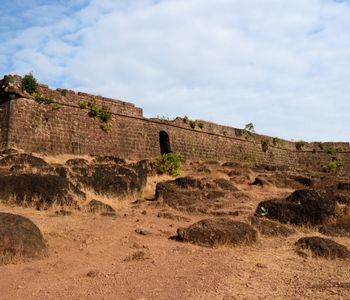
What emerged was a compound of staggering practicality. The fort's walls run the length of the entire peninsula, thick enough to absorb cannon fire, angled to create overlapping kill zones. Seventy-nine cannons once lined these ramparts. Today, a handful remain — rusted, barnacled by centuries of salt wind, their muzzles pointing at cargo ships and fishing trawlers drifting through the same channel Portuguese galleons once navigated.
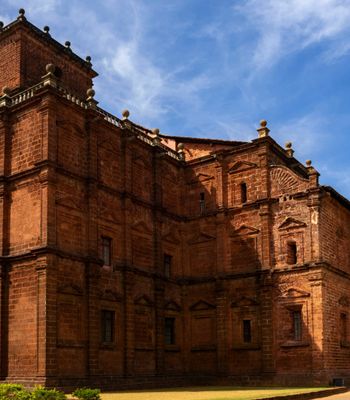
Unlike Goa's ornate churches, Fort Aguada was never meant to impress. It was meant to last. And it has, largely because laterite — the iron-rich red stone quarried locally — does something counterintuitive: it hardens with exposure to air rather than crumbling. The walls look nearly as solid now as they must have four centuries ago, which is more than you can say for most colonial ambitions.
Two Forts in One
Most people who visit don't realize they're only seeing half the structure. Fort Aguada divides into two distinct sections. The upper fort, perched on the hilltop, housed the garrison, the cistern, and the lighthouse. The lower fort extended down to the waterline, where a protected jetty allowed ships to dock and refill their freshwater stores without risking the river's shallows.
The upper section is the one you'll walk through freely. Its dry moat, vaulted gunpowder rooms, and the massive central water tank form a kind of open-air museum with no ropes, no guided pathways. You simply wander, and the silence does its own narrating. The lower fort is another story — part of it served as Aguada Jail until 2015, and that section remains largely sealed off. There's an uncomfortable dissonance in a fort designed to protect people being turned into a place of confinement. You feel it if you walk along the outer walls and peer down at the old prison complex, where the architecture of safety and the architecture of punishment become difficult to tell apart.
The Lighthouse That Replaced Itself
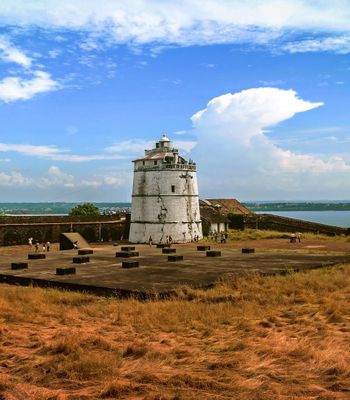
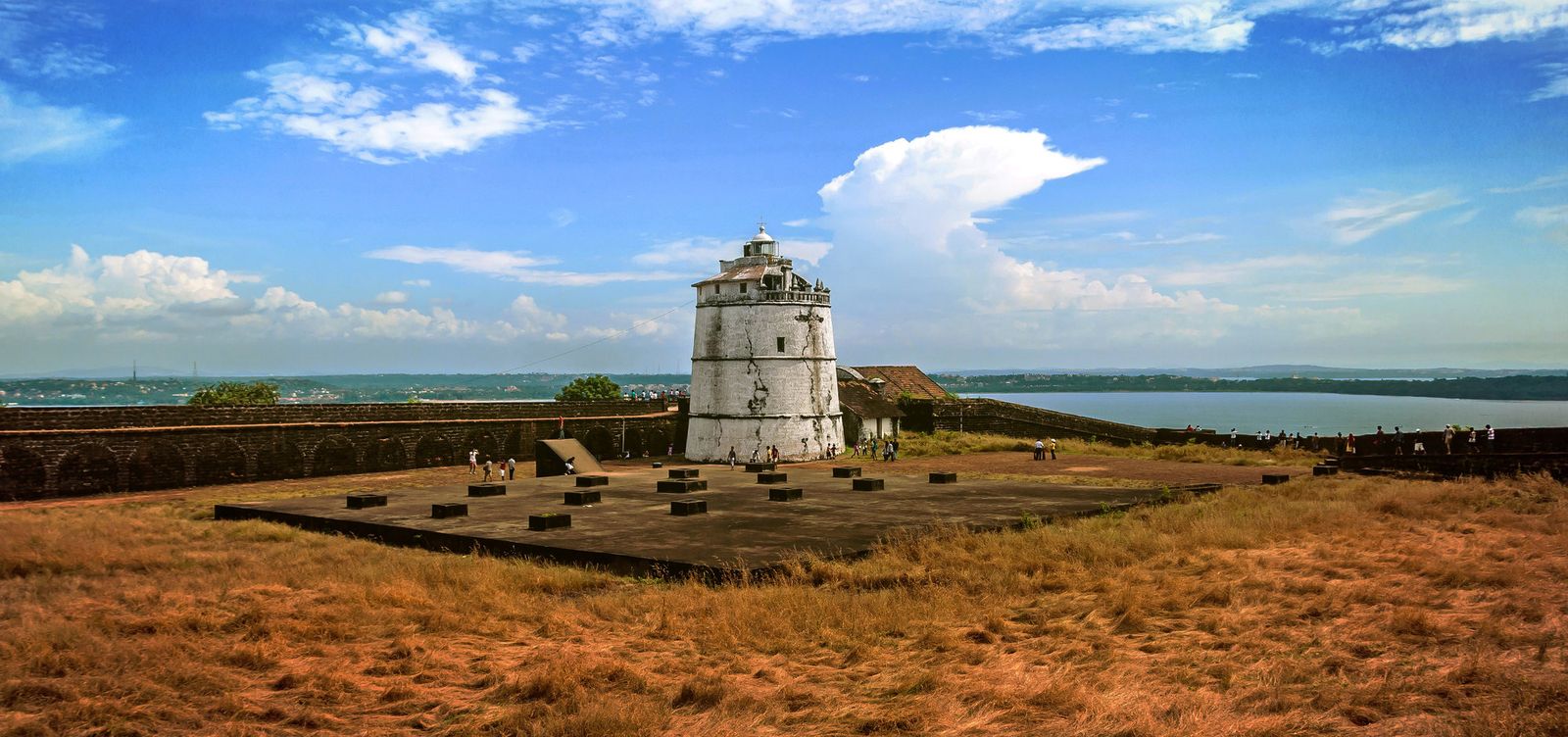
Fort Aguada's four-story lighthouse, completed in 1864, was the oldest of its kind in Asia when it still operated. For over a century it served vessels navigating Goa's coast before being decommissioned in 1976. A newer, far less photogenic lighthouse now stands nearby, handling the actual work of guiding ships while the original handles the work of being beautiful.
Its whitewashed cylindrical tower rises from the fort's highest point, and on clear afternoons the contrast against Goa's deep saturated sky is sharp enough to stop you mid-stride. You can't climb it — the interior has been sealed off — but standing at its base, looking out toward the horizon, you begin to understand why this particular headland mattered. Sinquerim Beach curves south. Fort Reis Magos holds its position across the river. The open ocean stretches west without a single interruption. The Portuguese chose this spot with the precision of people whose survival depended on seeing trouble before trouble saw them.
What the Walls Actually Feel Like
Guidebooks will tell you about the history. They won't mention the wind. Fort Aguada sits fully exposed on its headland, and depending on the season, the gusts coming off the Arabian Sea can be fierce enough to swallow conversation. During monsoon months — June through September — the fort transforms into something almost Gothic. Rain lashes the laterite walls until they darken to a deep burgundy, and the normally calm grounds become slick, empty, yours alone.
Come between November and February, and the experience inverts completely. The stone glows warm under winter sunlight, the ramparts offer a vantage point where the sea looks almost impossibly still. Late afternoon does particular favors to this place — the walls turn amber while fishing boats return to Sinquerim below in a slow, practiced procession that probably hasn't changed in generations.
The fort's interior is spare. Don't expect exhibits, plaques, or a gift shop. The Portuguese built functional spaces — storage vaults, barracks, the enormous water tank — and what remains is precisely that functionality stripped bare by time. Bring water. There's no vendor inside the walls. The irony of carrying your own water into a fort built around a cistern is worth noting.
Getting There Without the Headache
Fort Aguada sits at the northern end of Candolim, roughly thirteen kilometers from Panaji, Goa's capital. If you're staying along the Candolim-Calangute beach strip, an auto rickshaw takes about fifteen minutes and should cost between 100 and 200 rupees, depending on how firmly you hold your ground. Taxis from Panaji charge more but offer air conditioning, which isn't luxury but necessity in Goa's pre-monsoon heat.
Scooter rentals remain the most popular option among travelers already settled in North Goa. The road to the fort winds uphill through a canopy of trees before opening onto a parking area near the upper fort entrance. Arrive before 10 a.m. — tour groups tend to swarm between late morning and early afternoon, and the fort is a different experience when you have the ramparts to yourself. Open daily from 8:30 a.m. to 5:30 p.m., with an entry fee of around 25 rupees for Indian nationals and a slightly higher charge for international visitors.
After the Ramparts
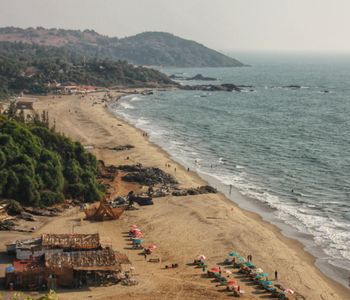
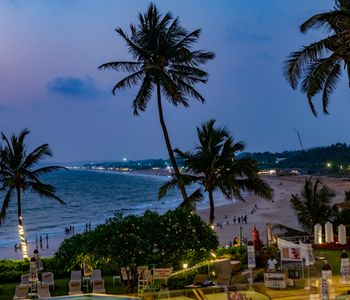
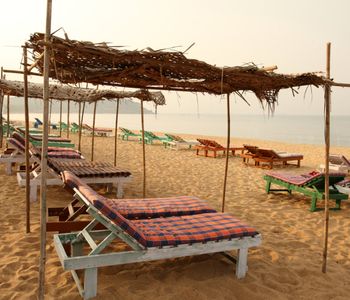
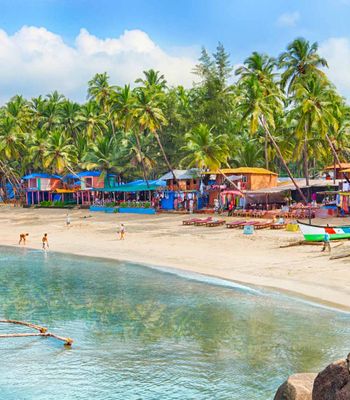
Sinquerim Beach lies directly below the fort's western walls, and walking down after your visit feels like exhaling after holding your breath. The beach here is quieter than Calangute or Baga to the north — fewer hawkers, a gentler slope into the water, a quality of unhurried afternoon that the more popular stretches lost years ago. Several shack restaurants line the sand, serving fried kingfish and cold Kingfisher beer at plastic tables. It's the kind of post-fort meal that doesn't pretend to be anything more than what it is, and it's exactly right.
Fort Aguada will never compete with India's grand fortresses for scale or ornamentation. It wins on a different count entirely — the clarity of its purpose, the honesty of its construction, and the strange fact that a building designed around a water tank became one of Goa's most quietly powerful landmarks. Stand on its ramparts with the wind pulling at your clothes and the sea hammering the rocks below, and you'll understand why the Portuguese held this headland for nearly 450 years. They weren't protecting gold. They were protecting the thing that mattered more.