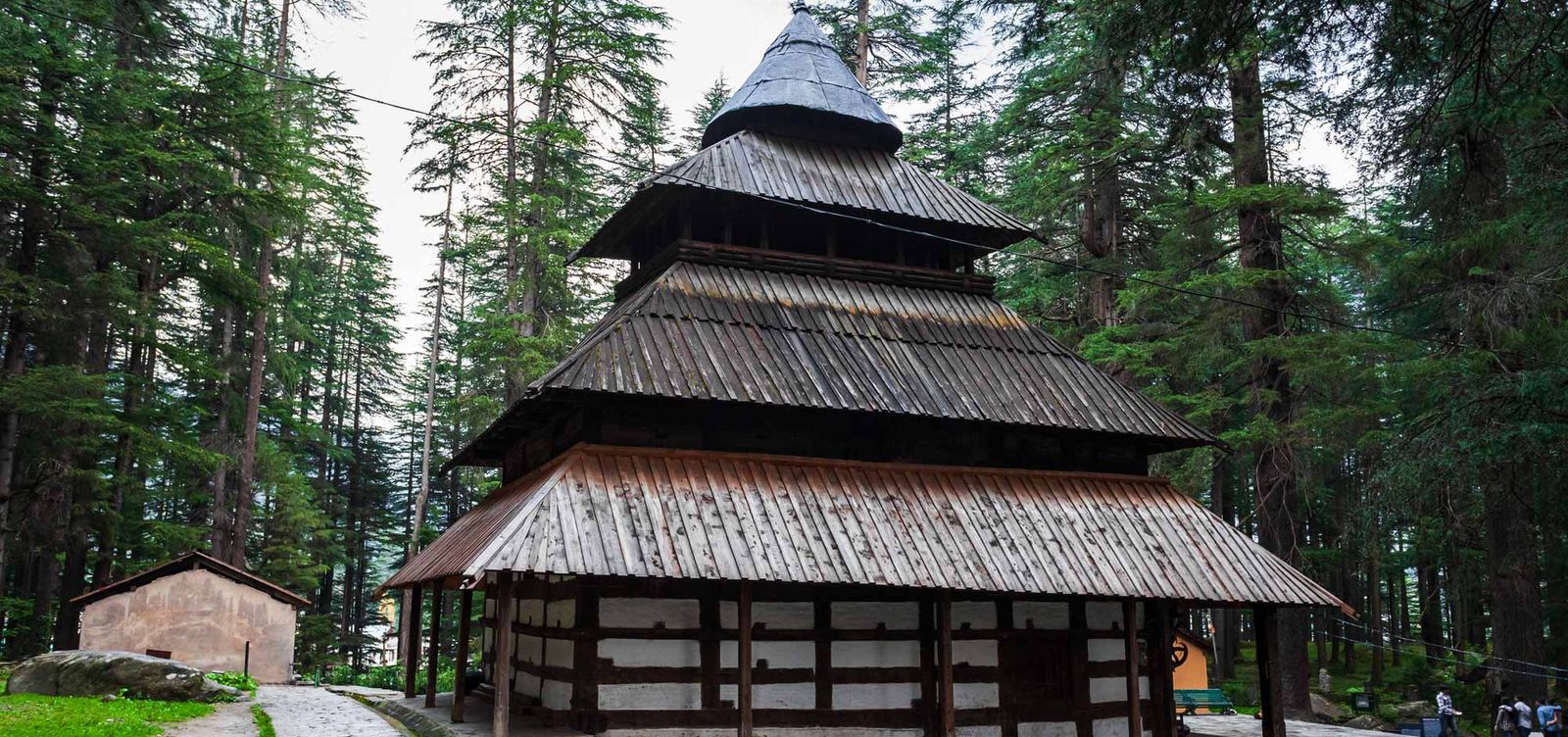
The cedars do most of the talking here. Walk the short trail from the main road in Old Manali, and long before you see the Hadimba Temple, you hear the deodars — enormous, five-hundred-year-old giants creaking overhead, filtering the Himalayan light into shafts that fall across the forest floor like spotlights. Then the structure appears: a four-tiered wooden pagoda, dark with age, roofed in timber shingles that have weathered countless monsoons. It looks less like a temple and more like something grown out of the forest itself. Built in 1553, Hadimba Temple is dedicated not to a god but to a demoness — and that contradiction is the first clue this place doesn't behave like other Hindu shrines in India.
A Demoness Worth Worshipping
Hadimba comes from the Mahabharata. She was a rakshasi — a demoness — who fell in love with Bhima, one of the Pandava brothers, during their exile. She married him, bore him a son named Ghatotkacha, and later renounced worldly life to meditate her way into divinity. The people of the Kullu Valley didn't just accept her; they elevated her. She's now regarded as the guardian deity of the region, and the royal family of Kullu still pays her ritual homage.
There's something quietly radical about that. A woman once branded a demon, now the most protected figure in the valley. The villagers will tell you she chose them, not the other way around.
The Pagoda That Shouldn't Exist Here
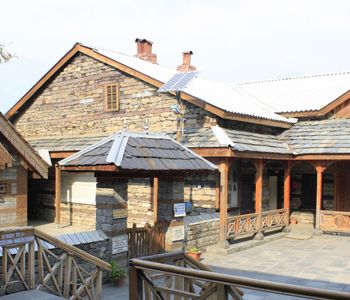
Look closely and you'll notice the temple doesn't fit Indian architectural conventions. The tiered wooden roof pulls from Himalayan traditions you'd expect in Nepal or Bhutan, not a Hindu shrine south of the main range. King Bahadur Singh commissioned it, and the craftsmen carved every inch of the lower façade with serpents, mythical beasts, and dancing figures that have softened over centuries into something you have to lean in to read.
The doorway is low. You'll stoop to enter, and that's deliberate — an architectural bow to the deity inside. Within the dim interior, there's no grand idol. A sacred footprint embedded in a rock rises from the floor instead, worn smooth by centuries of offerings. That's Hadimba. A print in stone. The absence is the point.
What Happens Outside Is Half the Story
Step back out and the clearing pulls you into the living present. Women in traditional Kullu dress — heavy woolen wraps pinned at the shoulder, silver jewelry catching the light — offer photographs with enormous white angora rabbits and yaks draped in bright blankets. Yes, it's touristy. It's also been happening for decades, and the families running these small trades have passed the work down through generations.
A few steps away, vendors sell roasted corn, walnuts from the surrounding orchards, and cups of sweet masala chai that taste better in cold mountain air than they have any right to. Woodsmoke and pine resin hang constantly in the clearing.
The Ghatotkacha Shrine
A short walk from the main temple sits a smaller, often-overlooked shrine dedicated to Hadimba's son, Ghatotkacha. It's built around a large tree. No pagoda, no intricate carving — just offerings tied to the trunk and the sense that this spot was sacred long before anyone framed it in wood.
Most visitors skip it. Don't.
The Dhungri Van Vihar Forest
The cedar grove surrounding the temple is officially protected as Dhungri Van Vihar, and it deserves more credit than it gets. Some of these deodars stand over thirty metres tall. Walk among them at dawn, before the crowds arrive, and you'll understand why the temple was built exactly here — this forest doesn't just surround the shrine, it consecrates it.
When to Go, and When to Really Go
The temple is open daily from 8 a.m. to 6 p.m., and entry is free. You can visit year-round, but the experience shifts dramatically with the seasons.
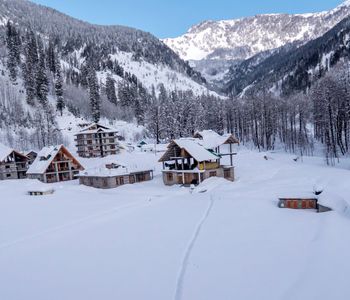
In summer, the clearing bustles — weekenders from Delhi, families, couples on their first trip to the mountains. Come in May or June if you want the energy, the rabbits, the full tourist tableau. But come in winter, ideally January or February, if you want something different. Snow softens the wooden roof. The deodars groan under the weight. The crowds thin to nothing, and the temple settles back into what it was meant to be — a quiet, slightly eerie presence in a cold forest.
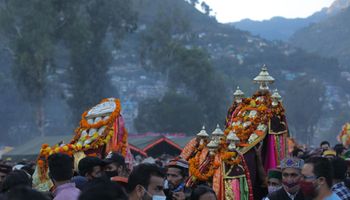
The real moment to visit is the Dhungri Mela, held every May to honor Hadimba. Locals stream in from across the valley. Folk musicians play, drums echo through the trees, and the deity is carried through the clearing in a ceremonial procession. It isn't performed for tourists. It's performed because it's always been performed.
Getting There Without Fuss
The temple sits about two kilometres from Mall Road in Manali, and the walk up through Old Manali is genuinely pleasant — apple orchards, small guesthouses, cafés playing Bob Marley a decade too late. You can also take an auto-rickshaw or taxi from the main market for very little money.
Wear shoes you can actually walk in. The path from the parking area winds through the forest on uneven ground, and in winter it turns slick with packed snow. There's no dress code enforced, but since this is an active place of worship, keep shoulders covered and remove shoes before entering the sanctum.
Photography is allowed outside the temple but prohibited within the inner chamber. Respect that rule. The priests notice.
Why This Place Stays With You
Plenty of temples in India are older, grander, more ornately carved. Hadimba isn't trying to compete. What makes it irreplaceable is the combination — the dark wood, the towering cedars, the demoness-turned-goddess, the footprint in stone, the cold mountain air carrying woodsmoke and cedar resin and the faint sound of bells.
Spend an hour here early in the morning, before the first buses arrive, and you'll understand why the people of Kullu have protected this clearing for nearly five centuries. Some places feel curated. This one feels found. Go slowly, stoop low through the doorway, and let the forest do what it's been doing since before the temple was built.