Himachal Pradesh

Dalhousie

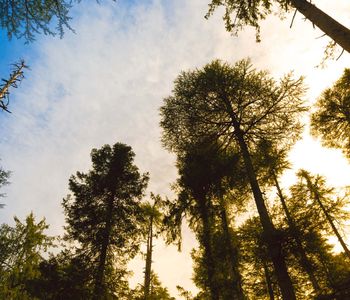
The morning mist clings to the pine trees like a whispered secret, and somewhere below, the faint sound of temple bells drifts up through the valley. Welcome to Dalhousie — a hill station that hasn't forgotten how to be still.

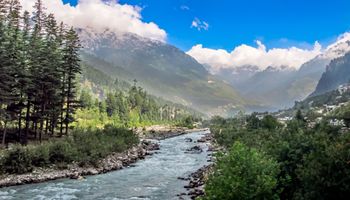
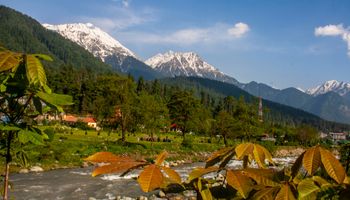
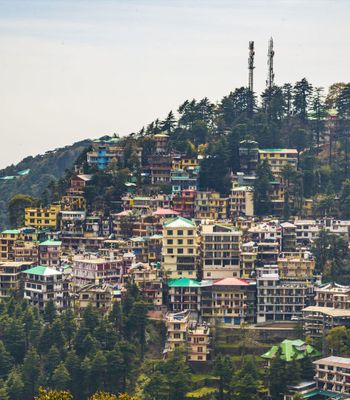
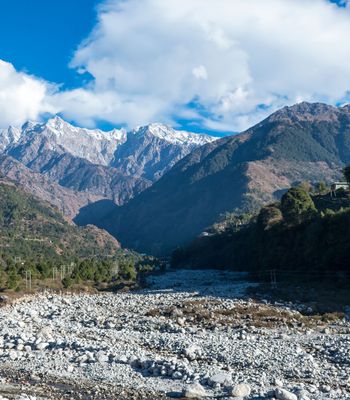
Perched across five distinct hills with the snow-draped Dhauladhar range commanding the horizon, this quiet corner of Himachal Pradesh feels deliciously untouched by time. Founded in 1854 by the Marquis of Dalhousie as a British summer retreat, the town wears its colonial heritage lightly — in weathered stone churches, in the gentle curve of its walking paths, in the unhurried rhythm of its days.

Five Hills, Five Moods

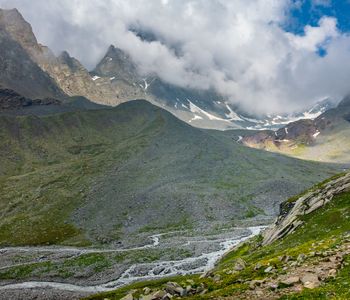
Each of Dalhousie's hills — Kathlog, Potreyn, Terah, Bakrota and Balun — reveals a different face of the mountains. From one ridge, you'll catch the last light turning distant peaks to amber. From another, deep valleys unfold in layers of green that seem to go on forever.

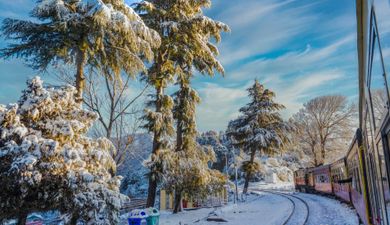
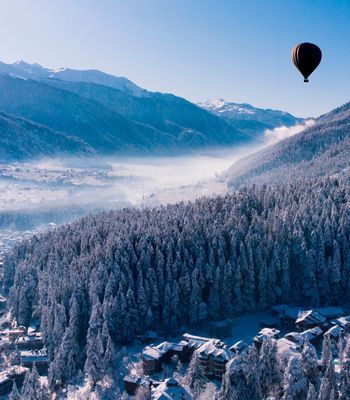
Spring and autumn are the sweet spots for exploration, when the air is crisp and the temperatures invite long, aimless walks. Summer stays pleasantly cool while the plains below simmer. But winter? That's when Dalhousie transforms entirely — a soft blanket of snow settling over rooftops and pine boughs, the Himalayan ridgeline etched razor-sharp against a pale, luminous sky.

Stone Walls and Stained Glass

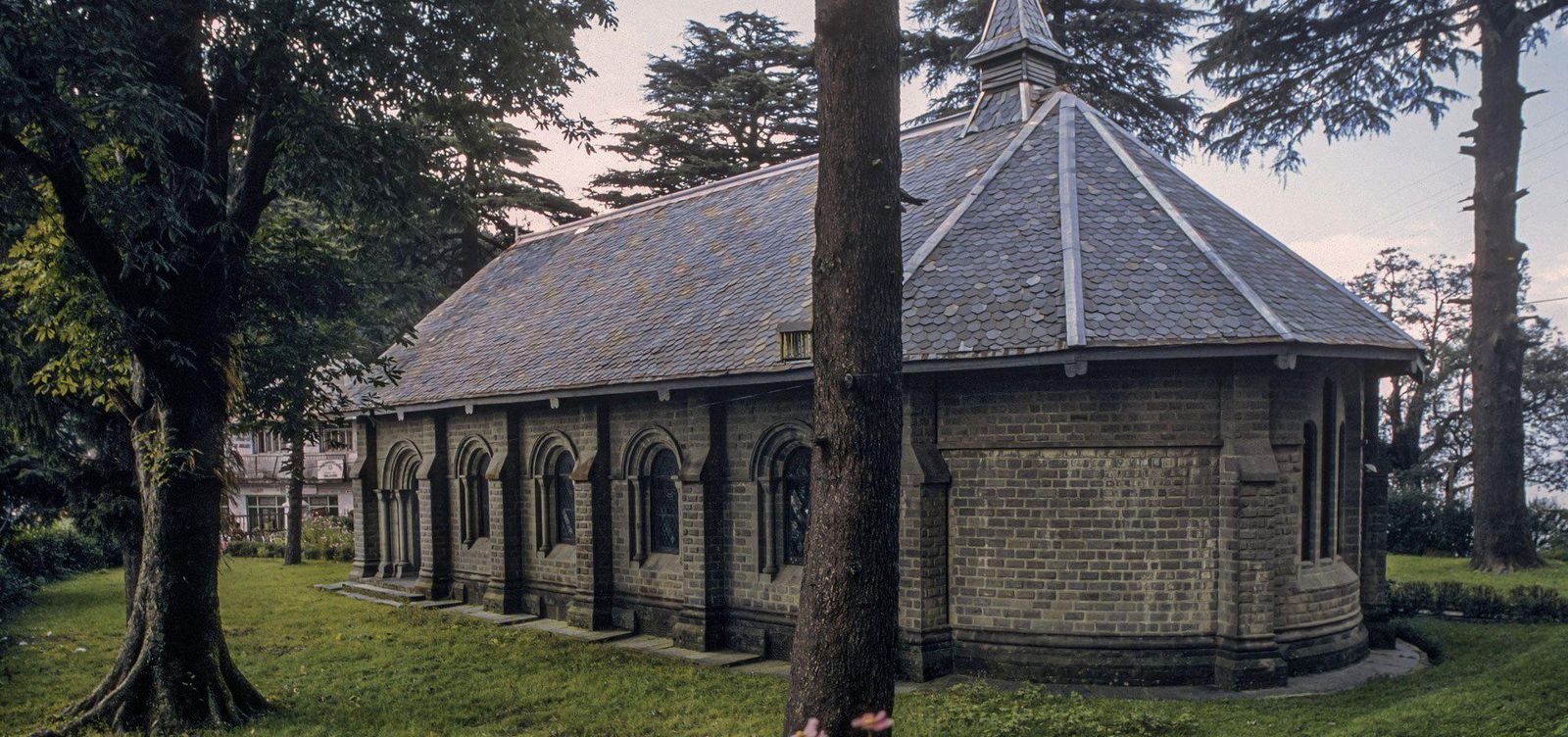
Dalhousie's colonial churches aren't museum pieces — they're living landmarks, quietly holding stories within their walls. St. John's, St. Patrick's, St. Francis's and St. Andrew's each carry their own architectural personality, from Gothic arched windows to humble stone naves worn smooth by generations of footsteps.

Step inside and the world outside disappears. Colored light filters through old stained glass, dust motes drift in the silence, and you can almost hear the echo of hymns sung a century ago. Even if history isn't your thing, the sheer peacefulness of these spaces will slow your heartbeat.

Bargains, Chai, and Mountain Breezes on Mall Road

Turn toward Mall Road and the energy shifts completely. Shopkeepers unfurl jewel-toned Himachali shawls across wooden counters, intricate silver jewelry catches the light, and stalls brimming with Tibetan crafts hint at the cultural crosscurrents flowing through this region.

Locals greet you warmly in English and Hindi, happy to explain the weaving technique behind a particular pashmina or the meaning of a carved pendant. Grab a clay cup of milky, cardamom-laced chai from a roadside vendor and sip it slowly — the mountain breeze cool against your face, the bustle of the market humming around you. No rush. Nowhere else to be.

Day Trips That Steal the Show

Beyond the town limits, Dalhousie opens the door to some of Himachal Pradesh's most breathtaking landscapes. A short drive in any direction and the scenery shifts dramatically:

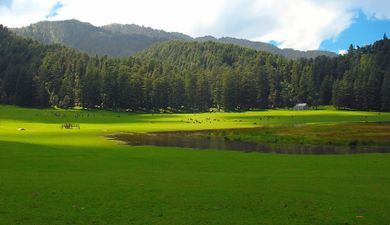
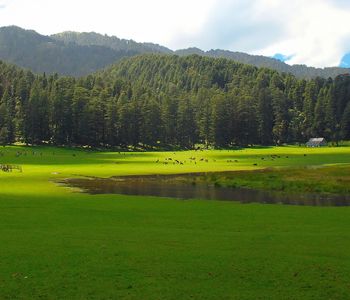
  • Khajjiar — A sweeping emerald meadow ringed by thick deodar forest, often called India's "mini Switzerland." One look and you'll understand why.
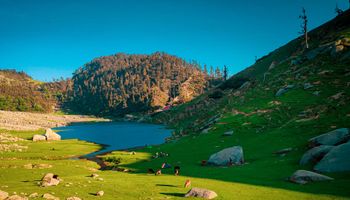
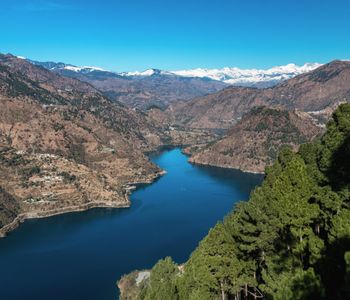
  • Chamera Lake — Glassy, turquoise-tinged waters tucked between forested hills, perfect for a quiet boat ride or simply sitting on the shore with your thoughts.
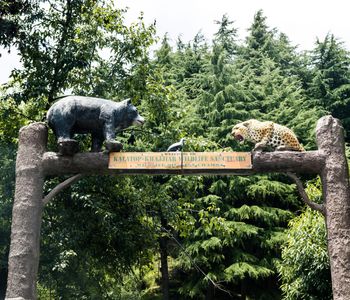
  • Kalatop Wildlife Sanctuary — Dense corridors of deodar and oak where Himalayan black bears, barking deer and langurs move through the undergrowth. The earthy, resinous scent of the forest floor here is unforgettable.
  • Satdhara Falls — Seven natural springs cascading down mossy rocks, their mineral-rich waters long believed to carry healing properties.

Trails That Reward Every Step

Lace up your boots — the hiking here is extraordinary. Well-worn trails thread through forests where sunlight splinters through pine canopies and the only sounds are birdsong and your own breathing. Gradually, the trees thin and the world opens wide: the River Ravi glinting silver far below, valleys stretching to the edge of sight.

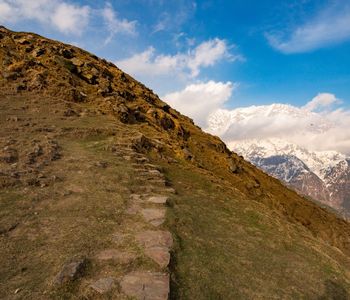
The trek to Dainkund Peak — the highest point in the area — delivers the kind of panorama that makes you forget to check your phone. On a clear day, the views seem to stretch into eternity. Not up for a serious climb? A gentle stroll along Bakrota Hills offers surprising rewards with far less effort — wildflowers underfoot, hawks circling overhead, and that ever-present wall of white peaks in the distance.

The Art of Doing Beautifully Nothing

Here's what sets Dalhousie apart from busier hill stations: it gives you permission to slow down. Spend a morning pushing through dense woodland on a steep trail, then surrender the afternoon to a hilltop bench, watching clouds unravel against the Dhauladhar range like slow-motion silk.

No honking horns competing for your attention. No crowds pressing in. Just the kind of deep, restorative quiet that seeps into your bones — whether you find it inside a century-old church, along a forest path carpeted with pine needles, or from your hotel balcony as the first golden light spills across the mountains at dawn.

Where to Stay and What to Eat

Accommodation runs the full spectrum, from heritage hotels dripping with old-world charm to cheerful budget guesthouses — many with balconies that frame the kind of mountain views you'll remember for years. Ask for a room facing the valley. Trust me on this one.

At mealtimes, let your appetite wander. Local eateries serve steaming North Indian thalis alongside momos stuffed with spiced vegetables, hearty Tibetan thukpa noodle soup, and traditional Himachali dishes like siddu — a slow-steamed wheat bread that tastes like the mountains themselves. Every meal here tells a story of geography and the people who've called these hills home.

Worth Every Winding Road

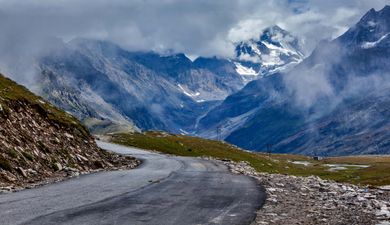
Yes, getting to Dalhousie involves hairpin turns and switchbacks that'll test your stomach. But when the trees part and that first glimpse of the Dhauladhar range fills your windshield, every twist in the road feels earned.

Give yourself more time than you think you need. Dalhousie has a way of quietly exceeding expectations — revealing another hidden trail, another jaw-dropping viewpoint, another moment of perfect stillness you didn't know you were craving. Come for the scenery. Stay for the silence. Leave wondering why you didn't come sooner.
Things to See & Do

Planning a Trip to Himachal Pradesh?

Let our experts help you plan your next trip

Lowest Price Guaranteed

Get Free Quote

Dalhousie Travel FAQs

March–June

Spring and early summer mark the best time to visit Dalhousie, with pleasant temperatures ranging between 50 and 75 degrees Fahrenheit. Clear skies open up sweeping views of the Dhauladhar mountain range, and the pine-covered hillsides come alive with wildflowers and birdsong. Travelers can comfortably explore Khajjiar's rolling meadows, stroll along the winding paths of Kalatop Wildlife Sanctuary, or simply sit with a book on a quiet hilltop. Because this is peak season, expect higher accommodation prices and more visitors along popular trails. Booking lodging in advance is a wise move during these months.

July–September

Monsoon rains sweep through Dalhousie during the summer months, draping the hillside in vivid greens but also bringing the risk of landslides and road closures. Outdoor excursions can be disrupted without much notice, so flexibility is essential. On the brighter side, the mist-wrapped valleys create an almost dreamlike atmosphere, and visitor numbers drop significantly. Budget-conscious travelers will find reduced rates on hotels and meals, making it an appealing window for those who don't mind carrying an umbrella everywhere they go.

October–November

Autumn delivers crisp air, dry trails, and uncrowded viewpoints. The post-monsoon landscape is lush yet stable underfoot, making it an excellent period for hikes to Dainkund Peak or along the Bakrota Hills circuit. Prices remain reasonable, and the cooler evenings add a cozy charm to the experience. Visitors often find this shoulder season strikes the perfect balance between comfortable weather and peaceful surroundings.

December–February

Winter blankets Dalhousie in snow, transforming its colonial-era architecture and forest paths into a postcard scene. When you visit during these months, pack heavy woolens and check road conditions before departing. Snowfall can be unpredictable, yet witnessing the white-covered ridges at sunrise makes the extra preparation worthwhile.

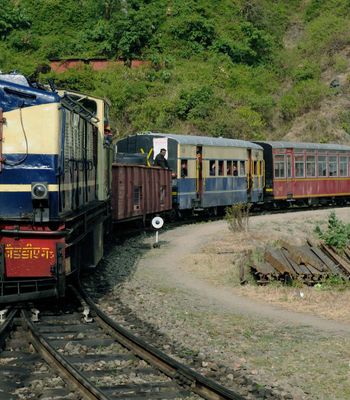
Dalhousie has no airport. No railway station. Getting there means committing to a final stretch of narrow hill road that corkscrews through the Chamba Valley — and that drive, with its cedar-thick air and sudden valley views, earns the destination before you've even arrived.

The Air Route: Through Kangra

Gaggal Airport in Kangra is your closest runway, roughly 120 km south. Flights link Kangra to Delhi, and sometimes Chandigarh, though schedules shift with the seasons and monsoon visibility has a habit of grounding planes without much ceremony. Don't build a tight itinerary around that connection.

From the airport, you're facing a 3 to 4-hour drive through Nurpur and Chamba. Pre-book a taxi or look for HPTDC coaches — either works, but winging it at the arrivals gate is a gamble. Past Chamba, the road sheds a lane and any pretense of speed. That final hour is slow, winding, and worth keeping your eyes open for.

The Train Route: Via Pathankot

Pathankot is the workhorse connection — a major railhead about 80 km below Dalhousie, with regular express and overnight trains running from Delhi, Amritsar, Mumbai, and Jammu. It's the route most travelers end up taking, and for good reason: it's reliable.

The 2.5 to 3-hour drive from Pathankot station climbs steadily through sal forests and small Himachali towns where life appears to move at a fundamentally different clock speed. Shared taxis and HRTC buses run this route frequently through the day, though the last buses clear out by early evening. If your train pulls in late, have a private cab arranged beforehand. The station forecourt after dark is not a place that rewards optimism.

The Road: Delhi to Dalhousie by Wheel

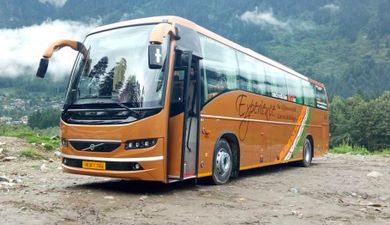
From Delhi, it's approximately 560 km — a 10 to 12-hour haul via Chandigarh and Pathankot on NH44. Overnight Volvo and semi-sleeper buses run by HRTC and private operators leave from ISBT Kashmiri Gate and typically deposit you in Dalhousie by mid-morning, groggy but there.

The road holds up well until Pathankot. After that, the geometry changes: tight switchbacks, stalled truck convoys that test your patience like nothing else, and gradients steep enough to make underpowered engines whine. If you're driving yourself, fill your tank in Pathankot. Petrol stations thin out sharply beyond it, and running low on fuel in the hills is a problem with no quick solution.

Dalhousie won't compete with Manali or Rishikesh for raw adrenaline. It doesn't try to. What it offers instead is a slower, more solitary kind of thrill — the kind where you're deep inside a deodar forest and it dawns on you that you haven't crossed paths with another human being in over an hour.

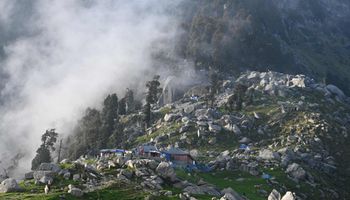
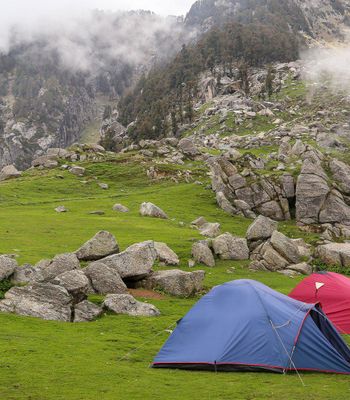
Trekking is the reason most people come. The Dainkund Peak trail climbs to roughly 2,745 meters, the highest point in Dalhousie, and the effort is modest enough for anyone with reasonable fitness. What you get at the top is disproportionately good: a wide-open panorama of the Pir Panjal range, and on clear mornings, a theatrical glint of distant snow that makes the whole climb feel like it was designed for that single reveal. The Kalatop Wildlife Sanctuary route is a different animal — gentler, canopied, winding through dense forest where a barking deer might freeze ten meters ahead before you've even registered the sound. Neither trail demands mountaineering chops. But here's what catches people out: even in May, the shade beneath those ancient deodars runs genuinely cool. Decent shoes and a light layer aren't optional extras. They're the difference between comfort and misery.

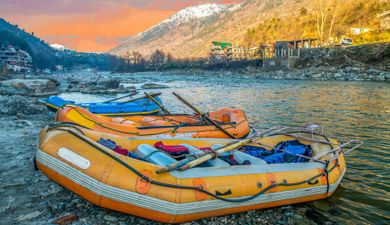
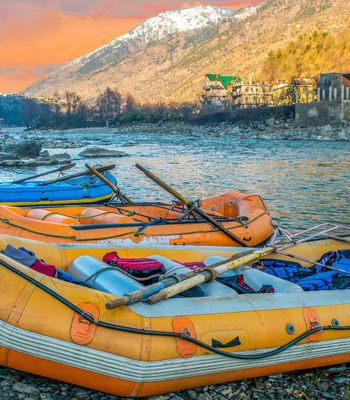
River crossing and rappelling sessions surface seasonally near Chamba, about 50 kilometers from town, organized by small local operators rather than anything corporate. Don't go looking for polished websites or instant booking confirmations. You'll likely arrange things on the ground, sometimes the morning of, negotiating over chai with someone who knows the gorge personally. That informality isn't a flaw. It's the entire character of the experience.

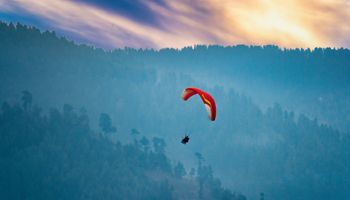
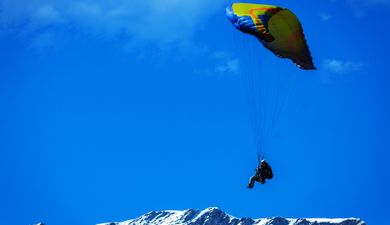
Along the Khajjiar road, zorbing and horse riding appear during the tourist months of April through June like seasonal wildflowers. The zorbing itself is unremarkable as a sport — but rolling across that absurdly flat green meadow with a perimeter of pines standing like silent spectators has a strange, childlike satisfaction to it. Paragliding has started gaining traction near Khajjiar as well, though operations swing heavily on wind conditions and cancellations are common enough that you shouldn't build your trip around one.

Winter rewrites everything. Between December and February, snow buries the upper trails, operators thin out, and the town contracts into something quieter and more honest. Basic snow trekking and snowshoeing become the only real options. Nothing is handed to you. Whatever you find, you earn.

Start with madra — a slow-cooked chickpea dish simmered in yogurt, ghee, and a restrained hand of spices that's as central to Himachali identity as dal makhani is to Punjab. You'll find it at almost every local eatery in Dalhousie, though the best versions come from small family-run dhabas along the road toward Khajjiar, where the chickpeas have been soaking since dawn and the gravy carries a faint tang that no restaurant menu can replicate. That tang — slightly sour, almost alive — is what separates someone's grandmother's recipe from a kitchen cooking for turnover.

Dham is the ceremonial feast you should actively seek out. Served on leaf plates during weddings and festivals, this multi-course meal layers rajma, rice, sweet mittha (a jaggery-laced rice preparation), and that same beloved madra into a single sitting that feels less like dinner and more like a rite. Some hotels in town offer a dham thali, but it arrives sanitized, arranged for photographs. If your timing aligns with a local celebration, that's the real thing — ask around, and people will point you toward one. Himachalis don't guard their feasts; they expand them.

After an evening walk along Gandhi Chowk, when the cold starts pressing through your jacket, order tudkiya bhath — a spiced rice preparation cooked with lentils, dried fruits, and a crack of cinnamon that sits somewhere between a pulao and a khichdi. It's comfort food tuned precisely to mountain nights when the temperature drops faster than the sun. Pair it with babru, a deep-fried bread stuffed with black gram paste. Crisp shell, earthy interior, and entirely different from any kachori you've had on the plains. The black gram gives it a density that makes one enough, though you'll order two.

Tibetan influences run strong here. Momos and thukpa are everywhere — that much is obvious — but the hand-pulled noodle soups at the smaller Tibetan stalls near Subhash Chowk carry a depth the tourist-facing restaurants rarely approach. The broth is the tell. If it's thin and pale, move on. If it's been simmering for hours, dark and slightly oily at the surface, sit down. Here's the counterintuitive thing about Dalhousie's food scene: the places with no signboard in English are almost always better than the ones with laminated menus and Wi-Fi passwords on the wall.

And don't leave without trying sidu — a steamed wheat bread stuffed with poppy seeds or walnuts, served with a generous pour of ghee. It's humble, filling, and distinctly Himachali. The kind of dish that never makes it onto food blogs or Instagram reels, because it doesn't photograph well and it doesn't travel. Which is exactly the point. Some foods belong to the altitude that made them.

Three days is the right number for Dalhousie. Enough to absorb the pine-scented stillness of a hill station that hasn't tried too hard to modernize, and short enough that its deliberate quietness doesn't curdle into boredom. Two days leave you skimming. Four work only if you've come with the specific intention of doing very little — though Dalhousie, it should be said, makes idleness feel almost noble.

Your first morning belongs to Garam Sadak, the sun-facing promenade that earns its name honestly — it holds warmth even when the rest of the town disappears under a damp grey lid of cloud. Walk slowly. The afternoon pulls you toward St. John's Church and then downhill to Subhash Baoli, where the air turns thick with deodar resin and wet pine needles underfoot. By dusk, you'll stand somewhere along the ridge and watch the Dhauladhar snowline catch the last light — a pale, improbable gold that explains, in a single moment, why a string of homesick colonial officers decided this particular ridge was worth building on.

Day two earns its keep with the drive to Khajjiar, roughly 22 kilometers out. The meadow itself needs a good hour to properly register — its strange flatness against the surrounding forest, the way the ground gives softly underfoot. But the road there, threading through Kalatop Wildlife Sanctuary, is the real argument for going: langur troops frozen in the canopy, forest so dense the light turns green, and a silence deep enough that you become aware of your own pulse. Back in town, the waterfall at Panchpula is worth the fifteen-minute downhill walk, though calling it a "detour" undersells how steep the return climb feels.

A third day opens up Dainkund Peak, the area's highest point at around 2,755 meters. From where the road gives out, the summit is a thirty-minute trek — not punishing, but enough to earn the view. On a clear morning, the panorama unfolds from Chamba Valley all the way to the Pir Panjal range, and the scale of it makes everything you've seen from town feel like a rehearsal. Save the afternoon for Mall Road's small cafés. Here's the counterintuitive truth about Dalhousie: the best food isn't in the hotels. The Tibetan momos from the roadside stalls — plump, glistening, served with a chutney that carries real heat — outclass anything with a printed menu.

If you're stitching Dalhousie together with Dharamshala or Chamba, add a day for each connection. But Dalhousie on its own terms? Three days. You'll leave with the satisfying sense of a place fully met, not merely passed through.

Top Stories from Himachal Pradesh

Himachal Pradesh Tour Packages

More Places to Visit in Himachal Pradesh