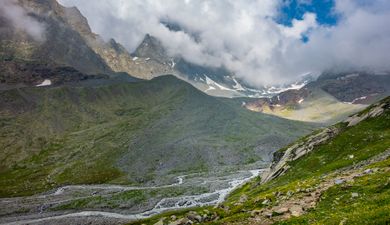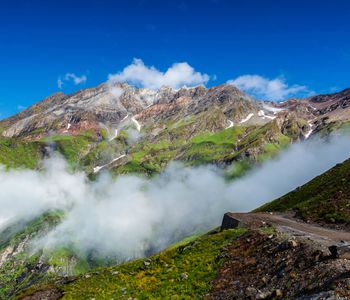
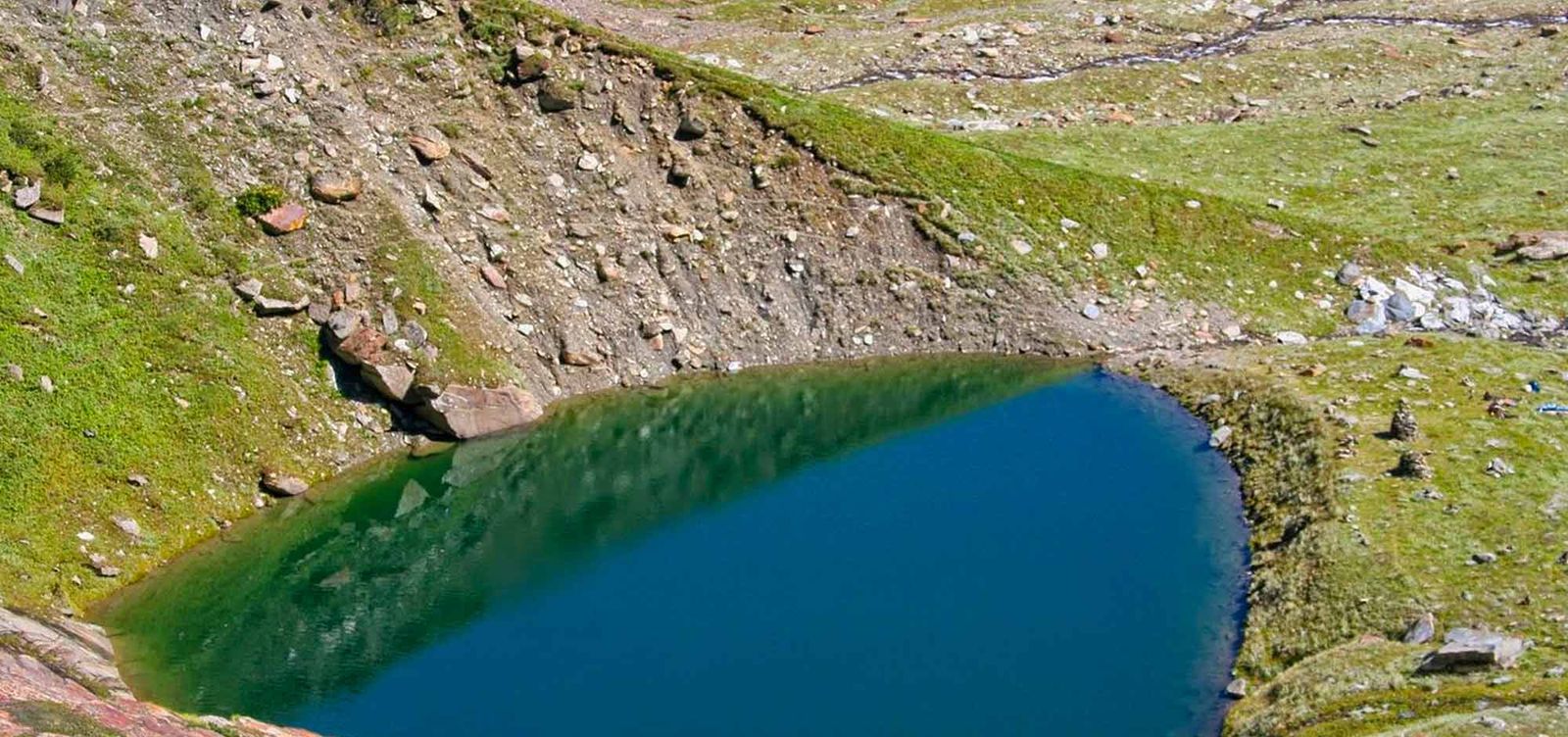
At roughly 3,700 metres, where the grass gives up and the rock takes over, a small glacial pool sits ringed by the Pir Panjal peaks. This is Beas Kund — the source of the Beas River, one of the five great rivers of Punjab, and according to Hindu belief, the spot where the sage Vyas once bathed. It isn't pretty in the postcard sense. There are no pine-fringed shores, no reflections of snowy summits arranged for your camera. What you get instead is something stranger and more honest: a shallow basin of meltwater, wind that never quite stops, and the unmistakable feeling that you've walked to the edge of something.
The trek from Manali takes two or three days. You earn this lake. And that, as much as anything, is the point.
The Sage Who Chose This Pool
Vyas — the sage credited with compiling the Mahabharata — is said to have performed his daily ablutions here. The river that flows from it still carries his name, softened over centuries from Vyasa to Beas. Believe the story or don't. The logic of it holds. If you were a hermit looking for a place to think, you could do worse than a glacial tarn surrounded by ridgelines and silence.
Pilgrims still come, though not in the numbers you'd expect. The trek is too demanding for casual devotion. Most of the people you'll meet on the trail are trekkers from Delhi, Mumbai, and Bangalore, along with a steady stream of foreign visitors who've heard this is one of the more honest walks in Himachal.
Two Days on Your Own Two Feet
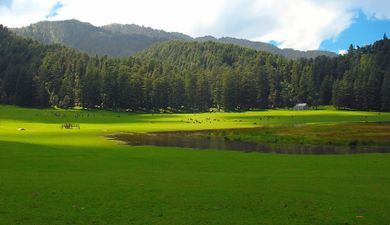
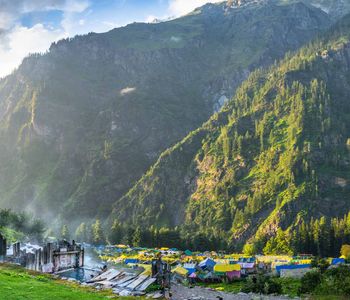
The trailhead begins at Solang Valley, about fourteen kilometres from Manali. From there, the route climbs through Dhundi, then Bakarthach — a broad alpine meadow where shepherds graze their flocks in summer — before the final push to the kund itself.
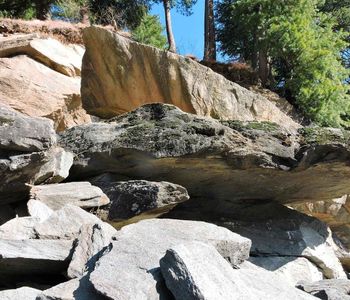
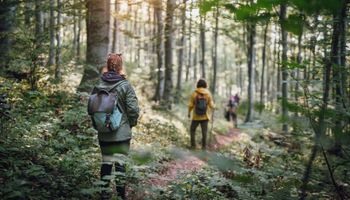
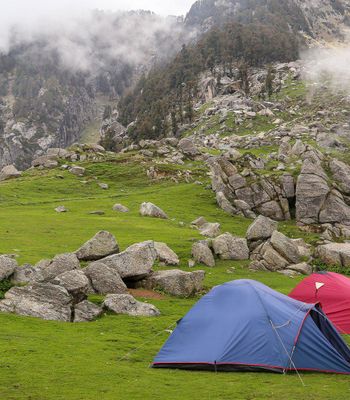
The first day is generous. You cross wooden bridges over the infant Beas, walk past boulder fields, and watch the treeline thin until only stunted rhododendrons remain. By Bakarthach, the air has changed. It's sharper, thinner, and carries the metallic tang of glacial runoff.
The second day is the test. The climb from Bakarthach to Beas Kund isn't technically difficult, but the altitude does its work quietly. Your pace slows. Conversations stop. The last hour is mostly silence and the sound of your own breathing.
Small Pool, Enormous Sky
Here's the counterintuitive truth: the kund itself is small. Perhaps thirty metres across. The water is a pale, mineral green, and in the right light it looks almost solid. You can walk around it in a few minutes.
But look up.
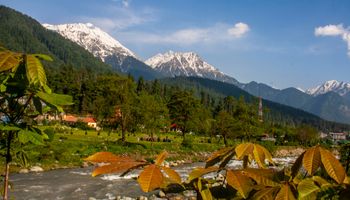
Hanuman Tibba rises to the north. Shitidhar and Ladakhi Peak stand to the west. Friendship Peak — a name that sounds made up but isn't — looms behind you. These are the mountains mountaineers train on before attempting bigger objectives in the Karakoram. From the edge of the lake, they feel close enough to touch, though none of them is.
The Mountain Wins Every Argument
Mornings are usually clear. By noon, clouds often pile up from the south, and by mid-afternoon the kund can be lost in mist entirely. Snow is possible in any month. Hailstorms aren't rare. Start early, turn back if the sky darkens, and don't argue with the weather. The mountain wins every argument.
A Sky You Thought You'd Lost
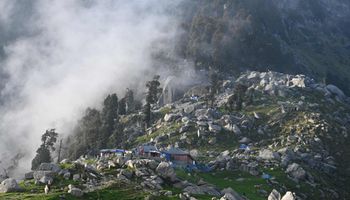
Most trekkers camp at Bakarthach rather than at the kund itself. The meadow is more sheltered, water is plentiful from the stream, and the views at dawn — when the first light hits the surrounding peaks and turns them briefly the colour of rust — are worth the early alarm.
Tour operators in Manali arrange the whole package: tents, sleeping bags, a cook who somehow produces hot dal and rice at 3,600 metres, and guides who've walked this route dozens of times. Going independently is possible but requires experience and proper gear. This isn't the place to test how your cheap sleeping bag handles a frost.
The nights are cold. Even in July, temperatures at the campsite drop below freezing after dark. But the sky — once the clouds clear — is the kind of sky most people have forgotten exists. The Milky Way isn't a suggestion up here. It's a structure.
Pick Your Month Carefully
The trekking season runs from mid-May to early October. May and June bring wildflowers to the meadows and lingering snow on the higher passes. July and August coincide with the monsoon — trails get muddy, leeches appear in the lower sections, and afternoon rain is almost guaranteed. September is arguably the best month: clear skies, crisp air, and golden light on the peaks.
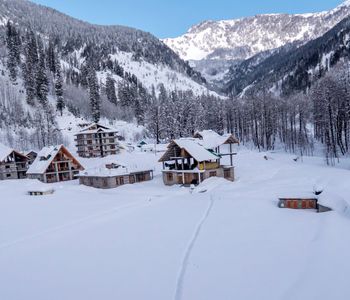
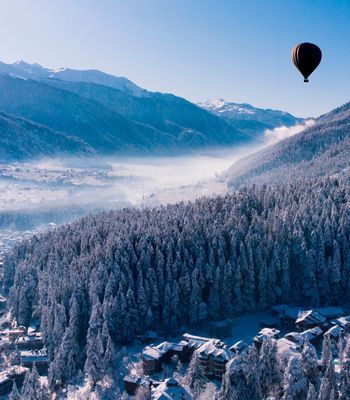
From November through April, the route is under snow and inaccessible to anyone without serious mountaineering skills. If you arrive in Manali in December hoping to trek to Beas Kund, you will be told no. Listen to them.
The Long Road North
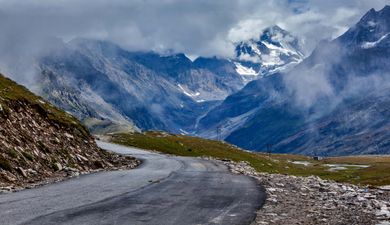
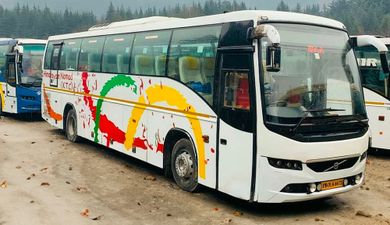
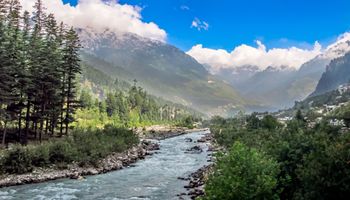
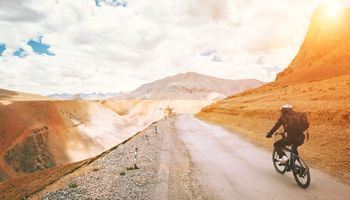
Manali sits at the northern end of the Kullu Valley, about 540 kilometres from Delhi. Most visitors take an overnight bus from Delhi's Kashmere Gate or Majnu Ka Tilla — Volvo sleepers run nightly and take roughly fourteen hours. The drive is long and, in places, dramatic. The final stretch along the Beas River, with the river itself churning white below the road, gives you a preview of what you're walking toward.
The nearest airport is Bhuntar, about fifty kilometres south, with limited flights from Delhi and Chandigarh. Flights get cancelled frequently due to weather. Build in buffer days if you're flying.
The Kit That Earns Its Place
Layers, always. A waterproof shell that actually works. Trekking poles for the descent, which is harder on the knees than the climb is on the lungs. A headlamp. A water filter or purification tablets — the streams look pristine but carry giardia. Sturdy boots broken in before you arrive, not during.
And sunscreen. The altitude magnifies UV radiation, and a day of trekking above the treeline without protection will leave you looking like you've been slapped by the sun itself.
A Lake That Asks Something of You
Beas Kund is not a destination in the usual sense. You can't drive to it. There's no café at the edge, no railing to lean on, no guide in uniform explaining what you're looking at. You walk for two days, sleep in the cold, wake up with altitude headaches, and then stand beside a small green pool while the wind tries to push you over.
And somehow, that's exactly why people go. In a country where most sacred sites have been paved, ticketed, and fitted with loudspeakers, this one still demands effort. Bring good boots, better lungs, and the patience to let the mountains set the pace.