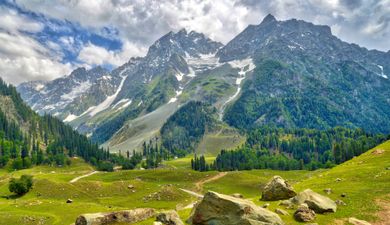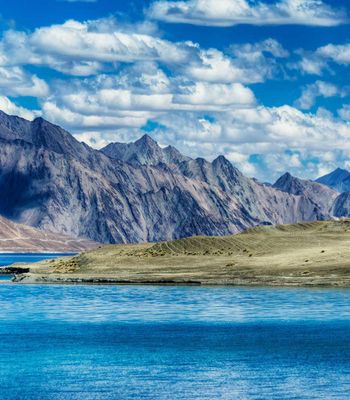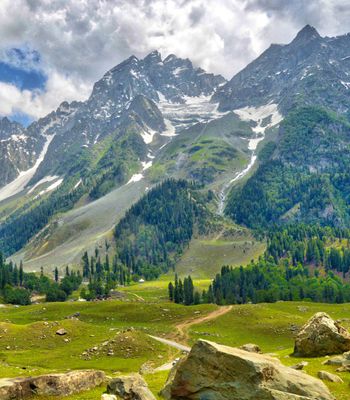
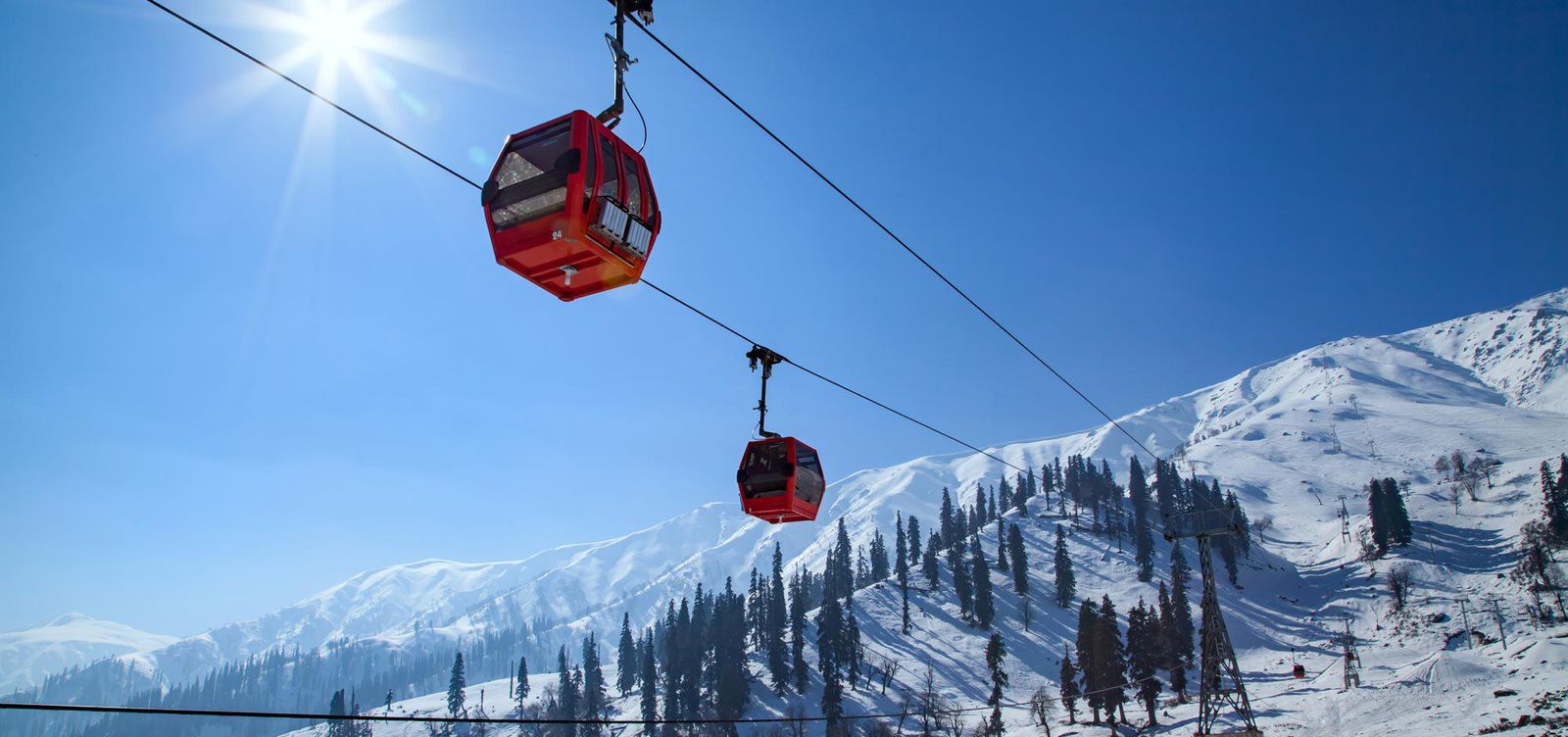
The first thing that strikes you about Gulmarg isn't the mountains. It's the silence. At nearly 8,700 feet above sea level, the thin air carries sound differently — the creak of a gondola cable, the distant crack of a shepherd's stick against rock, and then nothing. A vast, green nothing that stretches in every direction until it meets the white teeth of the Pir Panjal range. This is not a place that needs to sell itself. It simply exists, and that's enough.
Gulmarg translates to "Meadow of Flowers," a name given by Sultan Yusuf Shah in the 16th century. For once, the poetry isn't exaggerated. Between late spring and early autumn, the bowl-shaped meadow erupts in wild daisies, buttercups, and forget-me-nots so dense they look almost artificial. You wade through them up to your knees, and the fragrance — sweet, grassy, faintly medicinal — clings to your clothes and follows you back to your hotel room hours later.
Fifteen Minutes to the Roof of Everything
The Gulmarg Gondola is one of the highest cable cars in the world, climbing in two phases — first to Kongdoori at roughly 10,000 feet, then to Apharwat Peak at around 13,800 feet. The second phase is the one that rewires something in you. As the cabin clears the treeline, alpine meadow gives way to raw, exposed geology — shattered rock, glacial snow, and on clear days, sightlines that reach deep into Pakistan-administered Kashmir. The temperature plummets. Your ears pop. Below, the world flattens into a topographic map.
What catches most people off guard is how effortless the whole thing is. No mountaineering skills needed. No particular fitness. You step into a cabin, and within fifteen minutes you're standing at an altitude that would cost a trekker the better part of a day. That's Gulmarg's quiet trick — it delivers the high Himalayas without demanding sacrifice.
Where Powder Days Stay Untracked
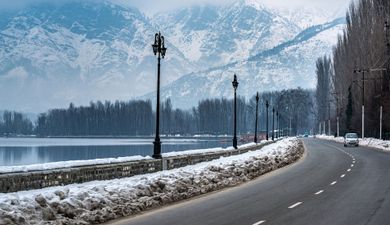
From December through March, Gulmarg becomes the subcontinent's most serious ski destination. Serious is the right word. The powder here runs deep — sometimes waist-deep after a fresh dump — and the terrain off the gondola's upper station is steep, ungroomed, and largely unmarked. Forget the manicured European resort model. There are no heated lodges at the summit, no ski patrol clearing every chute. You hire a local guide, strap in, and earn your turns through terrain that feels genuinely wild.
The skiing community here stays small, which means powder days don't get tracked out by noon. On a weekday in January, you might share a run with five other skiers. Five. The infrastructure won't impress anyone — rental equipment can feel like a relic, and food options at the base amount to Maggi noodles and sweet kahwa from roadside stalls. But the snow itself is extraordinary. Dry, cold, and relentless.
Golf Against a Backdrop of Absurdity
Gulmarg also houses one of the highest green golf courses on the planet, originally laid out by the British in the late 1800s. The course sprawls across the central meadow, and playing a round here feels slightly absurd in the best possible way — your drive sails against snow peaks, and the fairways are bordered not by suburban housing but by deodar and pine forests where woodpeckers hammer away, indifferent to your backswing.
Even if you've never held a club, walk the course at dusk. The light turns copper. The mountains shift from white to pink to violet in a sequence that lasts barely twenty minutes, and then the whole thing is gone.
A Town That Simply Opts Out
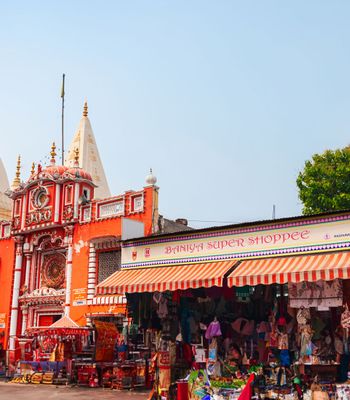
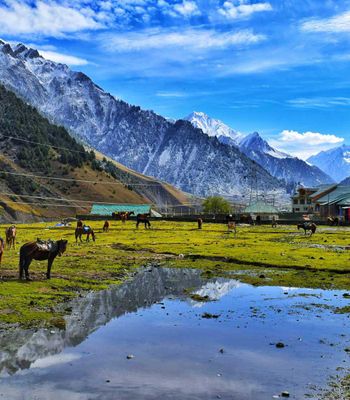
Gulmarg's permanent population is small. The town amounts to a cluster of hotels, a few shops selling pashmina shawls and walnut-wood carvings, and a handful of dhabas where the rogan josh cooks slowly in copper pots, thick with fat and chili oil. Life revolves around the seasons with a simplicity that feels almost anachronistic. In summer, Gujjar herders move their horses and sheep through the meadow. In winter, the town contracts inward, wood smoke threading through every street.
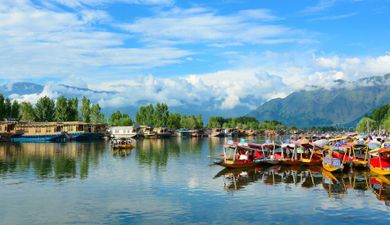
The pace catches you off guard if you've come from Srinagar, just 50 kilometers southeast but a psychological world away with its traffic, houseboats, and market noise. Gulmarg doesn't compete with that energy. It opts out entirely. You eat early, walk far, and sleep deeply — the altitude helps with that last part. By nine in the evening, your body is ready to quit whether you are or not.
One counterintuitive truth: Gulmarg is at its most beautiful not during the famous snow season or the flower-filled summer, but in autumn, when the crowds thin and the chinar trees along the lower approaches flame orange and crimson against a sky so blue it looks digitally enhanced. Almost nobody talks about September in Gulmarg. That's precisely why you should go.