Jammu, Vaishno Devi & Kashmir Family Pilgrimage-cum-Holiday Package

7 Nights / 8 Days
Jammu (1N)Katra (1N)Patnitop (2N)Srinagar (3N)
Starting from ₹45,000
Compare quotes from top 3 travel agents

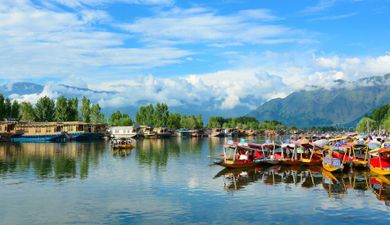
This is a trip that moves through altitude and intention in equal measure. You begin in Jammu — loud, flat, unapologetically hot in summer, its temple bells cutting through traffic noise at every intersection. From there, the road climbs toward Katra, where the air thins and the purpose sharpens: the trek to Vaishno Devi is not a casual outing but a physical commitment, eleven kilometres uphill with thousands of fellow pilgrims, the smell of camphor and sweat mingling on the mountain path. Then the landscape shifts again. Patnitop sits in the middle elevations of the Shivaliks, quiet in a way that Katra never is, its pine forests absorbing sound like a sponge. And finally, Kashmir — where the scale of beauty becomes almost unreasonable. The Dal Lake alone could hold your attention for days, its houseboats and floating gardens operating on a logic entirely their own, shikaras gliding past with cargo that ranges from lotus roots to carved walnut trinkets.

The shape of this itinerary is deliberate: devotion first, then rest, then wonder. You'll feel the physical effort of the Vaishno Devi climb in your calves for a day or two, which is precisely why two nights in Patnitop follow — cool air, long views, nowhere particular to be. By the time you reach Srinagar, your body has adjusted to the altitude, your pace has slowed, and you're ready for the kind of unhurried exploration that the Kashmir Valley demands. Three nights there gives you room to take a full day on the lake, another in the Mughal gardens, and still have margins for the unexpected — a saffron vendor who insists you smell the difference between grades, a walnut cake from a bakery on Residency Road that you'll remember longer than any monument. This is a trip that earns its pleasures.
Itinerary

Day 1Arrival in Jammu and the Temple City's Evening Pulse

Morning

Your flight lands at Jammu's Satwari Airport, and the heat greets you before the driver does. The transfer to your hotel takes you through the city's dense commercial arteries — auto-rickshaws weaving between trucks, shop signs in three scripts competing for attention. Check in, drop your bags, and let the air conditioning do its work for an hour. You've earned it.

Afternoon

Head to the Raghunath Temple complex after lunch, when the midday rush has thinned. Built across seven shrines over twenty-five years by Maharaja Gulab Singh, it's the largest temple complex in northern India, and its inner walls are covered in gold leaf that catches the corridor light in unexpected ways. The surrounding bazaar sells everything from dried fruit to religious prints; the kalari cheese at the street stalls is worth trying — salty, dense, fried crisp on a flat iron.

Evening

Walk along the Tawi River as the light goes amber over the Shivalik foothills. The ghats aren't grand in the Varanasi sense, but they're lively — families washing, kids jumping from the banks, the occasional goat looking confused. Dinner should be Dogra cuisine: rajma with fragrant rice, and if you can find ambal — a tamarind-spiked pumpkin preparation — order it without hesitation. Sleep early. Tomorrow starts a climb.

Day 2The Road to Katra and Preparing for Vaishno Devi

Morning

The drive from Jammu to Katra takes roughly ninety minutes if the highway cooperates, which it sometimes does. The road follows the Tawi initially, then cuts through scrubby, sunlit terrain dotted with dhabas and fruit sellers. You'll notice the change in mood before the change in scenery — more pilgrims on the road, more saffron scarves, more anticipation in the air. Check in at your hotel in Katra and take stock of what you'll need for the trek.

Afternoon

Register for the yatra at the Banganga check post — this is mandatory, and the process is straightforward but takes time, so don't leave it for the last minute. Use the rest of the afternoon to rest your legs and eat well. The restaurants along the main market serve solid rajma-chawal and parathas — nothing fancy, but honest fuel. Buy a walking stick from one of the vendors if you don't have trekking poles; the wooden ones with the bells are tradition more than function, but they help.

Evening

Many pilgrims begin the trek late at night to arrive at the shrine by dawn, and that is the approach this itinerary follows. The mountain is cooler after dark, the path lit by fluorescent tubes and the torches of other walkers. The eleven-kilometre ascent to the Bhawan takes five to seven hours depending on your pace. Pony and palki services are available if anyone in the family needs them — arrange these before you set out. The first three kilometres are the steepest; after that, the gradient eases and your rhythm settles.

Day 3The Shrine at Dawn and the Descent to Katra

Morning

You reach the Vaishno Devi Bhawan as the first light touches the Trikuta Hills. The final approach is through a narrow cave passage — cool, wet rock on either side, the sound of chanting compressed into the stone. The three pindis inside the cave represent the three forms of the goddess: Mahakali, Mahalakshmi, Mahasaraswati. The darshan is brief but concentrated; the energy of the place, after hours of walking in darkness, is impossible to intellectualise. You feel it in your chest.

Afternoon

Begin the descent, which is easier on the lungs but harder on the knees. The return path takes three to four hours. Katra appears below you gradually, its lights visible long before you reach the town. Back at the hotel, shower and collapse. The tiredness is specific — not exhaustion, but a deep, satisfied fatigue that comes from having done something physical with purpose. A hot meal and a horizontal surface are all that matter now.

Evening

If you have energy left — and you may not — a short walk through Katra's main bazaar is worth it. The shops sell prasad boxes, dry fruits, and Vaishno Devi souvenirs that range from tasteful to gloriously kitsch. Buy the dry fruit; the walnuts and almonds here are priced well below what you'd pay in Delhi or Mumbai. Otherwise, stay in. Tomorrow's drive is scenic but long, and your body has earned the rest.

Day 4Katra to Patnitop Through the Pine Belt

Morning

The drive from Katra to Patnitop covers roughly 110 kilometres and takes about three hours, depending on traffic through the Chenani-Nashri tunnel — at over nine kilometres, it's the longest road tunnel in India, and driving through it feels like entering a different climate zone. On the Katra side: dry, warm, scrubby hillside. On the Patnitop side: cool air, pine resin, mist sitting in the valleys like spilled milk. The transition is that abrupt.

Afternoon

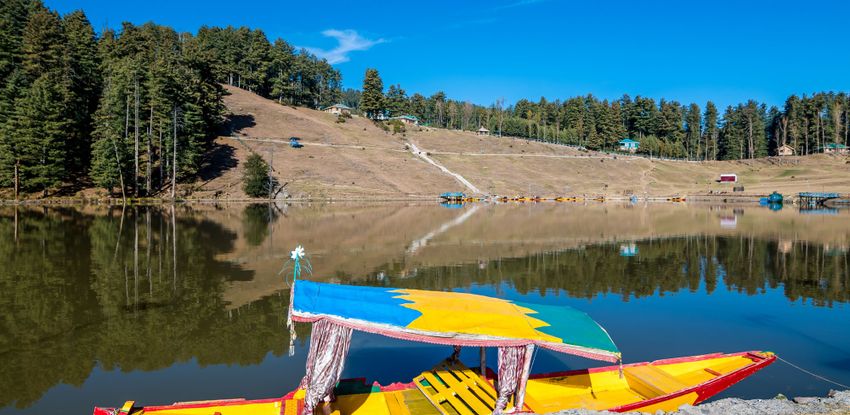
Check into your hotel and let the quiet settle around you. Patnitop sits at about 2,025 metres, and the temperature drop from Katra is immediately noticeable. After lunch, walk to Sanasar Lake if the weather is clear — it's a meadow-fringed body of water about twenty minutes by car, ringed by deodars, where the only sounds are cowbells and wind through branches. For the children, horse rides around the meadow are available and genuinely enjoyable, not the sad, circular kind you find at most Indian hill stations.

Evening

Patnitop doesn't have nightlife, and that's the point. The sunset from the ridge behind the main market paints the Chenab valley in shades of copper and slate. Dinner at the hotel is the practical choice; the local options are limited but the pahari dal and simple sabzi preparations are honest and warming. The silence after dark here is real silence — no traffic hum, no distant bass, just pine needles shifting in the wind. You'll sleep like you haven't in weeks.

Day 5A Full Day in Patnitop and the Shivalik Meadows

Morning

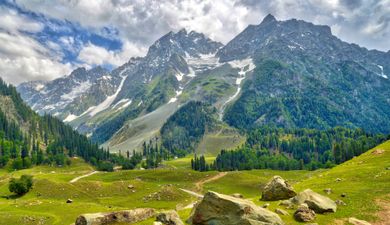
Start early with a walk through Madhatop, the highest point in the area, where the meadow opens up wide enough that the sky feels like a physical weight above you. On clear mornings, the snow line of the Pir Panjal range is visible to the north — a reminder that you're approaching Kashmir in stages. The air is sharp and resinous; breathe it in deliberately, because you won't find it anywhere below 1,500 metres.

Afternoon

Drive to Nag Temple, a small spring-fed shrine about six kilometres from Patnitop. The temple itself is modest, but the setting — a natural spring emerging from rock beneath dense forest — has a quality of stillness that manufactured attractions can't replicate. On the way back, stop at the Patnitop Fun Park if the children need to burn energy; the cable car ride over the valley gives a genuine sense of the terrain's scale. Otherwise, simply sit on the hotel lawn with tea and a book. Patnitop rewards inactivity.

Evening

This is your last night in the middle hills before descending into the Kashmir Valley tomorrow. The light fades slowly here, drawing out the blue hour until it feels stretched beyond its natural duration. Pack your bags after dinner, set an early alarm, and know that the next morning brings one of the most dramatic road journeys in the subcontinent. The Jawahar Tunnel awaits, and on the other side, Kashmir opens like a held breath finally released.

Day 6Patnitop to Srinagar via the Jawahar Tunnel

Morning

The drive from Patnitop to Srinagar takes roughly six hours, and it is not background scenery — it is the main event. The road climbs through Banihal, drops through the Jawahar Tunnel at the Pir Panjal pass, and on the other side the landscape transforms completely. The dry Shivalik scrub gives way to the Kashmir Valley floor: rice paddies in vivid green, poplar-lined avenues, rivers the colour of jade. You'll know you've arrived not from a signboard but from the way the light changes — softer, more diffused, as though filtered through gauze.

Afternoon

Arrive in Srinagar and transfer directly to your houseboat on Dal Lake, or to your hotel on the boulevard — either way, the first view of the lake through your window will stop you mid-sentence. Take a late lunch of Kashmiri wazwan preparations: rista, if it's available, are lamb meatballs in a red sauce so smooth it seems impossible, pounded for hours until the meat forgets it was ever solid. After eating, do nothing for a while. Sit on the veranda. Watch the shikaras. Let Srinagar come to you.

Evening

Take a shikara ride as the sun drops behind the Zabarwan hills. The boatman will paddle you through the floating vegetable gardens — lotus stems breaking the surface, kingfishers working the shallows — and past houseboats whose names read like a colonial novel: HMS Doonga, New York, Buckingham Palace. The water turns gold, then grey, then black. The sound of the paddle is the only rhythm. Dinner on the lake, if your houseboat host has prepared it, will be a quiet, memorable affair — candlelit, unhurried, with kehwa to finish, its saffron and almond warmth settling you for the night.

Day 7The Mughal Gardens and Srinagar's Old City

Morning

Head to Shalimar Bagh first, before the tour buses arrive. Emperor Jahangir built it for Nur Jahan in 1619, and the geometry of its four terraces — each ascending, each with its own water channel and chinar shade — still works exactly as intended. The top terrace was reserved for the emperor and his court; stand there and you understand why. The view down the central axis, through cascading water to the lake beyond, is composed with the precision of a Mughal miniature painting. Nishat Bagh, the larger garden next door, is wilder, more sprawling, and better for letting children run.

Afternoon

Cross into the old city and walk through the lanes around Jamia Masjid. The mosque itself is a vast courtyard of brick and deodar wood — 370 pillars, each carved from a single tree trunk, holding up a space that feels both ancient and completely alive. Friday prayers fill it to capacity, so visit on a weekday for quiet. The surrounding streets sell papier-mache boxes, pashmina shawls, and copper samovars; the quality varies wildly, so handle everything before you buy. If a shopkeeper offers you noon chai — the pink, salt-and-bicarbonate tea — accept. It tastes strange and then it tastes right.

Evening

Return to the lake for the evening. The vegetable market on Dal Lake operates from shikaras at dawn, but by evening the same stretch of water becomes still enough to reflect the mountains with photographic accuracy. Dinner tonight should be at one of the Boulevard restaurants — Ahdoos, if you want the classic wazwan experience with tabak maaz (rib chops pressed flat and fried until the fat turns glassy) and haaq, the collard-green preparation that Kashmiris eat more than any other vegetable. The night air off the lake carries a chill even in summer. Bring a shawl.

Day 8Departure from Srinagar

Morning

If your flight allows, rise early for one final shikara ride to the floating vegetable market at the northern end of Dal Lake. It operates between 5 and 7 a.m., and the sight of vendors paddling through the mist with shikaras heaped in tomatoes, radishes, and lotus stems is worth the lost sleep. The transactions happen boat-to-boat, voices carrying across the water in Kashmiri, the whole operation finishing before most tourists have ordered room-service tea. It is commerce at its most elemental, and it has looked this way for centuries.

Afternoon

Transfer to Sheikh ul-Alam International Airport for your departure flight. The drive from the lake to the airport takes about forty minutes, and the route passes through the cantonment area and along the poplar avenues that define Srinagar's middle distances. At the airport, give yourself extra time — security checks here are thorough and unhurried. Use the wait to buy saffron from the government emporium inside the terminal; it's certified, fairly priced, and saves you the negotiation theatre of the old city shops.

Evening

By evening, you're likely airborne or already home, and the trip has completed its arc — from the temple bells of Jammu to the cave shrine on Trikuta, through the pine silence of Patnitop, and into the valley that has occupied the world's imagination for four hundred years. The saffron in your bag will last months. The muscle memory of the Vaishno Devi climb will last longer. And somewhere in your phone is a photograph of Dal Lake at dusk that looks, honestly, like someone adjusted the saturation. They didn't. That's just how it looks.

  • 7 nights accommodation: 1 night in Jammu (well-appointed hotel near city centre), 1 night in Katra (comfortable hotel within walking distance of the Banganga check post), 2 nights in Patnitop (hillside resort with valley views), and 3 nights in Srinagar (premium houseboat on Dal Lake or boulevard hotel, subject to preference)
  • Daily breakfast at all hotels, plus dinner on all seven nights
  • Private air-conditioned vehicle for all transfers: Jammu airport to hotel, Jammu to Katra, Katra to Patnitop, Patnitop to Srinagar, and Srinagar hotel to airport on departure day
  • Experienced local driver for the entire duration, familiar with mountain road conditions and tunnel protocols
  • Vaishno Devi yatra registration assistance and coordination at Banganga check post
  • One-hour shikara ride on Dal Lake on the evening of arrival in Srinagar
  • Guided half-day tour of Shalimar Bagh, Nishat Bagh, and Jamia Masjid with entry tickets included
  • Early-morning shikara excursion to the floating vegetable market on Dal Lake on departure day
  • Excursion to Sanasar Lake and Madhatop meadow during Patnitop stay, with vehicle and guide
  • All applicable hotel taxes, service charges, and road tolls including Chenani-Nashri and Jawahar Tunnel tolls
  • Welcome kehwa and Kashmiri snack platter on arrival in Srinagar

Related Packages