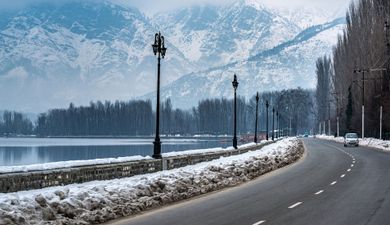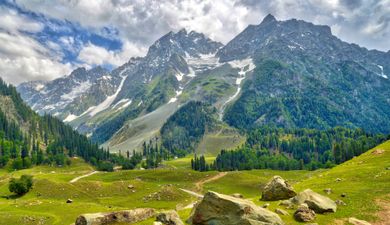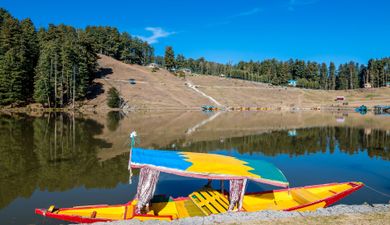
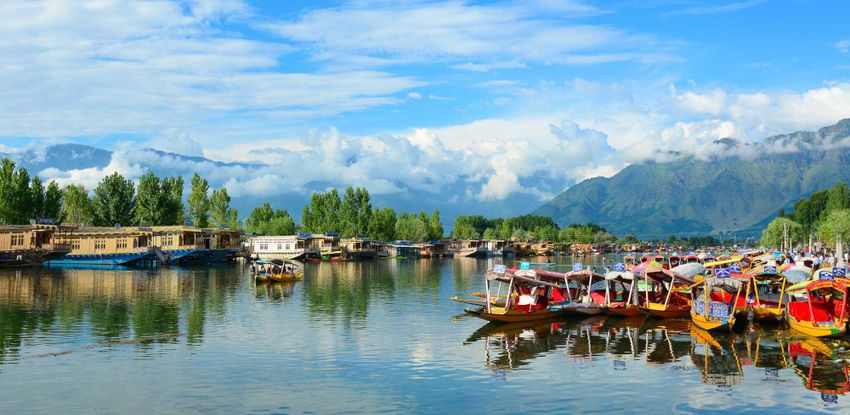
Kashmir doesn't ease you in. You land at Srinagar and the valley hits you all at once — the Dal Lake reflecting a sky that seems lower than anywhere else on earth, the Chinar trees throwing copper shadows across Mughal gardens, the sharp mineral smell of glacial water mixing with the smoke from a hundred kangri fires in winter or the sweet rot of fallen apples in autumn. Srinagar is a water city, closer in spirit to a Southeast Asian lake town than anything on the Indian plains. Gulmarg, an hour's steep climb west, is altitude and silence — a meadow station at 2,650 metres where the Pir Panjal range fills your entire field of vision like a theatre backdrop that someone built too close to the audience. And Pahalgam, east along the Lidder River, is Kashmir at its most pastoral: shepherds moving flocks through pine corridors, saffron fields glowing a strange violet in the low October sun, and water so cold it aches in your teeth.
This seven-day arc moves you through three distinct registers of the valley. Srinagar gives you the houseboat, the shikaras at dusk, and the old city's latticed wooden houses leaning over narrow lanes. Gulmarg slows the clock — there's nothing to do there except walk through meadows, ride the gondola above the treeline, and sit with kahwa while clouds settle into the bowl of the valley below you. Pahalgam brings the river, the forest, and the pony trails up to Baisaran and Aru. For two people beginning a life together, the rhythm matters more than the monuments. This itinerary is built around privacy, long mornings, and the kind of evenings where the only sound is water — whether it's the Dal lapping at your houseboat or the Lidder running over stones outside your window. Kashmir earns its reputation not by spectacle but by atmosphere, and atmosphere is what this week delivers.