Srinagar Romantic Escape – Luxury Dal Lake Houseboat Honeymoon

4 Nights / 5 Days
Srinagar (4N)
Starting from ₹48,000
Compare quotes from top 3 travel agents

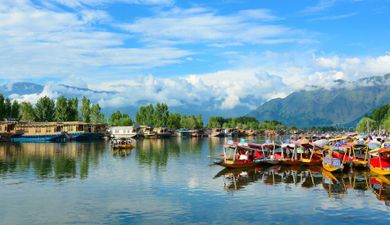
Srinagar is not what you expect. It is slower than you imagined, greener than any photograph promised, and stranger in the best possible way — a city that floats as much as it stands. Dal Lake isn't a scenic backdrop; it's a functioning neighborhood, complete with floating vegetable markets at dawn, shikaras laden with saffron and lotus root, and houseboats that have been carved, polished, and argued over by the same families for four generations. The Mughal gardens climb the hillsides in strict symmetry, but the city below them doesn't follow any plan at all. Old Srinagar's wooden mosques lean at angles that would alarm a structural engineer, and the smell of noon chai — salted, pink, faintly unsettling to outsiders — drifts from every second doorway along the Jhelum's banks. The mountains don't announce themselves so much as appear, casually, between gaps in the chinar trees.

This five-day honeymoon doesn't try to exhaust Srinagar. It lets the city come to you. You'll wake on the lake itself — on a hand-carved cedarwood houseboat where the silence at 6am is broken only by the slow dip of a paddle and the occasional kingfisher hitting the water like a blue dart. You'll drift through the floating gardens of Char Chinar, walk the terraced lawns of Nishat Bagh while the light turns everything copper, and eat wazwan dishes that nobody outside Kashmir prepares with the same gravity. The pace shifts between houseboat mornings and hotel evenings, between lake and land, between stillness and discovery. By the last morning, the rhythm of the place will have worked its way under your skin — not because you saw everything, but because you finally stopped trying to.
Itinerary

Day 1Arrival on the Water — Srinagar and Your First Night on Dal Lake

Morning

Your flight descends over the Pir Panjal range, and the valley opens beneath you like a green bowl filled with water and light. At Sheikh ul-Alam International Airport, your driver will be waiting — the ride to the lake takes thirty minutes through Srinagar's pleasantly chaotic outskirts, past walnut orchards and army checkpoints that have become as ordinary as traffic signals. Don't sleep in the car. Watch how the city changes as you approach the water.

Afternoon

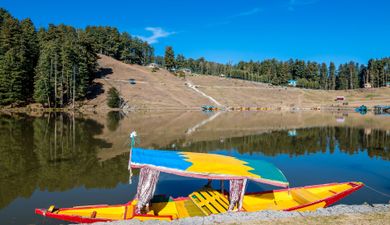
You board the houseboat by shikara — the only proper way to arrive. Your premium houseboat on Dal Lake is an education in Kashmiri woodwork: walnut panels carved so densely they look like lace, thick Kashmiri carpets underfoot, and a sitting room that smells faintly of cedarwood and decades of kangri smoke. Lunch is served on the sundeck — rogan josh with steamed rice, haak saag still bright green, and kahwa poured from a samovar that has probably been in service longer than you've been alive. After eating, do nothing. Sit on the deck. Watch the shikaras pass. Let the jet lag dissolve into the water.

Evening

As the sun drops behind the Zabarwan hills, the lake turns from silver to copper to a deep, improbable violet. Your houseboat attendant will bring evening kahwa — green tea with saffron, cardamom, crushed almonds, and enough sugar to make you not care. Dinner is served in the houseboat dining room: a quieter meal, perhaps gustaba — mutton pounded to a paste and simmered in yogurt until it barely holds its shape. The silence after dark on the lake is total. No traffic. No horns. Just water against wood.

Day 2Dawn on the Lake — Floating Markets, Mughal Gardens, and the Houseboat's Last Night

Morning

Set your alarm for 5:30am. It's worth it. Your shikara takes you to the floating vegetable market at the lake's western edge — farmers in flat-bottomed boats piled with tomatoes, lotus stems, radishes, and greens you won't find a name for, haggling in rapid Kashmiri while the mist still clings to the surface. This market exists entirely for locals, not for you, and that's precisely what makes it extraordinary. You'll be back at the houseboat by 7:30 for a full Kashmiri breakfast: girda bread, butter, honey, eggs, and more kahwa. Always more kahwa.

Afternoon

After checkout from the houseboat, a shikara transfers you to the boulevard side for the drive to the Mughal gardens. Start with Nishat Bagh — the "Garden of Pleasure" — built on twelve terraces that represent the twelve signs of the zodiac, each one stepping higher toward the Zabarwan range. The water channels still work exactly as they did in 1633. Walk slowly. Then move to Shalimar Bagh, smaller and more intimate, where the black marble pavilion at the top terrace catches the afternoon light in a way that makes you understand why emperors fought over this valley. You check into your lakeside hotel afterward — a different rhythm, a different comfort, but still close enough to hear the water.

Evening

Tonight, request a wazwan dinner at the hotel — or, better, ask them to arrange a private table with lake views. Wazwan is not a meal; it's a ritual. The dishes arrive in a specific sequence: tabak maaz first (rib chops fried twice in oil until the fat turns crisp), then rista, then gushtaba, then several things you won't remember the names of but will remember the taste of for years. Eat slowly. You're not in a hurry. You're on your honeymoon in a city that invented the concept of taking your time.

Day 3The Old City and the Garden at the Edge — Pari Mahal, Chashme Shahi, and the Jhelum's Banks

Morning

Start at Pari Mahal — the "Palace of the Fairies" — perched above the lake on the Zabarwan foothills. It's a ruin, technically, but a ruin with the best vantage point in Srinagar. From here, the entire Dal Lake spreads below you, and on a clear morning the snow peaks of the far Himalayas are visible behind the poplars. Then drop down to Chashme Shahi, the smallest and most overlooked of the Mughal gardens. A natural spring feeds its channels — the water is cold, clean, and locals still fill bottles from the source. Drink some. It tastes like mountain rock and nothing else.

Afternoon

Cross into old Srinagar on foot. The wooden houses along the Jhelum lean over the water at improbable angles — three, four, five stories of carved deodar and crumbling brick, with tin roofs and window boxes of geraniums. Walk to the Jamia Masjid, the city's grand congregational mosque, built entirely of brick and deodar wood — no steel, no concrete — with 378 wooden pillars holding up the interior. The courtyard is enormous and, on a weekday afternoon, nearly empty. The quiet here has weight. From the mosque, wander through the old market lanes: copper samovars stacked in shop windows, papier-mâché boxes in reds and golds, and the sound of hammer on metal coming from workshops that haven't changed their methods since Mughal times.

Evening

Return to the hotel for a shikara ride at dusk — not a tourist circuit, but a slow drift through the lotus gardens and the narrow channels between the floating islands where families live year-round on interconnected houseboats. The light at this hour is soft and gold, and the reflections on the water double everything. Back at the hotel, dinner can be simple tonight: a plate of seekh kebabs, fresh naan, and a salad of Kashmiri tomatoes that taste like actual tomatoes — sweet, acidic, warm from the afternoon sun.

Day 4Gulmarg Day Trip — Gondola, Meadows, and Mountain Air

Morning

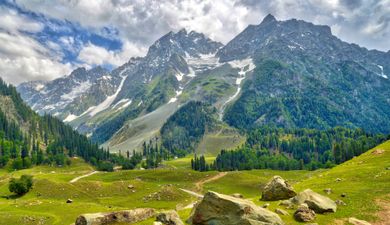
The drive to Gulmarg takes ninety minutes through the Tangmarg pine forests, climbing steadily until the road opens into a vast, sloping meadow ringed by conifers and, beyond them, the Affarwat range. In winter, this is a ski resort; in every other season, it's simply one of the most beautiful stretches of grass on the planet. Take the Gulmarg Gondola to Phase 1 — at 3,950 meters, the air hits differently, thin and cold and startlingly clean. If the weather cooperates, the view from the gondola includes Nanga Parbat, the ninth-highest mountain on Earth, floating above the horizon like something that can't possibly be real. It is.

Afternoon

Back at the base, walk the meadow itself. There's no agenda here — just wildflowers in summer, frost-tipped grass in autumn, and the sound of horses grazing. Rent a pony for the ride to Khilanmarg if your legs want rest; the trail climbs through the trees and emerges onto a higher meadow with views that make conversation feel unnecessary. Lunch at one of the small local restaurants near the golf course — rajma chawal, simple and perfect, with a cup of noon chai that arrives pink and salty and growing on you faster than you expected.

Evening

The drive back to Srinagar descends through apple orchards — if you're here between August and October, the trees are heavy with fruit and the roadside stalls sell apples for almost nothing. Back at the hotel, the evening is yours. A couples' massage, if the hotel offers one, or simply the balcony and the lake and the last of the light. Tomorrow is your last morning, so tonight, let the silence do its work.

Day 5Last Morning on the Lake — Departure from Srinagar

Morning

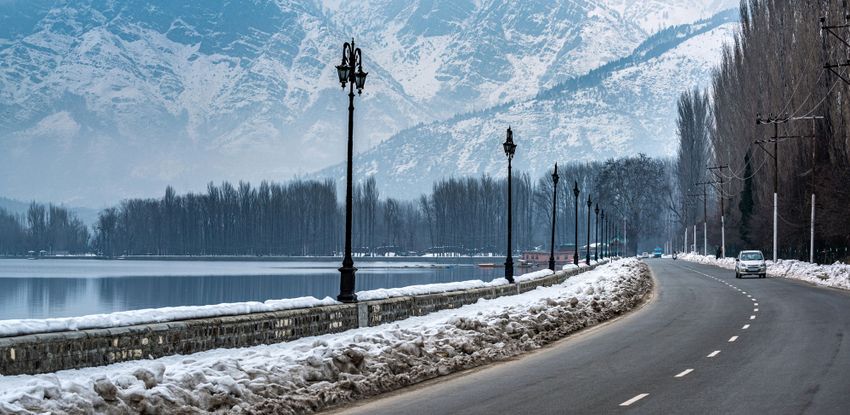
Wake early one last time. Walk to the boulevard along the lake before breakfast — the light at 6am in Srinagar is milky and blue, and the shikaras are already moving, their reflections stretching long across the still water. Vendors paddle past with floating stalls of flowers, jewelry, and embroidered shawls, calling out prices in a singsong that has the cadence of a lullaby. Back at the hotel, eat breakfast slowly. The girda bread. The honey. The kahwa. You know the routine now, and that's the point — five days is just long enough for a place to stop feeling like a destination and start feeling like something you'll carry.

Afternoon

Checkout and the drive to the airport take about forty minutes, depending on the hour. Your driver will navigate the boulevard one final time, past the rows of houseboats with their absurdly English names — "HMS Doris," "New Buckingham" — and the chinar trees lining the road like enormous hands raised against the sky. At the airport, the security process is longer than most Indian airports — Kashmir's particular reality — so arrive with time to spare. Use the wait. Sit with what you've seen.

Evening

By evening, you're elsewhere — a different city, a different altitude, a different noise level. But here's what stays: the color of the lake at dusk, the taste of saffron in the kahwa, the sound of a shikara paddle cutting water at dawn, and the particular quiet of a cedarwood room floating on a lake that has held people gently for centuries. Srinagar doesn't chase you. It waits. And it knows, with the patience of a place that has outlasted empires, that you'll come back.

  • 2 nights' accommodation on a premium heritage houseboat on Dal Lake (double-occupancy, full-board: breakfast, lunch, and dinner)
  • 2 nights' accommodation at a lakeside hotel in Srinagar (deluxe room, breakfast included daily)
  • Airport pickup and drop-off in a private air-conditioned vehicle
  • All intercity transfers including the Srinagar to Gulmarg round trip on Day 4 in a private vehicle with driver
  • Shikara ride to and from the houseboat on Days 1 and 2, plus a dedicated evening shikara ride on Day 3 through the lotus gardens and floating village channels
  • Early-morning shikara excursion to the Dal Lake floating vegetable market on Day 2
  • Guided visits to Nishat Bagh, Shalimar Bagh, Pari Mahal, and Chashme Shahi with monument entry tickets
  • Gulmarg Gondola tickets (Phase 1) for two persons
  • One traditional multi-course wazwan dinner at the hotel on Day 2
  • Complimentary kahwa and Kashmiri snacks served aboard the houseboat each afternoon and evening
  • A dedicated English-speaking guide for the old city walking tour on Day 3

Related Packages