At 9,000 feet, where the air thins and the world drops away, a meadow unfolds so luminous that ancient travelers called it the "Meadow of Gold." Sonamarg doesn't just carry that name — it earns it, every single morning, when the first light spills across alpine grasslands and glacier-fed streams turn to ribbons of silver beneath snow-crowned peaks. Tucked into the upper reaches of the Kashmir Valley, this small hill station doubles as a gateway to some of Northern India's most jaw-dropping high-altitude terrain.
The Road That Sets the Stage
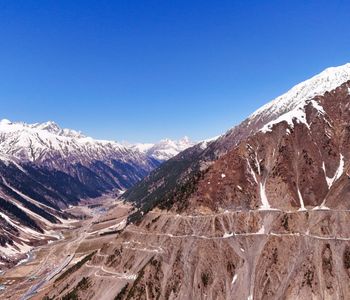
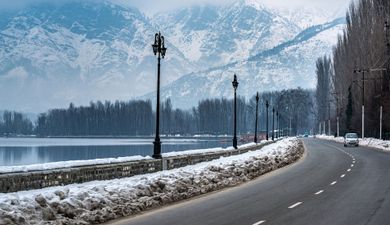
Don't rush the 80-kilometer drive northeast from Srinagar — the journey itself is half the magic. The road traces the Sindh River through a valley that narrows like a held breath, the slopes pressing closer, the drama building with every switchback.
Dense forests of pine, fir, and birch crowd the roadside, their resinous scent drifting through open windows. Waterfalls materialize around blind curves like natural punctuation marks, each one a reason to pull over, stretch your legs, and just listen. By the time Sonamarg appears ahead, your expectations have already been quietly, thoroughly recalibrated.
Where Ice Meets Wildflowers
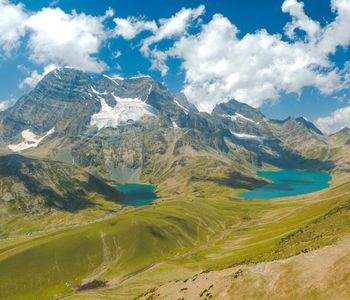
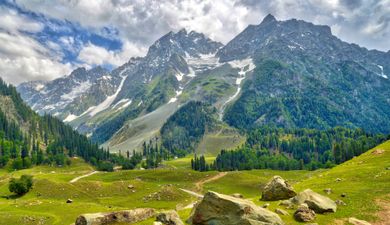
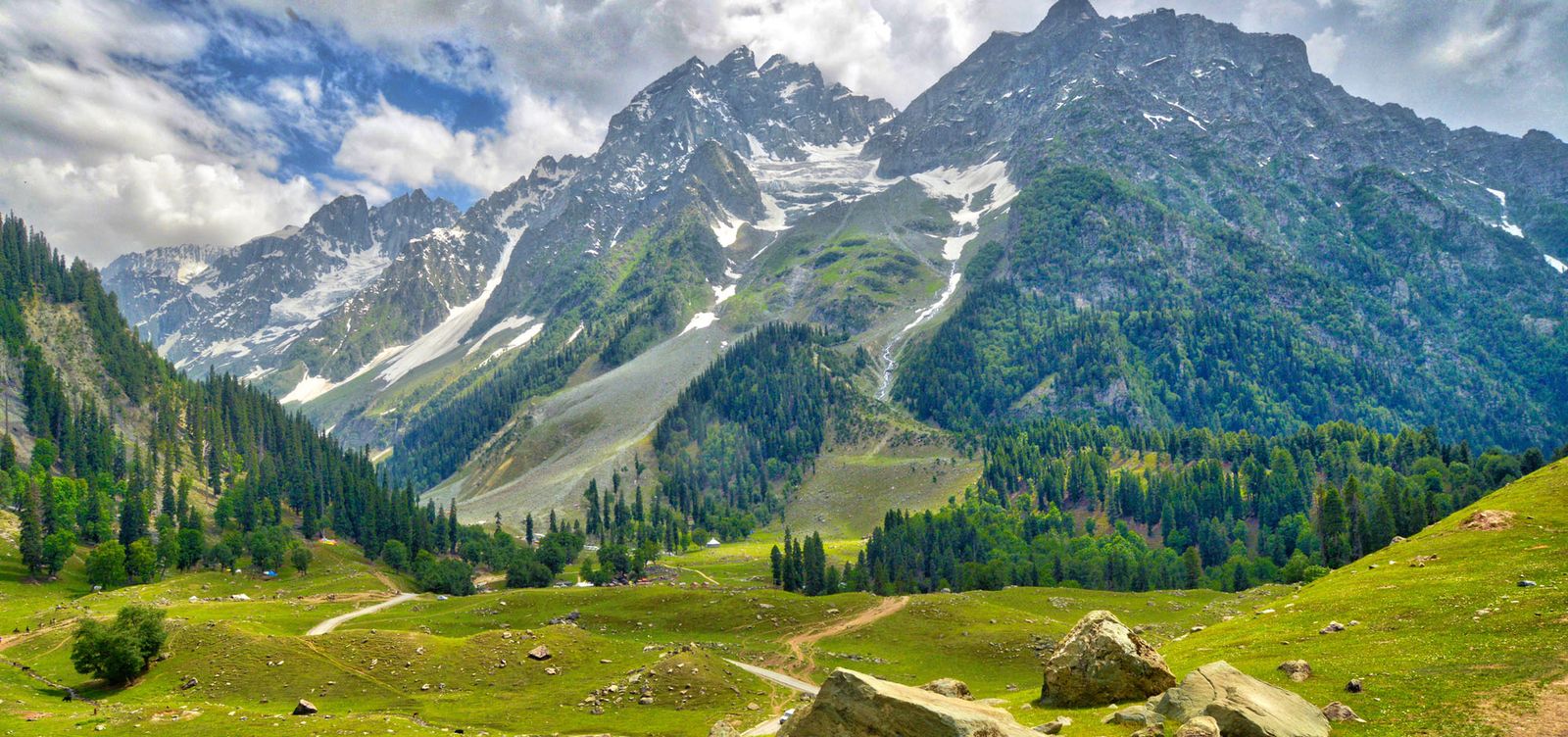
Sonamarg's landscape thrives on contrast — and it's breathtaking. From late spring through summer, wildflowers flood the meadows in rolling waves of purple, butter-yellow, and white, soft enough to wade through. Lift your eyes, and jagged peaks sheathed in glacial ice slash across the skyline like torn paper.
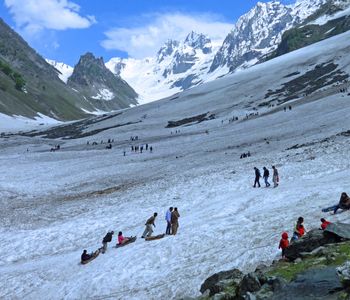
The Thajiwas Glacier sits just a short trek or pony ride from town, and standing before it recalibrates your sense of scale entirely. A massive wall of ancient, blue-tinged ice rises above green slopes while meltwater thunders downhill in channels you can feel vibrating through your boots. "Humbling" is the word visitors reach for most — and it fits.
Trails, Trout, and a Sacred Pilgrimage
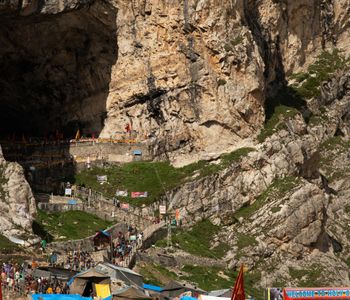
Every year, thousands of Hindu devotees pass through Sonamarg en route to the sacred Amarnath Cave, making the town one of India's most important pilgrimage base camps. The energy during the Amarnath Yatra season is palpable — chants mixing with the clink of walking poles and the brisk mountain wind.
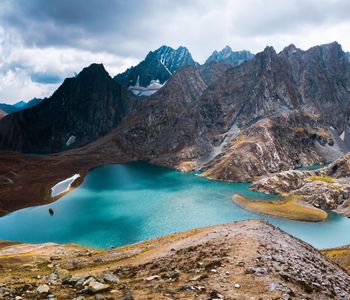
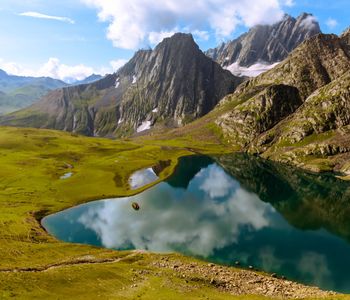
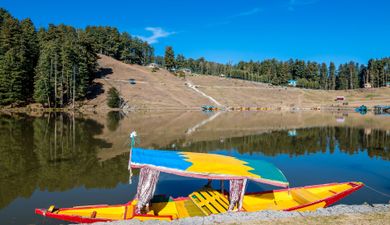
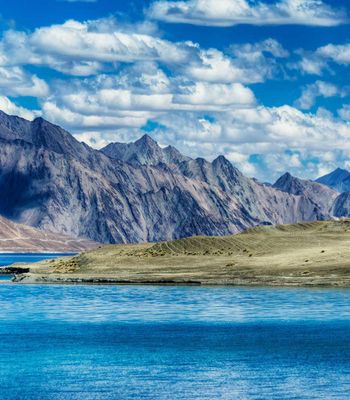
Beyond the pilgrimage route, trekking trails fan out in every direction. Follow them high enough and you'll reach Vishansar and Krishnasar — alpine lakes so still and clear they mirror the surrounding mountains with almost unsettling precision. The kind of reflection that makes you stop talking mid-sentence.
Prefer a quieter thrill? Cast a line into the Sindh River for trout. The cold current, the tug on the line, the absolute silence between bites — it's meditation with a hook.
Let a Pony Do the Walking
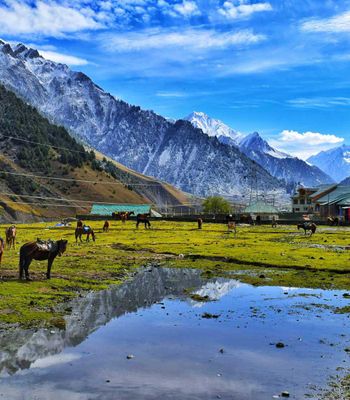
Not every adventure requires burning quads. Local pony owners guide you through meadows and along riverbanks at an unhurried clip, their sure-footed animals picking paths they've memorized across generations. These guides aren't just transport — they're storytellers, sharing tales about the region's shifting seasons, its geography, and the lives woven into this landscape.
During warmer months, you'll spot them at nearly every trailhead and campsite, a familiar and reassuring presence.
Summer's Short, Bright Window
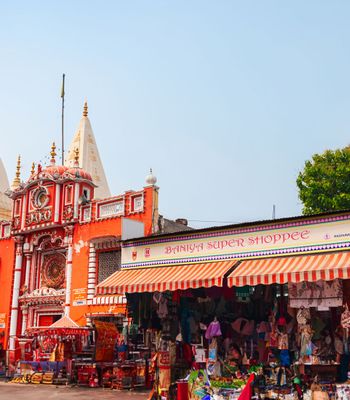
Heavy snowfall seals Sonamarg off from roughly November through March, which means the town packs an entire year's worth of life into a few vivid months. Late April through October is your window, and the summer season transforms this quiet settlement into a buzzing outpost of temporary markets, sizzling tea stalls, and small eateries where the aroma of fresh bread and spiced rice hangs in the cool air.
Locals — most of them Kashmiri-speaking — greet travelers with unhurried warmth. Expect genuine conversations and cups of kahwa, the traditional Kashmiri tea steeped with saffron, crushed almonds, and cardamom. That first sip, with its floral sweetness cutting through the mountain chill, is something you won't forget easily.
Echoes of the Silk Route
Long before tourists arrived, traders did. Sonamarg sits along the historic Silk Route that once linked the Indian subcontinent to Central Asia, and that ancient significance still hums beneath the surface. Walking through the wide, golden meadows, you can almost hear the ghost-echo of camel bells and bartered languages — centuries of passage through these same mountain corridors, compressed into the wind.
Where to Rest Your Head
Options range from government-run tourist bungalows to private hotels and organized campsites. For the full experience, spend at least one night under canvas near the Thajiwas Glacier or along the Sindh River, where the tent fabric ripples gently and the only soundtrack is rushing water and distant wind.
A Sonamarg evening settles over you like a blanket. The silence isn't empty — it's full, textured, almost physical. Most visitors carry it home like a souvenir they didn't know they were collecting.
When to Go and What to Know
Aim for May through September for the clearest weather and fullest access to trails. Early in the season, stubborn patches of snow still cling to higher elevations, creating a stunning patchwork against the first green shoots pushing through. Visit later in summer, and the meadows hit peak color — carpets of wildflowers stretching to the horizon — while glacier treks become their most accessible.
Whenever you arrive, Sonamarg asks one simple thing of you: slow down. Stop planning the next photo. Let the gold-lit meadow, the glacial air, the sound of water over stone do what they've been doing for centuries — quietly, irresistibly, pulling you back into the present.