At roughly 12,756 feet above sea level, inside a limestone cave in the western Himalayas, a stalagmite of ice forms each summer. It grows from the cave floor, fed by water dripping through the rock above, and reaches heights of up to six feet before slowly receding. Hindus worship this ice formation as a natural Shiva Lingam — a manifestation of Lord Shiva himself. No sculptor shaped it. No priest ordained it. The mountain simply produces it, year after year, and millions consider it among the holiest sites in all of India.
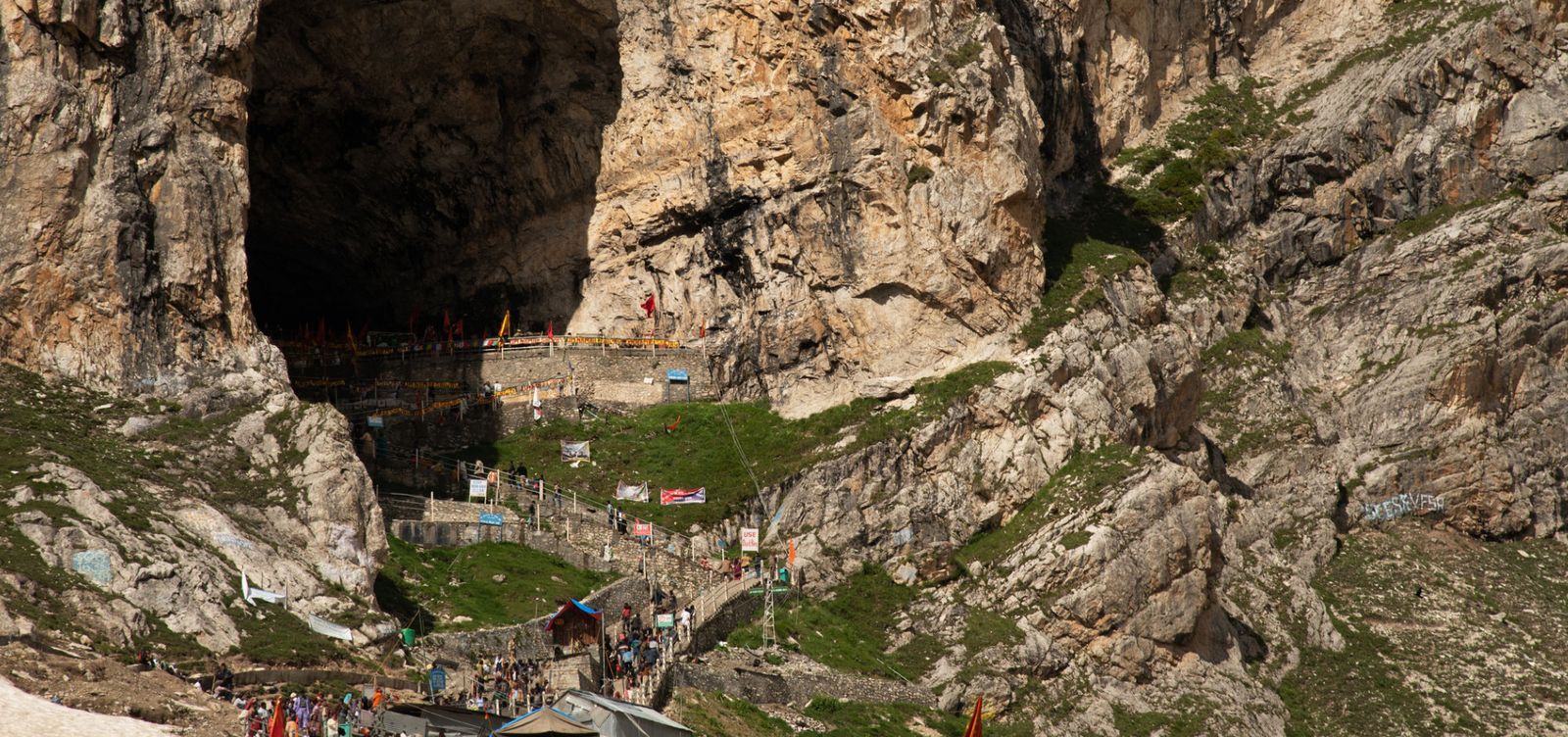
The Amarnath Cave Temple sits at the end of one of the most punishing pilgrimages in the Hindu world. Reaching it means days of trekking through high-altitude terrain where oxygen thins and weather turns without warning. Yet every July and August, during the brief window when the ice lingam stands at its fullest, hundreds of thousands of devotees make the climb. The cave isn't a temple in any architectural sense — it's a hollow in the mountainside, roughly 130 feet high and 90 feet wide, with the ice formation at its center. That's all there is. And it's enough.
A Legend Written in Frost
Hindu mythology ties this cave to one of the most intimate conversations in the faith. Lord Shiva, the story goes, chose this remote hollow to reveal the secret of immortality to his consort, Goddess Parvati. He demanded absolute privacy — no living creature could overhear. So Shiva left his bull Nandi at Pahalgam, released the moon from his hair at Chandanwari, shed his snakes at Sheshnag, and abandoned his son Ganesha at Mahagunas Parvat. Each stop along the modern pilgrimage route still carries the name of those mythological events.
Inside the cave, Shiva began his narration. But a pair of mating pigeons had concealed themselves in the recesses of the rock and heard everything. According to the legend, those pigeons — having absorbed the secret of immortality — still live near the cave. Pilgrims who spot pairs of pigeons near the entrance consider it deeply auspicious. Whether the pigeons cooperate with this narrative is, of course, entirely up to them.
The Trek That Tests You First
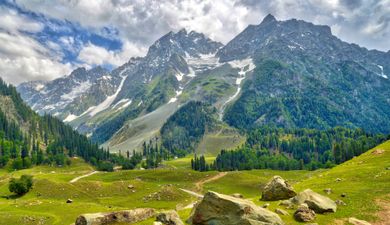
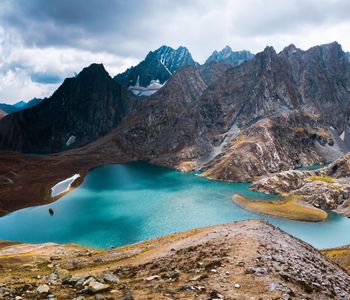
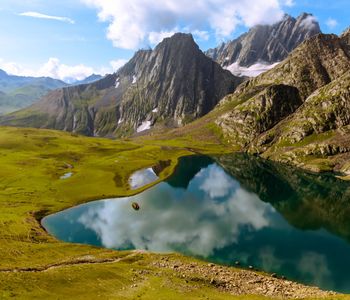
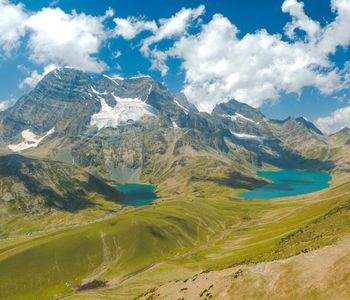
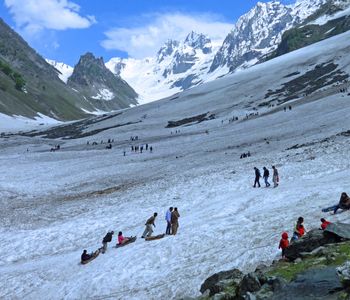
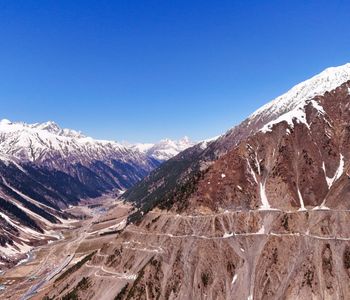
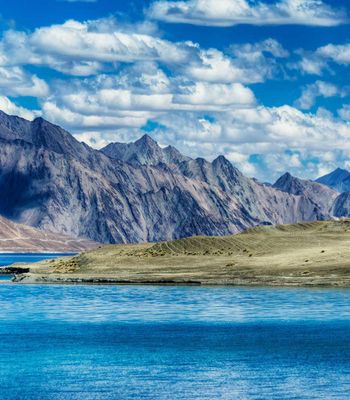
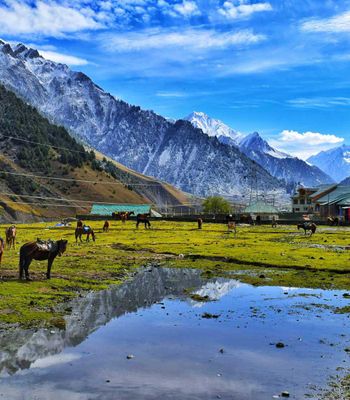
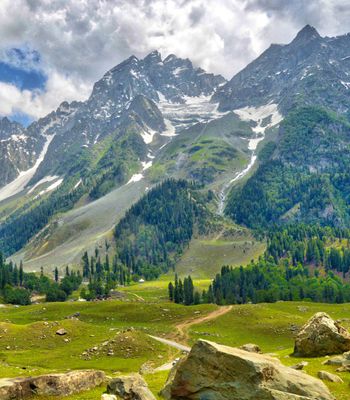
Two primary routes lead to the cave, and neither is casual. The traditional path begins from Pahalgam, covering approximately 36 kilometers over three to five days. You ascend through pine forests, cross the Pissu Top at around 11,120 feet, and pass the striking blue-green Sheshnag Lake before the final push toward the cave. The terrain shifts constantly — packed dirt gives way to loose rock, then snow, then mud that sucks at your boots like it has personal grievances.
The shorter alternative starts from Baltal, near Sonamarg, and covers roughly 14 kilometers. Don't mistake shorter for easier. The Baltal route climbs aggressively, with the altitude gain compressed into a single day for many trekkers. Headaches and nausea from altitude sickness are routine. Helicopter services now operate from both base camps for those unable or unwilling to walk, though availability hinges on weather — which in this part of Kashmir changes its mind hourly.
Pony and palki services run along both routes for pilgrims who need them. The Indian government and the Shri Amarnathji Shrine Board organize substantial infrastructure during the yatra season — medical camps, langars offering free meals, and temporary shelters line the path. Still, this is high mountain territory. Warm clothing, rain gear, and a realistic assessment of your own fitness aren't polite suggestions. They're prerequisites.
When the Mountain Opens Its Doors
The annual Amarnath Yatra typically runs for about 45 days between July and August, timed to coincide with the Hindu month of Shravan. Outside this window, the route is snowbound and the cave largely unreachable. Registration is mandatory — you can't simply show up at the trailhead and start walking. The Shrine Board requires a health certificate confirming fitness for high-altitude trekking, and registration can be completed online or at designated bank branches across India.
Security along the route is heavy. The pilgrimage passes through a region with a complicated political history, and the Indian military maintains a visible presence throughout. Convoys are organized, movement regulated. This creates an atmosphere you won't find on any other pilgrimage — devotional chanting mingles with the crackle of military radios, and canvas tents selling chai sit alongside sandbagged checkpoints. The pilgrims absorb it all without apparent contradiction.
Inside the Cave Itself
After days of walking — or a brief helicopter ride — you arrive at the cave mouth. The approach is steep and often icy. Wooden walkways and railings guide the final stretch. Then you step inside, and the temperature drops sharply. The air smells of damp stone and cold. Your breath clouds in front of you.
The ice lingam sits toward the back, illuminated by battery-powered lights that cast a pale glow across the wet rock walls. On peak days, the queue moves continuously, and you may have only a few minutes before the crowd presses you forward. Priests perform brief rituals. Devotees offer prayers, flowers, and sometimes tears. The ice itself is unadorned and uneven — it doesn't look sculpted or symmetrical. It looks exactly like what it is: frozen water that formed in darkness underground. The reverence comes not from its beauty but from its improbability, its cyclical return, its refusal to be permanent.
Two smaller ice formations, said to represent Parvati and Ganesha, sometimes appear nearby, though their size and presence vary year to year. The main lingam's dimensions also fluctuate — some years substantial, other years modest. Cave temperatures and climate patterns determine the outcome. Devotees read spiritual significance into these variations. Scientists read data. Both are probably right.
What the Journey Demands
Acclimatization matters more than enthusiasm here. Spend at least a day in Pahalgam or Sonamarg before beginning the trek to let your body adjust. Carry glucose, dry fruits, and plenty of water. Temperatures near the cave hover around freezing even in summer, and rain or sleet can arrive without preamble. Layer deliberately — thermal base layers, a waterproof jacket, and sturdy trekking shoes with solid ankle support.
The nearest major airport is in Srinagar, roughly 90 kilometers from both Pahalgam and Baltal. From Srinagar, shared taxis and buses run to the base camps during yatra season. Jammu, connected by rail to the rest of India, serves as the other major gateway, though the drive from Jammu to the base camps takes considerably longer.
The Mountain Remembers
The Amarnath Cave Temple doesn't reward you with architecture or ornamentation. It rewards you with effort and altitude and a lump of ice in a dark cave that somehow became one of the most sacred sites in Hinduism. The journey strips away comfort, convenience, and pretense. What remains — whether you call it faith, endurance, or simply stubbornness — is entirely yours. The ice will melt by September. It will return next summer. That rhythm, older than any temple built by human hands, is the whole point.