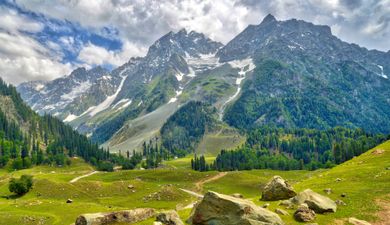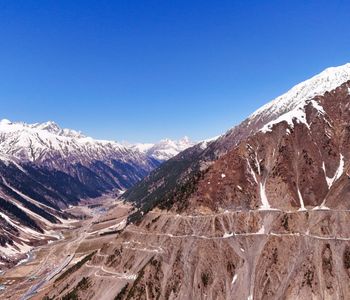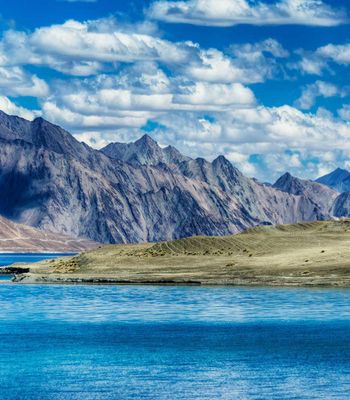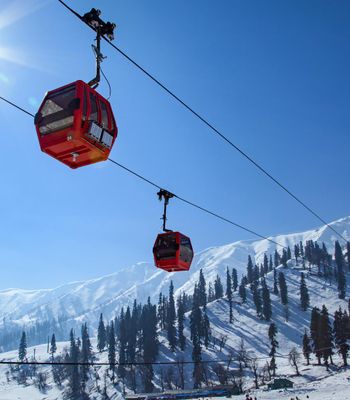
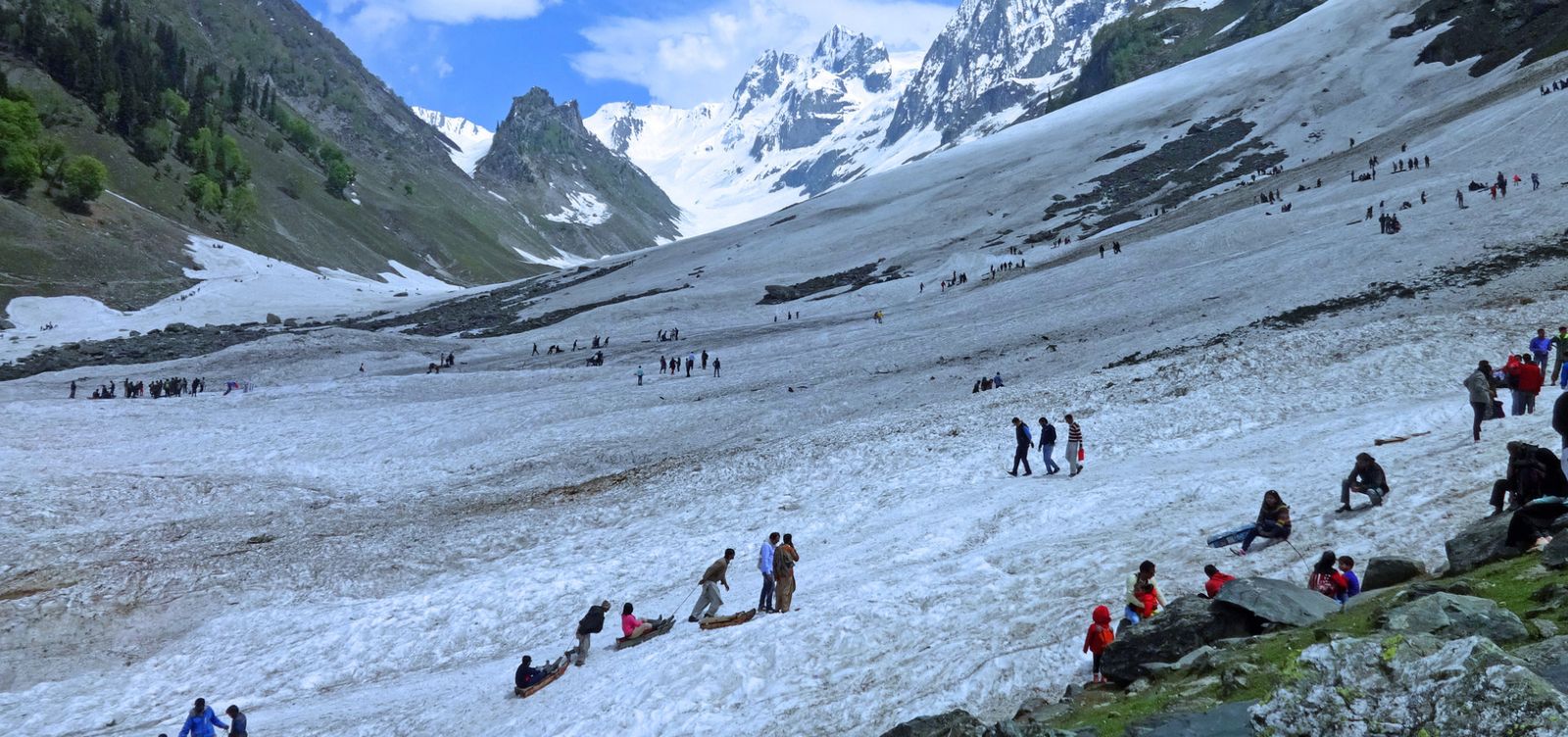
The walk to Thajiwas Glacier begins where the road gives up. From Sonamarg — a town whose name translates to "Meadow of Gold," though nobody who's stood in its mud has ever confused it for precious metal — you follow a trail through alpine grassland until the ground turns to rock and the air drops several degrees without warning. Then you see it: a massive grey-white tongue of ice wedged between dark mountain walls at roughly 9,186 feet above sea level. It doesn't sparkle. It doesn't perform. It sits there, ancient and indifferent, while meltwater runs in milky streams beneath its edges. Most glaciers in the Indian Himalayas require multi-day treks and permits. Thajiwas demands only a pair of sturdy shoes and about three kilometers of effort. That accessibility is precisely what makes it remarkable — and what threatens it.
The Walk That Earns Its Keep
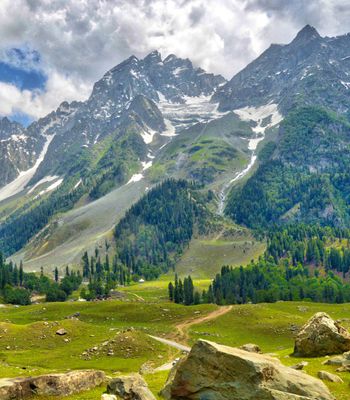
From the parking area at Sonamarg, the trail to Thajiwas covers roughly three kilometers each way. Don't let the short distance fool you. The path climbs steadily, weaving through patches of birch and pine before opening into a boulder-strewn valley where the glacier's face fills the gap between ridgelines. Underfoot, the ground shifts from packed earth to loose scree, and in spring the snowmelt turns sections of the trail into shallow streams you'll wade through whether you planned to or not.
You can hire a pony for around 500 to 700 rupees, and plenty of people do. But walking changes the experience entirely. On foot, you hear the glacier before you see it — a faint, persistent crack and gurgle that grows louder as the ice wall approaches. Cold air hits your face in waves, carrying that unmistakable mineral smell of glacial runoff, sharp and metallic, like licking a stone.
Budget about two hours for the round trip if you're walking, slightly less on pony. The trail isn't technical, but it's uneven enough that sandals or city shoes will punish you before the halfway point.
Where Summer Doesn't Quite Arrive
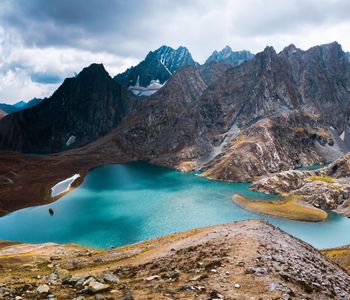
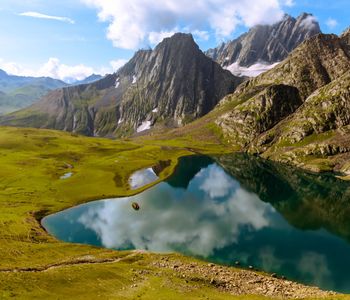
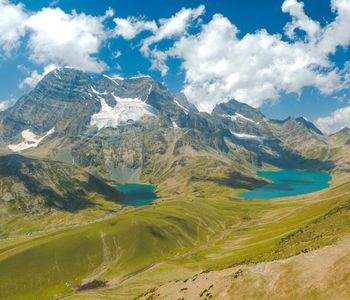
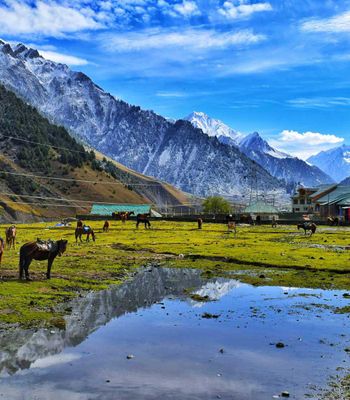
Here's the counterintuitive thing about Thajiwas: the best time to visit is midsummer, precisely when you'd expect a glacier to be least impressive. Between May and September, the surrounding meadows erupt with wildflowers — gentians, buttercups, patches of purple iris — while the glacier holds its ground above, stubborn against the warmth. The contrast is startling. Green grass and ice occupy the same field of vision, separated by a hundred meters of rubble. It looks like two seasons arguing over the same piece of earth.
In winter, the entire Sonamarg region buries itself under heavy snow and the road from Srinagar frequently closes. The glacier becomes unreachable for most people. Spring brings its own complications — avalanche risk along the approach and waist-deep snowdrifts obscuring the trail entirely. July and August, during the brief Kashmiri summer, offer the clearest access and the most dramatic visual payoff.
Temperatures near the glacier rarely climb above 15 degrees Celsius even in peak summer. Carry a windproof layer regardless of what the sky looks like in Sonamarg proper, where it might feel ten degrees warmer. The glacier has its own weather, and it doesn't consult the forecast.
A Glacier on Borrowed Time
Thajiwas has been retreating. Locals who grew up in Sonamarg describe an ice wall that once extended considerably farther down the valley — their childhood landmarks now sit in open air. The meltwater streams are wider now, the exposed rock more prominent. Scientific studies on Himalayan glaciers confirm what the eye suspects: warming temperatures are shrinking these ice fields decade by decade.
This isn't a reason to avoid the glacier. It's a reason to go. Standing at the terminus, watching chunks of ice calve into grey pools, you witness a geological process that normally takes millennia compressing itself into a human timescale. There's no interpretive sign explaining what's happening. No placard. Just exposed moraine and waterline marks on surrounding boulders, telling you everything if you're willing to read them.
Getting to Sonamarg — and to the Ice
Sonamarg sits about 80 kilometers northeast of Srinagar along National Highway 1, the same road that eventually crosses the Zoji La pass toward Ladakh. The drive from Srinagar takes approximately two and a half hours, though the winding mountain road and occasional military convoys can stretch that unpredictably — patience is not optional here, it's infrastructure. Shared taxis and buses depart from Srinagar's tourist terminal most mornings during the summer season.
Once in Sonamarg, the glacier trailhead is a short drive or walk from the main town center. You'll find the parking area crowded with pony wallahs and tea vendors by mid-morning, the whole scene carrying the cheerful chaos of a small economy built around one attraction. Arriving before 9 a.m. gives you a quieter trail and better light on the ice face.
Accommodation ranges from government-run tourist huts to private guesthouses. Most people treat the glacier as a day trip from Srinagar, but staying overnight lets you attempt the walk at dawn, when frost still clings to the meadow grass and the glacier takes on a blue-grey hue that disappears by midday. That early light alone is worth the cost of a room.
What to Bring, What to Skip
Water and a snack are essential — there are a few tea stalls along the trail, but their availability fluctuates with the season and the vendor's mood. Sunscreen matters more than you'd expect at this altitude; the UV intensity is punishing even under cloud cover. Sunglasses help cut the glare off the ice, particularly in the late morning when the sun hits the glacier's face directly.
Skip the selfie stick. Seriously. The terrain near the glacier's edge is unstable, and every summer brings reports of people slipping on wet rock while trying to frame the perfect shot. Approach the ice wall with respect for the loose ground underfoot, and don't venture onto the glacier itself without proper equipment and guidance. The ice looks solid. It isn't.
There's no formal entry fee for the trail, though you may encounter a small environmental charge during peak season. Pony operators negotiate prices individually, so settle on a fare before mounting up.
More Than a Photo Opportunity
Thajiwas Glacier doesn't offer the grandeur of Siachen or the fame of Gangotri. It won't appear on lists of the world's most dramatic ice formations. What it offers instead is proximity — the rare chance to stand within arm's reach of a living glacier after a short, moderate walk from a paved road. That intimacy changes how you think about ice, about mountains, about the speed at which permanent things become temporary.
Go in the morning. Walk rather than ride. Sit on a boulder near the terminus and listen to the glacier speak — those pops and groans of shifting ice that sound like a building settling into its foundations. Stay long enough for the cold to soak through your jacket. That discomfort is the point. It means you're close enough to something real.