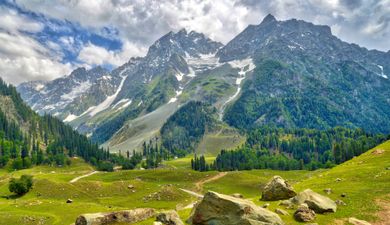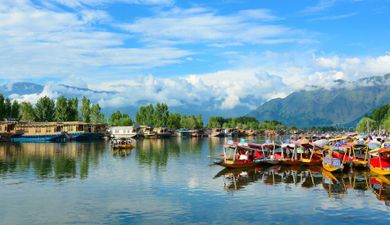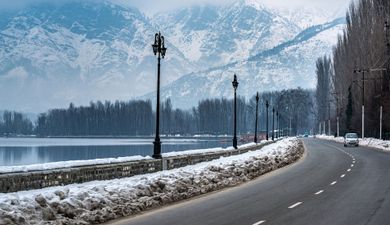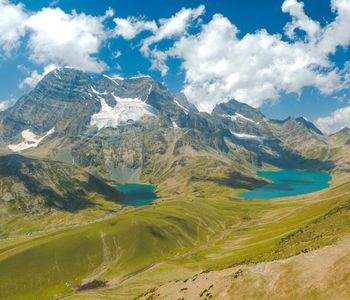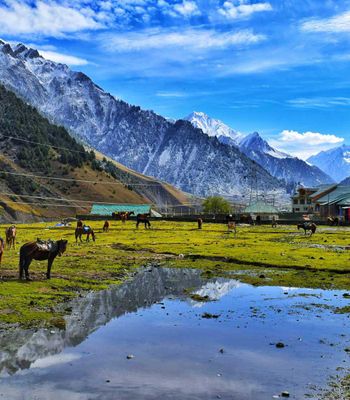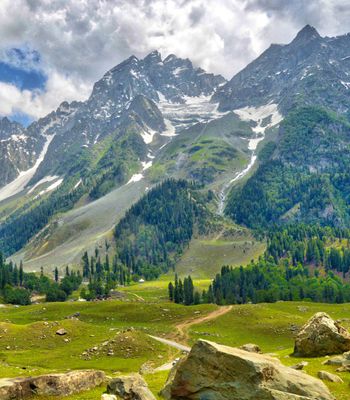
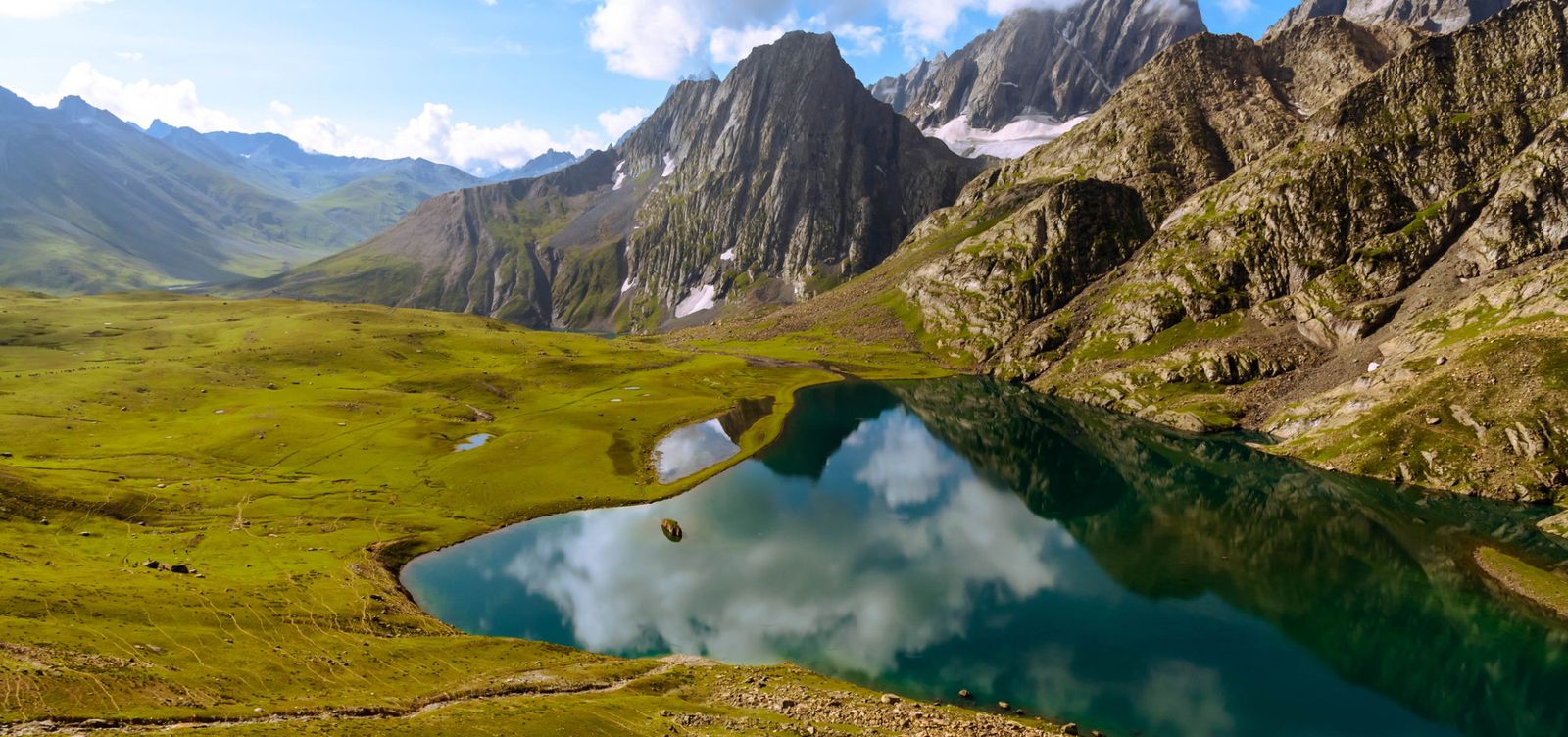
At roughly 12,000 feet above sea level, Vishansar Lake doesn't give itself away easily. You won't drive up to it, snap a photo from a parking lot, and move on. The lake sits at the end of a demanding two-day trek from Sonamarg, through meadows that shift from emerald to gold depending on the month, past glacial streams cold enough to make your bones ache. When you finally crest The Ridge and see that pale, ice-fed water stretched out beneath the Himalayan peaks, the exhaustion doesn't vanish — but it stops mattering. This is Kashmir's high country at its most unfiltered, a place where the silence has actual weight and the water holds the sky like a mirror that's been polished for centuries.
A Name Written in Mythology
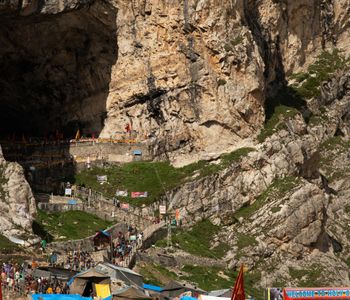
In Sanskrit, "Vishnu" and "sar" combine to form the lake's name — literally, the lake of Lord Vishnu. Kashmiri tradition holds that the water carries sacred properties, and Hindu pilgrims have traced paths to its shores for generations. The surrounding Sind Valley has its own layered spiritual geography, with alpine lakes scattered across the high passes like beads on a broken necklace.
What gets you here isn't the mythology itself but how plausible it feels. Standing at the lakeshore, where glacial melt feeds water so transparent you can count stones on the bottom at fifteen feet, it's easy to understand why someone centuries ago decided a god must live here. The setting does that work on its own — no temple required, no priests, just the water and the ring of snow-dusted peaks.
The Trek That Tests Your Commitment
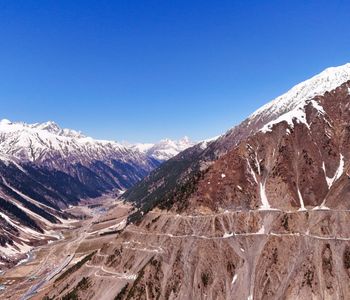
Most trekkers begin from Sonamarg, a town about 80 kilometers northeast of Srinagar in Jammu and Kashmir. The trail to Vishansar typically runs through Nichnai Pass, climbing steadily through pine forests before opening into wide alpine meadows. Two days of walking if you're reasonably fit, with an overnight camp at Nichnai.
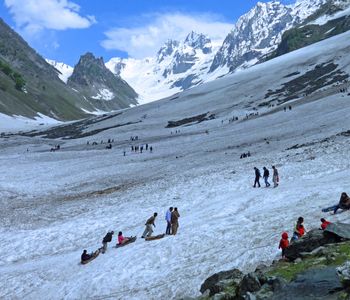
The path isn't technical, but it's relentless. Altitude gains come in long, grinding stretches rather than dramatic switchbacks — the kind of climbing that doesn't look like much on a map but hollows you out by mid-afternoon. Your lungs will remind you of every meter above 10,000 feet. River crossings require real attention, especially in June and July when snowmelt swells the streams to knee height. Porters and pack horses are available for hire in Sonamarg, and unless you're determined to prove something to yourself, take them. The weight you save on your back translates directly into how much you actually enjoy the landscape rather than just endure it.
Here's the counterintuitive part: the trek is harder in perfect weather. Clear skies at this altitude mean punishing UV exposure and afternoon heat that drains you faster than the cold ever would. Overcast mornings with a light chill are your best friend on the trail.
What the Water Actually Looks Like
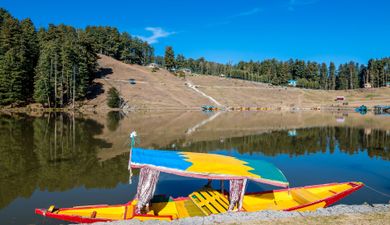
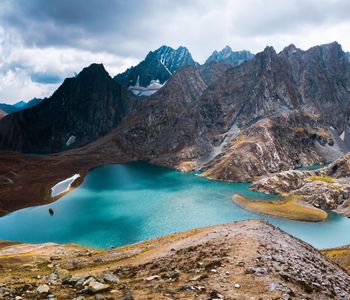
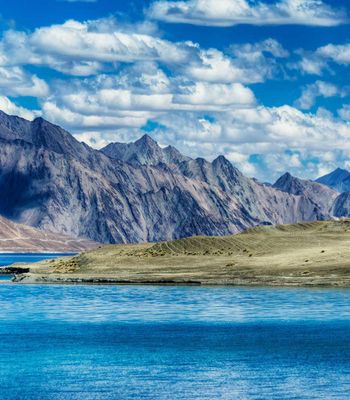
Photographs of Vishansar Lake tend toward the unbelievable — that particular shade of blue-green that makes people assume the saturation has been cranked up. It hasn't. The color comes from glacial minerals suspended in snowmelt, and it shifts throughout the day. Early morning turns the surface a deep, almost metallic teal. By midday, under direct sun, it pales to something closer to turquoise. Late afternoon brings a slate-grey quality that makes the surrounding peaks look sharper by contrast.
The lake stretches roughly a kilometer in length, fed by the Vishansar Glacier and several smaller streams that braid down from the ridgeline. In late spring, chunks of ice still float near the northern shore, bumping against each other with soft, hollow sounds that carry across the water. Trout move in the shallows — brown trout introduced decades ago that have thrived in the cold, oxygen-rich water. Fishing is restricted, but watching them dart between submerged rocks is its own quiet compensation.
When the Mountains Cooperate
The trekking season runs from June through September. July and August offer the most reliable weather and the fullest meadow wildflowers — entire slopes of gentian and buttercup that seem almost improbable at this elevation. June is riskier. Lingering snow can obscure the trail near the pass, and some years the lake itself remains partially frozen into the first week of the month. September brings cooler air and thinner crowds, but the days shorten fast and early storms aren't uncommon.
Temperatures at the lake drop below freezing most nights, even in midsummer. Bring a sleeping bag rated for at least minus five Celsius and layer aggressively. The difference between a comfortable night at camp and a miserable one comes down to what you packed, not what you hoped the weather would do.
Camping at the Edge of Things
Flat ground near the lakeshore serves as the primary camping area, with space for perhaps twenty tents before things start feeling crowded. There are no permanent structures, no tea stalls, no mobile signal. You carry everything in or arrange it through a trekking operator in Sonamarg. Several local outfitters provide guided treks with tents, meals, and porters — a practical choice, especially if you're unfamiliar with high-altitude camping in Kashmir.
Nights at Vishansar have a quality that resists description without sounding excessive, so I'll just say what happens. Without light pollution, the Milky Way sits across the sky like a smear of phosphorescence, dense and startlingly close. The silence is so complete that the occasional splash of a trout surfacing carries from a hundred meters away. You don't sleep deeply at 12,000 feet. But the hours you spend awake in your tent, listening to nothing, feel less like insomnia and more like a privilege you didn't know you were missing.
Getting to the Starting Line
Sonamarg is accessible by road from Srinagar, roughly a three-hour drive along the Srinagar-Leh Highway. Shared taxis and buses make the journey daily during summer months. The road follows the Sind River through a gorge that opens gradually into the broad valley where Sonamarg sits at about 9,000 feet. From Srinagar's tourist reception center, you can arrange transport or join a shared vehicle departing in the morning.
Once in Sonamarg, register your trek with local authorities if required — regulations shift from year to year, and it's worth confirming at the tourist office. Hire a local guide even if you're an experienced trekker. The trails aren't always clearly marked above the treeline, and weather in Kashmir's highlands can pivot from calm to dangerous within an hour. A guide who knows the terrain isn't a luxury. It's common sense wearing hiking boots.
Worth Every Blister
Vishansar Lake doesn't accommodate casual visitors, and that's precisely what protects it. The effort required to reach its shores acts as a natural filter — no road will ever reach this place, no cable car will skim above it. The lake remains exactly what it has been for millennia: cold, clear, magnificently indifferent to whether you show up or not. That indifference, strangely, is what makes the whole thing worth doing. You don't conquer Vishansar. You simply arrive, sit on a rock still warm from the afternoon sun, and let the silence settle around you like something you forgot you needed.